
Published September 22, 2025 | Updated July 28, 2026
Brandeis, the iconic, family-owned retail store based in downtown Omaha, was responsible for the city’s first regional mall. Located at the northwest corner of 72nd and Dodge Streets, The Crossroads Shopping Center opened five years after the much smaller Center Mall.

Brandeis turned down an offer to open a new store inside The Center, preferring instead to open its own indoor shopping center further west. While the area was largely undeveloped at the time, it seemed inevitable that a city that continued to move further and further west would catch up with it.

E. John Brandeis had assumed control of the family’s massive downtown retail operation in 1948. He had a varied background that included military service, traveling the world, and hunting, but having grown up surrounded by retail, he proved quite capable. Seeing a pattern in which customers and retailers continued to move further and further west, he was ready to gamble and moved even further west than The Center, all the way to 72nd and Dodge. It was the store’s first new location since the 1906 flagship, and it wouldn’t be its last.
Work commenced in 1959 after Brandeis Investment Company, the real estate division for the retail store, secured a 96-year lease on the 35-acre site. Among its few neighbors were Cargill to the south, West Lanes to the east, and 76 West Dodge Drive-In as well as Peony Park to the west.

Designed by Leo A. Daly, the $10.5M Crossroads Shopping Center featured two three-story anchor stores, one of which was Brandeis and the other Sears and Roebuck. Sitting in between them was a single-story row of two dozen smaller retailers. The fully enclosed mall also included a basement that housed the offices for mall management. The mall opened in phases, beginning with Sears in August 1960, followed almost two months later by Brandeis, with the remaining tenants opening the following year. E. John was present for the grand opening alongside Governor Dwight Burney and Mayor Johnny Rosenblatt, watching as the ribbon was cut on a massive new store in the middle of nowhere.

The Crossroads location was Brandeis’s first new building since it opened its flagship store at 16th and Douglas in 1906. While business was slow at first, the gamble paid off and the location became profitable in its own right and led to even more new locations. The Crossroads included the “Seven Wonders of the Brandeis Shopping World” with its luxuriously decorated women’s, men’s, and youth departments, as well as a fountain court that contained escalators and a fountain, in addition to a dining area.

In addition to the anchor stores, Crossroads’s other tenants included S.S. Kresge Company, Helzbergs, Cooks Paint and Varnish, Occidental Building and Loan Association, Goldstein-Chapman, Musicland, Sol Lewis, Babytown, Woolworth, Walgreen Drug, and even a Walgreen Grill, among others.

From the time it opened, Crossroads Mall dominated the retail scene until Westroads Mall opened two and a half miles west in 1968. In the face of increased competition, Crossroads continued to evolve by adding new tenants to the mix and even built a movie theater that operated from the basement starting in 1970. By the time its president, E. John Brandeis, passed away in 1974, the retail chain had more than a dozen locations with Crossroads being its most successful.

While Crossroads had become the flagship location for Brandeis after the downtown store closed in 1980, changes were on the horizon. The mall was sold to new owners in Melvin Simon & Associates. Not even that saved the retail store, which realized it couldn’t compete in a new hypercompetitive environment. Its president, Alan Baer, E. John’s nephew, relented and sold the retail store, which now included 11 locations, to Younkers in 1987.

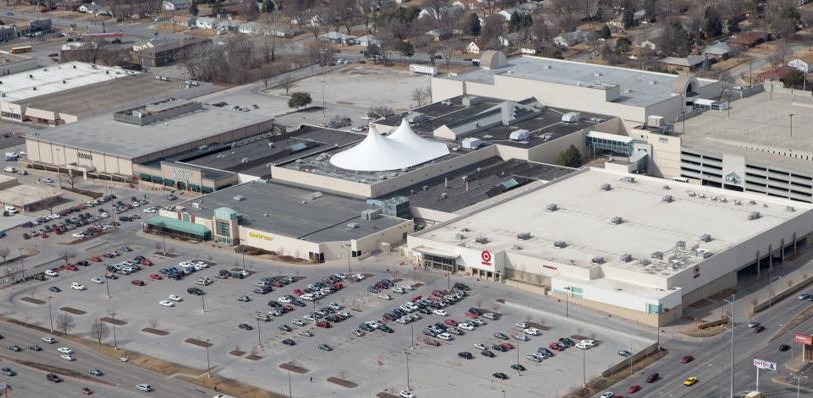
Crossroads completed a $35M renovation in 1988 that included the addition of a third anchor store in Dillard’s, two new wings that extended north and south, a parking garage, and a central food court beneath two white tents. As a result, the mall expanded to more than 70 retailers. The mall underwent a second renovation 10 years later that was more cosmetic in nature.

After the turn of the century, however, Crossroads was in decline due to a variety of factors including competition from Westroads, Oak View, Village Pointe, and online shopping. Younkers, which replaced Brandeis just a few years earlier, closed, at which point the building was demolished in favor of Target. The second of its three anchors, Dillard’s, closed in 2008. By that point, the entire second level was vacant and the food court was mostly empty.
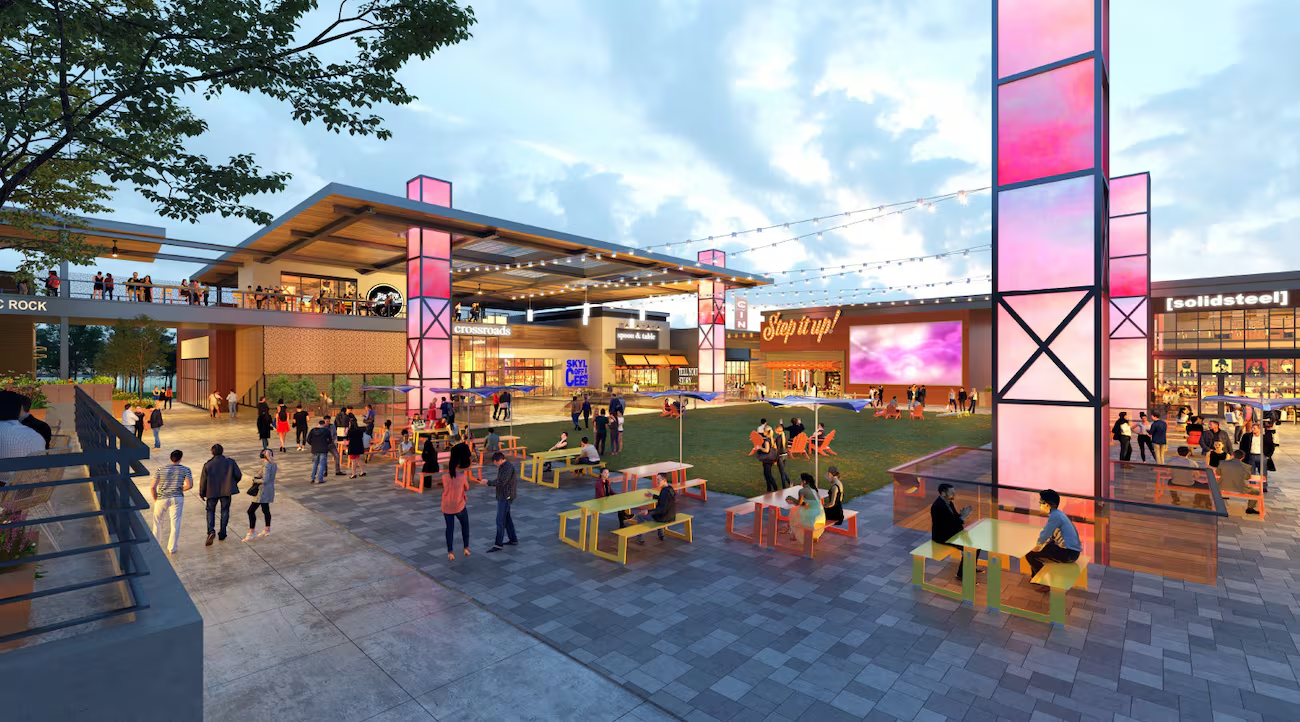
The building was put up for sale in 2009 but instead of selling it, the owner defaulted on its mortgage, causing it to go into foreclosure. The mall was subsequently sold, and in 2010, Century Development Company proposed a $390M mixed-use development called Crossroads Village. Its plan would retain the existing Target while relocating holdovers Sears, the last remaining anchor, and Barnes & Noble to new buildings. In addition to retail, the plan called for luxury apartments, office space, a hotel, a fitness center, a library, and a central park. After those plans failed to materialize, Sears and Barnes & Noble closed in 2019.

With the exception of Target, which had sealed off its entrance to the mall years earlier, tenants were given eviction notices and the mall was leveled in 2021, more than 60 years after it first opened its doors to the public. While progress has been slow since that time, much of the infrastructure work, including the street grid, was completed.
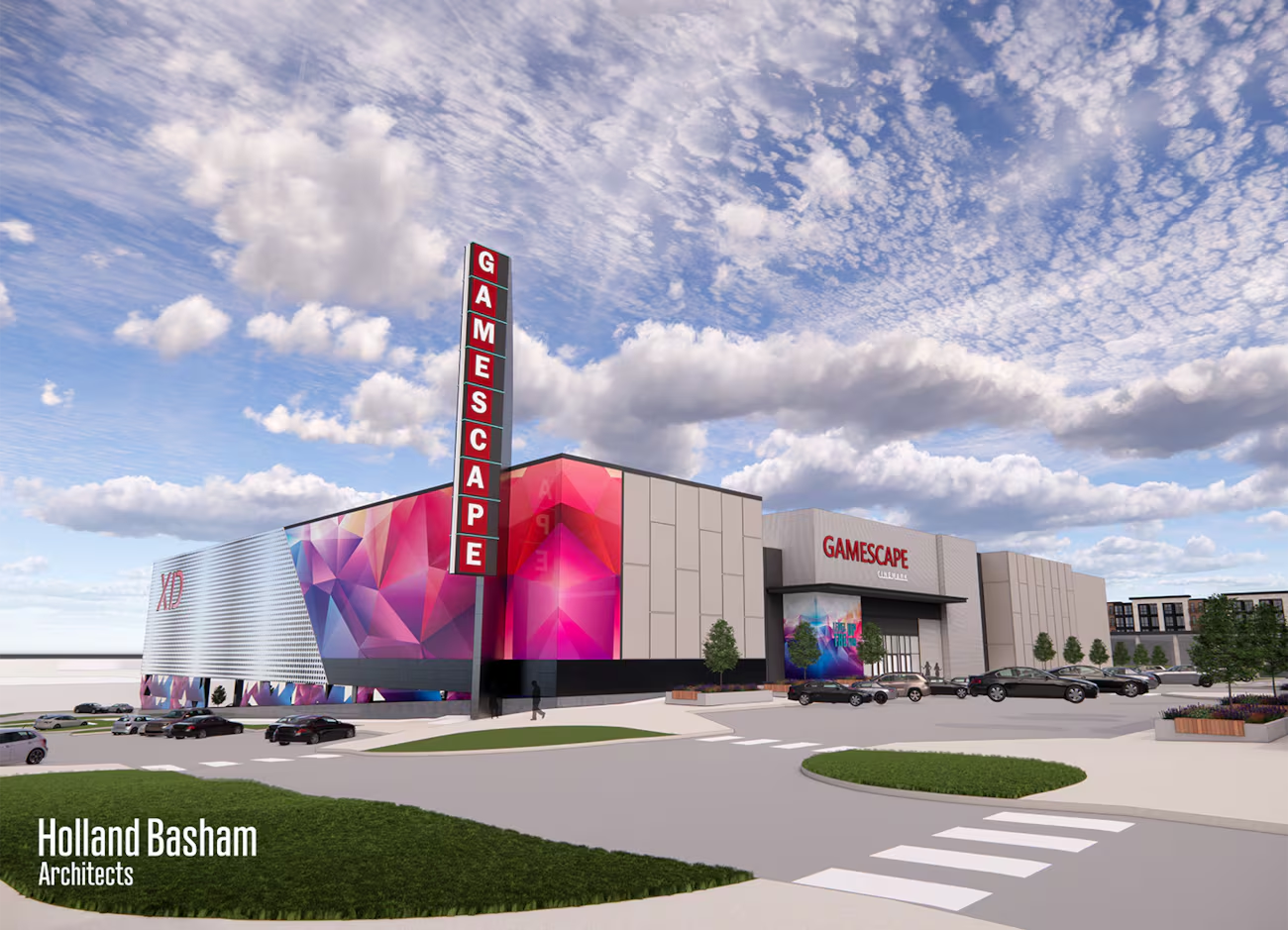
Its redevelopment saw new life in December after Woodbury Corporation took over. This summer, they announced that its first tenant, Gamescape, would open in late 2027 or early 2028. Gamescape is a combination movie theater that includes bowling, an arcade, laser tag, a ropes course, and a full-service restaurant and bar. It will sit on top of two levels of underground parking. Subsequent phases will include retail, multi-family housing, offices, and a plaza.

When Crossroads was built, it sat on the western edge of the city waiting for it to catch up. More than 60 years later, the city waits on a developer to make it a destination once again.
Content written by Omaha Exploration. Feel free to leave a comment or a suggestion. Until then, keep exploring!
Omaha Exploration is sponsored by @Rockbrook Mortgage Inc.

Click here to learn about opportunities to sponsor Omaha Exploration!
More pictures


Follow OE on Facebook for more
Get an email when new content is posted
Omaha Exploration, 2025. Unauthorized use and/or duplication of this material without express and written permission from this site’s author and/or owner is strictly prohibited. Excerpts and links can be used, if full and clear credit is given to Omaha Exploration with appropriate and specific direction to the original content.
Sources
- Omaha World-Herald archives
- https://douglascohistory.org/omahas-first-mall-the-crossroads-shopping-center/
- https://mall-hall-of-fame.blogspot.com/2007/11/crossroads-center-dodge-street-us-6-and.html
- Ervine John Brandeis (1895-1974) – Find a Grave Memorial
- Leola Brandeis Baer (1893-1961) – Find a Grave Memorial
Leave a Reply