
Published August 11, 2023 | Updated August 20, 2026
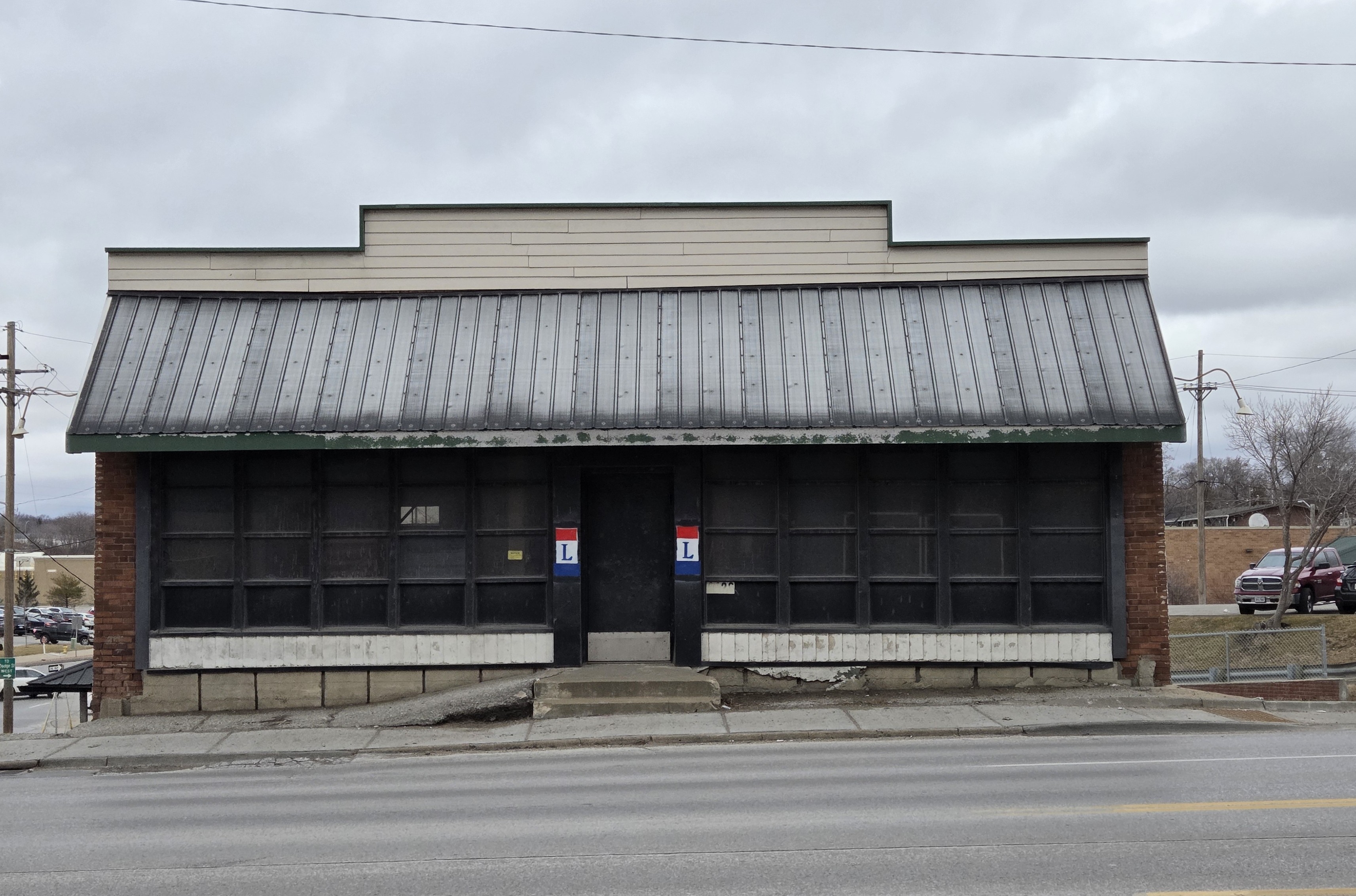
Sitting at the intersection of Dodge Street and Saddle Creek Road is Sutter’s Mill, a structure that its owner claims was built in 1847, seven years before the territory was opened for settlement. It’s a building often discussed in Omaha history groups, and I’ve attempted to piece together information from these groups as well as a variety of other sources in an attempt to document its history.
Located at 4426 Dodge Street along the former Lincoln Highway, the building did indeed start its life as a mill along the Saddle Creek, though the year it was built is a bit of a mystery. The Douglas County Assessor shows it as 1875, which seems more likely given the settlement timeline. The earliest references I can find to a mill in the area of 45th and Dodge belonged to Henry F. Cady in 1894. Cady operated the Santa Clara Manufacturing Company, whose building in the area caught on fire, prompting him to move the business to his nearby planing mill. Soon after, Cady relocated to 6th and Harney Street and sold his land in Briggs Place to Noah Perry.

Perry was a jobber and wholesale dealer in sewer pipes and stoneware. By 1903 he moved his business downtown, selling the lot to P. J. Creedon. Creedon & Sons were contractors that took over use of the planing mill. The Omaha World-Herald referred to the mill as the Dundee Mill in 1904. Where it gets interesting is that brothers William H. and Richard W. Pindell incorporated “The West Omaha Milling Company” that same year and operated their business in the area. The brothers manufactured flour and feed in addition to buying and selling grain. It’s unclear whether there were two mills in the area or whether the Pindell brothers converted the planing mill into a feed mill.

Joseph H. Sutter didn’t acquire the mill until 1906, at which point it became a part of the Sutter Feed & Coal Company. In 1910 Sutter alleged that the proposed Dodge Street viaduct over the Omaha Belt Line would result in $5,000 in damages to his property. Just a year later he no longer listed this address in advertisements, but continued to list 2862 Farnam Street, which may have been his feed store.
The mill and much of the land around it changed hands in 1912 when C.W. Hull acquired the property. C.W. had spent the previous two years acquiring land in the area and long desired the mill, with the intent of establishing a lumber yard. In total he acquired 14 lots, which included the property owned by Creedon. By 1917 the shed on the eastern end of Hull’s property was torn down for the track elevation for the belt line, which may be what Sutter had been referring to in 1910.

The building at 4426 Dodge Street ceased operating as a mill by 1918, when Adolph E. Samuelson moved his furniture and piano repair business to the building, likely after extensive renovation. The business known as Samuelson Upholstering Company continued to operate even after his death in 1927, at which point his son Paul took over. Seven years later, in 1934, the Saddle Creek Underpass was built as a WPA project. While other businesses also called the old mill home over the next few decades, Samuelson remained a constant. It wasn’t until the son died in 1959 that Samuelson would close after a 40-year run.

The building wouldn’t enjoy the same consistency over the next few decades. Businesses that called it home after Samuelson included Omaha Shade & Blind Company, which had begun operating there in 1956, and Design Incorporated, which took over Samuelson’s first floor when it opened its second location in 1960 (its first was in Sioux City). Design Inc. specialized in selling contemporary and modern furniture, wallpaper, carpets, plastic, light fixtures, and kitchen designs. By 1963, Omaha Cash Register moved in and would eventually become National Cash Register. Figure Fair, which advertised itself as Nebraska’s only complete slenderizing and reproportioning salon, set up shop in the 1960s and remained until the 1970s.

When the building went up for sale in 1995, Nils Erickson purchased it, drawn to its history and the income potential of a large triangular billboard that allowed six spaces for ads. The billboard, grandfathered by the city, provides Erickson with steady monthly income that helps supplement his other business, Rainbow Recording Studio at 64th and Center. The building has primarily been used for storage ever since.
Content written by Omaha Exploration. See my website for sources. If you enjoy my content, sign up to receive emails or make a donation on my website. You can also follow along or subscribe on my Facebook page. Thank you and keep exploring!
Bonus Pics


Sources
- Omaha World-Herald archives
- Omaha Bee archives
- The Examiner archives
- Douglas County Assessor
- Census records
- Baist map per Micah Evans

Leave a Reply