
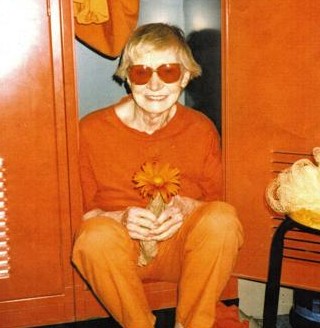
It was during quarantine that Lucile Schaaf walked outside of her 300-acre estate just north of Florence and cut down a six foot tree, drug it across the yard and pulled it into her house. Her two year old daughter having just come down with scarlet fever meant that they couldn’t leave to get a Christmas tree let alone decorations or even presents. Lucile and her daughters decorated the tree with foil wrappers, marshmallows, gumdrops and whatever else they could find in the house. The tree was inspired by a book they read titled “The Sugar Plum Tree”. The tree and a lifesize picture of Santa that Lucile painted on the wall were bright spots of that Christmas. They also started a tradition that would continue for decades.

Lucile, a collector of architectural remnants, also began collecting Christmas decorations following her time in quarantine with her daughters. The following year she hosted a tea party for one of her daughters and her second grade classmates. Without much thought, they had decorated one of the rooms for Christmas in advance of the party. Fun was had by all and the next year, the tea party was planned again but this time it included the girls’ mothers. While preparing for the party, Lucile took the previous year’s decorations, added more and decorated two rooms.
The tea party tradition continued after the Schaaf family moved to the Gold Coast neighborhood in 1953. The grand Georgian Revival house with its stone entry columns, red gabled roof and its front and rear dormers was designed by John McDonald for Charles McLaughlin. If you recognize John’s name, it’s because he also designed Joslyn Castle. By this time, Lucile had already built up a sizable collection of Christmas decorations. The house quickly became known as the “Christmas House” once they moved in.

The process of decorating the house at 507 S 38th St would begin in August and included every room. As word of the house spread amongst neighbors, friends and family, more and more people came to see the house. It was at that point that Lucile began charging a $2 admission in order to limit the number of visitors. When that didn’t work, she would just use the money to buy even more decorations the next year.
By 1956 Lucile and her husband Frank had divorced and she was operating a business called Steeple Studios in which she recovered and sold architectural remnants. Located at 819 S 22nd St, it was housed in an abandoned Danish church which she converted into her shop. As a part of this business she would travel across the country in order to acquire items from homes and buildings being torn down. She had everything from old fireplaces to decorative hardware, marble clocks, chandeliers and furniture. She even flew to North Carolina once to purchase a double decker bus which she drove back to Omaha in the middle of winter. For a time, she used the bus to provide tours around the city.

She continued to decorate the house for Christmas and it even caught the attention of the Omaha World-Herald which described it “as something that might have been created by Walt Disney in one of his more inspired moments.” Eventually the hobby which started out as a way to express herself became too much to handle especially as she got older and her children which now included a son moved out. By the time she ended that tradition, she started a new one when she opened a Christmas store called The Place in the Old Market.
When she opened The Place at 1007 Howard St in 1968, the Old Market was in the beginning stages of its transformation from a produce hub. Success was all but assured but Lucile was no stranger to firsts. Years earlier she was the first girl to take mechanical drawing at Central High School which led to her studying art and architecture at Scripps College in CA. In fact, she doubled down as she also opened a sandwich shop called the T Room nearby.
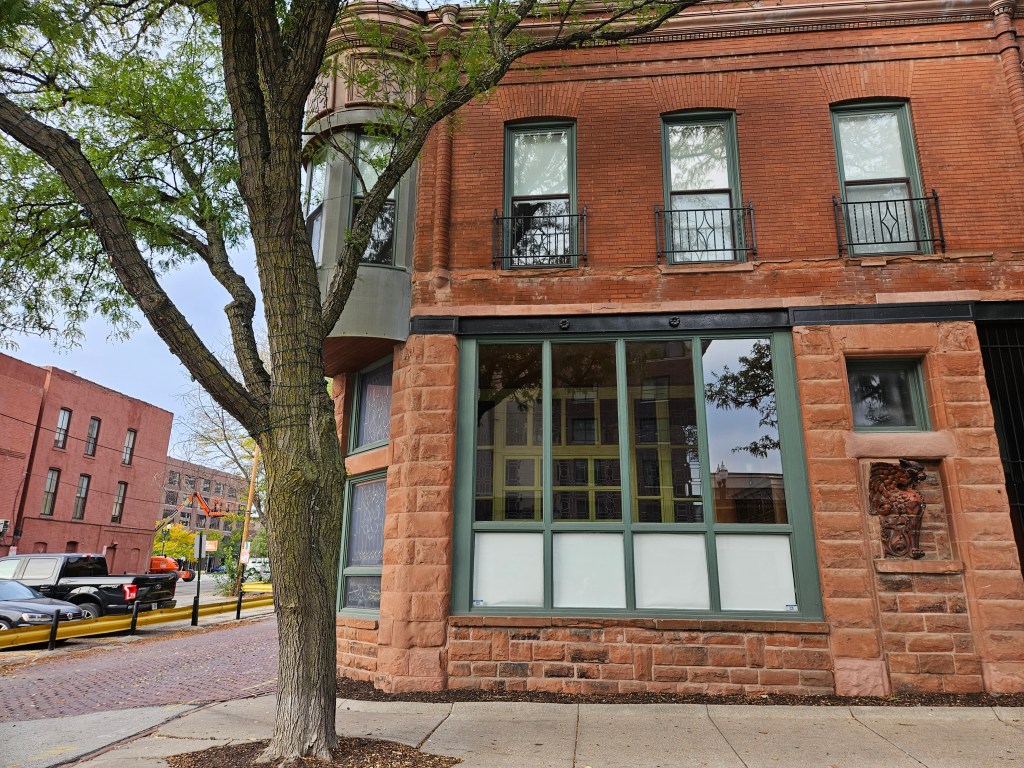
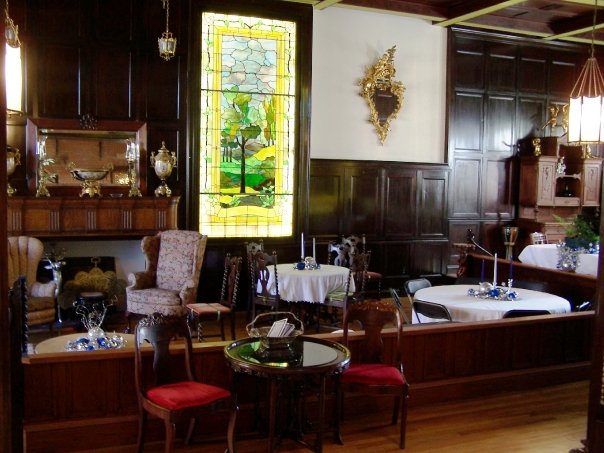
After she sold the “Christmas House” in 1980, she relocated to her beloved Old Market. Her new home was the old Pickwick Bar at 510 S 10th St, just around the corner from her businesses. In the process of making it habitable, she removed loads of clutter from the 8,000 sq ft building in addition to the 6,300 sq ft walled-in courtyard. In this space, she was able to combine her hobby of collecting architectural remnants with her love of art and architecture. With the help of her daughter, she filled the space with stained glass windows from the Brandeis mansion, installed mirrored murphy bed doors from the Morris Hotel, terra cotta cornices from the Farnam building, wood paneling from City National Bank. They also installed an iron gate at the entrance as well as stone griffins from the Farnam building to keep watch.

The Christmas Lady as she became known donated nearly 4,000 Christmas decorations from her personal collection to the Western Heritage (Durham) Museum. She was also responsible for decorating its enormous tree for nearly a decade. She liked to decorate trees from the inside out and from top to bottom which required a ride to the top on a cherry picker. After it was finished, children were encouraged to lie on their backs and scoot under the lowest branches where they would see hundreds of stars and angels that she carefully placed.

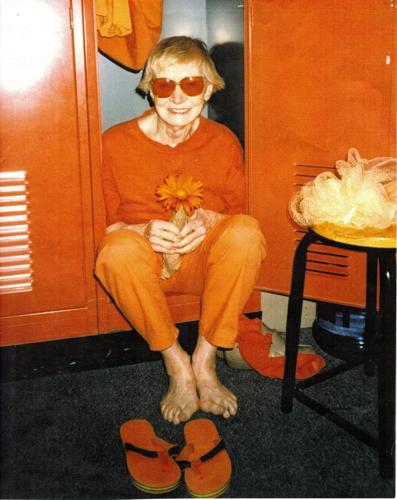
Even though the eccentric old lady who always dressed in orange passed away in 2009, her legacy lives on. Her on-time “Christmas House” was named a local landmark and placed on the National Register of Historic Places in 1982. Her painstakingly designed Old Market home is now Lucile’s Old Market and is available for weddings, fundraisers and other events. Meanwhile her Christmas shop remains just that – a Christmas shop called Tannenbaum which has become an Old Market mainstay since it opened 40 years ago.
Content written by Omaha Exploration. If you enjoy my content, you can follow or subscribe on my Facebook page, signup to receive emails or make a donation on my website. Thank you and until next time, keep exploring!
Bonus Pics

Subscribe
Type your email address above to be notified when a new story is posted.


 Omaha Exploration
Leave a reply to Asten Rathbun Cancel reply