
Published October 1, 2026 | Updated October 1, 2026
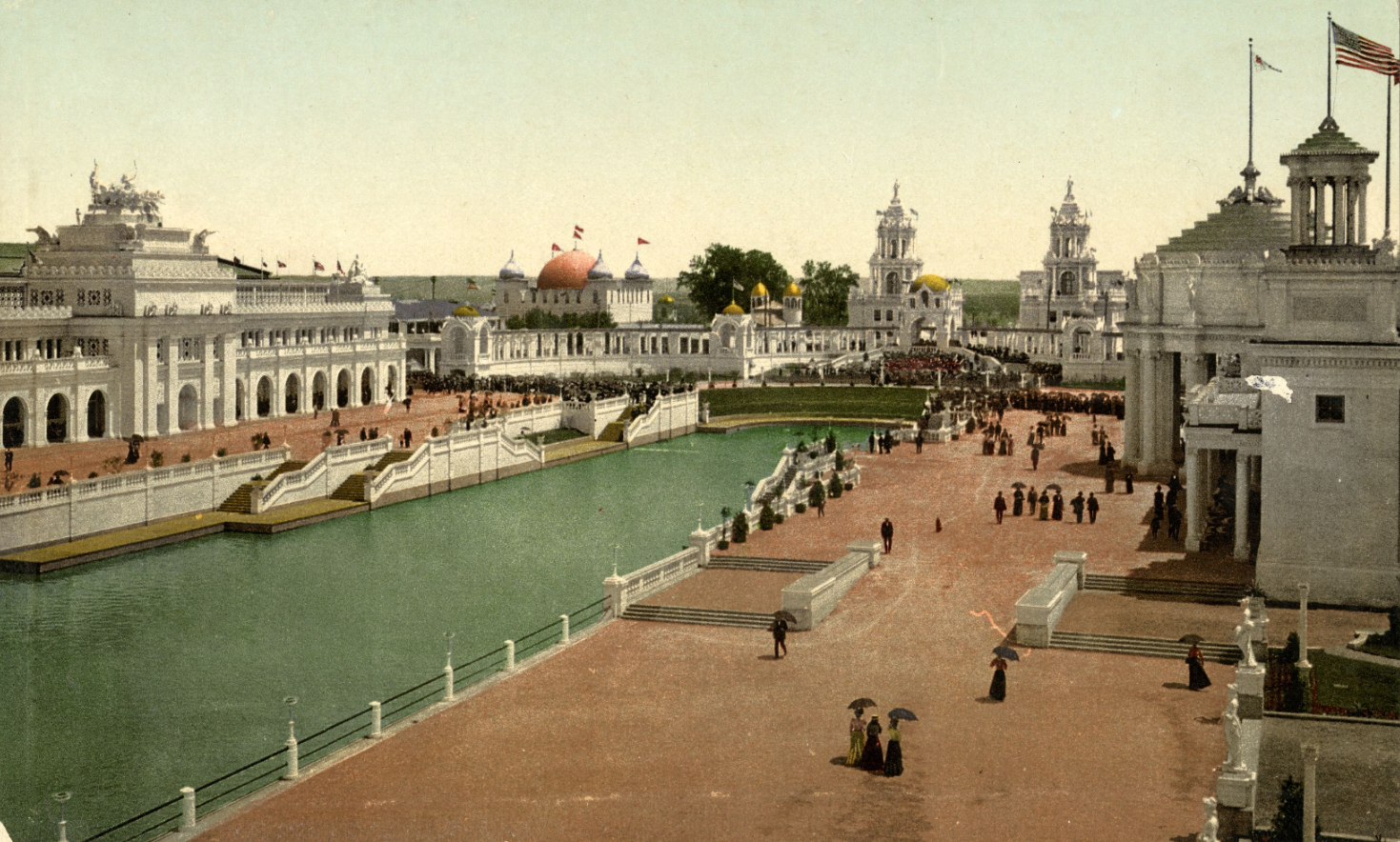
North Omaha’s Kountze Park holds a special place in Omaha history as the site of the city’s very own world’s fair.
The event followed the success of the Chicago World’s Fair leading a small committee of businessmen to pitch the idea of bringing a similar event to Omaha. Included in that group was the event’s president and chairman Gurdon Wattles, a businessman who moved to Omaha three years earlier and helped consolidate the various streetcar lines into the Omaha & Council Bluffs Street Railway. William Jennings Bryan, the former congressman, who unsuccessfully ran for president in 1896, was also a part of the committee.

After Congress agreed to Omaha as the site of the next world’s fair, it allocated more than $200,000 for the event. The 1898 Trans-Mississippi and International Exposition was designed to showcase the progress of the west in addition to countering the host city’s image as a gritty industrial town with that of a modern city with a growing economy.

The architects-in-chief were Thomas Rogers Kimball as well as C. Howard Walker of Massachusetts. Among Kimball’s other projects were the Omaha Public Library and Burlington Station. After considering sites including East Omaha and Miller Park, a 184-acre tract of land belonging to Herman Kountze, co-founder of what would become First National Bank of Omaha, was selected. The grounds stretched from Ames Avenue to Binney Street, and from 13th to 24th Streets.

The fair included 120 temporary structures that were designed and constructed at half the cost while resembling classical architecture inspired by Greece and Rome. The Arch of the States marked the entrance, and a domed building anchored the Grand Court, which overlooked a lagoon with gondolas that stretched more than 2,000 feet. Lit up at night, it also contained lush gardens, statues, and fountains. The Midway featured displays from around the globe including the “Streets of All Nations” with a Greek theater as well as Chinese, German, Flemish, and Moorish villages among others.

Starting in June and continuing through November, the fair included more than 4,000 exhibits featuring products, industries, sciences, arts, and design. Nebraska as well as other states including Iowa, Illinois, Wisconsin, Minnesota, and Kansas were represented. The fair also included entertainment in the form of carnival rides, a roller coaster and a giant seesaw. Other attractions included the Mexican National Band and John Philip Sousa’s band, wild animals, and an “encampment of Native Americans performing mock battles and traditional dances.” Restaurants and beer gardens were present including the Schlitz Pavilion operated by Fritz Mueller who, along with his sons, would go on to operate in similar fairs across the country. The band stand was the site of memorable performances while Buffalo Bill Cody brought his “Wild West Show” back to the city where it started in 1883. Due to the size of the crowds, he had to relocate the show two miles south.

Among its distinguished guests was President William McKinley who delivered a speech focused on international affairs. The fair also featured the Indian Congress that was represented by more than 35 Native American tribes and 500 participants including Geronimo, the largest such gathering, designed to display the progress of Indigenous people.
To help get some of the more than 2.6 million people to Omaha to partake in the event, Burlington Station opened that same year. It was considered a massive success for the city even if it lagged behind the scale and success of fairs in St. Louis and Chicago.

The city followed the Trans-Mississippi Exposition with the Greater America Exposition organized by its president Dr. George Miller, who also served as the president of the park commission, alongside Omaha Bee founder and editor Edward Rosewater. It was designed to celebrate the country’s new territorial gains as well as its military might following the signing of the Treaty of Paris. It was held on the same grounds and utilized many of the same buildings. The event only drew 845,000 people and was considered a failure despite its lofty predictions. The temporary buildings were torn down almost immediately afterward with a few being relocated.

The exposition was largely successful in achieving its goal to revive the economy of the region and helped bring prosperity back to the area in the years that followed. Left behind was the infrastructure including roads, electrical lines, sewers, and streetcar service. After the temporary buildings were dismantled, the land became Kountze Place (present-day E.R. Danner), a middle-class streetcar suburb. Kountze Park, meanwhile, was built on top of the former lagoon. It sat on land donated to the city with the stipulation that it forever be used as a park to honor the Kountze family. The park featured a lagoon, a popular site for fishing and ice skating, along with cricket fields and a pavilion.

Very few traces of the fair can be found today. Lauritzen Gardens contains a Storz bierstube that once sat at the family’s Blackstone mansion. Whether it is a holdover from the 1898 or 1899 exposition is disputed, and the structure has since been completely rebuilt. The Durham Museum’s permanent exhibit includes a large 3D model of the Grand Court and lagoon, along with souvenirs, buttons, books, and other items.

The site itself remains the home to Kountze Park. Located at 1920 Pinkney Street, the park is sliced in half by Florence Boulevard, once known as Omaha’s “prettiest mile.” The original pavilion was demolished, and the lagoon was filled in 1953. In their place, a new pavilion was built and tennis and basketball courts were added along with softball fields. Afterward, it was the place for some of the city’s best athletes to display their skills. Among them were future NFL players Gayle Sayers and Johnny Rodgers, as well as Bob Boozer who played in the NBA. Decades later, several remnants including parts of buildings from the fair were discovered in 1980 while the city excavated to install a new sewer.
Today, the park remains popular with its sports fields, pavilion, playground and spray ground. The park also holds two historical markers, one for Buffalo Bill and his Wild West Show and the other marking it as the site of the 1898 Trans-Mississippi Exposition. While the area around the grand but temporary structures has changed, it still serves as a reminder of when Omaha captured the world’s attention.
The article you just read was written by Omaha Exploration. If you enjoy what I do, consider signing up for email notifications on my website, where you’ll also find sources for this article and ways to support the project. Get out there and explore it for yourself!
Read OE on Grow Omaha: Local History by Omaha Exploration | Grow Omaha
More pictures

Omaha Exploration is sponsored by

Not just a mortgage broker, we’re your educator and guide through the loan process. Proudly local in Omaha, Nebraska, we personalize our service to your specific situation. We’re not here to sell, we’re here to solve your home loan needs. Give us a call and see how we can help! (402) 205-7618
Omaha Exploration, 2026. All rights reserved. Excerpts and links are welcome with full credit given to Omaha Exploration and a link back to the original content.
Sources
- https://en.wikipedia.org/wiki/Gurdon_Wattles
- https://en.wikipedia.org/wiki/Thomas_Rogers_Kimball
- https://en.wikipedia.org/wiki/William_Jennings_Bryan
- https://en.wikipedia.org/wiki/Trans-Mississippi_Exposition
- https://en.wikipedia.org/wiki/Indian_Congress
- https://northomahahistory.com/2019/05/18/a-history-of-the-trans-mississippi-and-international-exposition/
- https://northomahahistory.com/2015/10/09/a-history-of-omahas-greater-america-exposition-of-1899/
- https://northomahahistory.com/2017/05/01/a-history-of-malcolm-x-memorial-park-aka-kountze-park/
- https://trans-mississippi.unl.edu/
- https://plainshistory.org/items/show/46
- https://durhammuseum.org/exhibits-collections/permanent-exhibits/
- https://history.nebraska.gov/marker-monday-buffalo-bill-at-the-trans-mississippi-international-expo-indian-congress-of-1898/
- https://www.hmdb.org/m.asp?m=33018
- https://www.britannica.com/topic/Trans-Mississippi-and-International-Exposition
- Omaha World-Herald (Omaha, Nebraska), May 24, 1980: 1. NewsBank: Access World News – Historical and Current. https://infoweb.newsbank.com/apps/news/document-view?p=WORLDNEWS&docref=image/v2%3A1106B5BBD4B623A8%40EANX-NB-13A3C9B9D20C4593%402444384-13A3C54A363BDC71%400-13A3C54A363BDC71%40.
- Omaha World-Herald (Omaha, Nebraska), June 11, 1980: 4. NewsBank: Access World News – Historical and Current. https://infoweb.newsbank.com/apps/news/document-view?p=WORLDNEWS&docref=image/v2%3A1106B5BBD4B623A8%40EANX-NB-13897E28C755EA00%402444402-13808DD0F7204B6C%403-13808DD0F7204B6C%40.
- Hendee, David. “Miller was at the forefront of state’s early history.” Omaha World-Herald (NE), November 15, 2015: 11W. NewsBank: Access World News – Historical and Current. https://infoweb.newsbank.com/apps/news/document-view?p=WORLDNEWS&docref=news/159237EC2AD10388.
- “Reminisce on Kountze Park.” Omaha World-Herald (NE), November 5, 2023: 4E. NewsBank: Access World News – Historical and Current. https://infoweb.newsbank.com/apps/news/document-view?p=WORLDNEWS&docref=news/1951D9016F3F65E0.
Leave a Reply