

In the first two parts of our Joslyn series, we explored Joslyn Castle and the Joslyn Art Museum. To finish, we explore the Western Newspaper Union Building downtown. If you missed either one, you can find links to the stories below.
After George and Sarah Joslyn left Montreal they headed to Des Moines where he obtained work as a bookkeeper and printer for the Iowa Printing Company. Owned by a relative, the company supplied “ready-to-print” newspapers with pre-printed articles and advertisements to small town newspapers. Upon receipt, the local newspaper printed its local news on the other half of the paper.
George quickly established himself and just one year later in 1880 , they moved to Omaha where he had the responsibility of setting up branch office. First earning $18 per week as an office manager in charge of sales, he also worked on a commission basis.
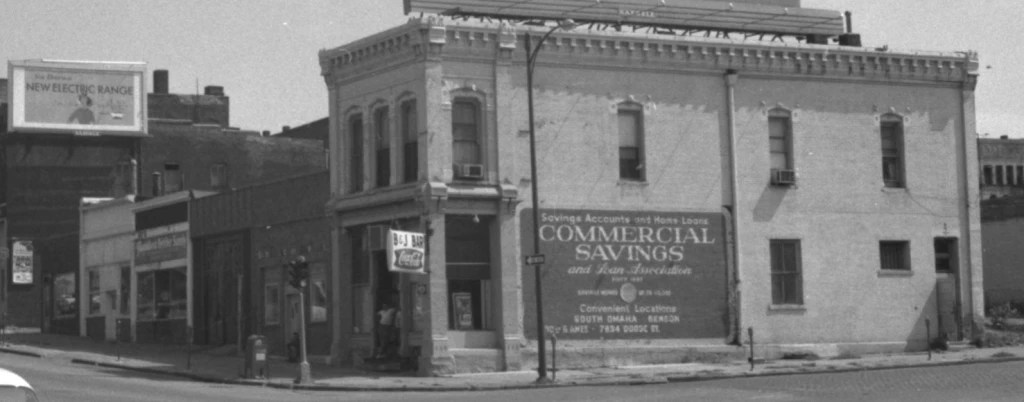
The company quickly grew as westward expansion resulted in the creation of small town’s across Nebraska. These towns established local newspapers that benefited from the service offered by the Iowa Printing Company. It’s likely that the company changed its name from Iowa Printing Company to the Western Newspaper Union (WNU) to establish itself as a larger regional company rather than a local one. In a corresponding move, George moved the Omaha branch from 523 S 13th Street to 1123 Howard Street in 1883.

Headquartered in Des Moines, the company had in fact grown to a large regional business by 1886 mostly through acquisitions. During the decade it had purchased newspaper unions in St. Paul, New York City, Dallas, Topeka, St. Louis and Chicago among others.
Trying to keep up with its growth, George moved the Omaha office yet again, this time to 511 S 12th Street. Two years later the company acquired the Great Western Type Foundry, a company that cast type and distributed printing supplies. George rose through the ranks and acquired wealth due his added responsibilities not to mention the revenue he received from operating the St. Charles and Metropolitan Hotels. He used much of that money to buy shares of WNU stock.

By 1890 he had acquired enough stock to gain a controlling interest in the company and embarked on an even more ambitious expansion plan. With WNU now under his control as its president and general manager, he relocated its headquarters to Chicago where he and Sarah moved for a time before returning to Omaha in 1896 – the same year they built Joslyn Castle. By the end of the next decade, WNU moved the Omaha office yet again, this time to 510 S 15th Street which it remained for the next 15 years.
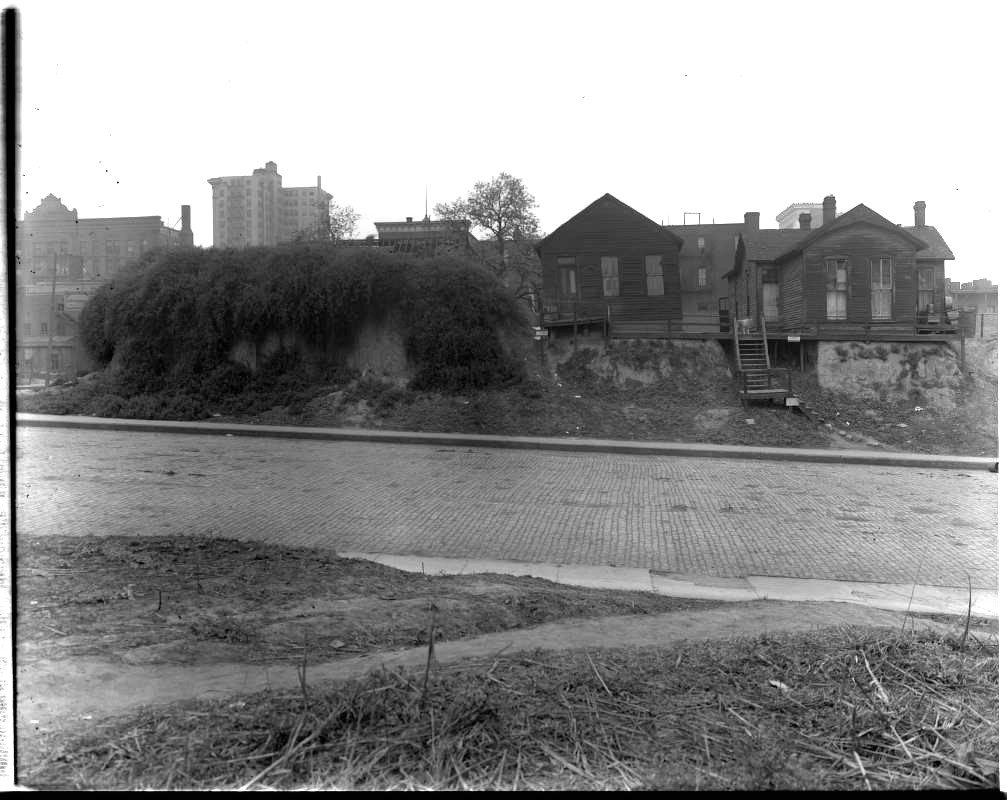


As a result of its aggressive growth, WNU became the largest supplier of “ready-to-print” newspapers in the country. By 1906 the company had acquired its primary competitor, the A. N. Kellogg Company of Chicago, establishing a virtual monopoly in the auxiliary printing business and the largest newspaper service in the world with plants and publication offices in 32 cities in addition to six exclusive plate foundries, the largest publication plant in Chicago, 17 wholesale paper houses and pulp and paper mills in northern Wisconsin.

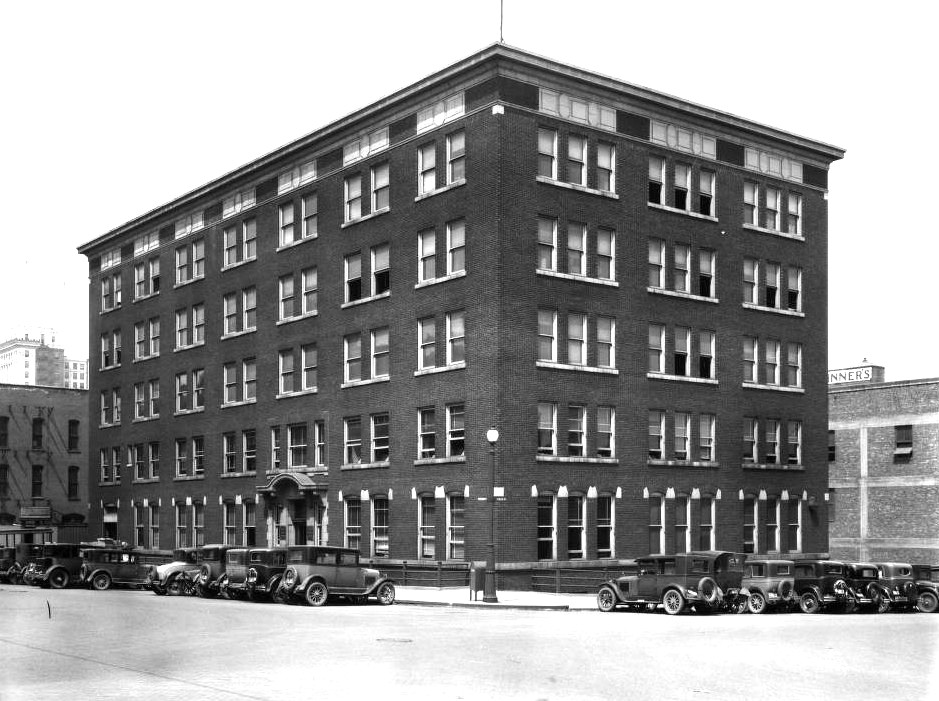
By 1915 the company had outgrown its Omaha branch office yet again. This time George hired architects John and Alan McDonald to design an impressive new building that would demonstrate its success. He selected a spot at the northeast corner of 15th and Jones Streets. He also hired the father and son architectural team to design their residence, Lynhurst, better known as Joslyn Castle. Sarah would later hire them to design the Joslyn Memorial (present day Joslyn Art Museum).
Designed in the Italian Renaissance style, the five-story red-brick building at 621 S 15th Street was embellished with a decorative cornice and etablatures. When it was finished, it was indeed considered one of the best and finest office buildings in Omaha.
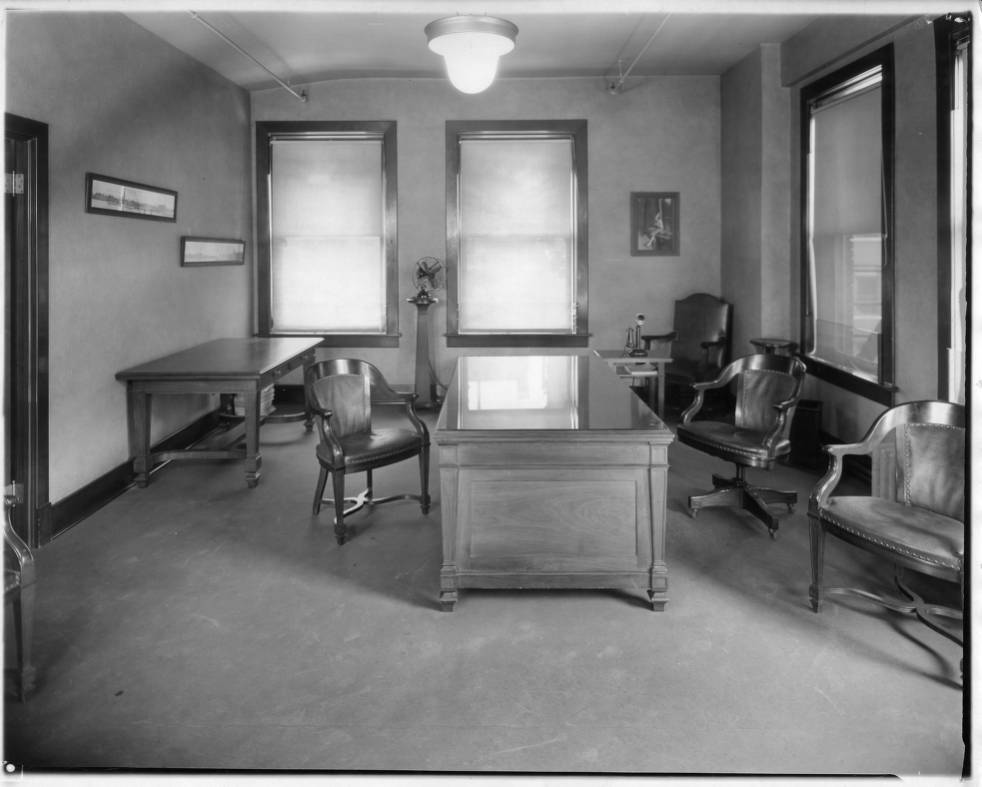
Apparently George had plans to build a skyscraper in Omaha that would replace its Chicago offices. This plan was never realized due to his untimely death just one year later at the age of 68. George was practically the sole owner of the company so following his death, Sarah sold it to its employees for $5M. She used the much of the money to pay for Joslyn Memorial in memory of her husband. She also used some of it to fund the Society for Liberal Arts which was tasked with operating the museum.

The Omaha office continued to operate after its headquarters moved to New York in 1930. In the following decades the “ready-to-print” business dwindled. By the time WNU ran its last order in 1952, the building was being utilized by the Western Paper Company, a sister company that George established in 1898. Western Paper was sold to Hammermill Paper Company in 1961. The building remained in use by the various paper companies until 1968. At that time, the downtown building went up for sale.

The oldest moving company in the country, Belkin Van & Storage, moved into the building after that and in 1998 it was renovated Bluestone Development and converted into the Joslyn Lofts. Today the 110-year old building contains 29 upscale units with with exposed brick walls, cherrywood floors, skylights, balconies and underground parking. It’s name continues to honor one of Omaha’s most iconic and philanthropic families.

Content written by Omaha Exploration – follow my page for more! Please also feel free to leave a comment. If there’s something you want to learn more about, let me know. In the meantime, keep exploring!


Interior photo courtesy of Joslyn Lofts via its Facebook page.
Omaha Exploration is sponsored by @Rockbrook Mortgage Inc.

Click here to learn about opportunities to sponsor Omaha Exploration!
More pictures



Follow OE on Facebook for more
Get an email when new content is posted
You might also like these posts

Sarah and George Joslyn’s Art Museum
Previously we explored George and Sarah’s residence, Lynhurst, which is commonly known as Joslyn Castle. Today we explore the monument that Sarah built for George. With her husband George being the wealthiest person in Nebraska, the Joslyn’s used their unparalleled wealth to support many local organizations. Among them were the Omaha Community Playhouse, Nebraska Humane…

Sarah and George Joslyn’s Castle
By the time George Joslyn passed away in 1916, he was the wealthiest man in Nebraska. Born in Massachusetts in 1848, he moved with his family to their farm in Vermont before working for his uncle’s clothing business, Rice Brothers Collar Manufacturers in Montreal, Quebec. By 1872 he married his cousin, Sarah Selleck which wasn’t…
Omaha Exploration, 2024. Unauthorized use and/or duplication of this material without express and written permission from this site’s author and/or owner is strictly prohibited. Excerpts and links can be used, if full and clear credit is given to Omaha Exploration with appropriate and specific direction to the original content.
Omaha Exploration proudly supports

Contact me to learn more about M4K!
 Omaha Exploration
Leave a comment