
Published February 9, 2025 | Updated May 15, 2026
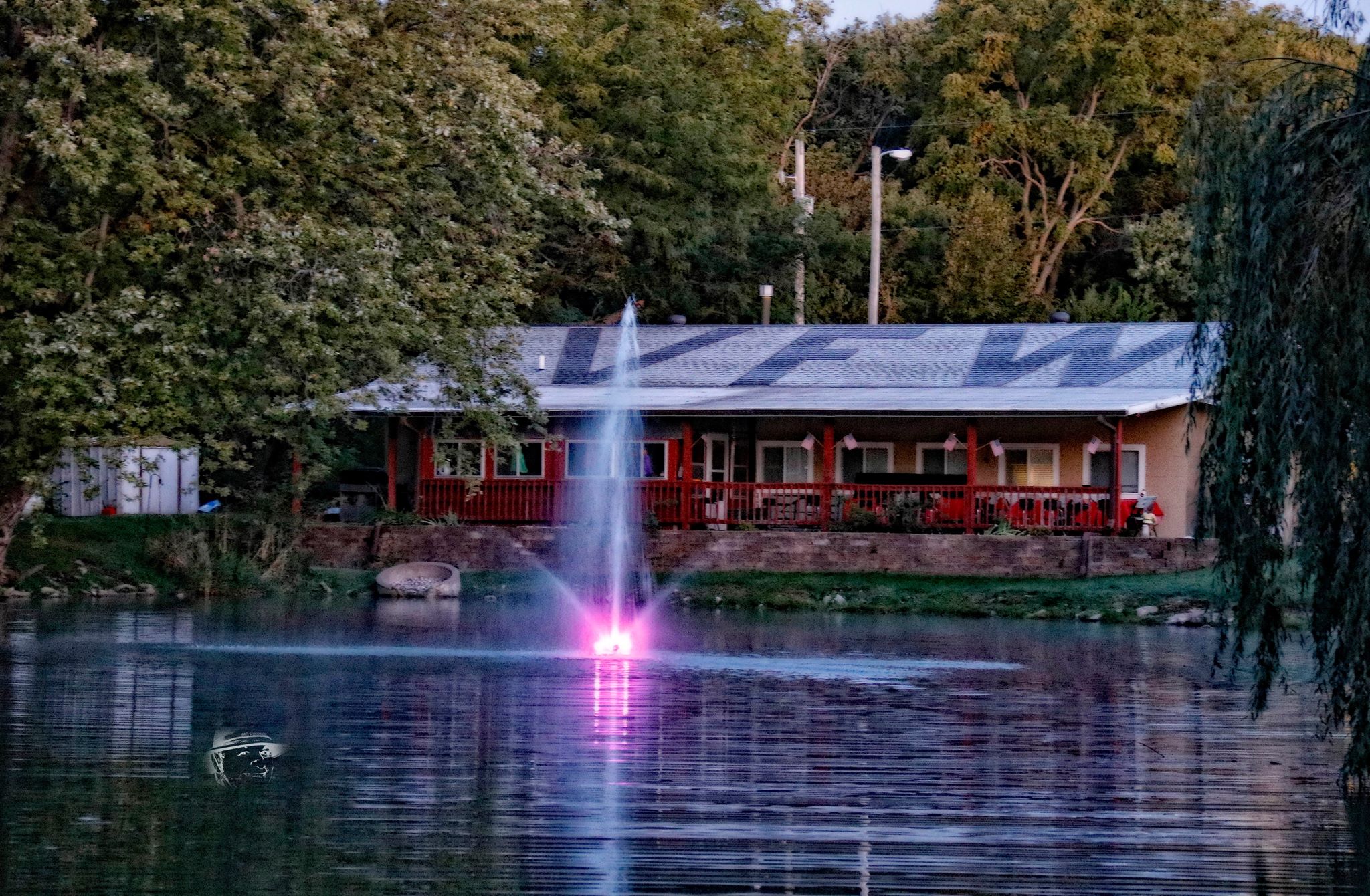
While perusing Google Maps as I often do when trying to find new things to explore, I stumbled on Gilmore Lake. I found its location and the building on its northern end intriguing and decided to dig in.

As it turns out, Gilmore Lake is named after a small railroad town that was established nearby when the Union Pacific Railroad installed tracks. Formed in 1869, the town, named after a railroad official, centered around the intersection of 25th and Gilmore Road. The railroad built a depot in 1885, making it the first station east of Papillion.
In addition to the depot, the area had a grain elevator and livestock pens. It was considered an important point for shipping grain and other commodities while allowing farmers to easily transport animals to South Omaha, where they could get top dollar for them.

Gilmore station was also the site of a tragic accident minutes before midnight on March 11, 1903, when the “Overland Limited” collided with Freight Train #27. The head-on collision resulted in six deaths.
While the railroad town was largely abandoned by 1908, people including Frank Bohac, a Bohemian immigrant, and his wife Mary continued to farm the land. The Bohacs settled the area around 1900 and eventually acquired the lake and much of the land surrounding it. The family continued to hand the property down to subsequent generations, who remained even after the train depot was removed in 1947.

With the help of her son, Leonard, Evelyn Bohac turned the farm into a recreation area after her husband, James Bohac, tragically passed away in 1958. In 1964, they also constructed a building at the northern end of the lake that served as the home to Gilmore Lake Tavern.

Leonard managed the tavern, which had an old nickelodeon and a resident German Shepherd, Krushchev, that howled whenever they played “Margie.” The tavern provided refreshments including sandwiches, pop, and beer for the people fishing on the lake. The lake, stocked with catfish and carp, was popular as it remained open 24 hours and didn’t require a fishing license. The Bohacs held competitions and awarded prizes to whoever had the largest catch on Sundays. They kept the enterprise going through the winter, opening the lake for ice skating after it froze over.
Meanwhile, the land surrounding the lake was used for trap shooting, motorcycle races, and mushroom hunting. The wooded area was a treasure trove of mushrooms, with Leonard once claiming that he found one that weighed 38 pounds and stood more than 18 inches growing out of a boxelder tree. He cooked it up and served it at the tavern.

Considered a Sarpy County landmark, the area was still far off of the beaten path in the 1960s, but that would change as the city encroached upon it. In 1985, Evelyn sold the Gilmore Lake Tavern, which took on the name Avery Tavern after it was relocated from its original location along Avery Road. Described as an old rogue bar, it was largely ignored until a housing development sprung up next door, requiring that patrons drive through the adjacent neighborhoods to get to it.
By this time, Avery Tavern developed a reputation as a go-go joint that attracted sketchy clientele. Those living nearby began to complain about the heavy traffic, speeding, accidents, noise, fights, and littering. Avery Tavern was raided by deputy sheriffs in 1989 as a result of the complaints. The raid resulted in the arrest of 14 people, including five dancers. The tavern shut down after its liquor license was revoked. Evelyn repossessed the tavern and, with the help of her son, turned it back into a neighborhood bar that resembled what had been, with activities including fishing and horseshoes. Leonard once again managed the bar until 1999, when it was sold to VFW Post 10727. The last of the Bohacs in the area of Gilmore Lake, Evelyn passed away in 1991 and Leonard in 2018.

Today, the lake and the land that surrounds it are likely the only remaining connection to the former railroad town. They now serve as a place of recreation for vets. The lake is primarily used for fishing, and the land serves as a memorial honoring Prisoners of War as well as those who are Missing in Action.

Content written by Omaha Exploration – follow my page for more! Please also feel free to leave a comment. If there’s something you want to learn more about, let me know. In the meantime, keep exploring!
Omaha Exploration is sponsored by @Rockbrook Mortgage Inc.

Click here to learn about opportunities to sponsor Omaha Exploration!
More pictures


Follow OE on Facebook for more
Get an email when new content is posted
Omaha Exploration, 2024. Unauthorized use and/or duplication of this material without express and written permission from this site’s author and/or owner is strictly prohibited. Excerpts and links can be used, if full and clear credit is given to Omaha Exploration with appropriate and specific direction to the original content.
Omaha Exploration proudly supports

Contact me to learn more about M4K!


Leave a Reply