
Published January 31, 2025 | Updated July 28, 2026
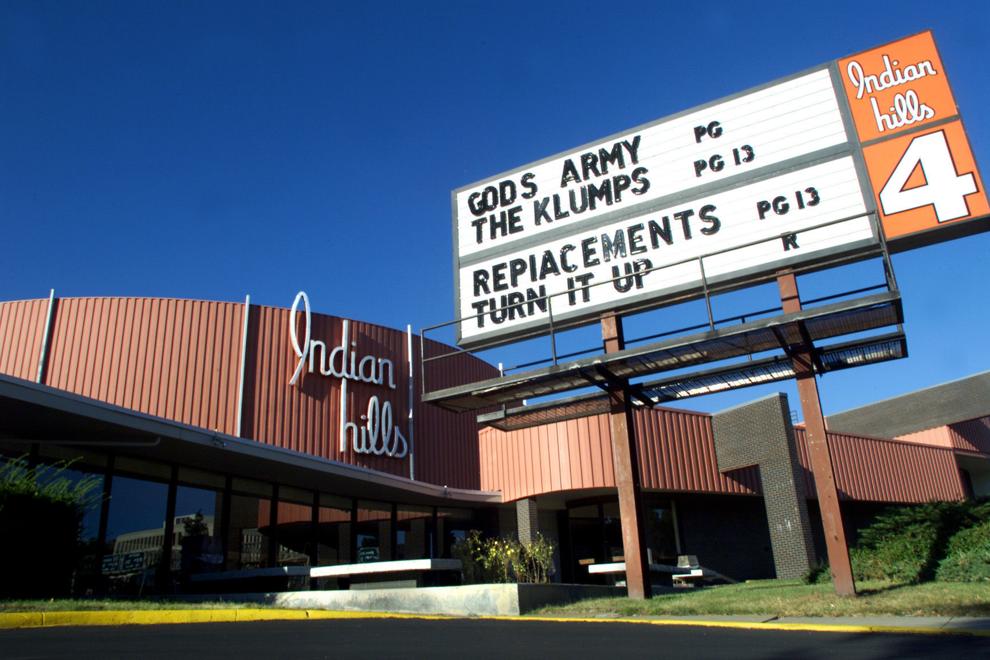
Created out of a former golf course, the mid-century Indian Hills neighborhood in central Omaha had its namesake movie theater open its doors in 1962. Both the neighborhood and the theater were owned by Swanson Enterprises, the same family that invented the TV dinner.
The theater was located at 8601 W. Dodge Road, just west of the Indian Hills Inn, which was owned by another famous Omaha family, the Schimmels, who owned the Blackstone Hotel (present-day Cottonwood Hotel) as well as the Cornhusker Hotel in Lincoln, among others.

Indian Hills was the largest of 200 theaters to showcase films in the Cinerama wide-screen format, designed by architect Richard L. Crowther, a Fellow of the American Institute of Architects. While smaller than the theater in Omaha, those in Denver and Minneapolis were nearly identical.

The theater was thoughtfully designed to improve the movie-going experience from its shape to its roof. Circular in shape, the interior auditorium had a screen with a 146-degree curve and stretched from the floor to the ceiling and measured 35 feet high, 110 feet wide. The auditorium was large enough to seat 810 moviegoers, with 662 on the main floor and 148 in the balcony. The exterior base of the building consisted of black bricks, with the upper portion formed of burnt orange monopanels, a color scheme that was repeated on the inside.

When it first opened, moviegoers had to call in advance to reserve seats. Upon arrival, a doorman would open the lobby door, at which point you would pick up your tickets from the box office and be led to your seats by a tuxedo-clad usher armed with a flashlight. Concession options were limited to an orange drink as well as imported candies, as refreshments were not permitted inside the theater in those days.

As the lights dimmed, the curtains would be pulled back, revealing the massive, curved screen. The multi-channel sound and screen created a three-dimensional experience. At intermission, patrons would gather at one of its four lounges or the outdoor patio with fireplace that was separated from the lobby with a glass wall.

Indian Hills was the first enclosed movie theater to open in Omaha since the Center Theater in 1946. Operated by the Cooper Foundation of Lincoln, its first showing was The Wonderful World of the Brothers Grimm on December 21, 1962. It only showed Cinerama-format films until 1964, with its last being How the West Was Won. After that, the theater played first-run films using a single projector in the 70mm or 35mm format.
In 1978, the smaller Cameo Theater was built to the east of the main theater, the result of a national trend toward twin theaters. Seating about 300, it shared the same lobby with the main theater. Indian Hills expanded further in 1987 when two additional 200-seat theaters were built on the west side of the building. The addition was connected by a corridor in the main lobby.

The theater changed hands over the years but remained popular in its central location. Over time, however, competition increased, particularly as residents continued to move west and new theaters opened closer to home. It was underperforming by the time its then-owner, Carmike Theaters, filed for Chapter 11 bankruptcy protection from its creditors. At that point, it was granted permission to cancel its lease on Indian Hills as well as some of its other theaters. They eventually sold it and the adjacent office complex to Methodist Health Systems, which had its hospital nearby.

When news broke that it would be demolished, local residents, members of the Hollywood elite, and even the National Trust for Historic Preservation attempted to prevent it. Those efforts failed, and the theater was ultimately demolished in 2001. Some of its contents were given to Larry Karstens of an investment group that had attempted to lease the theater before it was razed. Other items were donated to various theater and arts groups, including the Rose Blumkin Performing Arts Center.

Gone for nearly 25 years now, the Indian Hills Theater lives on in the memories of those who got to experience its unique circular design and extraordinarily large screen, which, according to Los Angeles filmmaker David Strohmaier, embodied the culmination of Cinerama design and technology, a story that dated back to the 1939 New York World’s Fair, where the format made its debut.

Content written by Omaha Exploration – follow my page for more! Please also feel free to leave a comment. If there’s something you want to learn more about, let me know. In the meantime, keep exploring!
Omaha Exploration is sponsored by @Rockbrook Mortgage Inc.

Click here to learn about opportunities to sponsor Omaha Exploration!
More pictures

Follow OE on Facebook for more
Get an email when new content is posted
Omaha Exploration, 2024. Unauthorized use and/or duplication of this material without express and written permission from this site’s author and/or owner is strictly prohibited. Excerpts and links can be used, if full and clear credit is given to Omaha Exploration with appropriate and specific direction to the original content.
Omaha Exploration proudly supports

Contact me to learn more about M4K!

Leave a Reply