
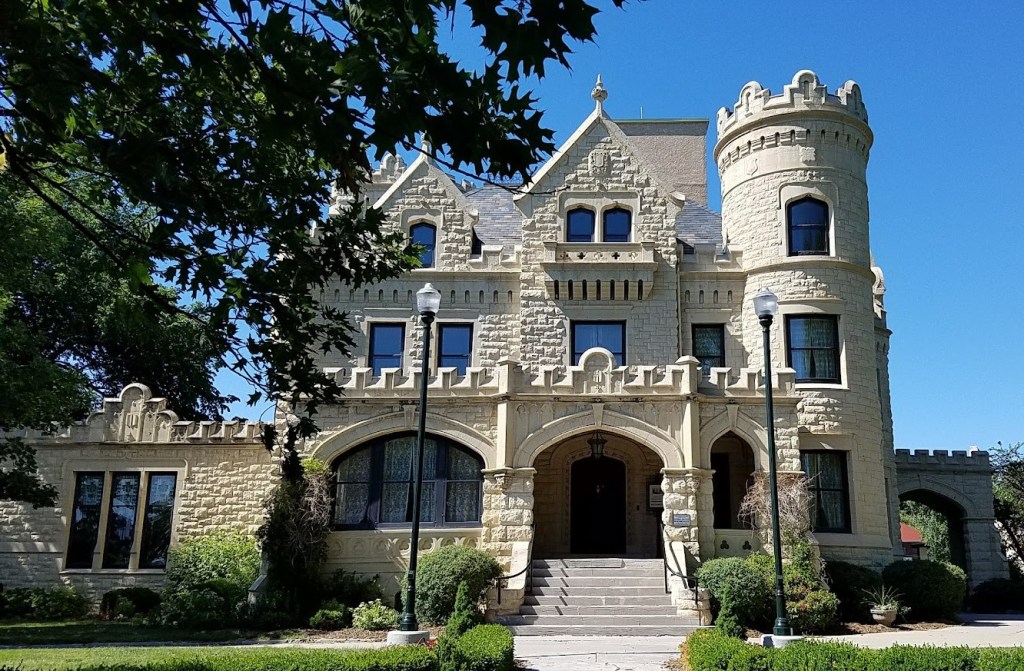
By the time George Joslyn passed away in 1916, he was the wealthiest man in Nebraska. Born in Massachusetts in 1848, he moved with his family to their farm in Vermont before working for his uncle’s clothing business, Rice Brothers Collar Manufacturers in Montreal, Quebec. By 1872 he married his cousin, Sarah Selleck which wasn’t altogether unusual at the time especially in rural farming communities like the one that they were from. Described as a strong-minded, no-nonsense woman with a dry wit and an adventurous spirit, the two were married in 1872.
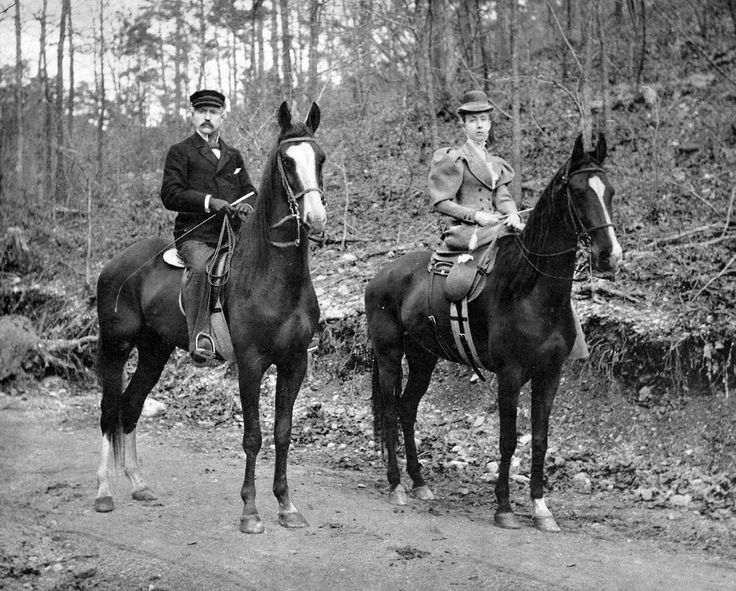
By 1879 he had left the clothing business and headed west once the transcontinental railroad was completed. The couple landed in Des Moines where he obtained a job as a printer and bookkeeper for another relative’s business, the Iowa Printing Company. The company supplied “read-to-print” articles and advertisements to small town newspapers.
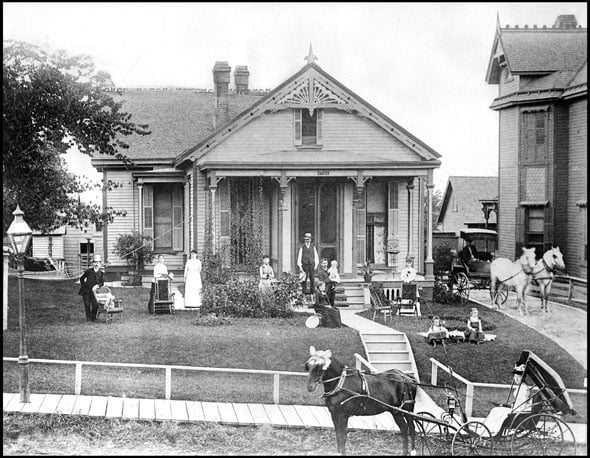
The Joslyn’s moved to Omaha just one year later in 1880 where George had the responsibility of setting up a branch office for the same company. At that point he began to accumulate stock in the company. He quickly rose through the ranks of Iowa Printing which was renamed as the Western Newspaper Union.

George built the company into the largest supplier of “ready to print” newspapers – essentially sheets of paper that were pre-printed with general news and features on one side and then shipped to 7,500 small-town newspapers. Once received, editors printed local news on the other side of the paper. By the 1900’s, Western Newspaper Union’s pre-printed newspapers reached over 70% of the population.

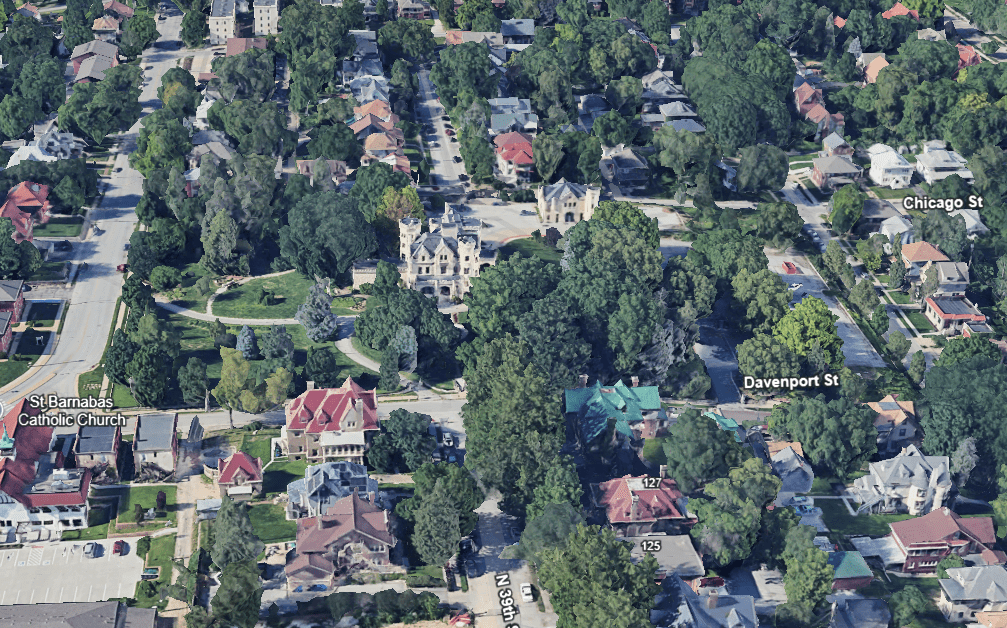
When the Joslyn’s moved to Omaha in 1880 the census shows them living at 523 S 13th Street. This site is the patio for Nicola’s Wine & Italian Fare at 13th and Jackson Streets. They also lived at 2522 Davenport Street as well as 2111 Emmet Street. While riding on horseback on the western outskirts of the city, the couple discovered the breathtaking views from Dewitt Sutphen’s farm at what is now 39th and Davenport Streets. Perched atop a hill, the five-acre tract of land was located just west of the Gold Coast neighborhood and north of Blackstone. With cornfields on one side, the property provided unobstructed views of downtown to the southeast. The farmland had a large farmhouse, barn, windmill and pond when they acquired the property in 1893.

The Joslyn’s lived in the Sutphen house for six years while developing the rest of the property which started with the landscaping. They loved flowers and were committed to creating an arboretum and eventually planted more than 100 varieties of trees, shrubs, flowers and plants – some of which were rare – on the property in addition to installing greenhouses. They also incorporated a rock garden, grotto and swimming pool which had its water spill under a limestone bridge and flowed into a lily pond. The grounds were completed by 1899.

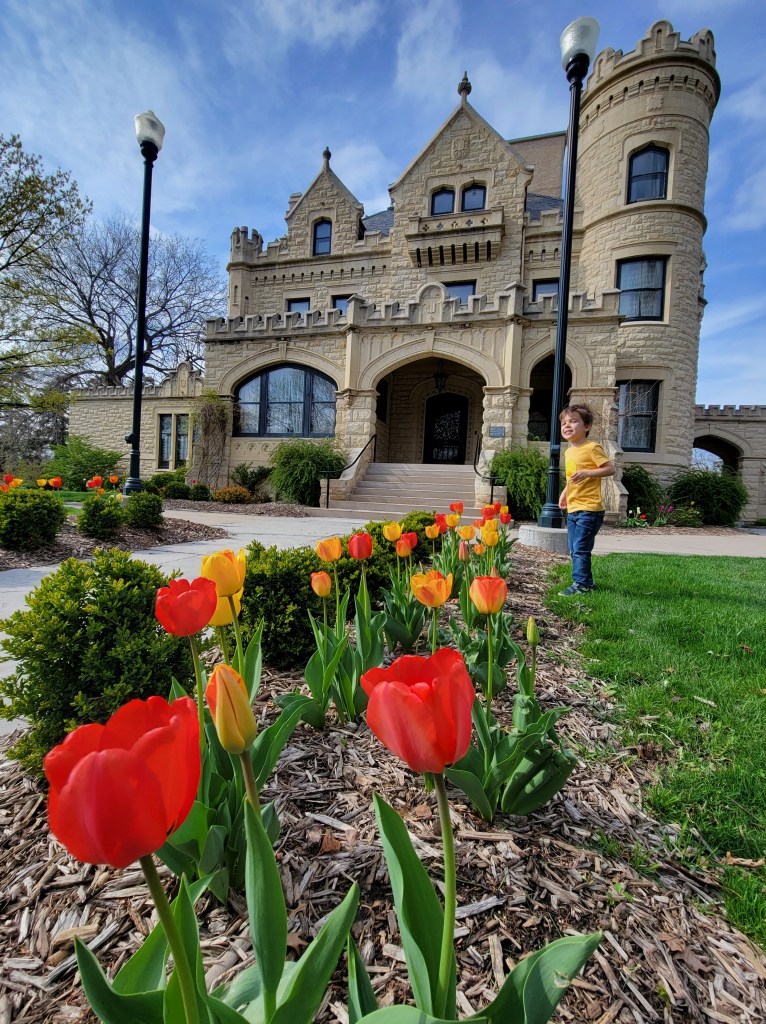
George moved the old Sutphen house in 1896 so construction on the castle which they called Lynhurst could begin. They hired close friend, John McDonald, and his son Alan, to design the 35-room Scottish Baronial mansion. They chose the style in order to convey an air of old money and sophistication that would align with their status which was brought about by its newfound wealth. I read that it was inspired by the Chicago home of railroad tycoon Jay Gould, Lyndhurst.

It took 100 men 11 months to complete the $250,000 (about $8.5M today) residence. Completed in 1903, they moved into the four-story castle – a moniker that George hated. It was constructed with Kansas limestone on the exterior while the interior featured carved wood, stained glass, chiseled stone, mosaic tiles and wrought iron. The interior decorations cost another $50,000 with most of the furniture obtained at the 1893 Chicago’s World’s Fair and the 1904 St. Louis World’s Fair.

The home featured a large reception hall that opened to adjoining rooms with pocket doors and a sweeping 2 1/2 story mahogany staircase that led to a third-floor ballroom that they used twice for the intended purpose. Interestingly the hall included marble fountains that their dogs quenched their thirst. The house also had a library, drawing room, as well as a game room for playing billiards, cards, smoking as well as a gymnasium, two-lane bowling alley and mechanical bull.

Lynhurst also included telephones, central heating, gas, electricity, a refrigeration room, and indoor plumbing with bathrooms for each bedroom – one with an elaborate shower. The property included a gardener/gatekeeper house, carriage house, greenhouse, green house, stable, cow barn and a private electric plant.

Shortly after its completion, George got into a dispute over new tax legislation in 1904 and said they were leaving Omaha. At the time he said the new house was of no concern and that they would tear it down and ship its furnishing to their new residence in Saratoga Springs, NY. The Joslyn’s proceeded to board up the castle and let their livestock grace on the once immaculate lawn. It seems they never intended to leave permanently though as work continued on the mansion which wasn’t fully completed. They returned after the state legislature changed its position. In 1907 they added a stone addition to the house for a music room that included a pipe organ. By that time the total square footage of the house was 19,630.

The grounds, greenhouse, small lake and the bridge were all destroyed as a result of the Easter tornado of 1913. Even though the twister missed the residence itself, the Joslyn’s were so disheartened by the damage to the outbuildings and the gardens that they considered moving. It was the announcement that their daughter Violet was engaged that they decided to stay. They opted not to rebuild the greenhouse which contained one of the nation’s best orchid collections. Instead, they donated what remained of it and the orchids to Hanscom Park. They later hired one of America’s leading landscape architects, Jens Jensen, to design the conservatory with curved glass panels, rock walls, a small pool and fountain inside the house.

After George passed away in 1916, Sarah continued to live on the 5 1/2-acre estate and eventually reduced the staff from 25 to three. When asked once why she stayed in Omaha rather than move somewhere else like California, she said “The money was made in Omaha and it will be spent in Omaha.” When she passed away in 1940, the grounds were overgrown and unkept.

George and Sarah often discussed what to do with their home after their death but never reached a firm conclusion. Her will left the castle as a part of the estate going to the Joslyn Memorial which she built in 1931 in honor of her late husband. The Joslyn Liberal Arts Society managed the property for the next four years.

In 1944 the castle was donated to the city and served as the headquarters to Omaha Public Schools’ administrative offices. The gardeners house was torn down in 1949 as vandals kept breaking in. It served in that capacity until 1989 when the offices were moved to the former Technical High School. During those years, the school district kept changes to a minimum. Changes included the installation of a modern central heating and cooling system, elevator, restrooms and walls in the ballroom for office space.
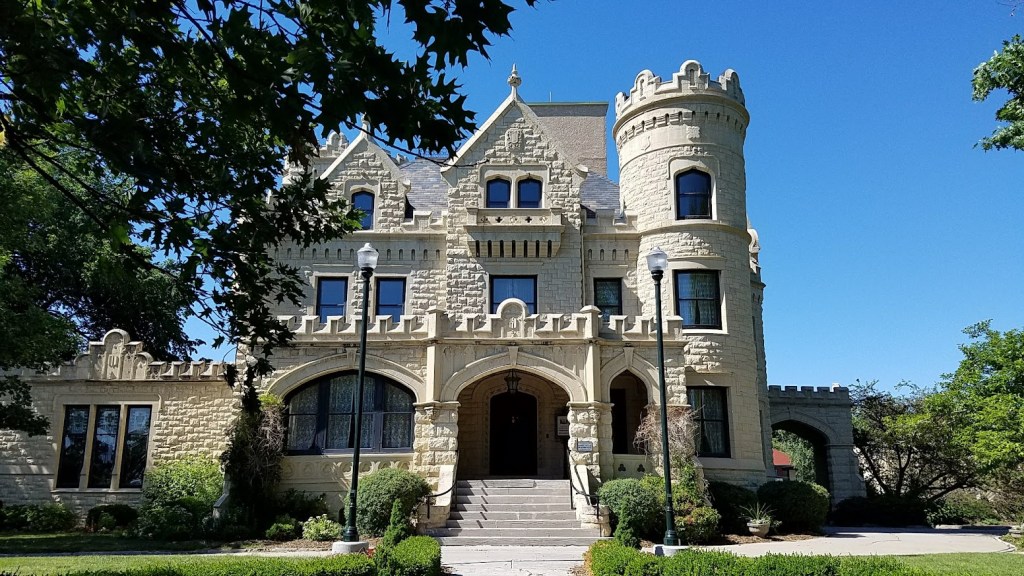
The economics caused the school district to raze the gatekeeper’s house, cow barn, rock garden and bridge, while covering the pond and pool. The conservatory was turned into office space and the parking lot was added on the east side of the property. They later built the annex building that included offices, meeting rooms and a cafeteria. By 1989 the school district outgrew the building which also proved too costly for continued use. Ownership of the castle, which was added to the National Register of Historic Places in 1972, was transferred to the State of Nebraska. During that time, they rented out the castle for meetings, conventions, weddings while also conducting public tours.

In 2010 the Joslyn Castle & Gardens purchased the property and began the process of restoring the residence, grounds and gardens to their original grandeur – an effort that continues to this day. That same year they discovered long forgotten furniture and artifacts that had been hidden in storage at Joslyn Art Museum since Sarah passed away 70 years earlier. The furniture included tables, chairs, music stand, floor lamp, loveseat, phonograph, music box and steamer trunk.

It remains one of Omaha’s oldest and largest surviving private estates. It is available for tours and hosts numerous events throughout the year including a summer fete and is available for events and weddings. The grounds are also open to the public and was a favorite place for my son to play hide-n-seek.
In future posts, we’ll explore the building that was the home to the Western Newspaper Union, the Joslyn Memorial which later became the Joslyn Art Museum in addition to some of their philanthropic endeavors.
Have you been to Joslyn Castle? If so, what are some of your favorite memories or experiences? I’d like to hear what you have to say so feel free to leave a comment. Until next time, keep exploring!
Content written by Omaha Exploration – follow my page for more!
More pictures


Follow OE on Facebook for more
Get an email when new content is posted
Click here to learn about opportunities to sponsor Omaha Exploration!
Omaha Exploration, 2024. Unauthorized use and/or duplication of this material without express and written permission from this site’s author and/or owner is strictly prohibited. Excerpts and links can be used, if full and clear credit is given to Omaha Exploration with appropriate and specific direction to the original content.
Omaha Exploration proudly supports

Contact me to learn more about M4K!
 Omaha Exploration
Leave a comment