

Sometime back, I explored the history of baseball in Omaha starting with Vinton Street Park, College World Series, Werner Park and Charles Schwab Field. Today we will explore Omaha’s iconic Rosenblatt Stadium in more detail.
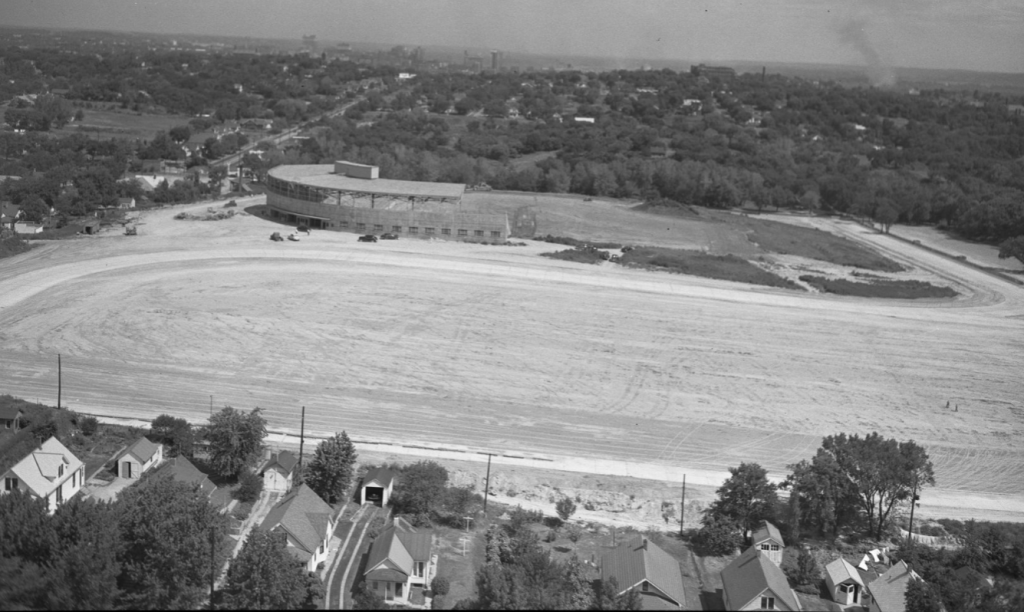
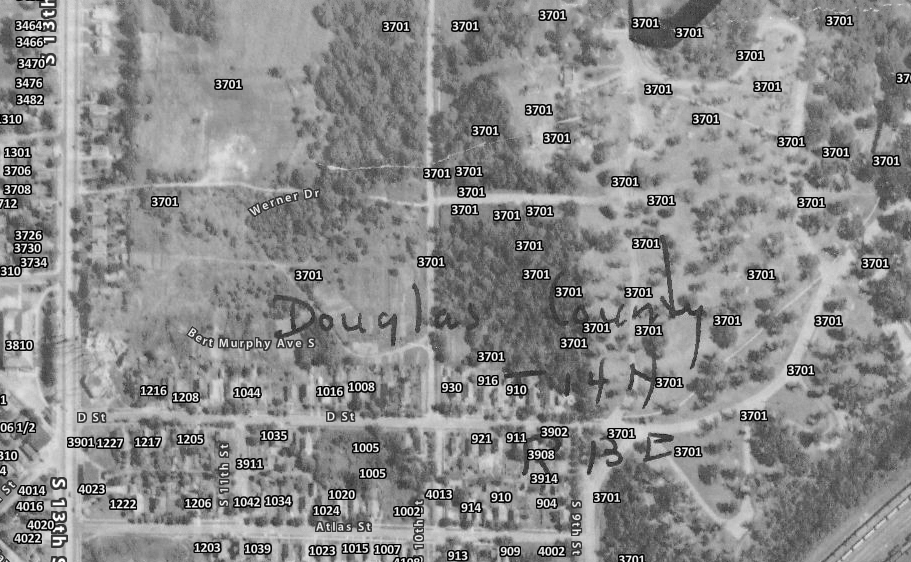
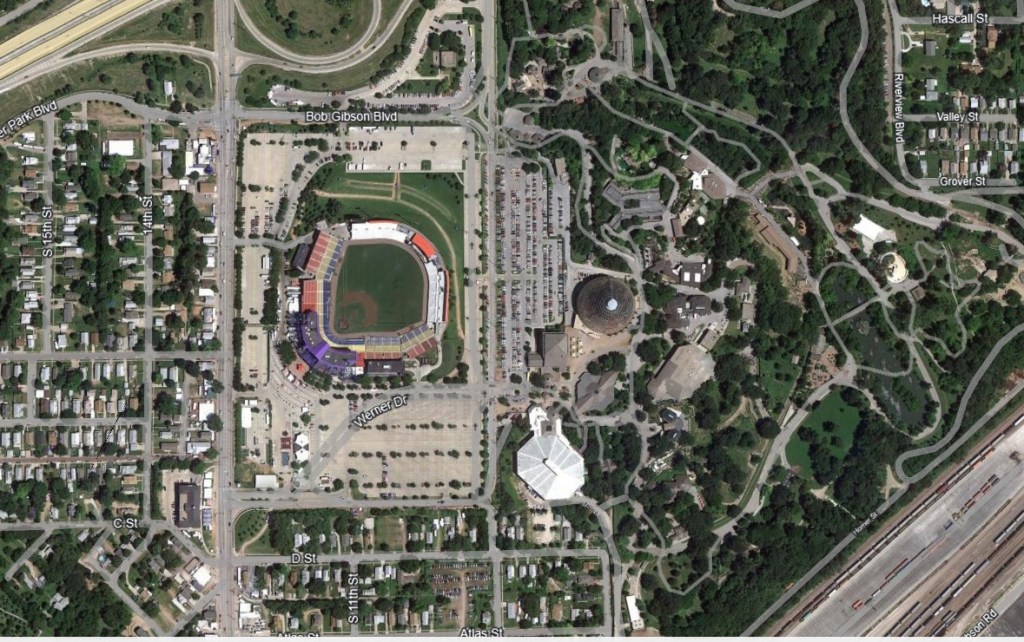
After Vinton Street Park was destroyed due to a fire in 1936, there had been talk of building a replacement, but World War II delayed those plans. The opportunity finally presented itself in 1945 after voters approved the $480,000 bond issue. Some of the options included Aksarben on 67th and Center which and Fontenelle Park on 42nd and Ames Avenue. City officials ultimately decided on a 40-acre site on Deer Park Boulevard between 10th and 13th Streets – just a half mile south of the old ballpark. The site sat atop of a hill that overlooked Riverview Park (current day Henry Doorly Zoo) and cost just $17.
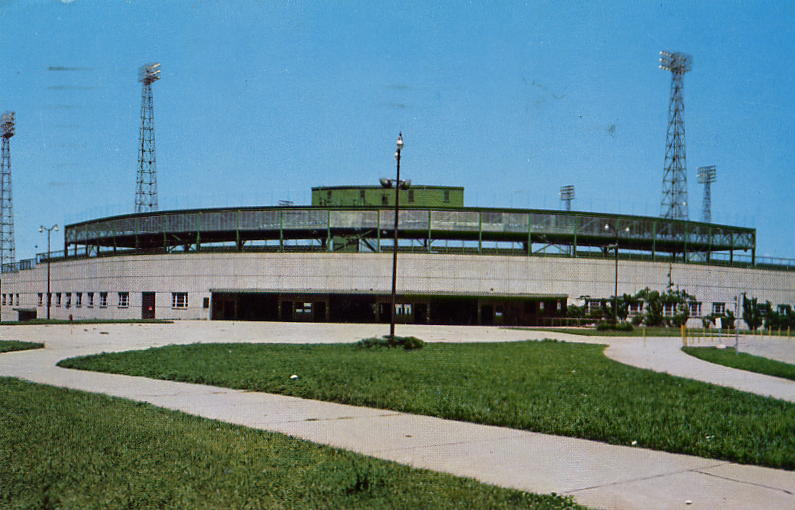
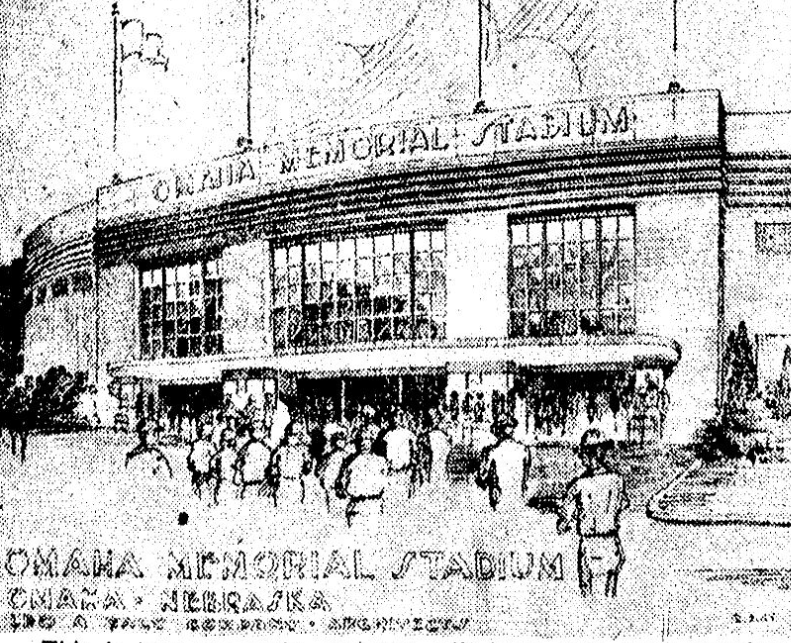
The original plans for Omaha Municipal Park called for a light gray brick facade with large windows above the entrances and seats for 13,483 spectators. The brick was ultimately deemed to be too expensive so less expensive concrete was used instead. Before construction was completed, a second bond of $290,000 was needed.
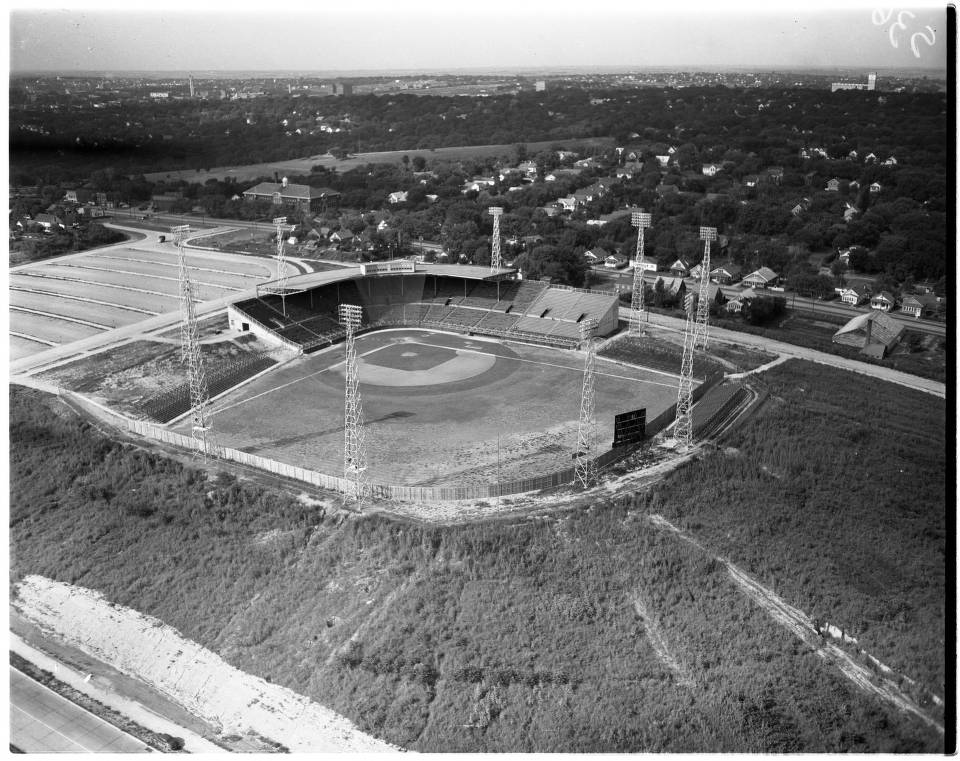
The inaugural event was a game between an all-star team that included Nebraska native and future Major League Baseball Hall of Famer Richie Ashburn against a team representing Storz Brewery. To no one’s surprise, the all stars won the game 11-3. The stadium also hosted an exhibition football game between the New York Giants and Los Angeles Rams in 1949.
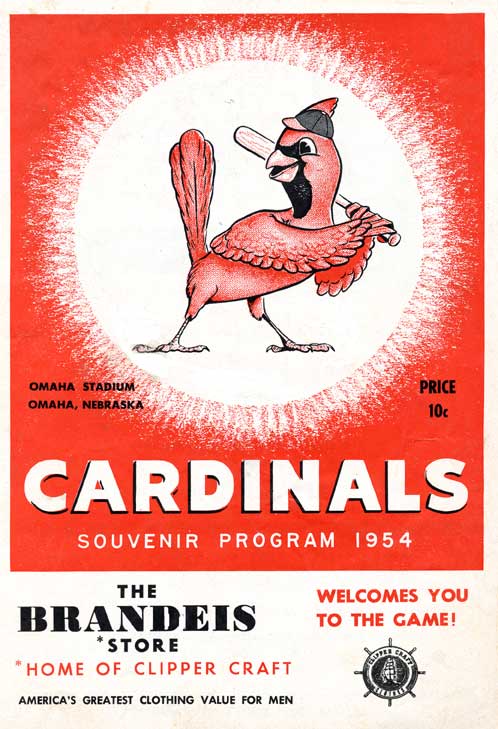
The primary purpose of the stadium was to attract a Minor League Baseball team to Omaha. Then City Commissioner Johnny Rosenblatt and his partners were successful in doing just that when the St. Louis Cardinals agreed to locate its Class-A affiliate in Omaha starting with the 1949 season.
The group also saw an opportunity for the new stadium to host the College World Series which was in search of a permanent home after playing its first three tournaments in Kalamazoo, MI and Wichita, KS. Meanwhile the Cardinals replaced Columbus, OH with Omaha as the home to its Triple-A affiliate starting in 1955. Around that same time, Zesto’s Drive-In which would become synonymous with the stadium as well as the CWS opened just south of the stadium on 13th Street.
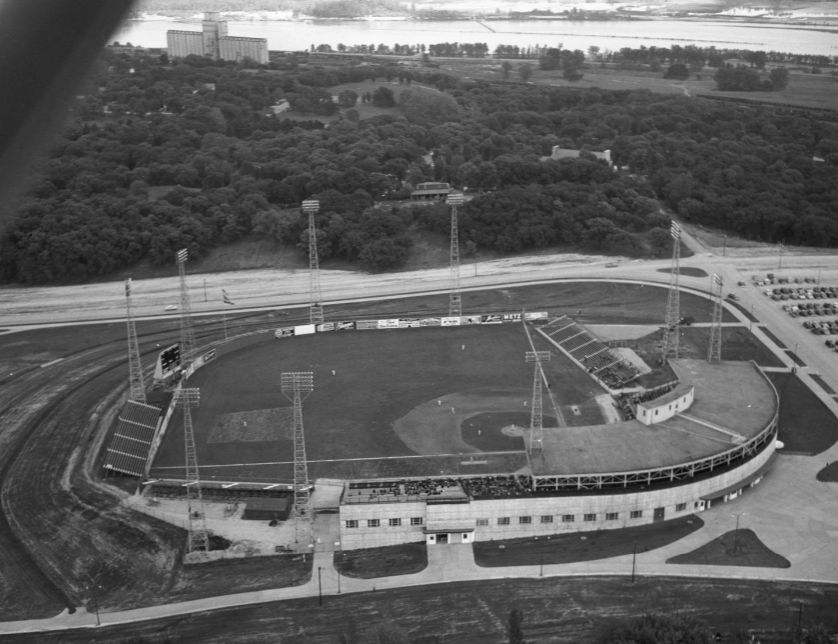
Omaha’s affiliation with the Cardinals came to an end after the 1959 season. While the stadium continued to play host to the CWS, it remained without a professional team for two years until the Los Angeles Dodgers brought its Triple-A team to Omaha for the 1961 and 1962 seasons. Once the Dodgers left town, Omaha was once again without a minor league baseball team.
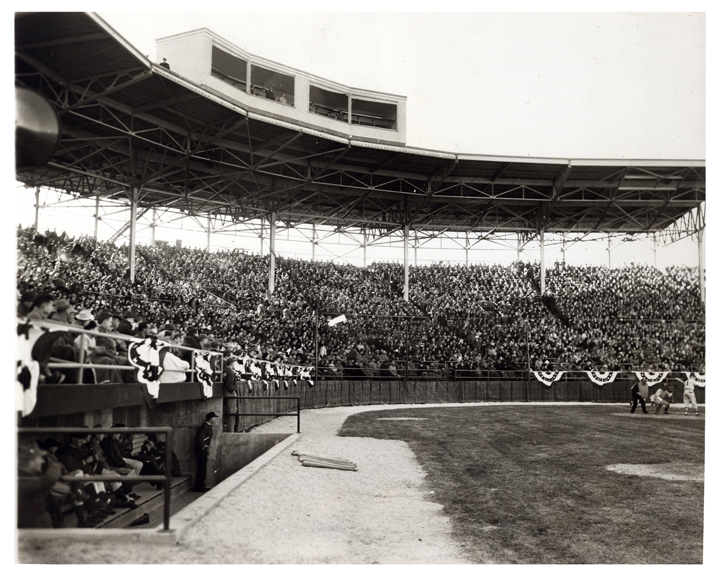
Only after Johnny Rosenblatt served as the mayor from 1954-1961 did the city decide to name that stadium after him in 1964. The honor was bestowed upon Johnny as he led the effort to not only build the stadium but to also bring professional baseball to Omaha in addition to the CWS. While the annual college tournament struggled financially early on and failed to turn a profit for 10 of its first 12 years, the gamble paid off as it would become a massive hit in Omaha. Interestingly, Johnny also served on a committee that reviewed the possibility of a downtown stadium in 1963 – decades before the NCAA would force the move.

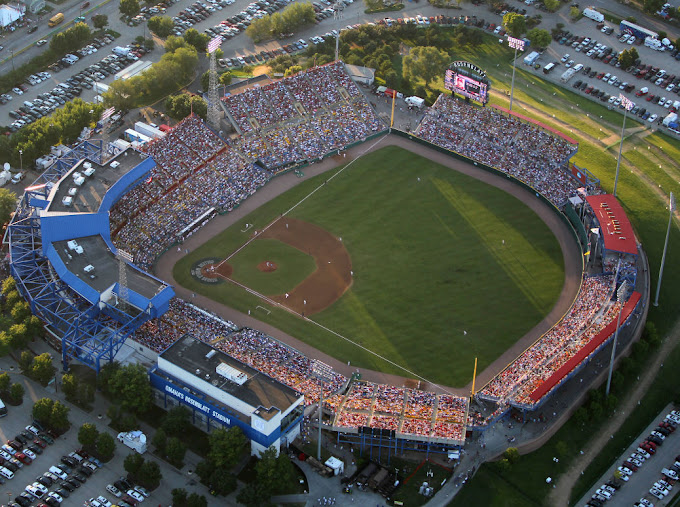
After Major League Baseball added the Kansas City Royals expansion team for the 1969 season, minor league baseball returned as Rosenblatt became home to the Omaha Royals, the Royals Triple-A affiliate. As the CWS grew in popularity, however, it caused issues for Royals as its continual expansion made it more and more difficult to fill the cavernous park that would become the largest non-MLB stadium in the country with a capacity over 23,000. It also required that the Omaha Royals make extended road trips while the tournament was underway.
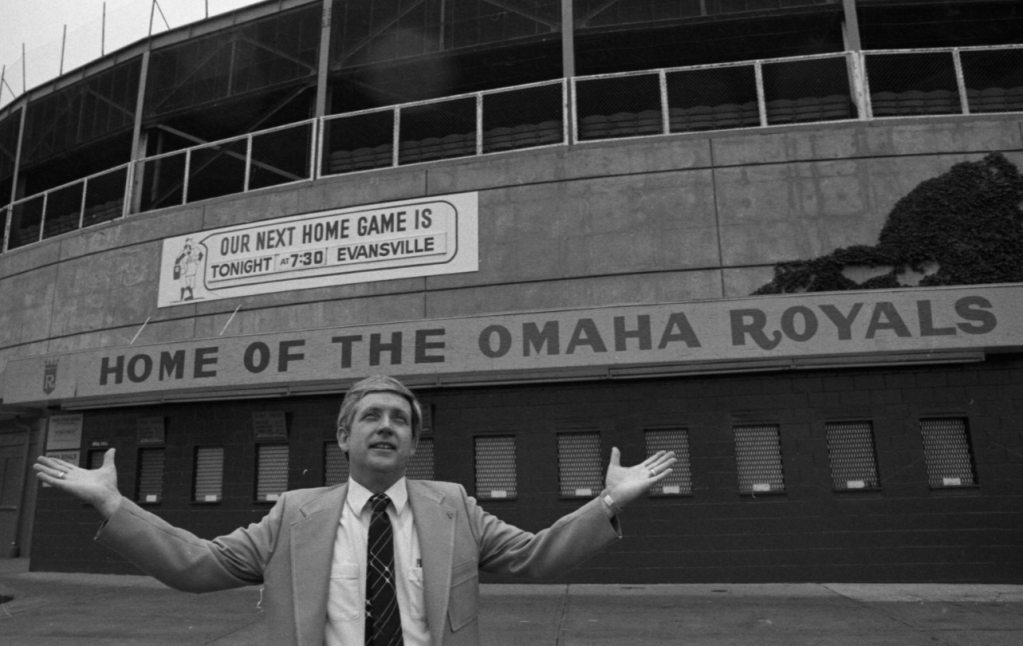
These issues caused the Omaha Royals to consider building a new, smaller stadium that would be shared with Creighton University and the University of Nebraska at Omaha as far back as 2003. Despite Omaha spending $35M to refurbish and upgrade Rosenblatt over the years, it became clear that the NCAA preferred a new downtown stadium for one of its premier events. For all its history, Rosenblatt had its drawbacks that included aging facilities, obstructed views, narrow concourses, limited parking and a lack of nearby amenities.
A grassroots effort to save Rosenblatt started in 2007 and even featured actor and avid college baseball fan Kevin Costner and gathered more than 17,000 signatures. After five months of deliberation, the city relented, fearful that they would lose the event that resulted in $90M impact to the local economy not to mention the prestige and advertising that came from having the city mentioned all over ESPN broadcasts over a two-week time period.
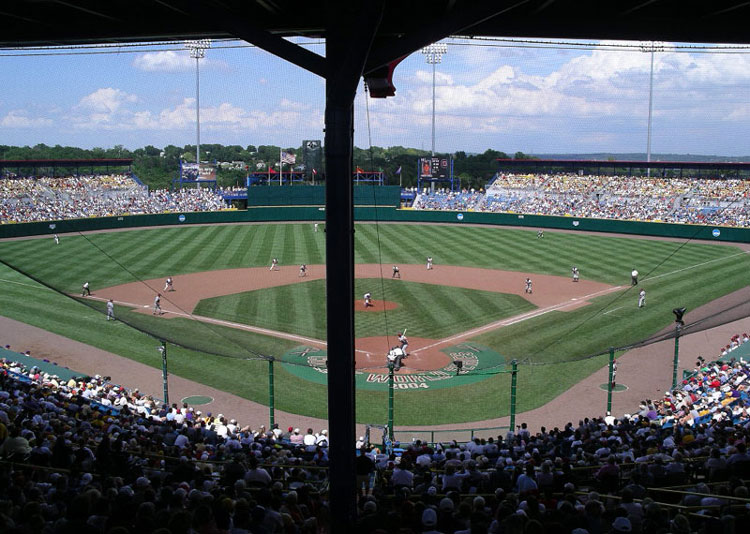
In 2009 NCAA agreed to a new 25-year contract with Omaha with the understanding that the city would build a new downtown stadium by 2011. That spelled the beginning of the end for Rosenblatt which was older than all MLB stadiums other than Wrigley Field in Chicago and Fenway Park in Boston.
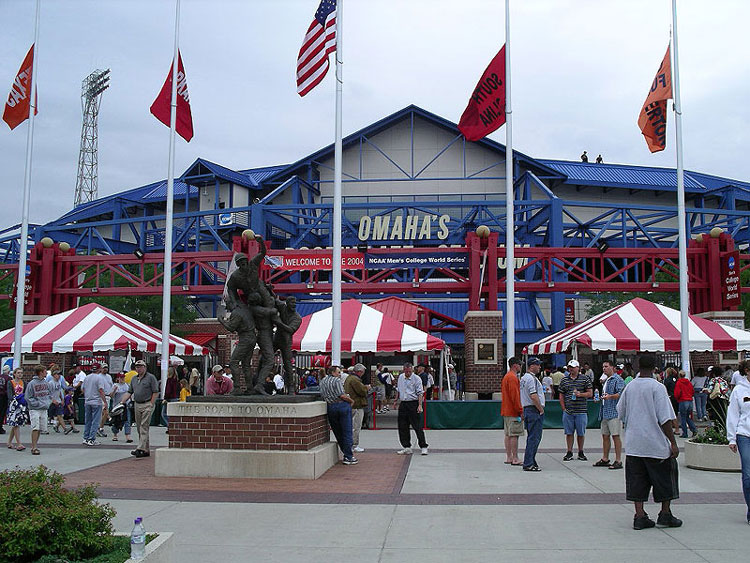
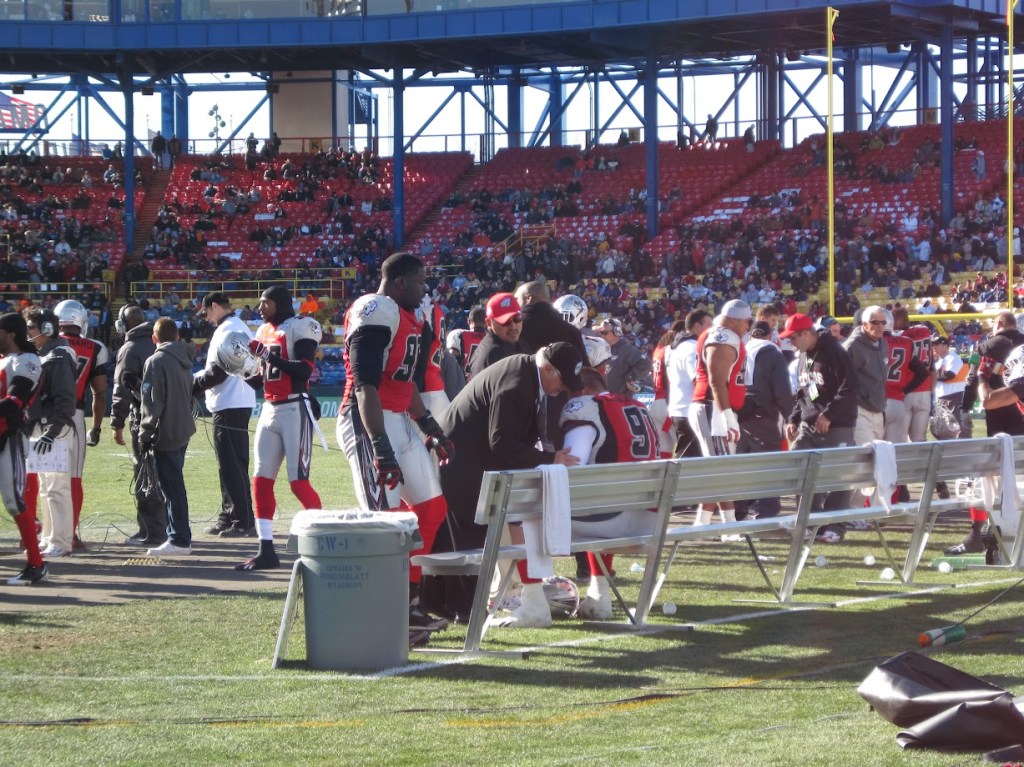
During its final season, the “Diamond on the Hill” served as the home to Omaha Royals, CWS and the Omaha Nighthawks of the United Football League. The stadium was also the site of the football championship that season.
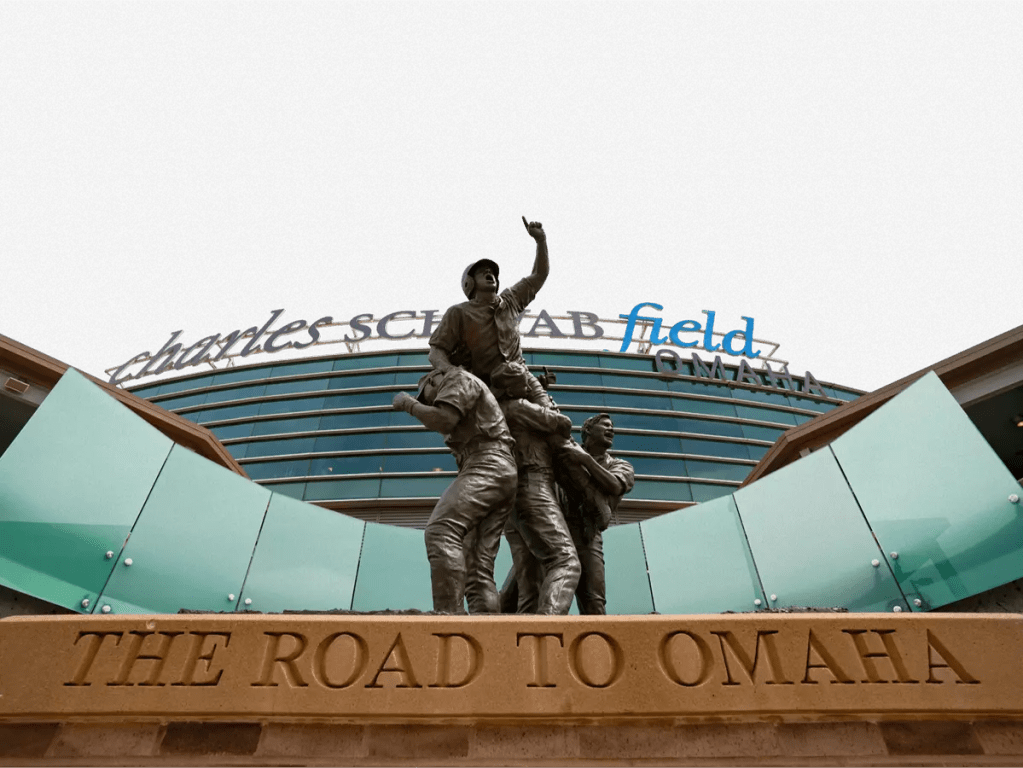
The Omaha Royals ended up building its own smaller, family-friendly stadium in Sarpy County and became the Omaha Storm Chasers. The CWS, meanwhile, moved to the $140M Charles Schwab Field at 10th and Cuming Street in North Downtown near the CHI Health Center. The stadium which hosted a Major League game between the Kansas City Royals and Detroit Tigers in 2019 is also home to the Creighton University Bluejays and the Big Ten Baseball Tournament.
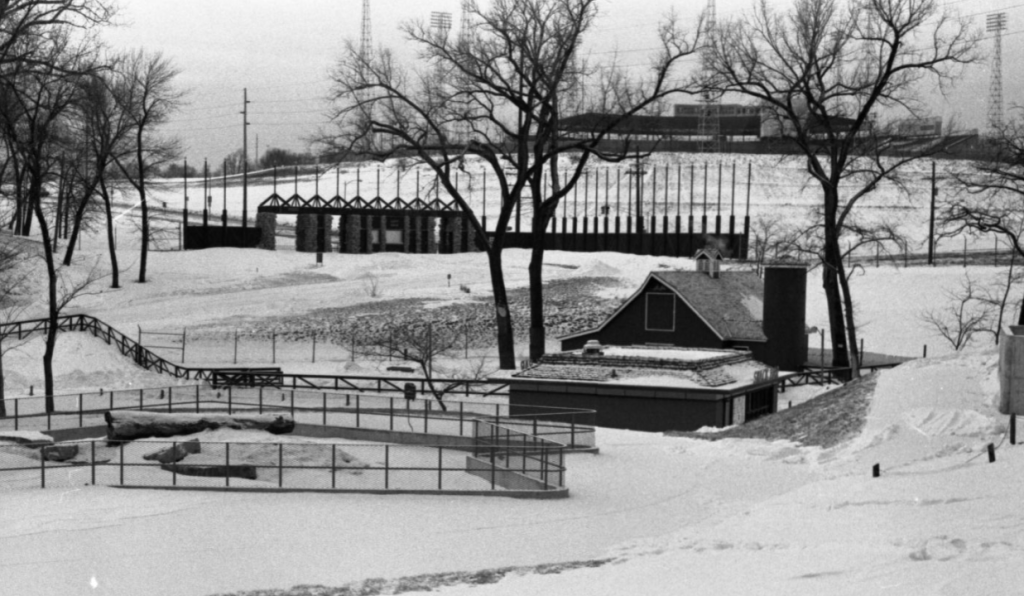
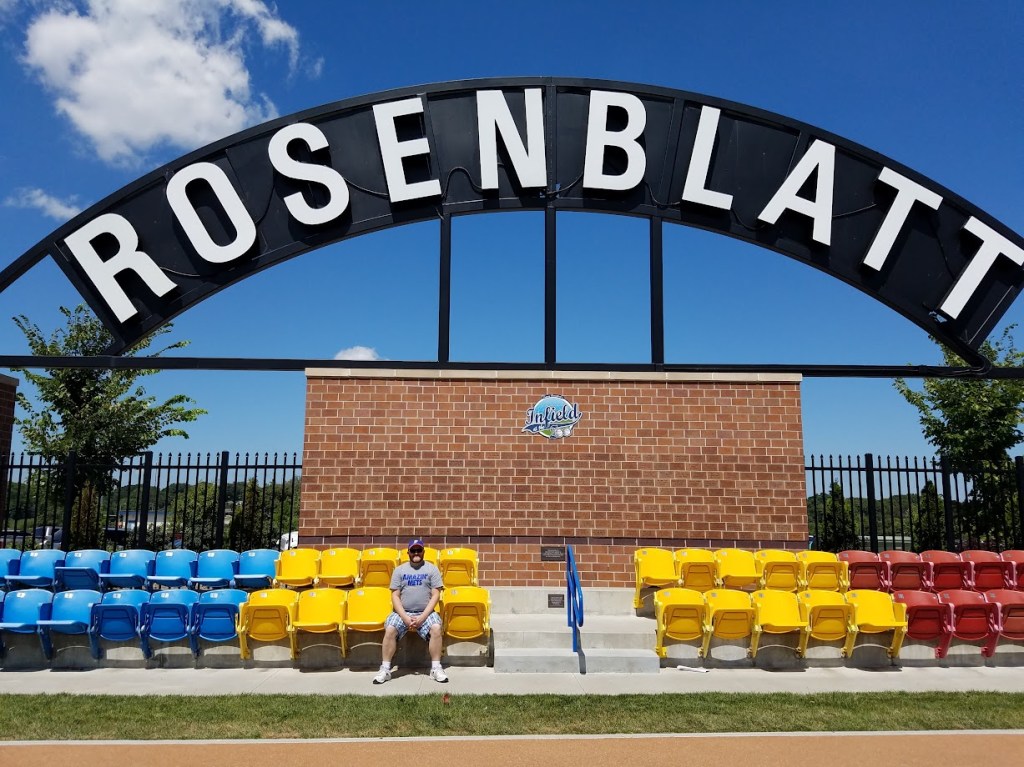
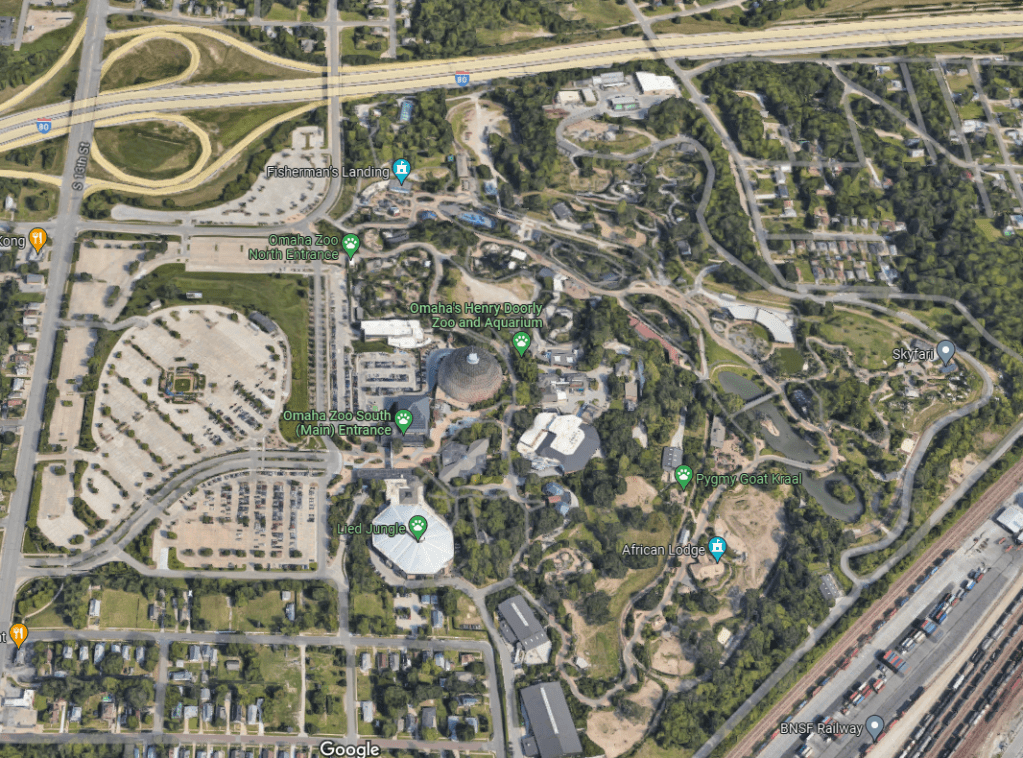
Omaha’s Henry Doorly Zoo purchased the land on which Rosenblatt once sat for the previous 64 years for $12M. The stadium was demolished in 2012 allowing the zoo to use the grounds for additional parking. To pay tribute to its longtime neighbor, they built a little league version of the ballpark called Johnny Rosenblatt’s Infield at the Zoo.
Some of baseball’s best players including the aforementioned Richie Ashburn, Omaha native Bob Gibson, Satchel Paige, George Brett, Dave Winfield, Mike Schmidt, Barry Bonds, Roger Clemens, Rafael Palmeiro, and Barry Larkin and so many others played at Rosenblatt during its existence. The old stadium will always be remembered for the epic games, beach balls, countless rounds of the wave, the spectacular fireworks displays, dingerville, vendors lined along 13th Street, homeowners using their lawns for parking in order to make a buck and the numerous concerts performed by the likes of The Beach Boys, The Police, Santana and others.
What are some of your memories at Rosenblatt Stadium? I’d like to hear what you have to say so feel free to leave a comment. Until next time, keep exploring!
Content written by Omaha Exploration – follow my page for more!
More pictures
Content written by Omaha Exploration – follow my page for more!
Click here to learn about opportunities to sponsor Omaha Exploration!
Omaha Exploration, 2024. Unauthorized use and/or duplication of this material without express and written permission from this site’s author and/or owner is strictly prohibited. Excerpts and links can be used, if full and clear credit is given to Omaha Exploration with appropriate and specific direction to the original content.
Omaha Exploration proudly supports

Contact me to learn more about M4K!


 Omaha Exploration
Leave a reply to Omaha Exploration Cancel reply