Published September 9, 2024 | Updated July 25, 2026
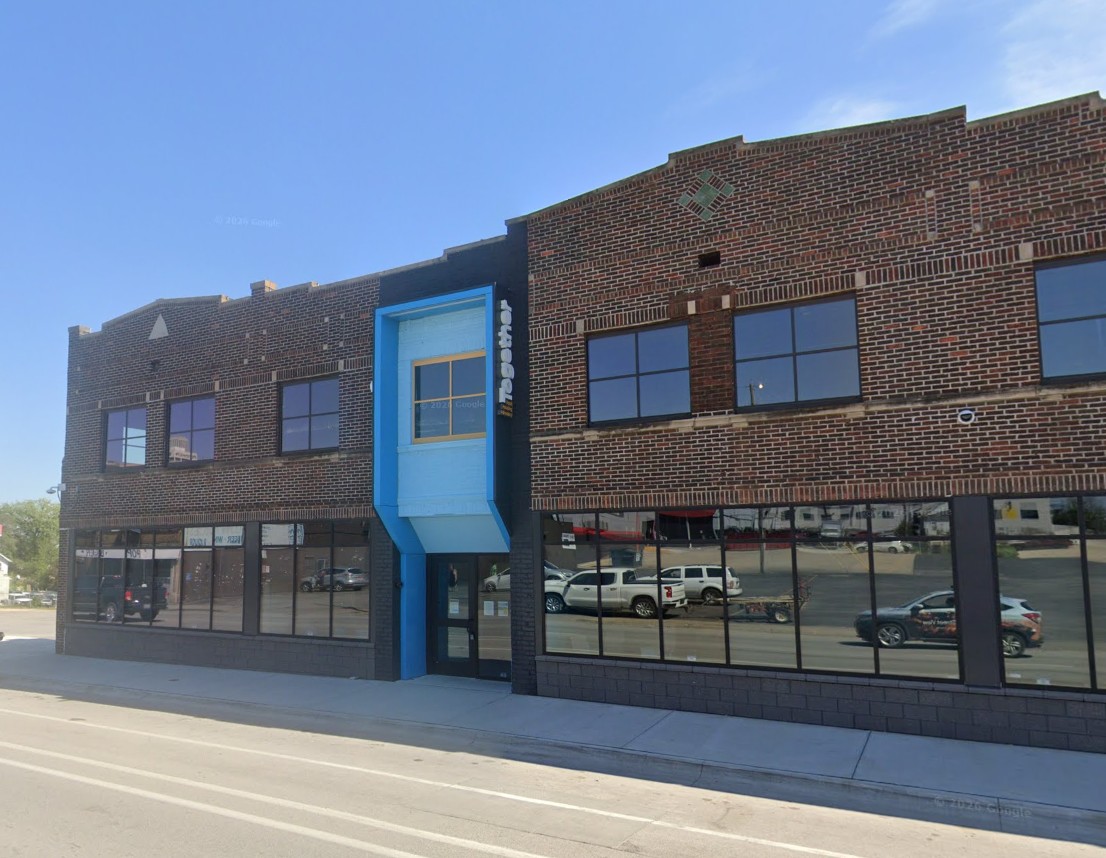
Long before the popular breakfast spot 11-Worth Cafe opened its doors, it was home to the Sewing Machine Exchange. Constructed in 1910, it continued to serve in that capacity through the 1920’s.
The business rented, repaired, purchased and sold sewing machines. After it closed, Ed McCoy opened his market which offered fresh meats and homemade sausage. It then spent a couple of years as a wallpaper and paint store called Anderson-Dorance Company. The revolving door continued with Lanphier Electric Company opening in 1937 followed by Interstate Body Works in 1943.

2419 Leavenworth found new life as Garrotto Pool Hall in 1949. By 1953 Fred (Turk) Abboud renamed it as Turk’s Billiards. Turk’s operation was notorious and was repeatedly busted for gambling and bookmaking. It became Omaha’s best known bookie joint and after multiple arrests resulting in its phones being removed. By 1961 the operation was being run by Joe Digilio who also had a reputation for being one of Omaha’s most arrested bookies. Joe was evicted in 1961 and more reputable businesses occupied the building throughout the rest of the decade including Midwest Roofing Company and Guyett’s Auction.
The adjacent store at 2417 had been the home to restaurants since at least the 1940’s. Some of them included Your Cafe, Rainbow Cafe, Terry’s Cafe, Baileys and Chuck Wagon Cafe. By 1976 the two storefronts were merged to become 11-Worth Cafe. Opened by Tony Caniglia, distant cousin to the Caniglia family that operated many of Omaha’s most popular restaurants.

The restaurant named after Leavenworth Street proved to be quite popular with generous portions of its traditional breakfast fare. So popular, in fact, that they switched to remaining open for 24 hours starting in 1982. That continued until 1995 when they altered their hours to 6 AM to 3 PM.
The restaurant was a reflection of the neighborhood in which it was located, just outside of downtown proper. Its diverse clientele included city council members, mayors, judges, city workers, priests, business people and retirees.

The founder’s son, Tony Caniglia Jr., took over in 1992. By that point, the restaurant which had expanded greatly over the years had seating for 146 within its 4,000 sq ft space which included a game room with a dozen video games and pinball machines. Two people were injured inside the restaurant in 1996 when the old plaster and lathe ceiling weakened and collapsed. While a new suspended ceiling was installed in recent years, it was screwed directly into the old ceiling rather than wooden beams.
While the restaurant remained popular well into its 40th year of operation, it abruptly closed its doors in 2020. The closure was the result of violent social media posts directed at people protesting the murders of George Floyd and James Scurlock. It didn’t take long to connect the author who also happened to be the owner’s son to the restaurant. It only made matters worse when it was discovered that the restaurant had named its biscuits and gravy dish after Confederate Civil War General Robert E. Lee.

To his credit, the owner initially agreed to meet the protester’s demands to change the name of the menu item and to donate to the Malcolm X Memorial Foundation. However negotiations broke down after further demands were made followed by threats against both the owner’s family and the organizers of the protest. Tony Jr. cited those threats and safety concerns when he decided to close the restaurant permanently.

After its closure, Together Omaha purchased the building for offices. The mission of the nonprofit is to prevent and end hunger and homelessness. To that end they offer services to the homeless including a food pantry, crisis services and housing.

A building that spent over a century cycling through sewing machines, sausage, wallpaper, bookies and biscuits and gravy now serves a very different purpose. Where Turk Abboud took bets and Tony Caniglia flipped hash browns, Together Omaha now works to keep people fed and housed. It’s a fitting turn for Leavenworth Street that continues to reinvent itself.
Please feel free to comment respectfully and share your memories.
Until next time, keep exploring!
More pictures


Omaha Exploration is sponsored by

Omaha Exploration, 2024. Unauthorized use and/or duplication of this material without express and written permission from this site’s author and/or owner is strictly prohibited. Excerpts and links can be used, if full and clear credit is given to Omaha Exploration with appropriate and specific direction to the original content.
Sources
- Omaha World-Herald archives
- New York Times, The Battle Over Biscuits and Gravy at the 11-Worth Cafe, 9/5/2020
- https://theclio.com/entry/148137
Leave a Reply