
Published December 12, 2023 | Updated September 15, 2026
Before it became the site of Omaha’s botanical gardens, the area just southeast of 6th and Cedar Street was both a limestone quarry and a landfill. Dating back to the city’s founding in 1854, this part of town was simply known as Omaha. This is not to be confused with Omaha City, which would become the city we know today once it dropped the word “city” from its name. Even though it was incorporated as Grandview in 1859, it was also referred to as South Omaha on occasion, as the actual city of South Omaha wasn’t founded until 1884.

That quarry provided stones used for the foundations of houses during the city’s first 25 years of existence. It later became the subject of a number of legal disputes but would eventually become known as John H. Green’s quarry, which closed sometime during the early 20th century. The city bought the lots where the quarry used to sit and in 1977, it began dumping compacted garbage bales into the deep ravines that were adjacent to the property. They ended this controversial practice in 1982 and proceeded to cover the garbage with dirt.

It wasn’t until 1980 that Omaha’s lack of a botanical garden really began to take focus. At that time, an Omaha World-Herald gardens columnist by the name of Helena Street began advocating for it. She had just returned from visiting the Des Moines Botanical Center and thought it was pitiful that Omaha didn’t have one of its own. She began meeting with like-minded individuals while visiting gardens in other cities including Chicago, Denver, and St. Louis. By 1982 she realized it would take more than just her and a few others to get it done. It was at that time that she met with Alden Aust, the city’s planning director.

Aust led the committee that was responsible for creating the gardens. Progress was slow and it wasn’t until 1991, after considering a dozen sites, that they settled on the former quarry and landfill. Located on a bluff overlooking the Missouri River, the site had deep ravines that were leveled off to some degree by the bales of garbage. By this time, the site was covered with grass and had the potential to provide one of the most unique and interesting botanical gardens in the country. Its selection was also strategic as the city sought good publicity for its reuse of a former landfill. While the city would allow its use for the botanical gardens, it wouldn’t finance the project.

After money was raised to clean up and convert the 75-acre site into the gardens, the first flowers were planted in 1993. It wasn’t until the tulips bloomed the next spring that the gardens had its first visitors. Construction of the formal rose garden began in 1995. Soon after, a shade hosta garden, herb garden, children’s garden, and spring flowering walk were added.

With the gardens beginning to take shape, they hired Spencer Crews as the executive director in 1996. Crews had experience with the Missouri Botanical Garden in St. Louis and Powell Gardens in Kansas City. After first turning down the job, he reconsidered after seeing the potential in a city that had mostly built and expanded its zoo with private funds. He figured that a city with a world-class zoo could also support a top-notch botanical garden. He accepted the job and set up his office in the former Rinky Dink Tavern one block from the original entrance on 6th and Cedar Street.

Things really began to take off after it purchased additional land south of the existing gardens. Now consisting of over 100 acres, the gardens’ grounds stretched all the way to I-80. This allowed for better visibility from the interstate below, ensuring that it would be the first thing people see when they cross the Missouri River into Omaha. It also allowed enough space to build the visitor and education center in 2001. Nearly 20 years after she first touted the idea, Street was on hand for the ribbon cutting. The center, which is used to showcase a floral display and seasonal flower shows, included a great hall, horticulture library, banquet and meeting spaces, classrooms, cafe, and a gift shop. By this time, it was named Lauritzen Gardens, after Omaha’s prominent banking family.

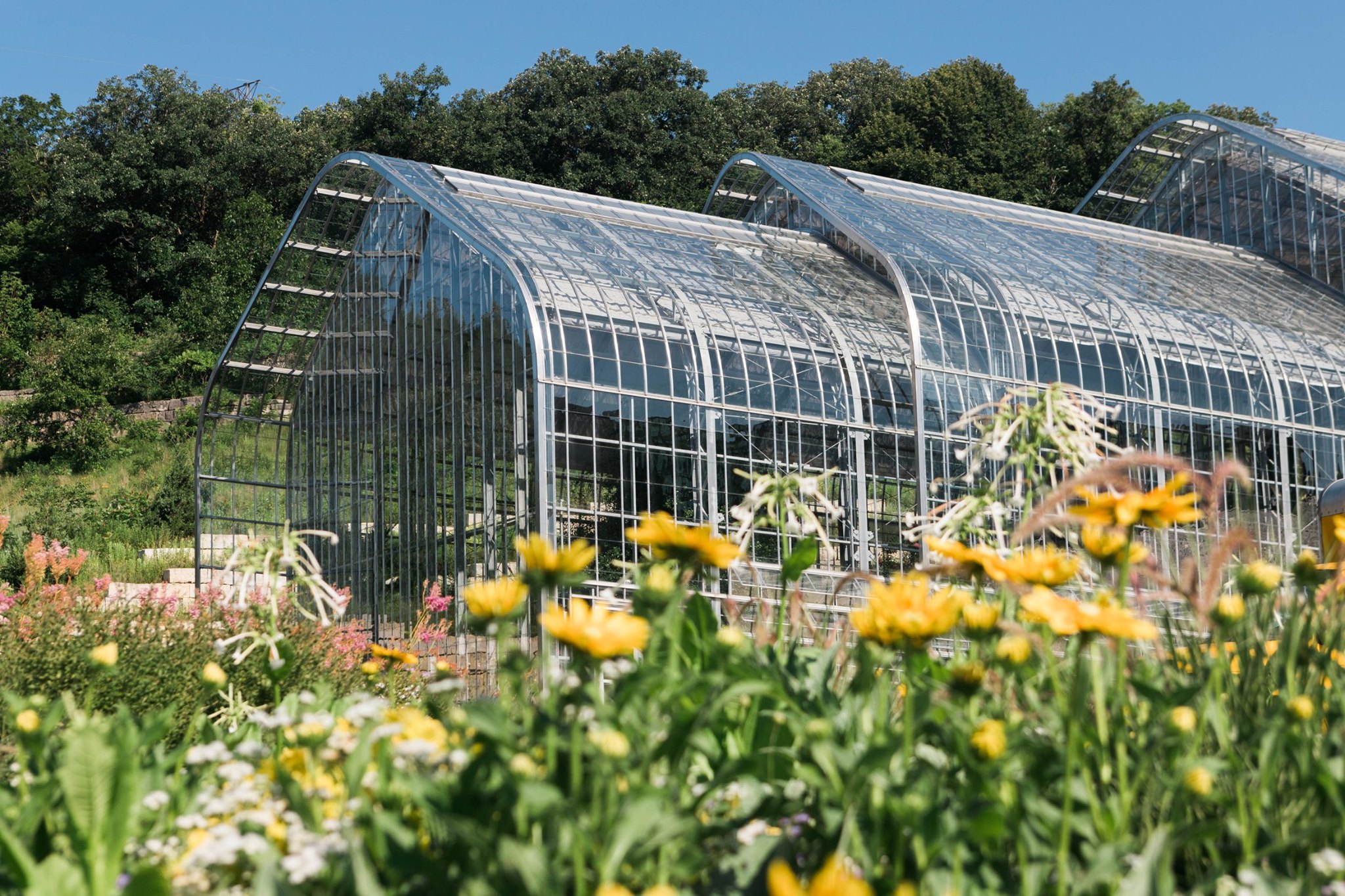
After the acquisition of the additional land, the entrance was moved from Cedar Street to Bancroft Street, which allowed for ample parking. Gardens were established surrounding the parking lots, which provided as much space for annual and perennial flowers as it did for parking. While many new gardens and features have been added over the years, many consider the Marjorie K. Daugherty Conservatory to be its crown jewel. The 17,500-square-foot, 50-foot-tall structure with 12,000 panes of glass opened in 2014. It allows visitors to experience a tropical climate even in the middle of winter. It houses 3,000 plants in 350 species, in addition to streams, ponds, and waterfalls.

Crews, who retired in 2018, was right when he calculated that Omaha would support a first-class botanical garden. The garden has grown considerably over the last 30 years and continues to evolve with the opening of Sofia’s Play Garden in 2025, which offers children a hands-on learning experience. Today, the secluded area enclosed by a wooded valley offers a beautiful and peaceful oasis in an ever-growing city. Attracting over 200,000 people per year, Lauritzen Gardens is ranked among the most outstanding botanical gardens in the world in 2023.
Please feel free to comment to share your thoughts and memories.
Until next time, keep exploring!
Bonus Pics


Sources
- Omaha World-Herald archives
- https://www.lauritzengardens.org/About/History/
- https://en.wikipedia.org/wiki/Lauritzen_Gardens
- https://en.wikipedia.org/wiki/Kenefick_Park
- https://fox42kptm.com/news/local/lauritzen-gardens-breaks-ground-on-hands-on-horticulture-project-for-kids

Leave a Reply