
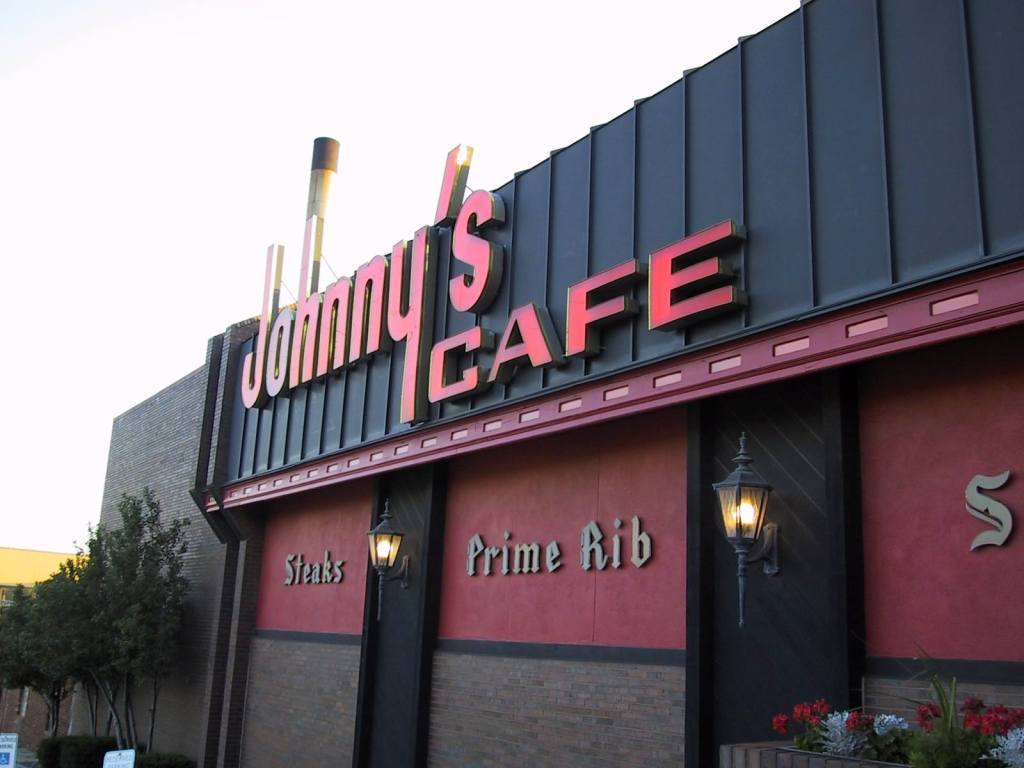
Frank Kawa was the “beer baron” of Omaha by the time he opened Johnny’s Cafe next to the stockyards. He had emigrated to the United States from his native Poland, where his parents were farmers. Despite not speaking a word of English when he arrived, Frank caught on quickly and began aligning himself with powerful people.
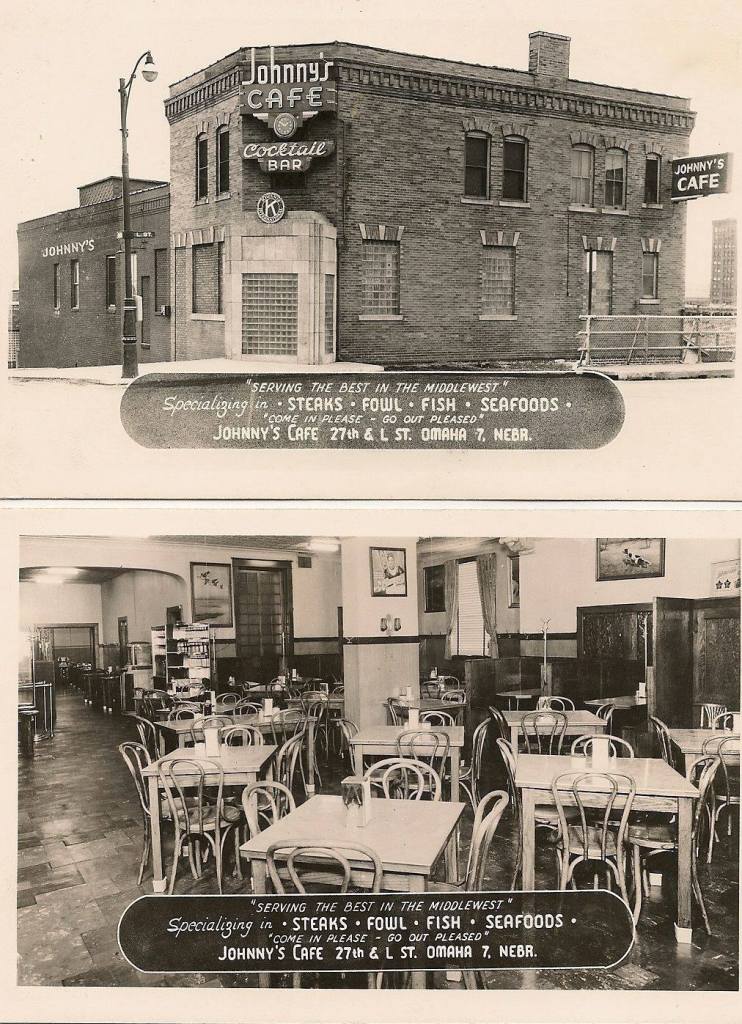
Prohibition was already underway when he returned from World War I and opened a sandwich shop in South Omaha in 1922. While the restaurant cites this as its founding date, it wasn’t yet called Johnny’s. It’s also likely that booze, rather than sandwiches, was Frank’s primary focus. He soon aligned himself with Tom Dennison and would end up earning as much as $40,000 per month, resulting in the “beer baron” nickname. Although Frank served nine months in prison, the brewery supplying the beer was never discovered. This likely had something to do with Dennison’s political machine, which ran the city at the time.
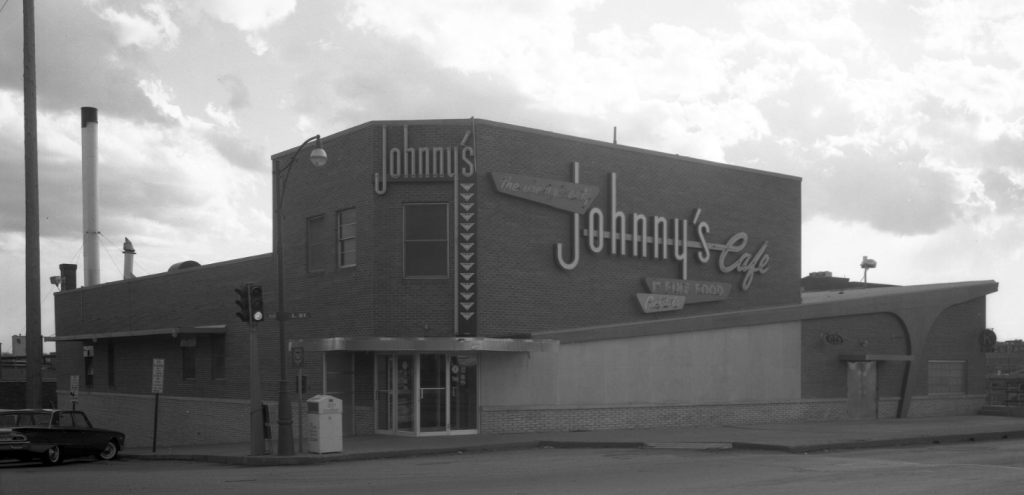
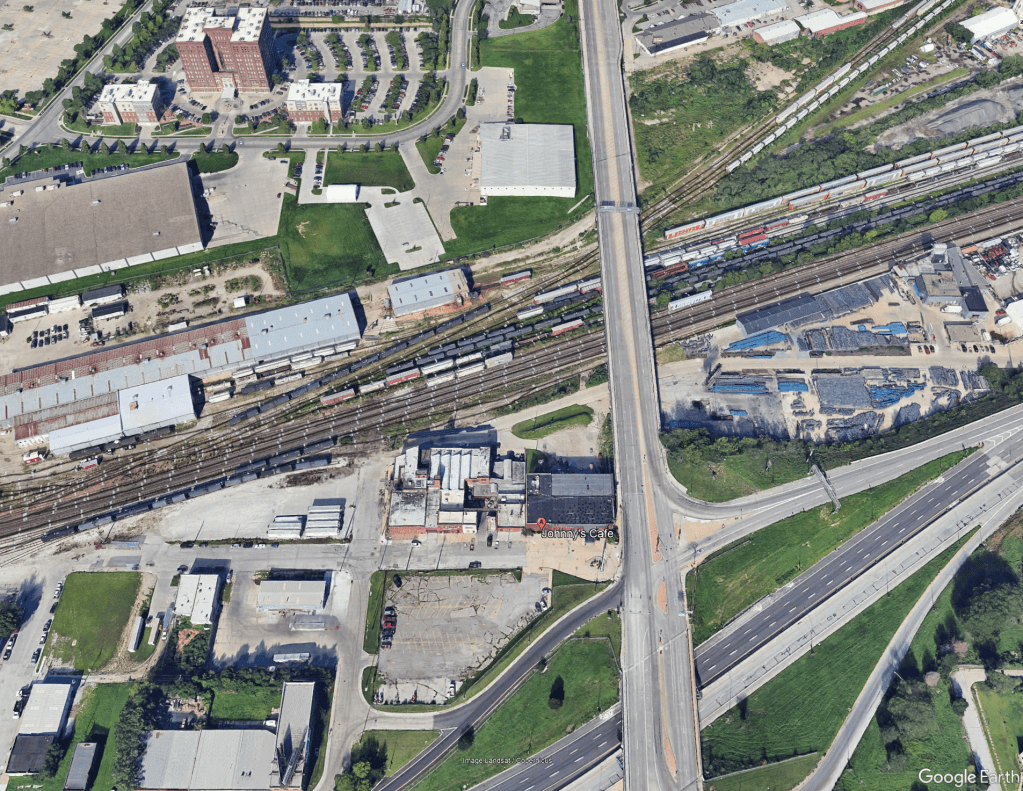
When Prohibition ended in 1933, Frank turned his focus to the restaurant, which moved to its current location at 4702 S. 27th Street in 1934. The new building had the advantage of being right next to the ever-growing stockyards. Additionally, the restaurant occupied the top floor of George Hoffman’s small packing plant.
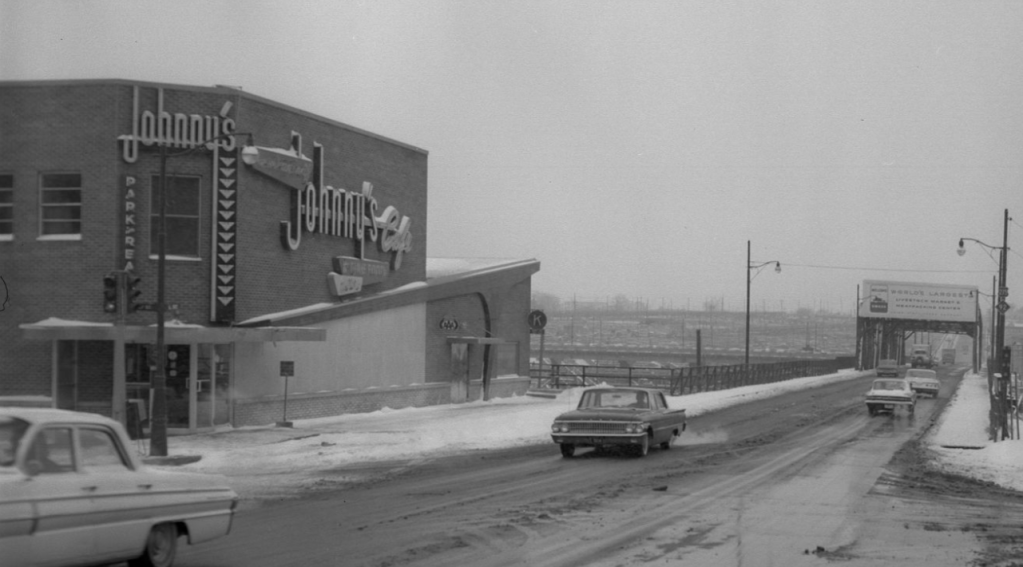
James Bruno previously operated a business called Johnny’s Cafe out of that same location. When Frank moved in, he opted to keep the name rather than change it. As the stockyards next door continued to grow, so did Frank’s restaurant, which developed a reputation for its steaks. Despite billing itself as Omaha’s original steakhouse, Louie Ahko had actually opened his restaurant earlier, in 1917. Frank, of course, benefited from being located directly next to the stockyards, which provided tremendous exposure.
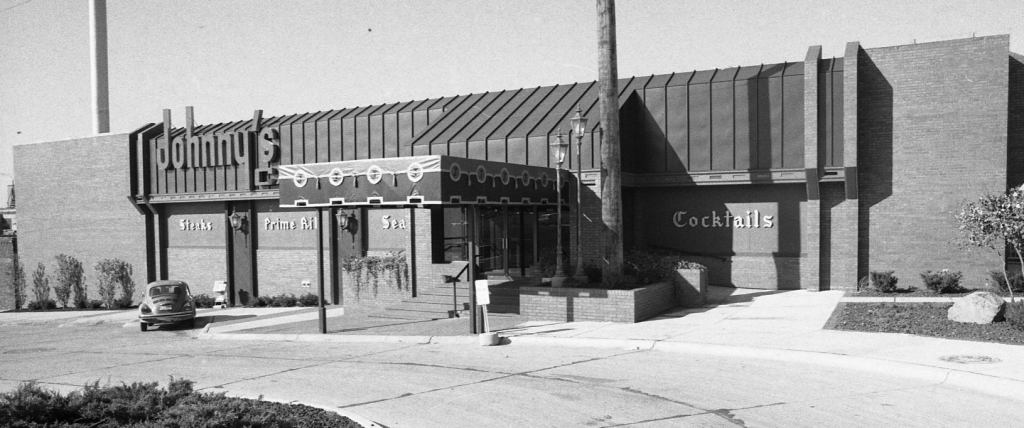
Business exploded when Omaha’s stockyards became the largest in the world in 1955. As Johnny’s continued to expand, George Hoffman moved his plant out in 1957. This gave the restaurant the perfect space to age its steaks after acquiring them from nearby packers and cutting them in-house. Activity at the stockyards never stopped, causing the restaurant to remain open for up to 20 hours per day.
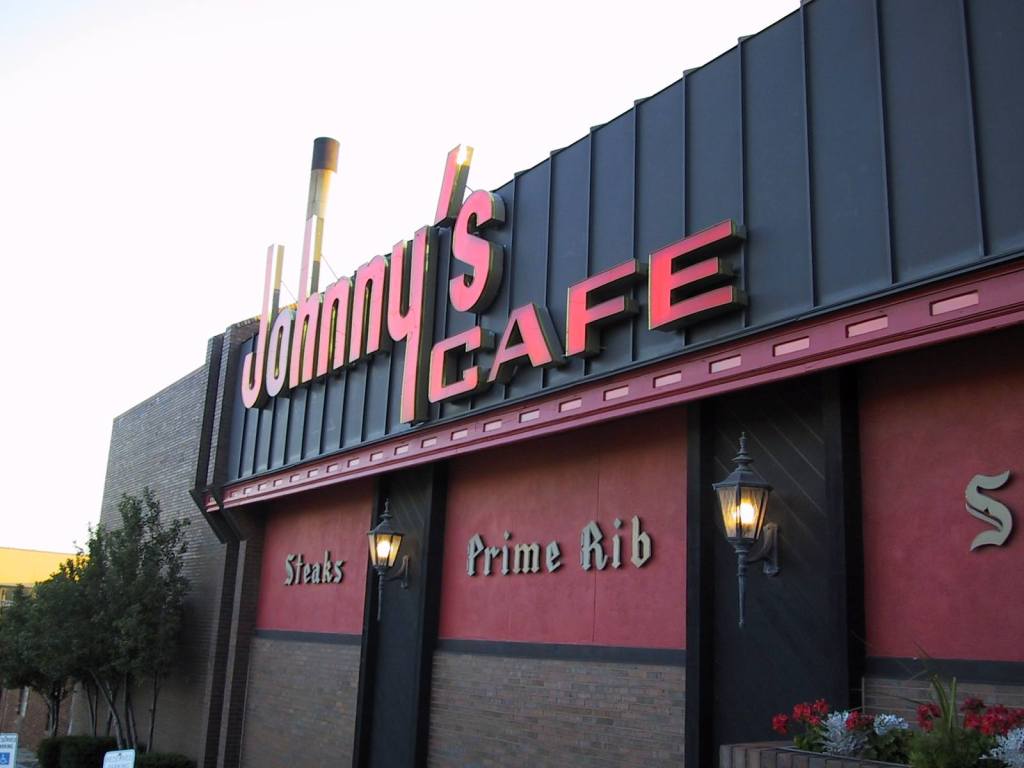
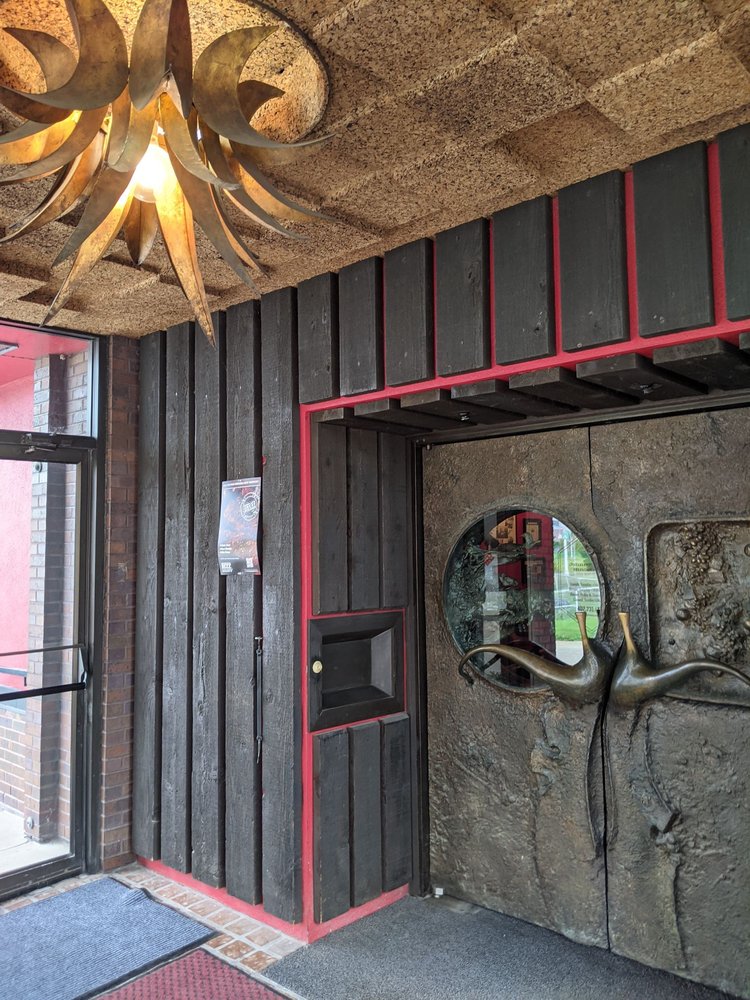
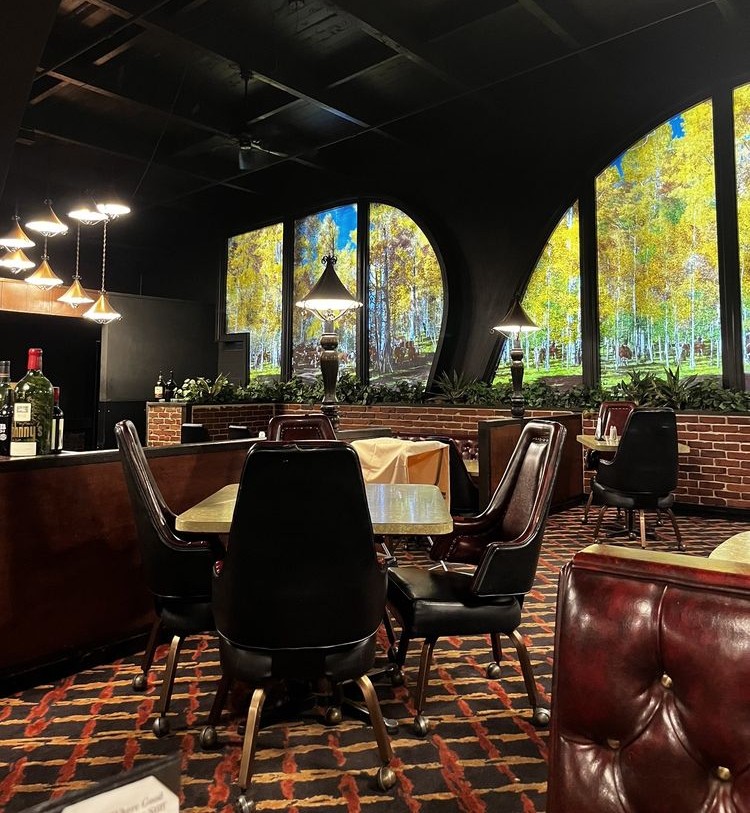
Johnny’s Cafe remained family-owned after its founder passed away in 1961. His sons were responsible for turning it into the restaurant we recognize today. A renovation they oversaw in the 1970s changed the exterior, removed the second floor, relocated the kitchen, installed the brass steer horns on the front doors, enhanced the large dining room mural, and added carpeting.
Johnny’s continues to thrive in 2024. It was named one of the 38 best restaurants in Omaha by Sarah Baker Hansen of Eater and was one of just 50 small restaurants nationwide to receive a $50,000 grant from the National Trust for Historic Preservation’s Backing Historic Small Restaurants Grant Program. The funds were used to refresh the exterior and improve the landscaping.
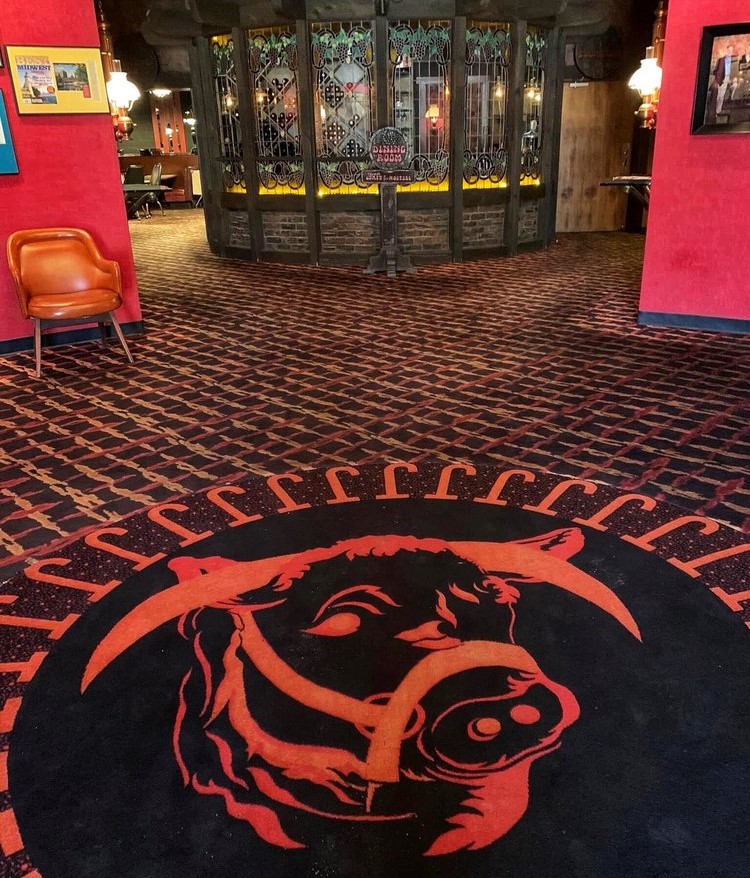
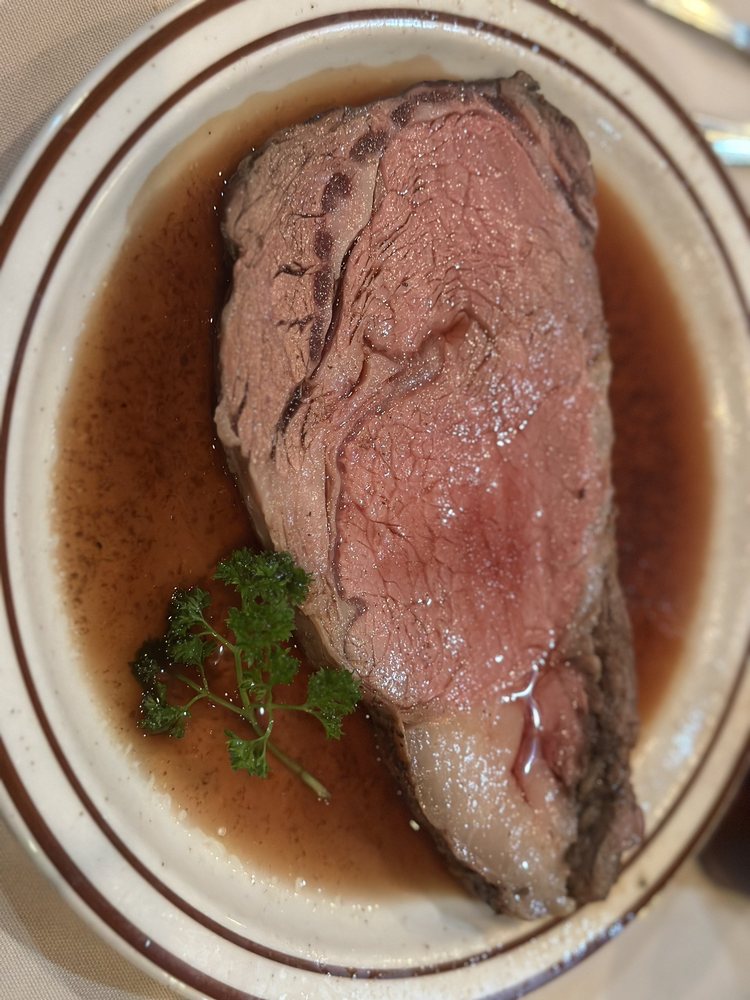
It’s impressive that Johnny’s Cafe still stands after everything around it has changed. Over its 100-year run, a sandwich counter that once fronted an illegal booze operation evolved into Omaha’s oldest steakhouse. It witnessed the closure of both the stockyards and Aksarben, which had provided much of its business. It thrived despite the construction of the Kennedy Freeway, which forced many neighboring businesses to close or relocate. It even survived a pandemic that temporarily shut its doors. Frank Kawa, the Polish immigrant who arrived at age 15, is largely credited with helping pioneer Omaha’s reputation as a steakhouse town—and from the massive dining room of his restaurant, you can still enjoy a ribeye steak while sipping an Old Fashioned.
Content written by Omaha Exploration. If you enjoy my content, you can follow or subscribe on my Facebook page, signup to receive emails or make a donation on my website. Thank you and until next time, keep exploring!
Bonus Pics
Follow me on
Subscribe
Type your email address above to be notified when a new story is posted.

 Omaha Exploration
Leave a comment