
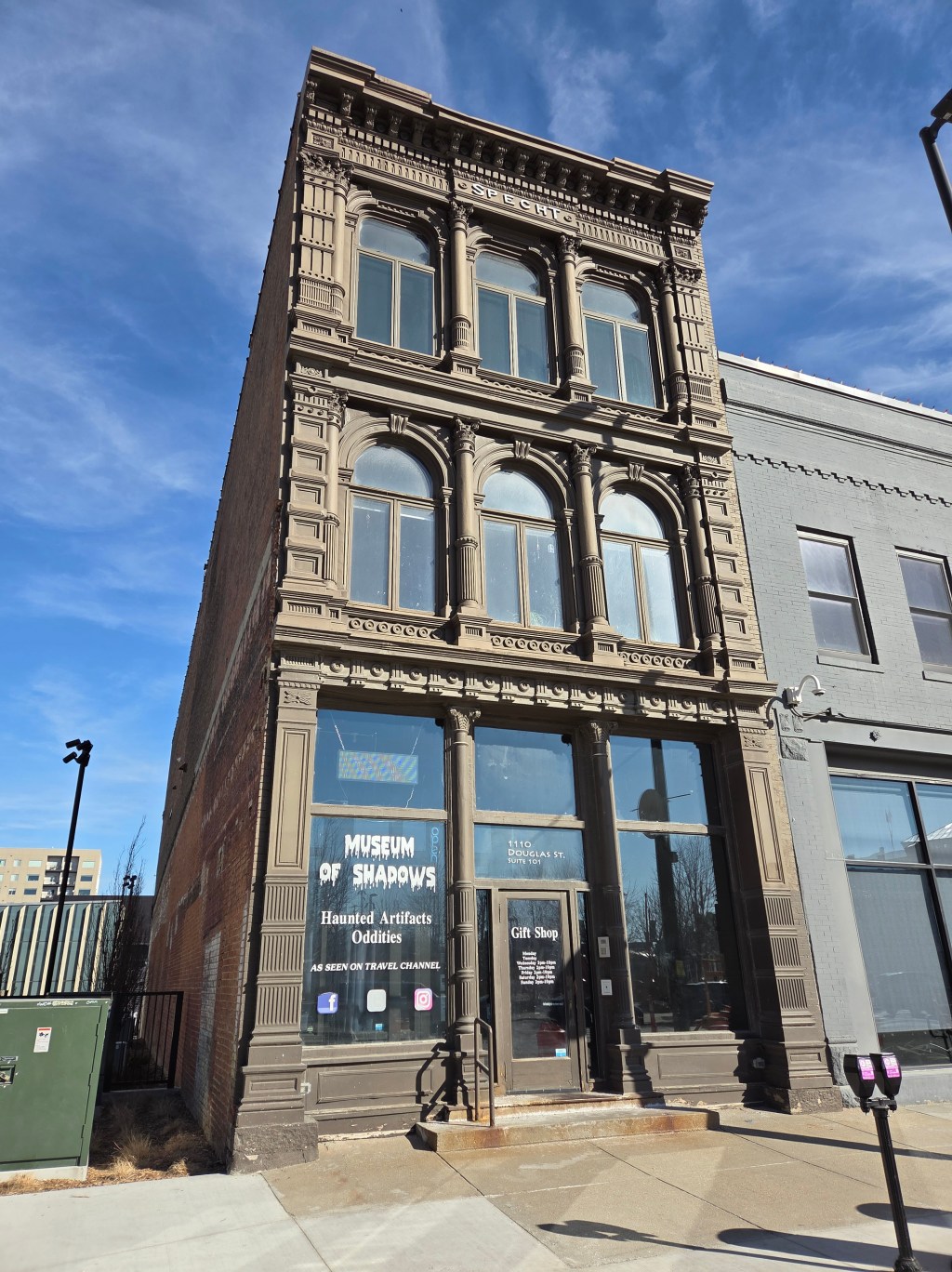
One of Omaha’s most well-known historic buildings bears the name Specht. Located across from the Gene Leahy Mall, the building was constructed by Christian Specht for his Western Cornice Works.
Born in Germany in 1847, Christian Specht arrived in Baltimore at the age of 18. From there, he is said to have walked to Cincinnati, where he worked in his uncle’s sheet metal business. Soon afterward, he established Western Cornice Works, a company that manufactured cornices, dormer windows, finials, and other decorative architectural elements.
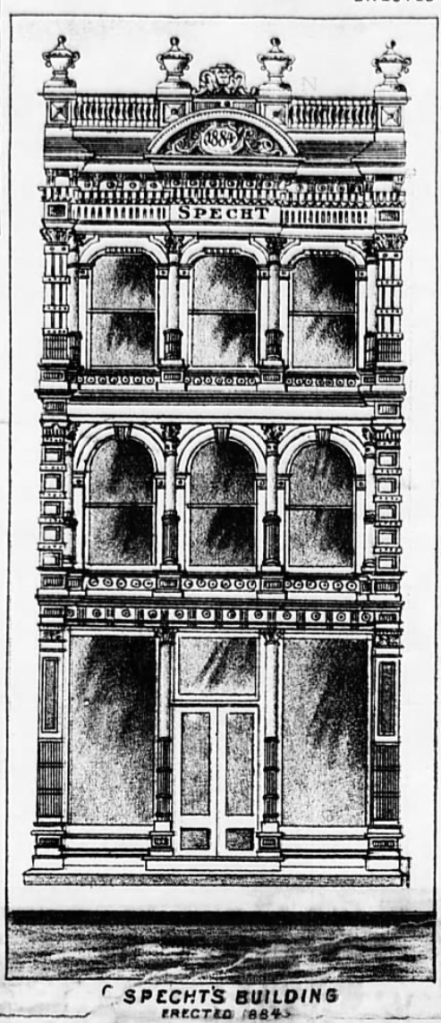
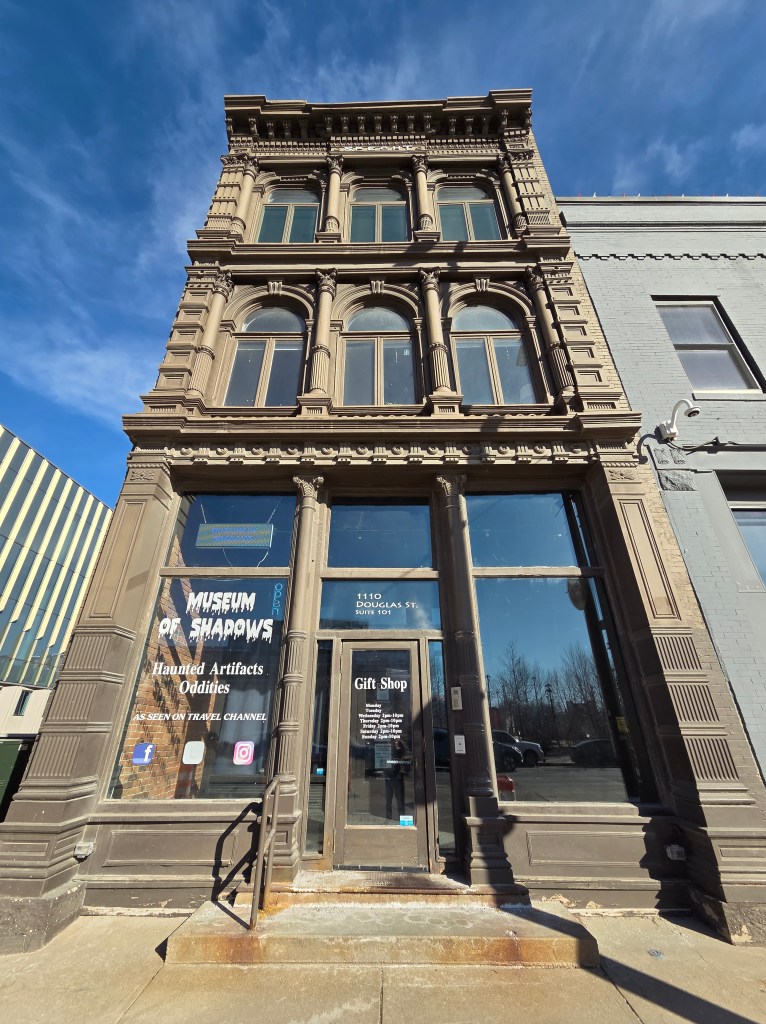
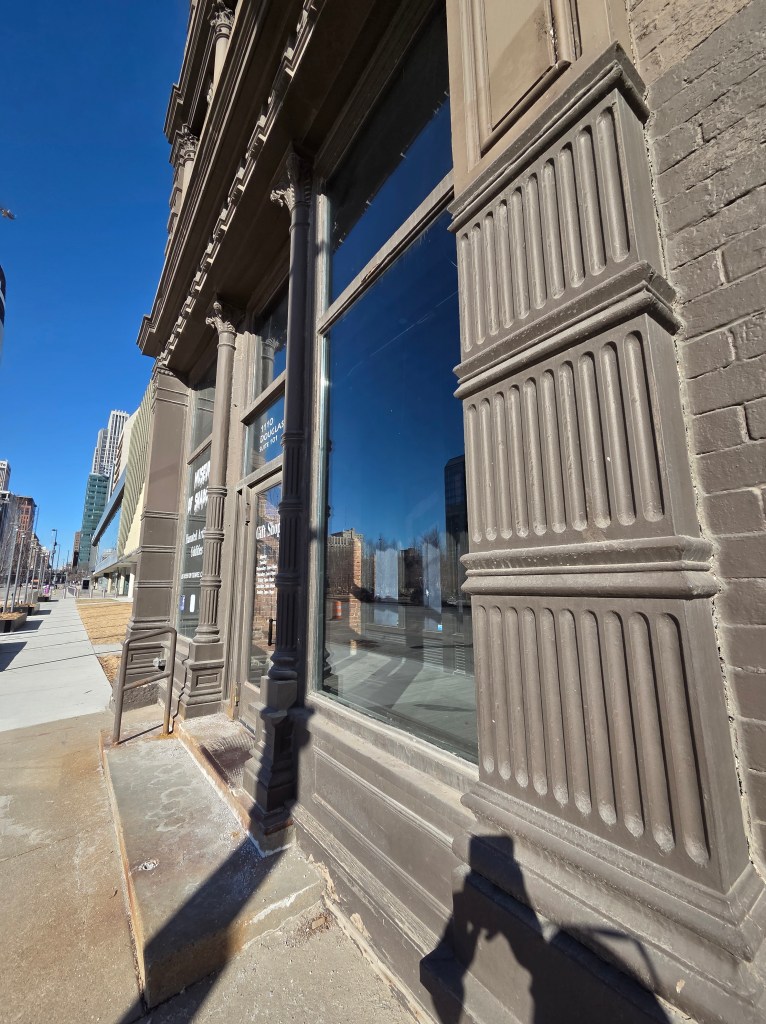
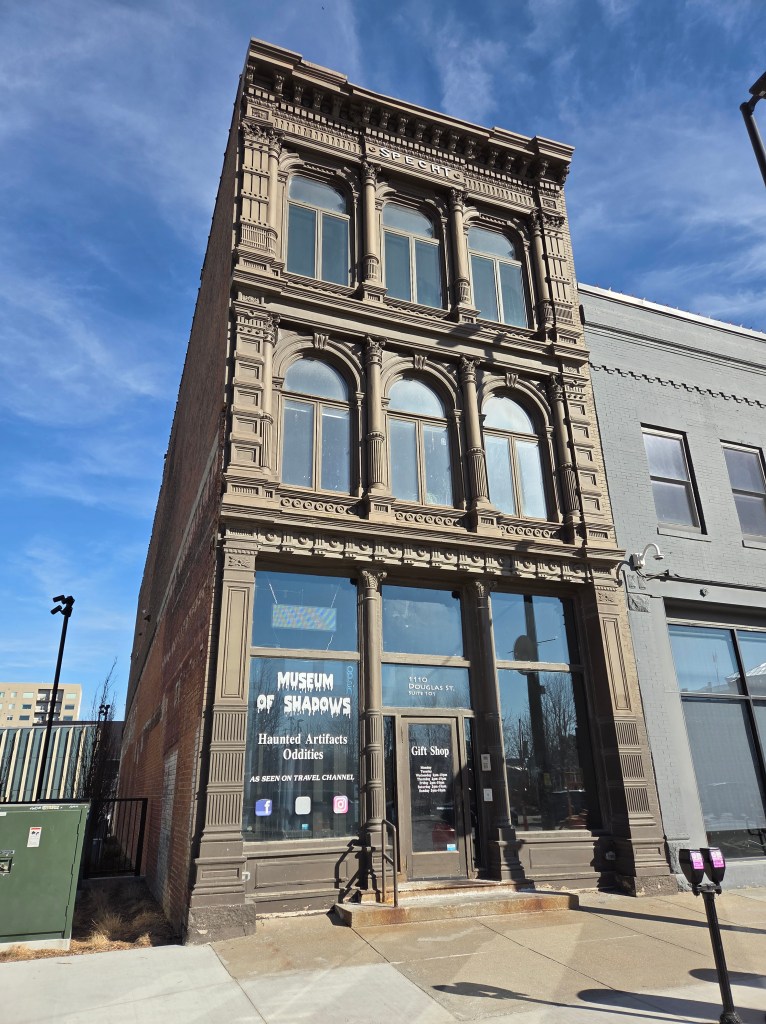
He relocated the business to Omaha in 1880 and built the Specht Building at 1110 Douglas Street in 1884. Designed in the Italian Renaissance style by architects Alfred Dufrene and Louis Mendelssohn, it was one of just three buildings in the city to feature a facade made entirely of cast iron. The cast-iron front was produced by Specht’s own company and served as a striking advertisement for its craftsmanship. The remainder of the building was constructed of pressed brick.
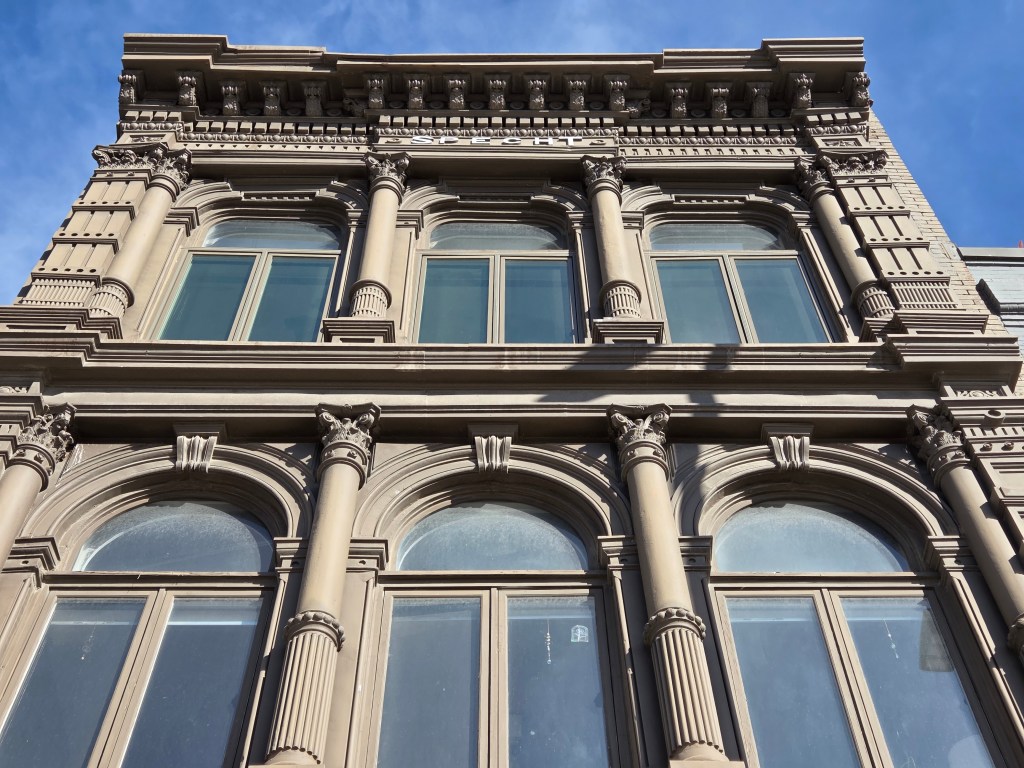
Cast-iron fronts were popular in the mid-1800s because their components could be mass-produced and erected quickly without sacrificing ornate detailing. These buildings typically had narrow frontages, as cast iron could not span wide distances, but they allowed for open floor plans with tall ceilings and large windows that maximized natural light. The Specht Building features large windows and a central double door flanked by columns and pilasters on the ground floor. The upper two floors contain three windows separated by Corinthian columns, with pilasters at the corners of the building. The cornice was once topped by a parapet that is no longer present.
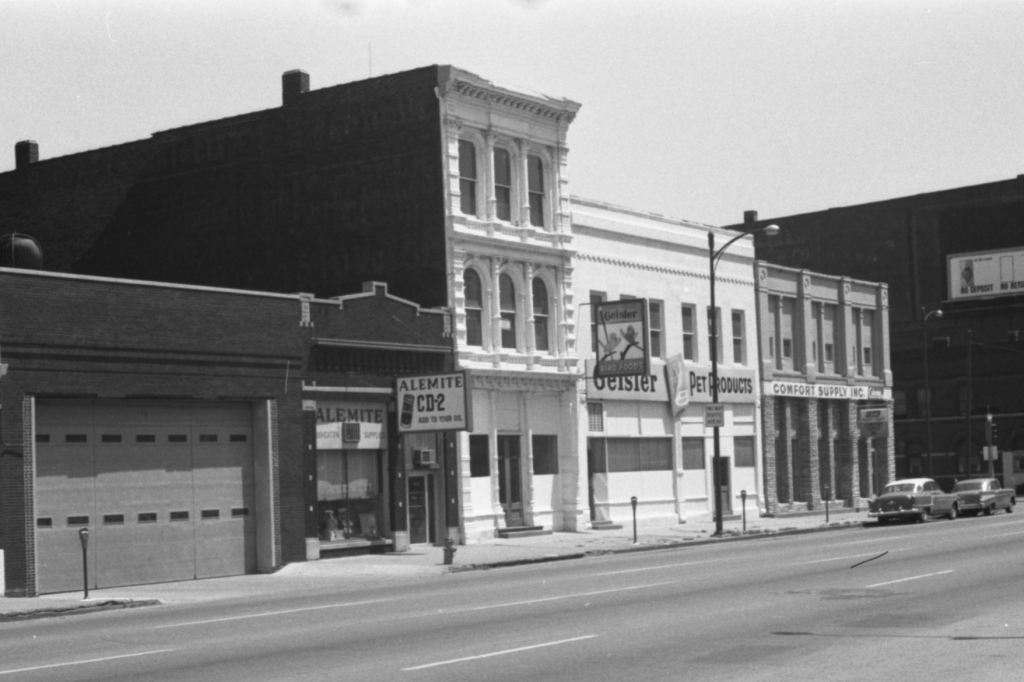
The building served as the headquarters, showroom, and workshop for the Western Cornice Works, which prospered during Omaha’s construction boom of the 1880s, when metal cornices and architectural features were in high demand. Despite this success, the company vacated the building by 1886. By 1894, its owner had moved to Los Angeles, where he founded California Cornice Works, which became one of the largest businesses of its kind on the West Coast.
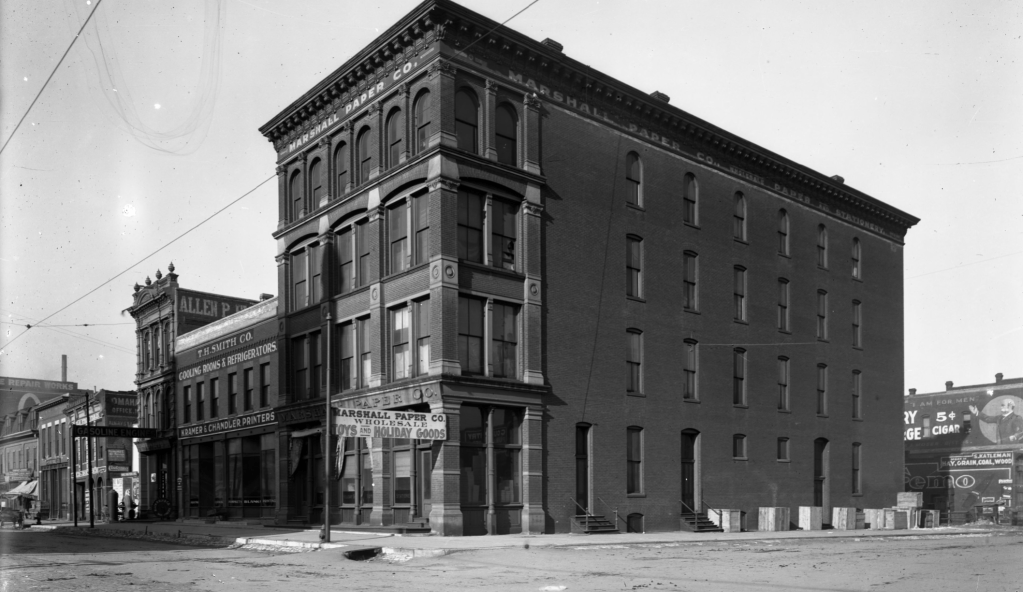
Afterward, the building was home to a variety of businesses, including the Allen Brothers wholesale grocery; J.J. Wilkinson’s box factory; Allen P. Ely & Company, a dealer in new and used machinery; Carl Furth Supply House, a distributor of Arrow beverages; Piggly Wiggly, the grocery store chain; Nogg Brothers Paper Company; Rubin Distributing, a wholesale company; and Tires, Inc.
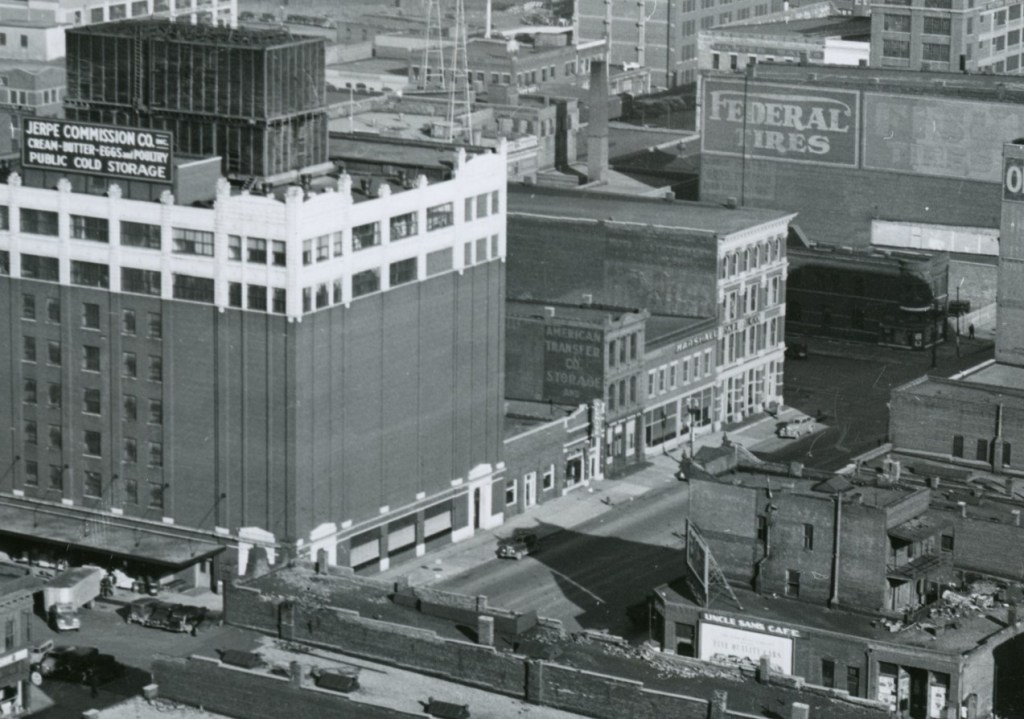
A notable incident involved the Schmoller and Mueller Piano Company, which used the poorly suited building to store pianos, phonographs, and records. In 1920, a fire weakened the structure, causing the roof and third floor to collapse. Seven firefighters were injured, and one died beneath the rubble, while the blaze left extensive damage.
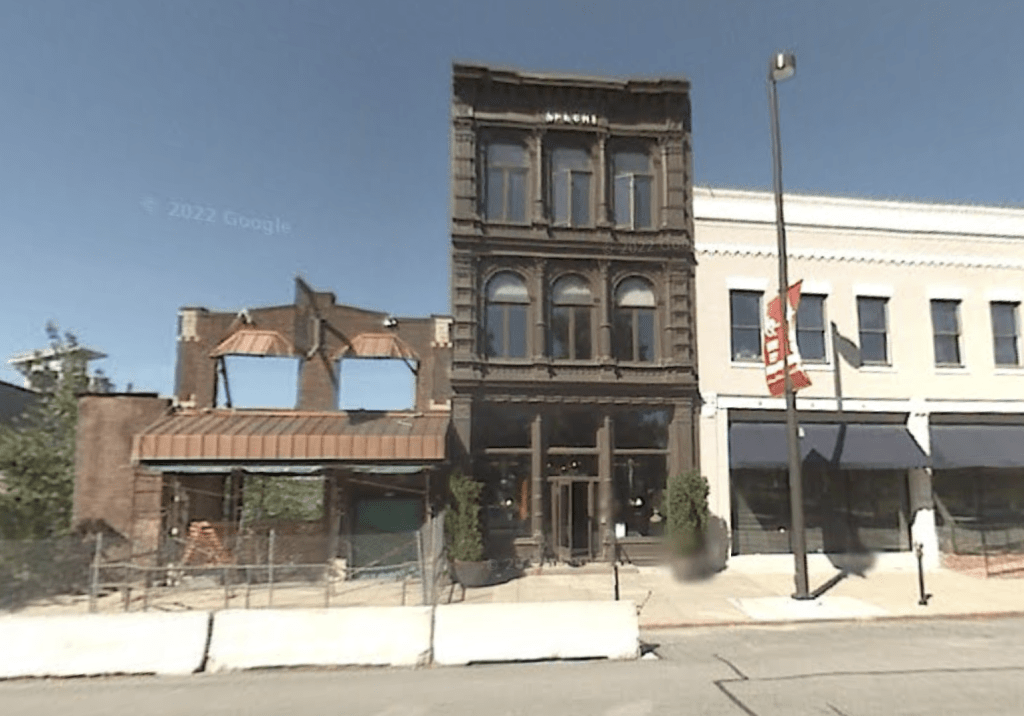
The building found new life beginning in 1980, when prominent artist Tom Bartek transformed it into his art gallery, Ground Floor Gallery, as well as his studio and residence. Bartek remained at the Specht Building until 1986, after which the building was purchased by Todd Simon of Omaha Steaks.
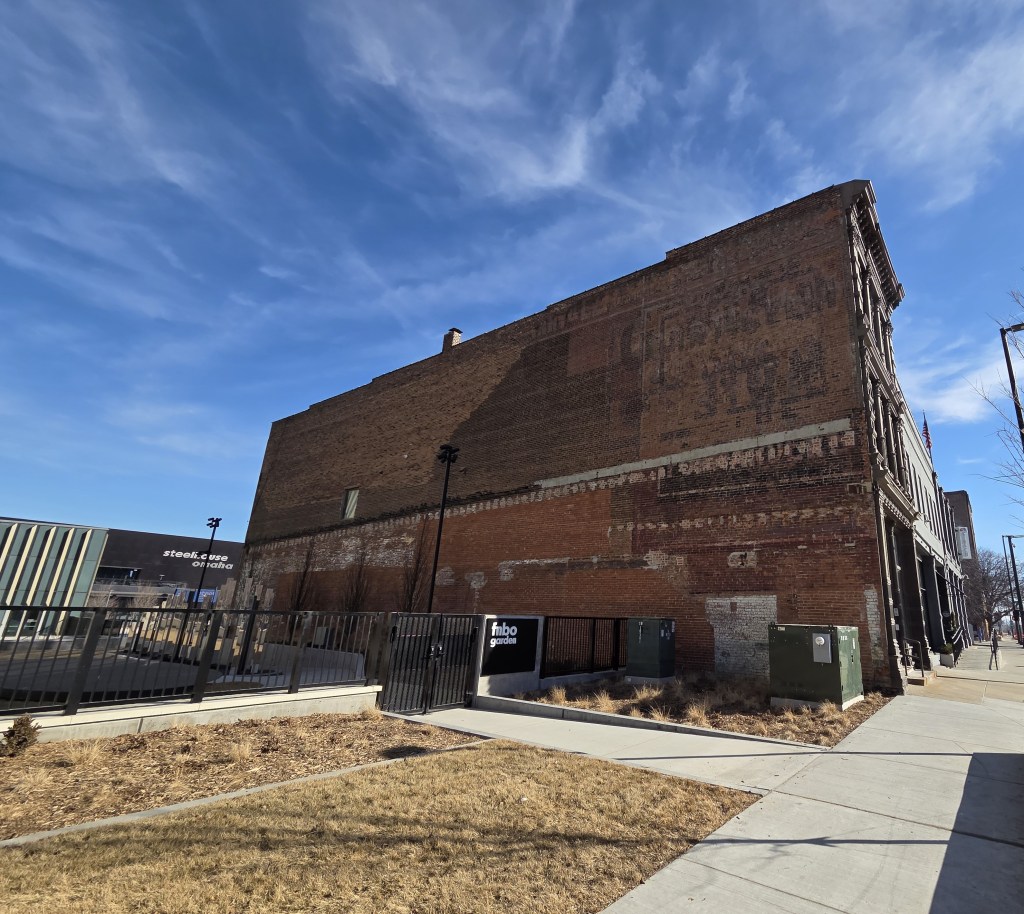
Simon, who also owned the nearby Happy Hollow Coffee Building which he used as his personal residence, renovated the Specht Building and converted the upper floors into apartments. Meanwhile, the ground floor commercial space became home to several interior design businesses, including JEM Interior Designs, Davis Design, and Julia Russell Designs. Since 2021, it has been home to the Museum of Shadows, which displays more than 5,000 haunted artifacts.
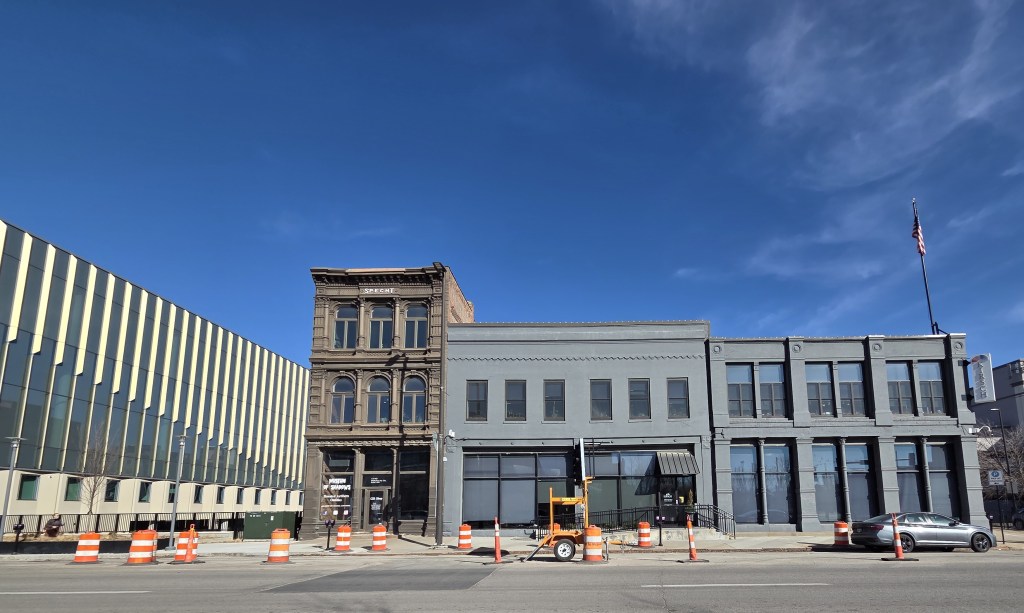
The Specht Building was saved from demolition twice in the last couple of decades. In 2001, there was a proposal to raze two entire city blocks to make way for the Holland Performing Arts Center. In 2015, another proposal called for its demolition to make way for a parking garage. Alongside the Restoration Exchange, now known as Preserve Omaha, the community rallied around the building.
Added to the National Register of Historic Places in 1977 and designated an Omaha Landmark in 1981, the Specht Building stands as a reminder of the past even as its neighbors were replaced by the Holland Performing Arts Center, the Gene Leahy Mall, and the Capitol District. Against all odds, the state’s only building with an entirely cast-iron facade still stands.
Content written by Omaha Exploration. If you enjoy my content, you can follow or subscribe on my Facebook page, sign up to receive emails or make a donation on my website. Thank you and keep exploring!
Read my content on Grow Omaha: Local History by Omaha Exploration | Grow Omaha
Omaha Exploration is sponsored by Rockbrook Mortgage

Click the logo to learn more
Click here to learn about sponsorship opportunities
More pictures
Subscribe to get an email when new content is posted
Omaha Exploration, 2025. Unauthorized use and/or duplication of this material without express and written permission from this site’s author and/or owner is strictly prohibited. Excerpts and links can be used, if full and clear credit is given to Omaha Exploration with appropriate and specific direction to the original content.
Omaha Exploration is a proud M4K OMA Grower!

Help us as we grow mustaches while raising money for local children’s charities each May!

 Omaha Exploration
Leave a comment