
In 1962, the City of Omaha began constructing pedestrian bridges in response to the city’s continued growth. With streets growing busier and more children walking to school, safety became an increasing concern. The issue was amplified after World War II, as returning servicemen fueled a population surge that saw Omaha grow by 35 percent between 1940 and 1960.
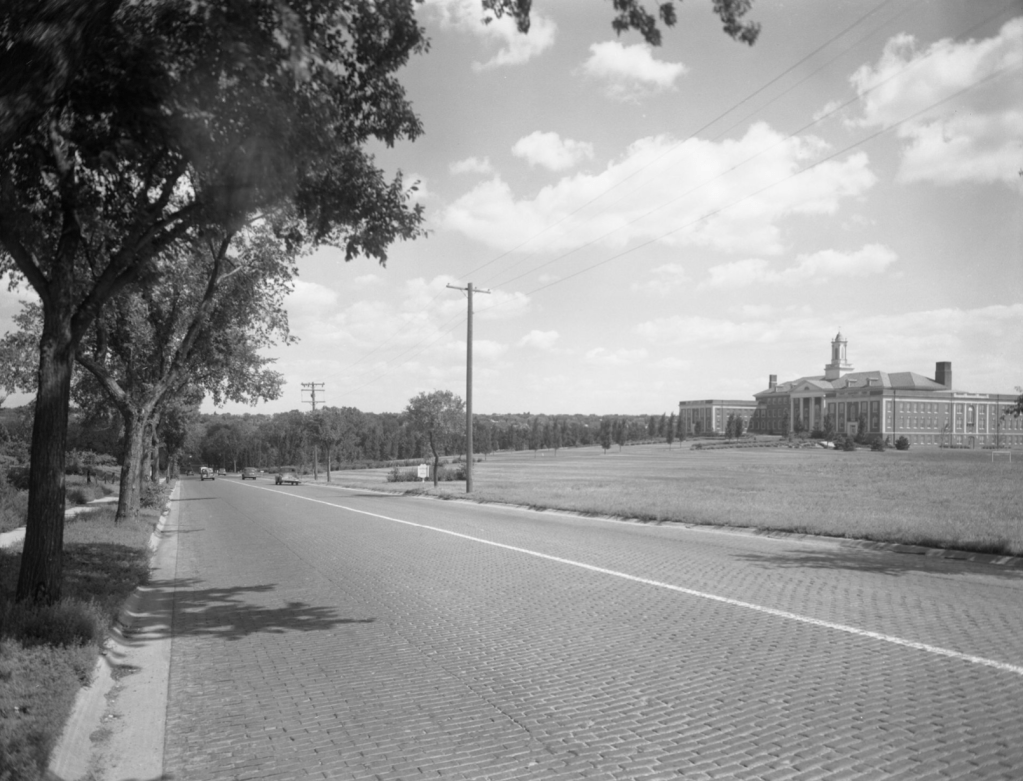
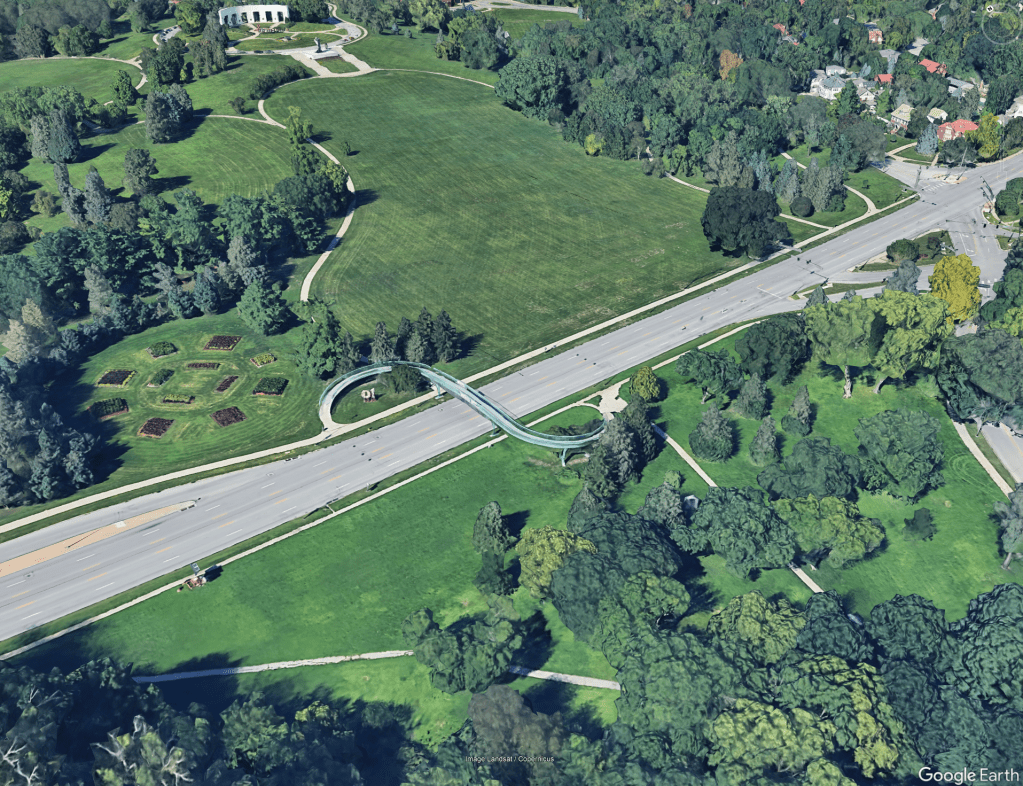
The first pedestrian bridge was constructed at 42nd and Grover Streets. A second bridge was planned to span Dodge Street between Memorial and Elmwood Parks. The need for this crossing was clear, as Dodge Street served not only as the city’s primary east to west thoroughfare but also as Highway 6. The project was delayed by several factors, and in the meantime, two pedestrian bridges were built over West Center Road at 98th and 108th Streets.
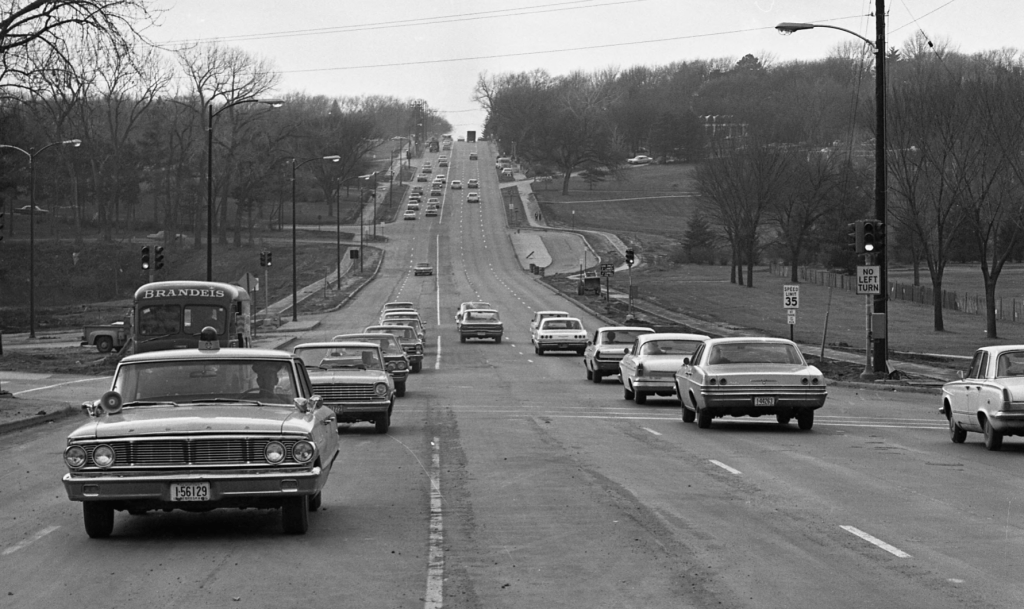
The Dodge Street Overpass ultimately became the fourth pedestrian bridge constructed, as the city coordinated its completion with the widening of Dodge Street to five lanes between 52nd and 72nd Streets. It was during this project that the corridor gained its well-known bidirectional center lane. Beyond safety concerns, Mayor A. V. Sorensen insisted that the bridge be designed as a work of beauty despite budget constraints. Cost overruns were another factor contributing to construction delays.
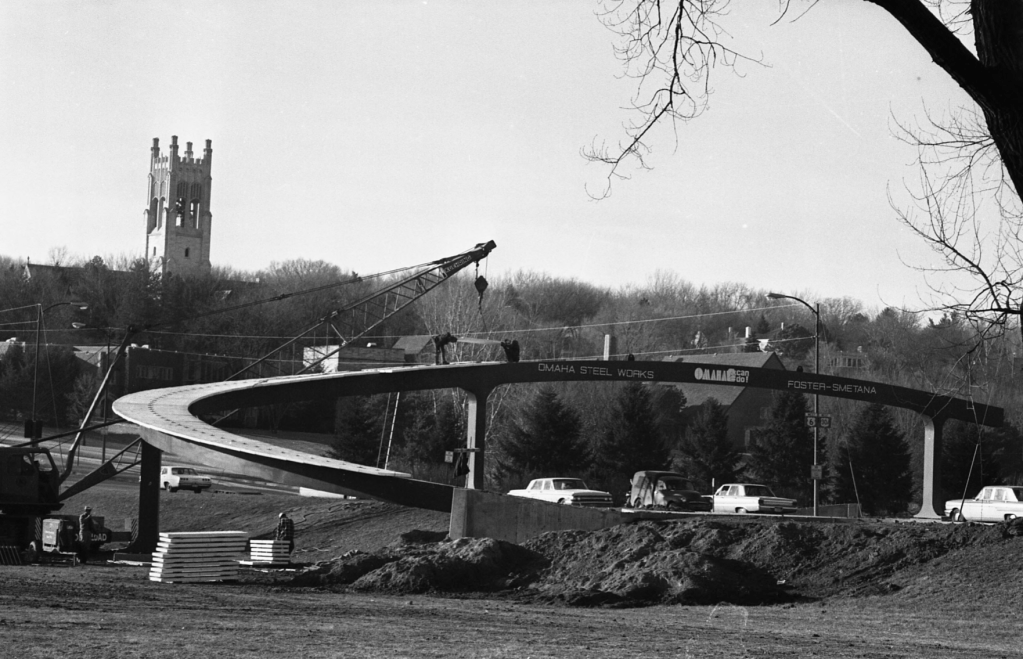
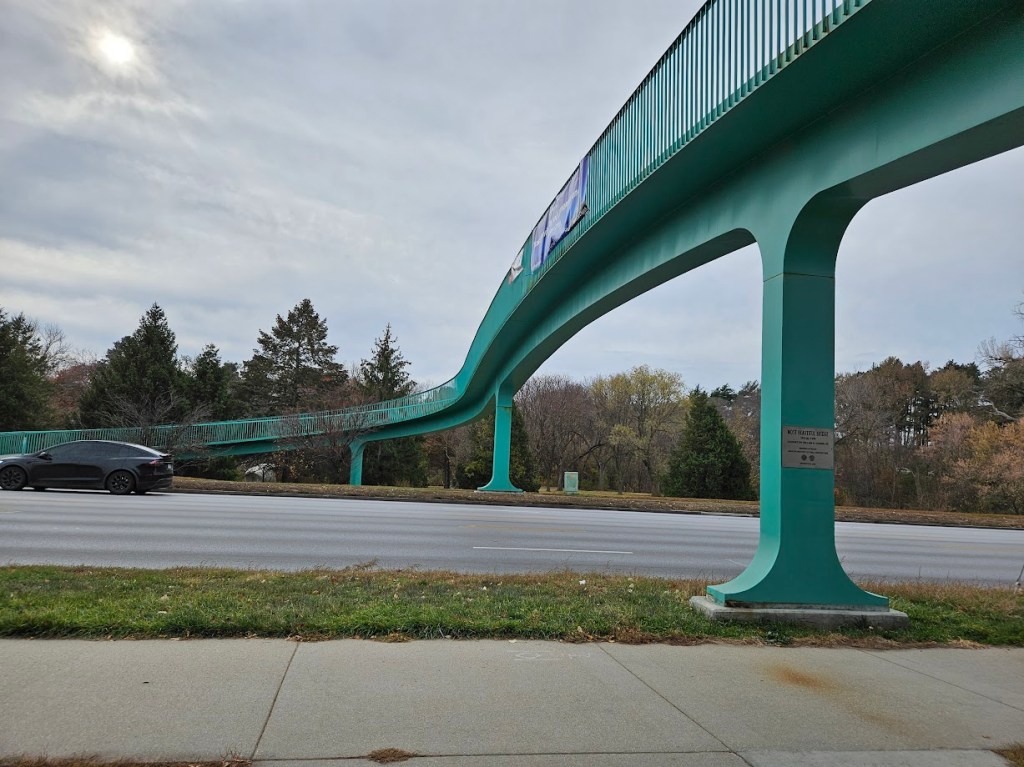
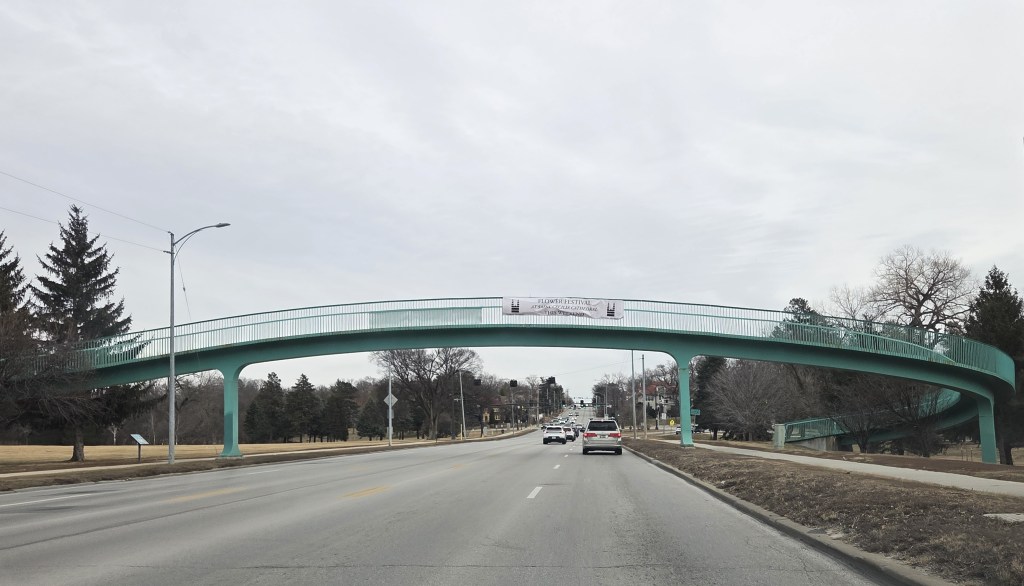
The 380-foot flowing S curve bridge was designed by William H. Durand of Durand Jackson and Associates. The steel was fabricated by Omaha Steel Works, and construction was completed by Foster-Smetana at a cost of $66,000, well above initial estimates. The design featured four steel piers supporting a box girder, with two inches of poured concrete on the walking surface and steel handrails running the length of the bridge. One element that set this bridge apart was that it was not constrained by right of way limitations. Located entirely within two public parks, the city did not need to acquire additional land for its construction.
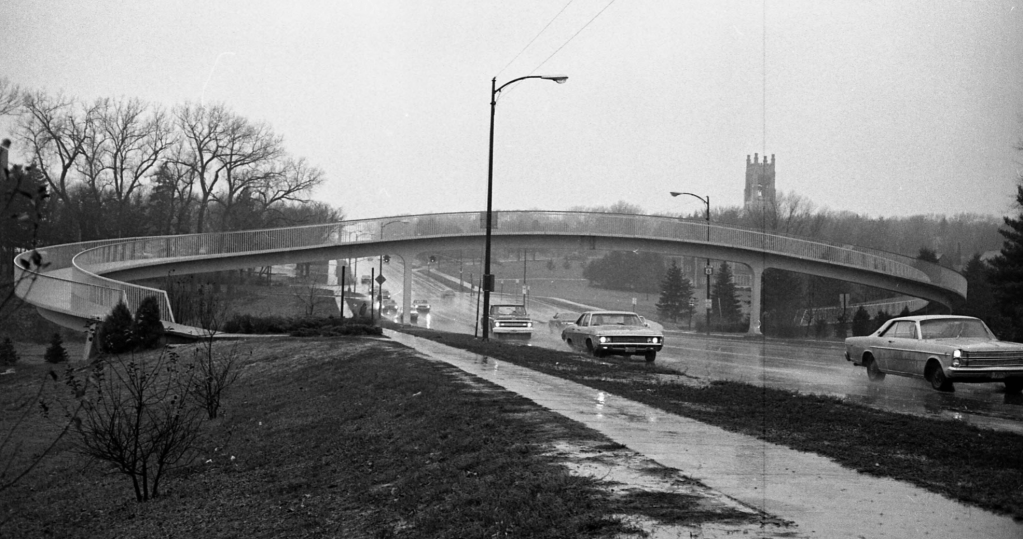
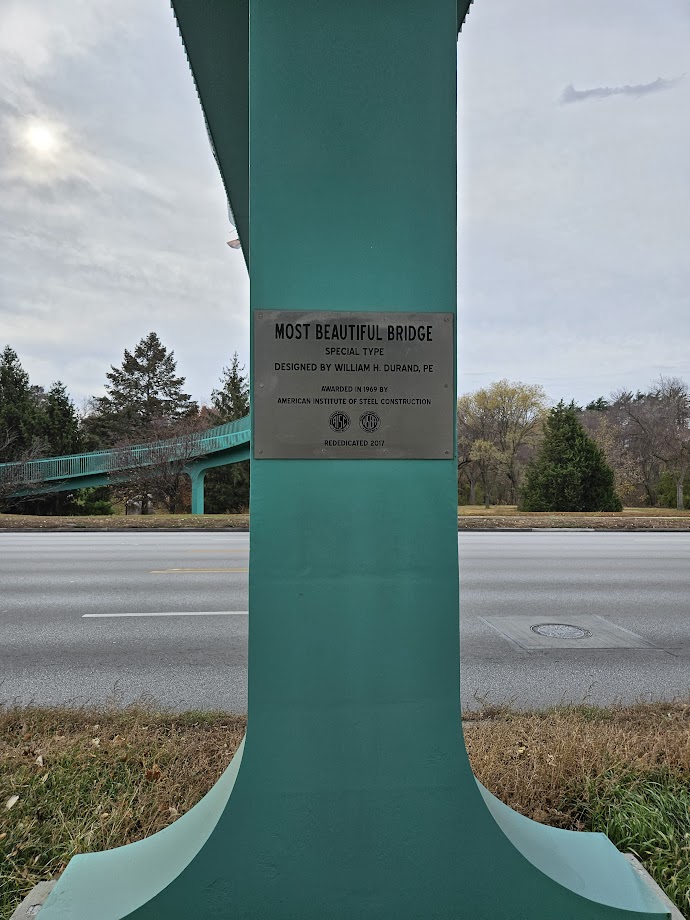
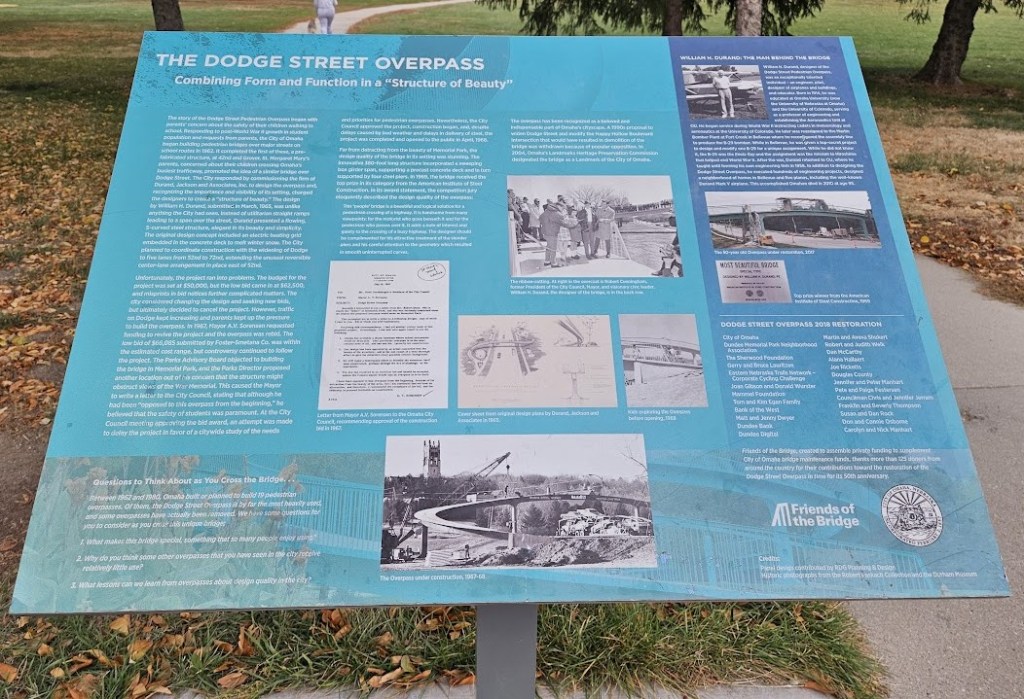
When the bridge was completed in 1968, it was unlike anything Omaha had seen before. Its innovative design and distinctive surf green color set it apart, as all other pedestrian bridges in the city were painted brown. In 1969, it was named Most Beautiful Bridge by the American Institute of Steel Construction. A plaque on the north side of the bridge commemorates this honor.
The City of Omaha effectively ended its pedestrian bridge program by 1980. Rising construction costs, driven in part by new accessibility requirements, made additional projects impractical. By that time, however, Omaha had built 19 pedestrian bridges between 1962 and 1979, giving the city one of the largest school overpass programs in the country.
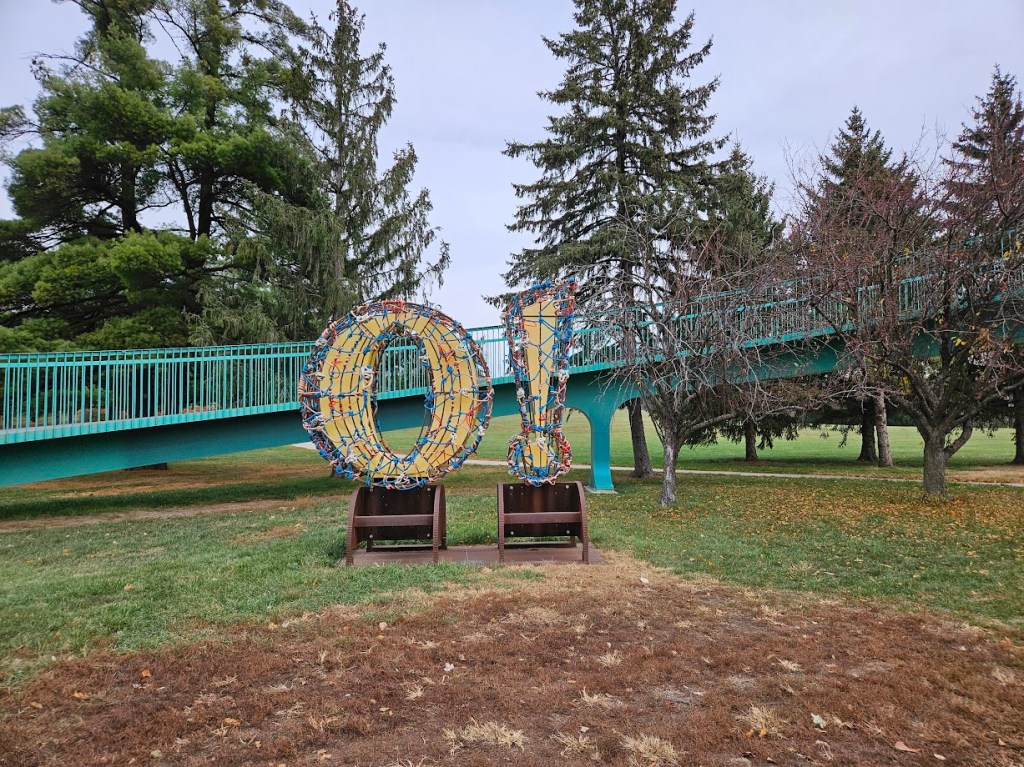
When the Dodge Street Overpass was designated an Omaha Landmark in 2004, its nomination noted that it represented the city’s best effort to combine functionality with style. The bridge was refurbished in 2017, a project that included lead paint removal, repainting, deck resurfacing, base stabilization, and the installation of new historical and landmark signage.
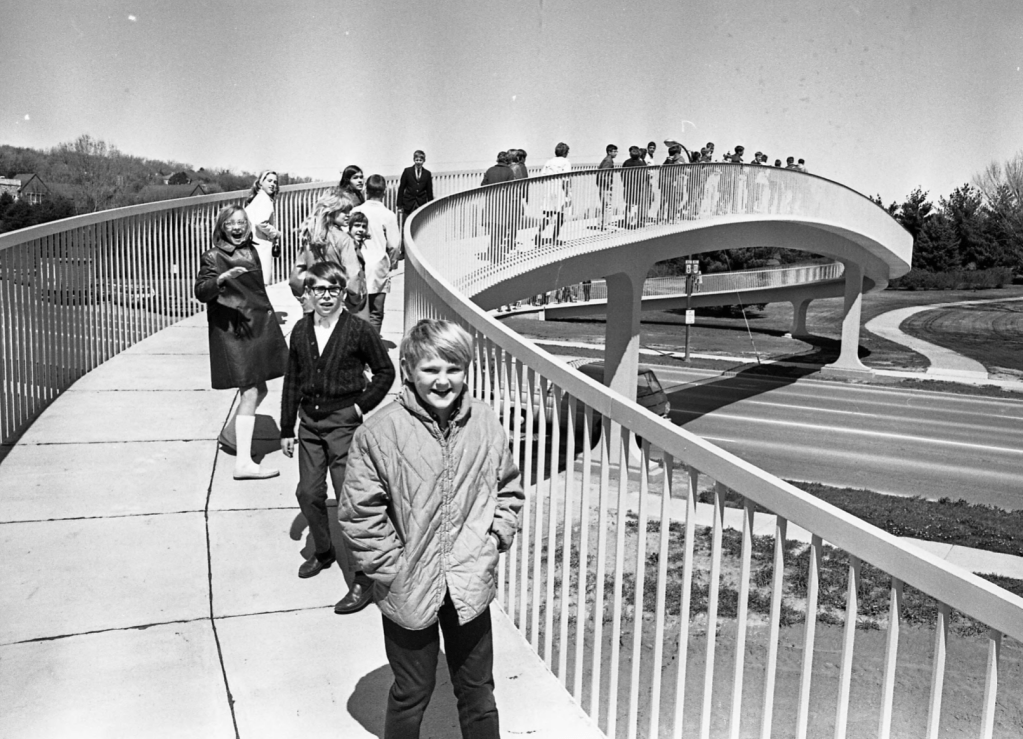
Today, the Dodge Street Overpass remains the most heavily used of Omaha’s pedestrian bridges. It continues to serve nearby residents, visitors to Memorial and Elmwood Parks, and students from the University of Nebraska at Omaha, St. Margaret Mary, and Brownell Talbot.
Content written by Omaha Exploration. If you enjoy my content, you can follow or subscribe on my Facebook page, signup to receive emails or make a donation on my website. Thank you and until next time, keep exploring!
Article Featured on Grow Omaha: Local History by Omaha Exploration | Grow Omaha
Omaha Exploration is sponsored by @Rockbrook Mortgage Inc.

Click the logo to learn more
Click here to learn about opportunities to sponsor Omaha Exploration!
More pictures

Follow OE on social media!
Subscribe to get an email when new content is posted
Omaha Exploration, 2025. Unauthorized use and/or duplication of this material without express and written permission from this site’s author and/or owner is strictly prohibited. Excerpts and links can be used, if full and clear credit is given to Omaha Exploration with appropriate and specific direction to the original content.
Omaha Exploration proudly supports

Contact me or click the logo to learn more
 Omaha Exploration
Leave a comment