
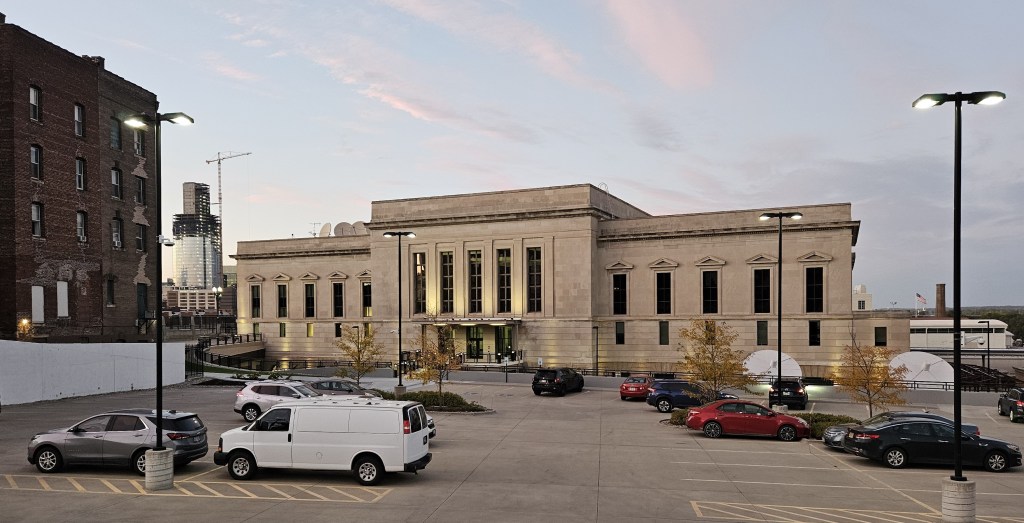
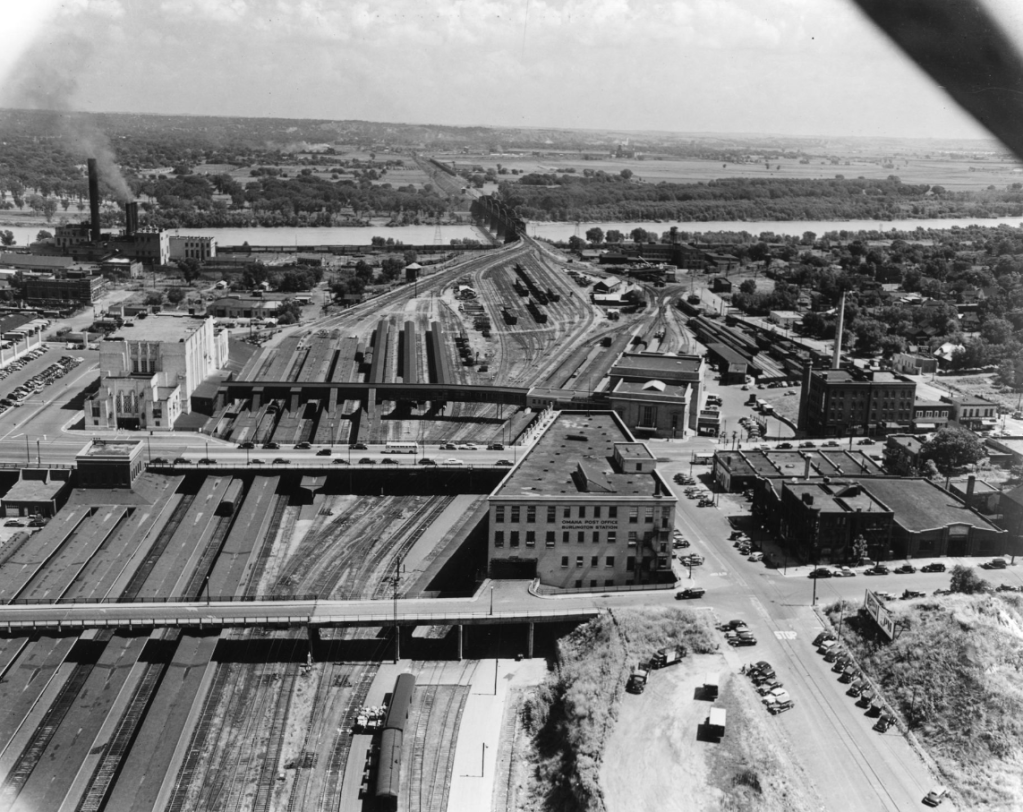
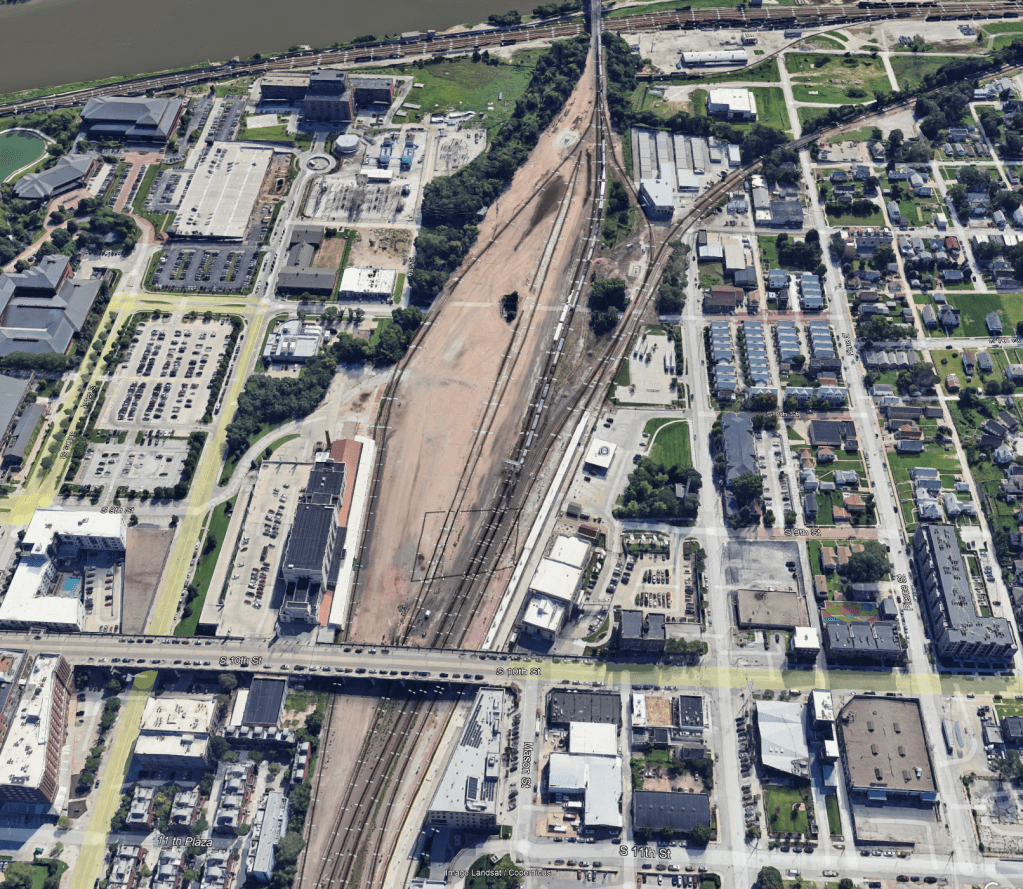
Burlington Station is one of Omaha’s two historic train stations. While the newer Union Station sits on the north side of the tracks, Burlington Station sits on the south, just east of the 10th Street viaduct in Omaha’s Rail and Commerce Historic District.

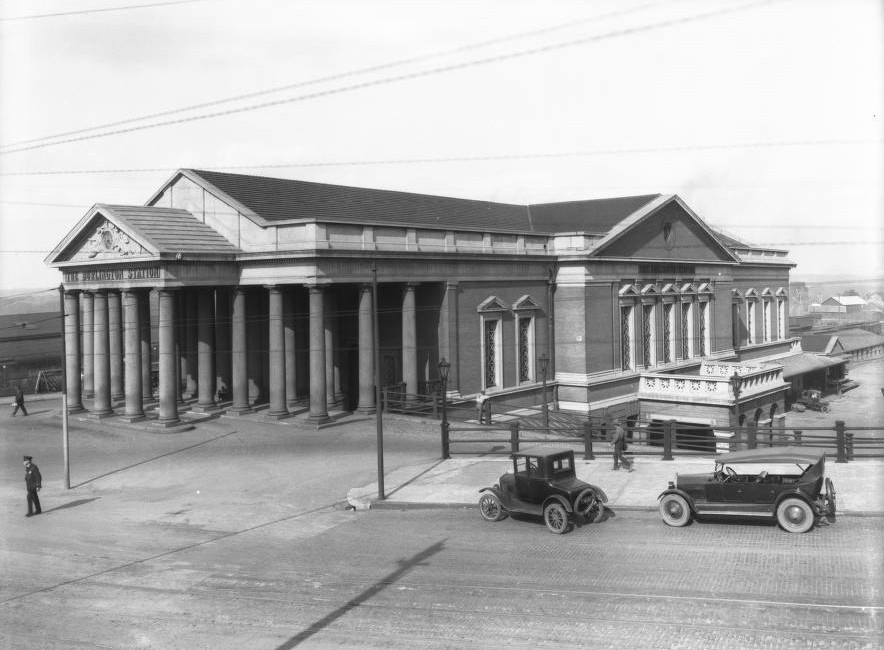
The iconic structure was designed by architect Thomas R. Kimball in the Greek Revival style. It replaced the original train station built on the same site in 1870. The exterior was made of light gray limestone, and the roof was covered in glazed red tile. The building featured 28 marble columns and mosaic floors, along with a large ornamental clock mounted atop a globe. Flanking the globe were figures representing manufacturing, agriculture, industry, commerce, steam, electricity, enterprise, science, art, and literature. In addition to waiting rooms, the station offered a lunch counter, offices, smoking room, and many other amenities. A grand circular staircase accented with bronze castings of Rocky Mountain sheep heads led passengers to the track level, where they boarded trains beneath a large canopy.

Located at 1001 South 10th Street, the 48,000-square-foot station was built at a cost of $408,000. It opened just in time to welcome visitors to the Trans-Mississippi Exposition in 1898. At one point, it was referred to as America’s finest railroad station and an artistic gem resembling a Grecian temple. Serving the Chicago, Burlington & Quincy Railroad, it carried not only passengers but also freight, crops, and mail.
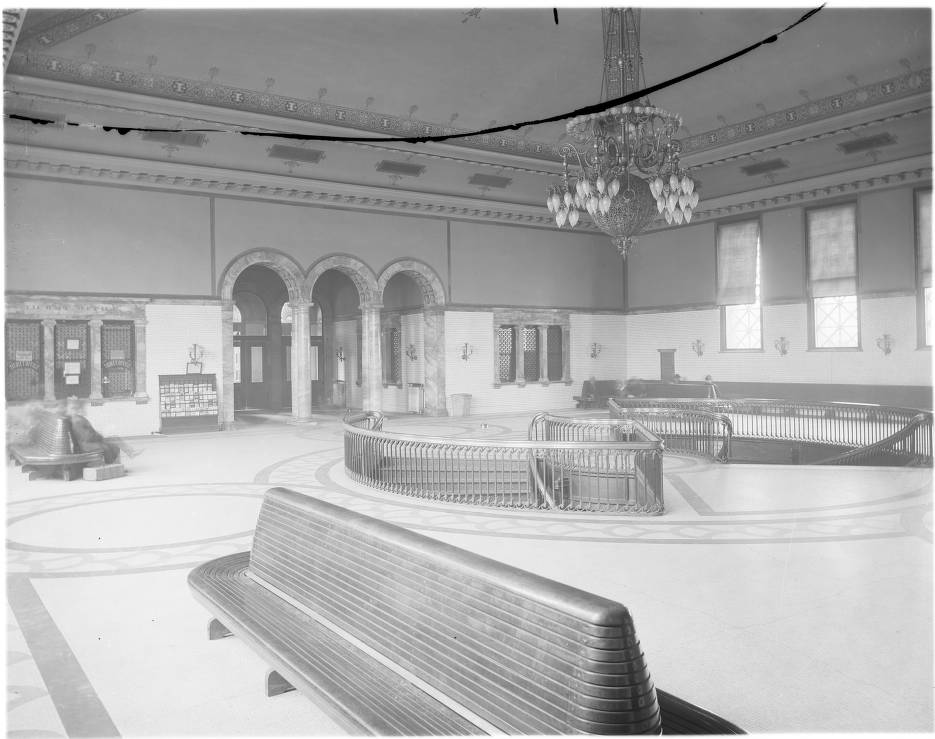
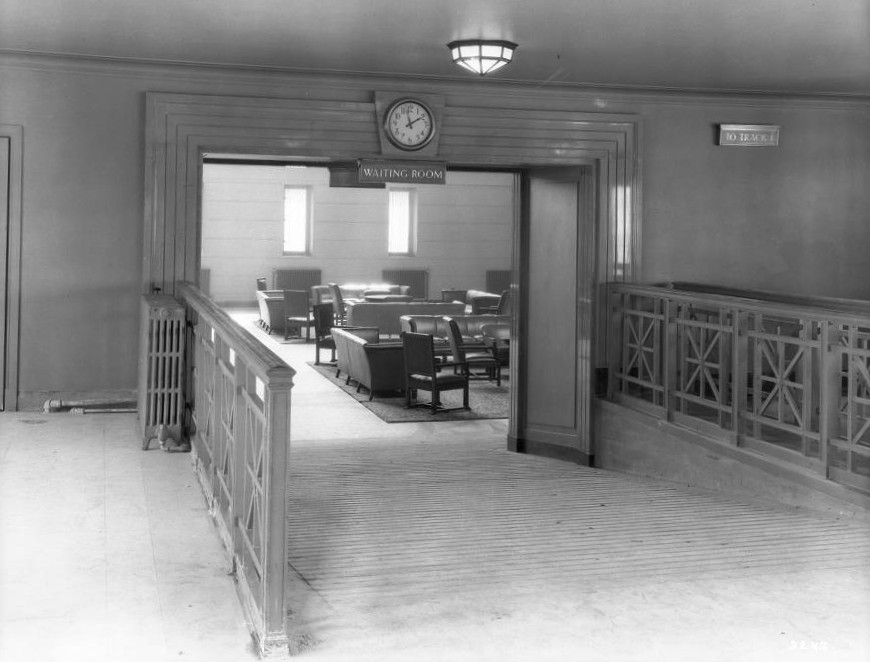
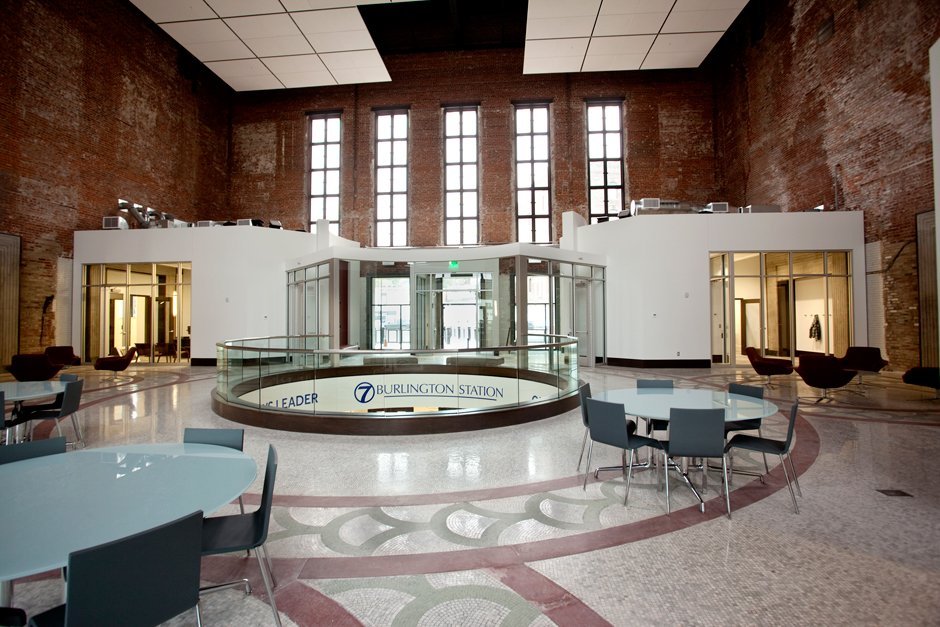
Union Pacific opened its Art Deco–style Union Station on the other side of the tracks in 1930. To compete, Burlington Station was extensively remodeled by Graham, Anderson, Probst & White of Chicago in the Neoclassical Revival style. The new design simplified the exterior, including the removal of the columns, which were relocated to Lincoln, where they still stand near Memorial Stadium. The roofline over the waiting area was raised, while the central spiral staircase was removed and its circular opening covered. The arched doorways were replaced with flat ones to create a more linear look. When completed, the station featured four large lanterns—each weighing more than a ton—as well as a new restaurant and a concourse that provided easier access to the trains.
Burlington Station was remodeled again in 1954, when a major parking structure and a circular drive for passenger drop-offs were added. Over the following decades, however, train travel declined in popularity, and the grand station fell into disrepair. Amtrak provided brief hope, leasing the station in 1971, but citing high maintenance costs, it moved to a more modest facility in 1974. After Burlington Station closed, it was added to the National Register of Historic Places.

Following a failed attempt to return Amtrak service to the old station, the building was used occasionally for events such as open-air markets, plays, and haunted houses. It remained vacant as multiple redevelopment proposals surfaced over the years. Ideas included a restaurant and cocktail lounge in 1983; a business center with offices, a convention center, shops, and restaurants in 1985; headquarters for Warren Distribution in 1989; and a multi-purpose facility featuring condominiums, restaurants, shops, a spa, and gym as recently as 2005.

During this period, the building—despite lacking electricity, heat, air conditioning, or lighting—was used as shelter by homeless individuals during harsh winter months. The lack of maintenance led to a leaking roof and graffiti-covered, crumbling walls.
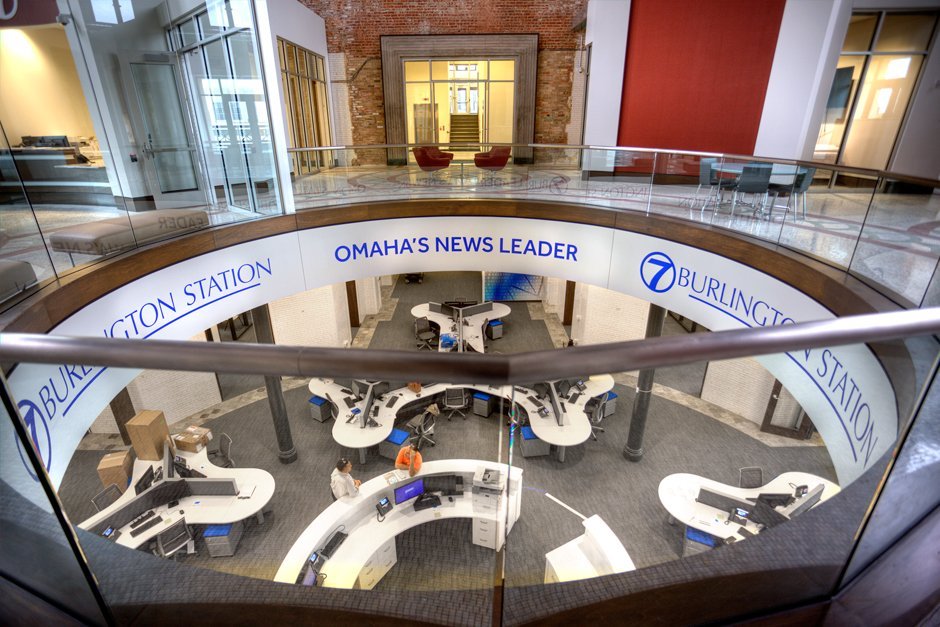
In 2013, KETV announced an ambitious plan to transform Burlington Station into its newsroom, ultimately saving it from demolition. The news station sought not only a larger space but also the opportunity to preserve a historic landmark. Led by Leo A. Daly and Lund-Ross Constructors, the $22 million project restored the building’s exterior to its historic appearance while outfitting the interior with modern broadcast technology. In 2017, the Great Plains Chapter of the National Railway Historical Society honored KETV, Leo A. Daly, and Lund-Ross Constructors with the John H. Conant Award for their efforts in preserving American railroad history.

Content written by Omaha Exploration. If you enjoy my content, you can follow and/or subscribe on my Facebook page and signup to receive emails or make a donation on my website. Thank you and until next time, keep exploring!
Omaha Exploration is sponsored by @Rockbrook Mortgage Inc.
Click here to learn about opportunities to sponsor Omaha Exploration!
More pictures




Follow OE on Facebook for more
Get an email when new content is posted
Omaha Exploration, 2025. Unauthorized use and/or duplication of this material without express and written permission from this site’s author and/or owner is strictly prohibited. Excerpts and links can be used, if full and clear credit is given to Omaha Exploration with appropriate and specific direction to the original content.
Omaha Exploration proudly supports

Contact me to learn more about M4K!
 Omaha Exploration
Leave a comment