
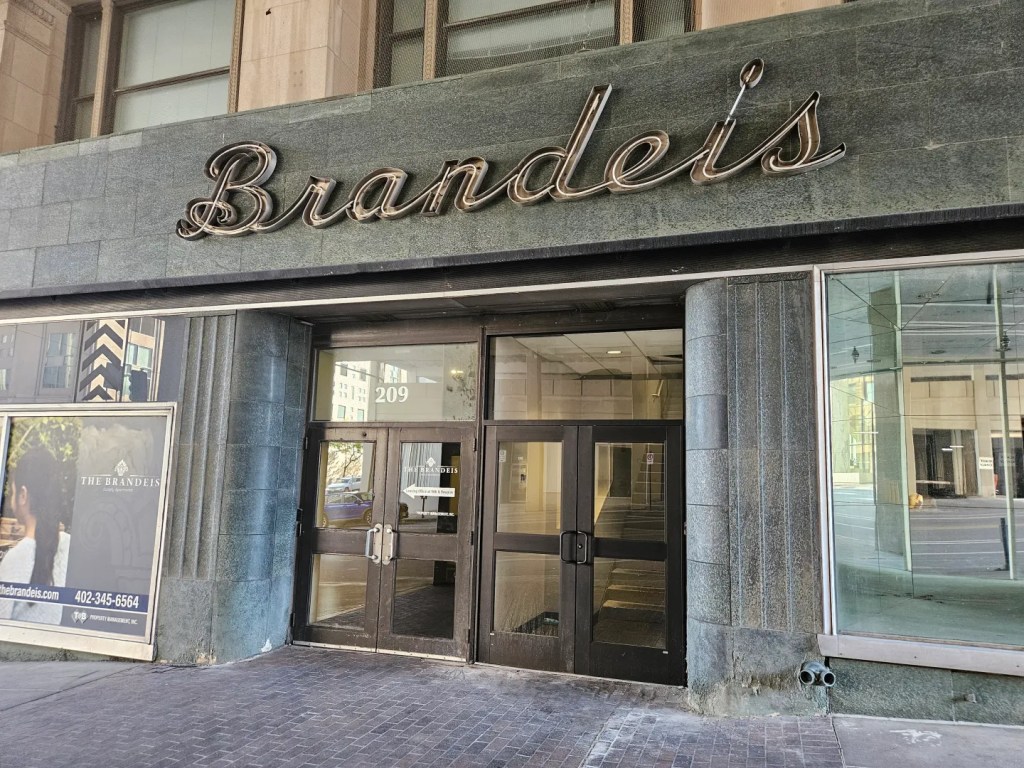
At one time, an Omaha retail store was the largest between Chicago and San Francisco. It was started by Jonas L. Brandeis, a native of Prague who was born in 1836 and immigrated to the U.S. when he was 20 years old.

A tanner by trade in Prague, he first settled in Wisconsin. The opening of the Manitowoc Clothing Store launched his retail career. Named for the town where it was located along Lake Michigan, between Milwaukee and Green Bay, he is reported to have traded with Native Americans.
While in Wisconsin, Jonas married Fannie Tewels, and the two had four children: Arthur, Emil, Sarah, and Hugo. Jonas saw opportunity in the growing city of Omaha, which not only sat along the Missouri River but also served as a hub for the railroad.
After relocating to Omaha in the 1880s, Jonas opened a new store called The Fair, or J.L. Brandeis & Son, on 13th between Howard and Jackson Streets. At this point, he was joined by his eldest son, Arthur, in the family business. A shrewd businessman, Jonas employed a number of tactics to draw attention to his store. Among these were sidewalk sales, window displays that he kept lit up at night, riding a wagon full of marked-down merchandise through the streets, and releasing a dozen balloons with coupons for free clothing.
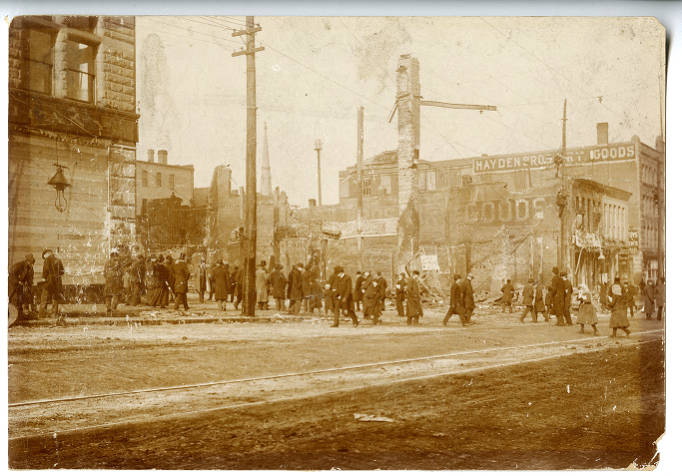
The success of the first store led to the opening of a larger store, J.L. Brandeis & Sons, at 16th and Douglas Streets, at which point his other two sons had joined the business. After the new store burned to the ground in 1894, they built an even larger one to replace it. Around this time, his sons assumed day-to-day responsibility, allowing their father to retire. Each had a specialty, with Arthur as its president, Emil focused on expansion, and Hugo on merchandising. They were joined by their cousin, George, who eventually moved to Chicago to manage another store.

While Jonas passed away in 1903 at the age of 66, the store didn’t miss a beat and was well on its way to becoming a force in the retail landscape well beyond Omaha. In 1905, the brothers embarked on an ambitious project to build what would become one of the largest buildings in the city.

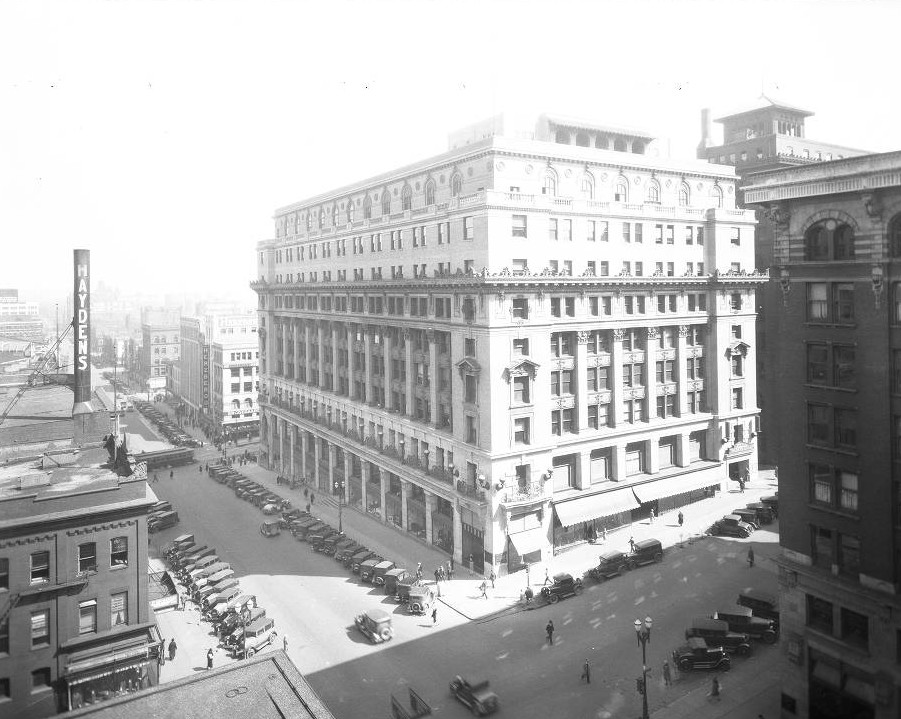
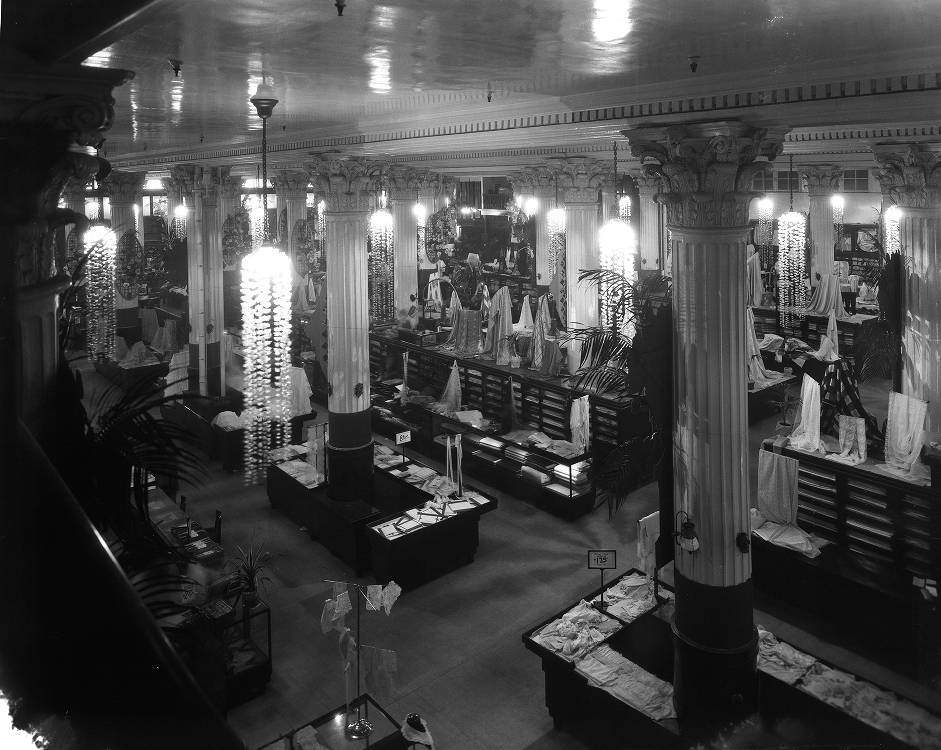
They hired prominent architect John Latenser Sr. to design an eight-story building in a Neo-Renaissance style. The facade was made of stone, brick, and terra cotta, featuring ornamentation and window trim that differentiated each floor from the outside. Inside, it had ornate floor-to-ceiling columns. At first, the store occupied the first three floors and the basement while the upper floors were used as offices.

The massive building at 210 S 16th Street was an entire block long and a half block wide. It was built in the tradition of its contemporaries, including Macy’s and Marshall Fields. Brandeis was among the first to become a total-service store, offering restaurants, a post office, community meeting rooms, free telephone services, and other amenities. According to one newspaper, it had the longest single sales aisle of any store in the world.

After the new store opened in 1906, Brandeis became synonymous with retail in Omaha. They didn’t stop with retail, however, as they built the Brandeis Theater across the street in 1909. The two buildings were connected not only by an underground tunnel but also by a strip of red pavement across 17th Street that allowed a grand exit from an afternoon of shopping to the entrance of the theater for an evening show.
The Brandeis family would suffer unthinkable tragedy over a four-year period that saw all three sons pass away at relatively young ages. At 48 years old, Emil passed away in 1912 while on the Titanic. Three months later, Hugo passed away at 44 following an operation. The weight of running the massive operation fell onto the shoulders of Arthur, who was fortunate enough to have his nephew George return from Chicago. Arthur passed away four years later at the age of 52 following surgery for appendicitis.

Under George’s leadership, the store continued to expand, occupying all eight floors while adding two more in 1921. It also included upscale restaurants such as Italian Renaissance and Pompeian Room, with combined seating for 1,500.

While George provided some much-needed stability, Arthur’s son, E. John, was ready to assume control following his uncle’s death in 1948. He proved quite capable and brought unique experience earned while serving in the military, traveling the world, and hunting. E. John was adamant that the stores remain spotless while adding customer conveniences, including air conditioning and escalators. He even went as far as razing the theater across the street to build a connected parking garage over 17th Street that delivered customers to its entrance.
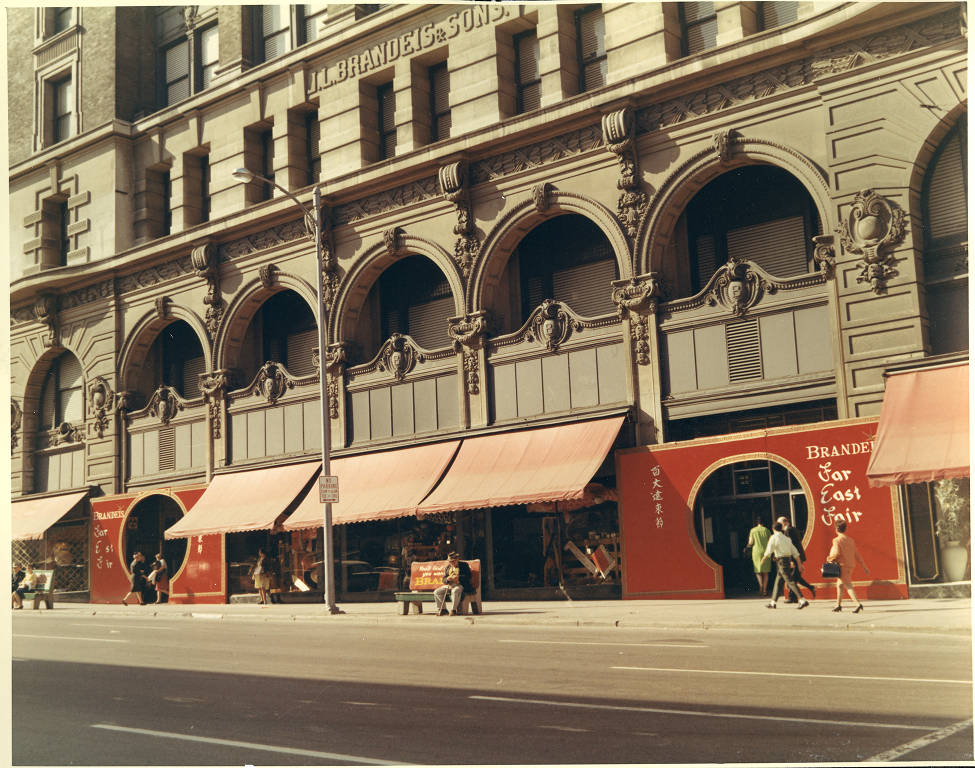
During E. John’s tenure, the store expanded beyond its single downtown location. They developed two malls, allowing Brandeis to be the anchor of each: Crossroads and Southroads. He proceeded to open another store in Omaha at 132nd and Center, as well as the Gold and Company store and Gateway Mall in Lincoln. Other locations were opened in Grand Island, Columbus, Council Bluffs, and Des Moines.

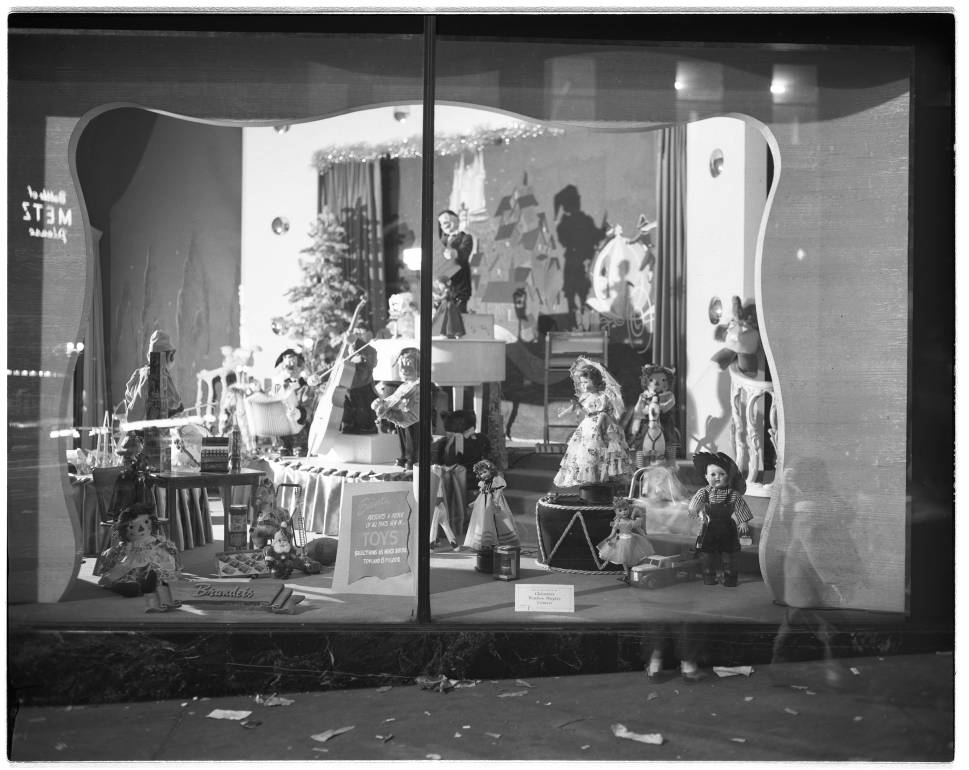
By the time E. John passed away in 1974, Brandeis operated more than a dozen stores with over 3,000 employees and more than $100 million in sales annually. It was also one of the largest family-owned retail businesses in the country. Despite its expansion, the flagship store at 16th and Douglas Streets remained important not only to the family but to the citizens of Omaha. For generations, it was an extremely popular holiday destination, as the store was lit up at night and featured elaborate window displays, decorated Christmas trees, and an in-house Santa Claus.

With no children of his own, the store was taken over by his nephew, Alan Baer, the son of his sister Leola. By this time, however, the retail landscape was changing. Combined with the city’s continued westward expansion, customers largely abandoned downtown as a shopping destination. This led to the painstaking decision to close its flagship store, which was added to the National Register of Historic Places in 1982. Baer sold the building, and by 1987, he realized the store could no longer compete and sold it to Younkers.

Over the next two decades, Brandeis would change hands a number of times, each with their own vision of what to do with it. In 1981, its owners divided the building into office space, retail, and a food court while adding two atriums and a skywalk that connected it to Parkfair Mall. Despite those changes, the building deteriorated due to neglect, causing businesses to relocate and the owner to default on its mortgage. Its next owners restored the building, including improvements to the entrance at 16th Street, adding exterior lighting that resembled the lamps from the 1960s, enlarging the food court, repairing the parking garage, and converting retail space to offices.
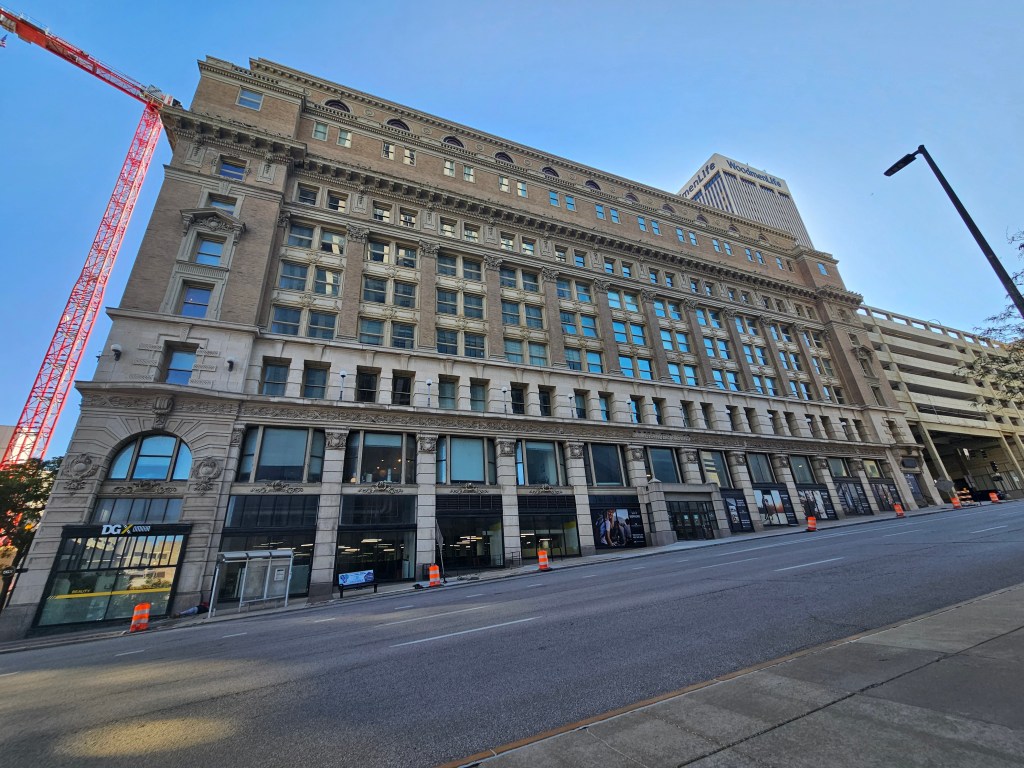
After being sold again in 2004, there was a failed attempt to convert it to luxury condos. It was only partially occupied when the developer went bankrupt, resulting in its conversion to being primarily residential not being completed until 2009. This included the addition of apartments, commercial and retail space, along with a food court. Today, its amenities include concierge service, a lounge with a billiards table, dry cleaning pickup and drop-off, a fitness center, a community room, and a movie theater.
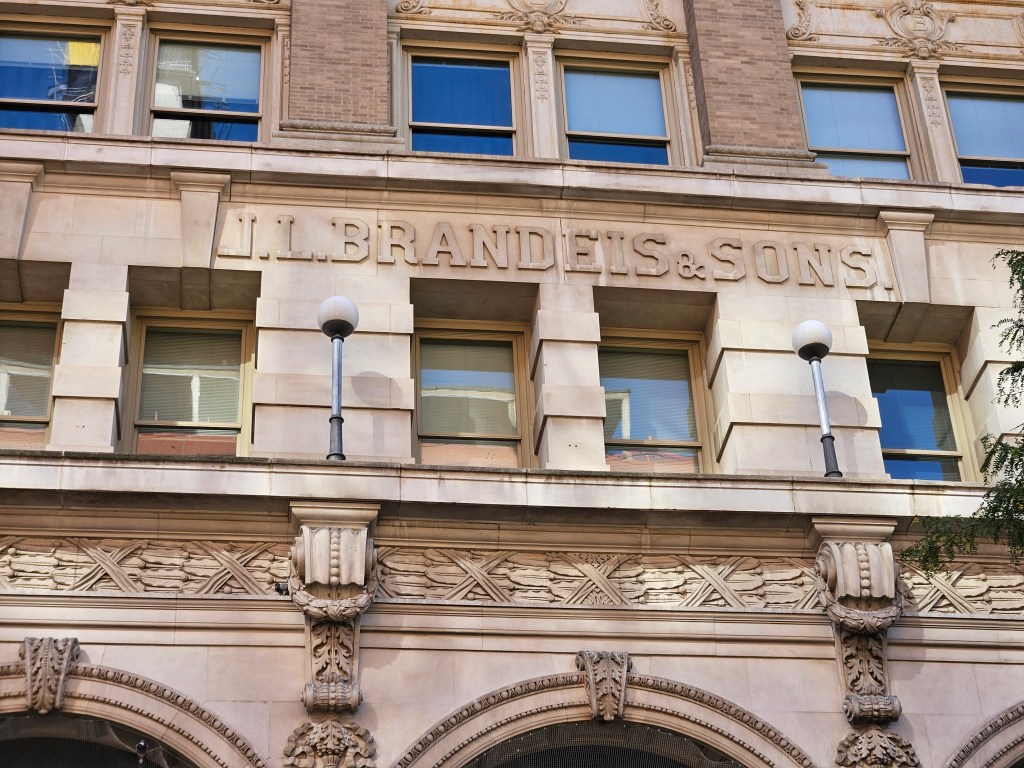
While the J.L. Brandeis & Sons store is long gone, the building remains a landmark that keeps Omaha’s history alive downtown.
Content written by Omaha Exploration. If you enjoy my content, sign up to receive emails or make a donation on my website. You can also follow along or subscribe on my Facebook page. Thank you and keep exploring!
Omaha Exploration is sponsored by @Rockbrook Mortgage Inc.

Click here to learn about opportunities to sponsor Omaha Exploration!
More pictures


Follow OE on Facebook for more
Get an email when new content is posted
Omaha Exploration, 2025. Unauthorized use and/or duplication of this material without express and written permission from this site’s author and/or owner is strictly prohibited. Excerpts and links can be used, if full and clear credit is given to Omaha Exploration with appropriate and specific direction to the original content.
Omaha Exploration proudly supports

Contact me to learn more about M4K!
 Omaha Exploration
Leave a comment