
Long before Omaha’s Henry Doorly Zoo was recognized as one of the world’s best, it was Riverview Park.
The land along the Missouri River with steep hills was acquired on the cheap between 1893 to 1899. This was by design as Horace Cleveland, the architect of the parks and boulevard system, advocated for park land being acquired cheaply before the growth of the city caught up to it.
While the area was mostly undeveloped, Tom Murray, one of the city’s original pioneers owned 160 acres of land in the area. Referred to as an old time junk dealer, Tom kept a variety of items on his pasture including second-hand coffins and a ship’s anchor. In the early days, pioneers could find nearly everything they needed.

Upon learning of the city’s plan to establish a park in the area, good ol’ Tom offered to “donate” 10 acres to the city as long as they agreed that the park and the boulevard connecting it to the other parks be named after him and that he not be taxed for improvements he made to his adjacent land. He knew that by platting the land after the park was established, it would become even more valuable.
Mayor George Bemis declined as the cost to improve the donated land was more than it was worth. He added that if the city wanted the land the land, it should get it by purchasing it or condemning it – either of which would be cheaper than the conditions imposed by the landowner. While Tom would sell the land to George Warren Smith of Boston, the city acquired much of it in the decades that followed.
The Omaha World-Herald even weighed in stating that: “Public parks are preserved – to this day – to be named for men of such high character and public spirit that they are entirely deserving of the honor. Mr. Murray does not deserve this recognition and the people generally will be glad that he is not to receive such recognition”.

The hilly terrain of the 66 acre park with its deep ravines and ridges offered spectacular views of the river which inspired its name. The city hired 120 men to improve the land by cutting decaying trees, removing underbrush, clearing timber, grading and beautifying the grounds in preparation for its grand opening in June. Larger than Hanscom Park to the west, Riverview was expected to be the most utilized of Omaha’s seven parks.

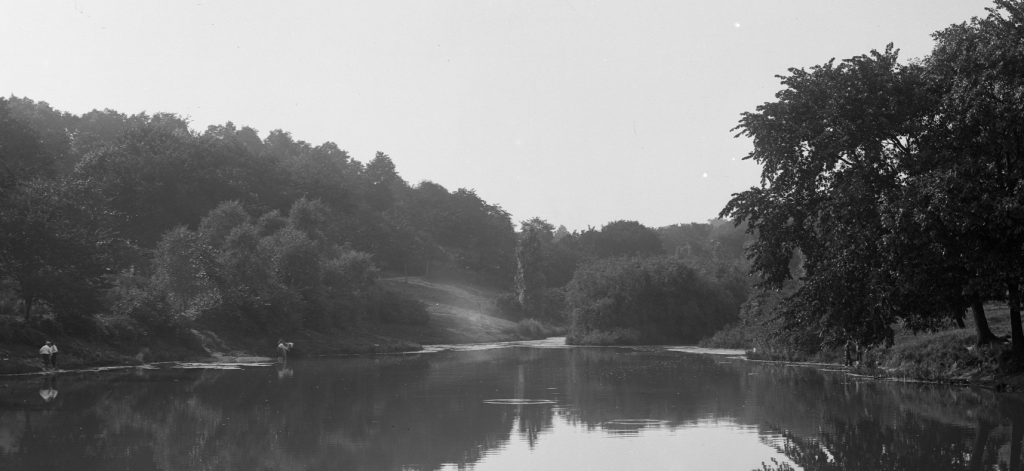
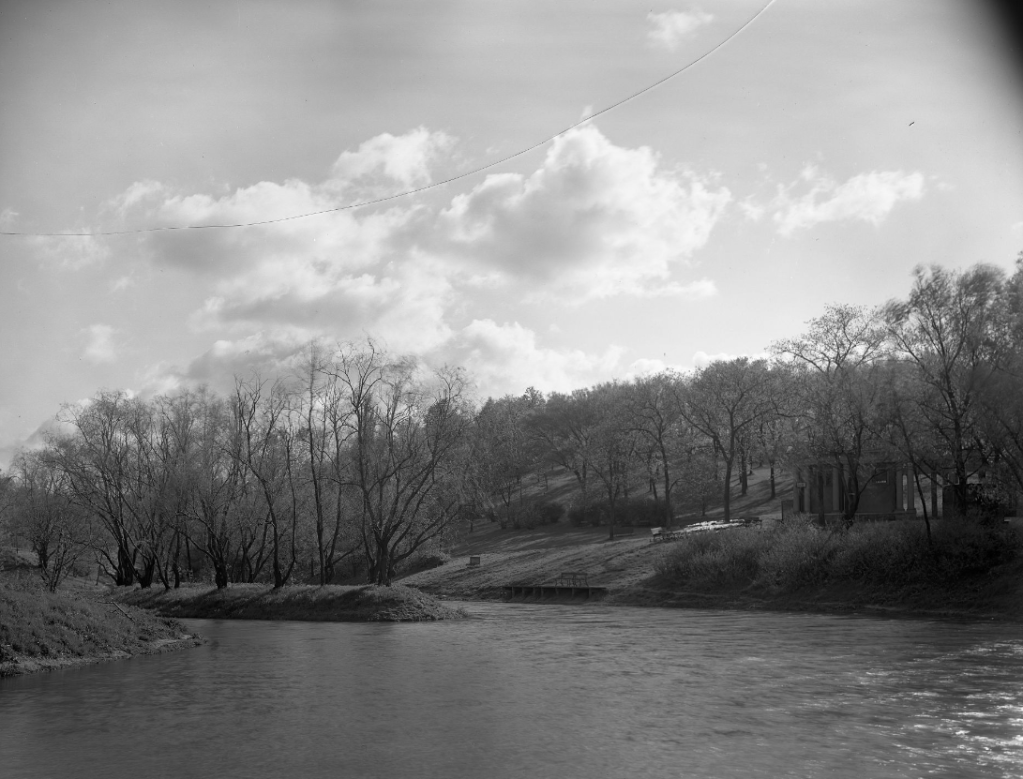
On the northern end of the park was a tall ridge crowned with trees. Extending to the heart of the park was a ravine that was converted to a lake. Near the ravine were 19 tennis courts and baseball fields.

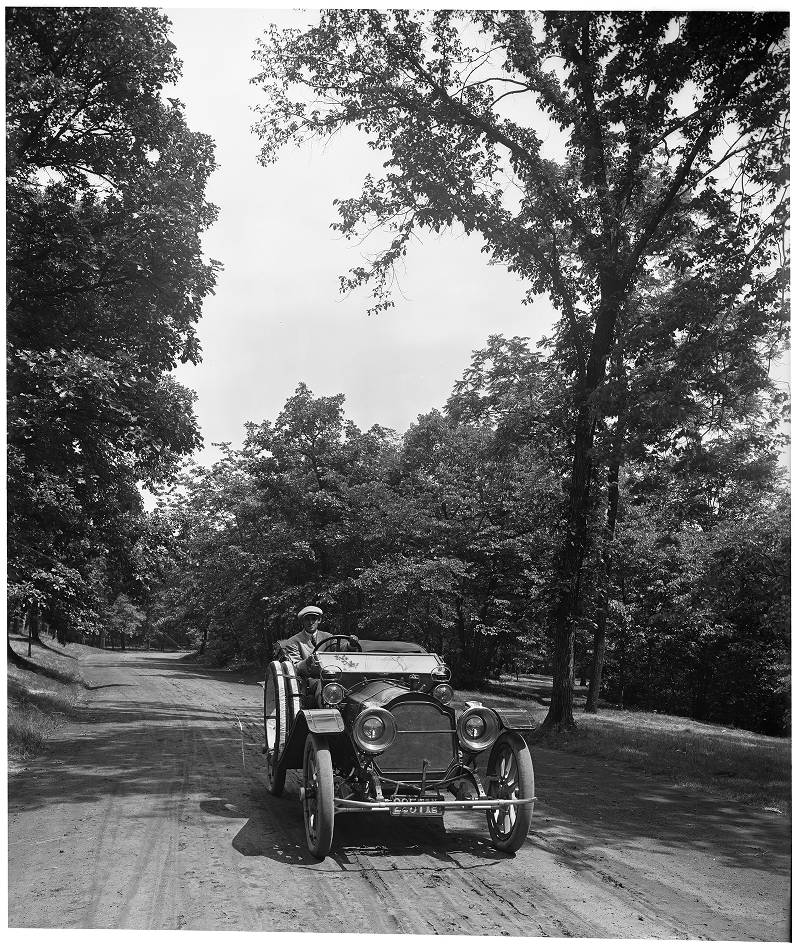
On the east side there was a shaded walk bordering a ravine to a concourse for a small playground under large trees. Rustic bridges were constructed over ravine. The longest trail called “Lover’s Lane” went past deep ravines and slopes covered with hazel, sumac and wild grape and led to the top of the ridge providing spectacular views.

The grand opening of the park took place on June 24, 1894 with over 5,000 visitors watching the Fort Omaha Military Band perform. The park proved to be extremely popular and continued to add attractions including an artesian well that allowed access to water for both drinking and medicinal use. After that a lake was added to allow for ice skating in addition to a music stand. Concerts and picnics were held between the two entrances along 9th Street. Meanwhile the streetcar line along 13th Street provided easy access.
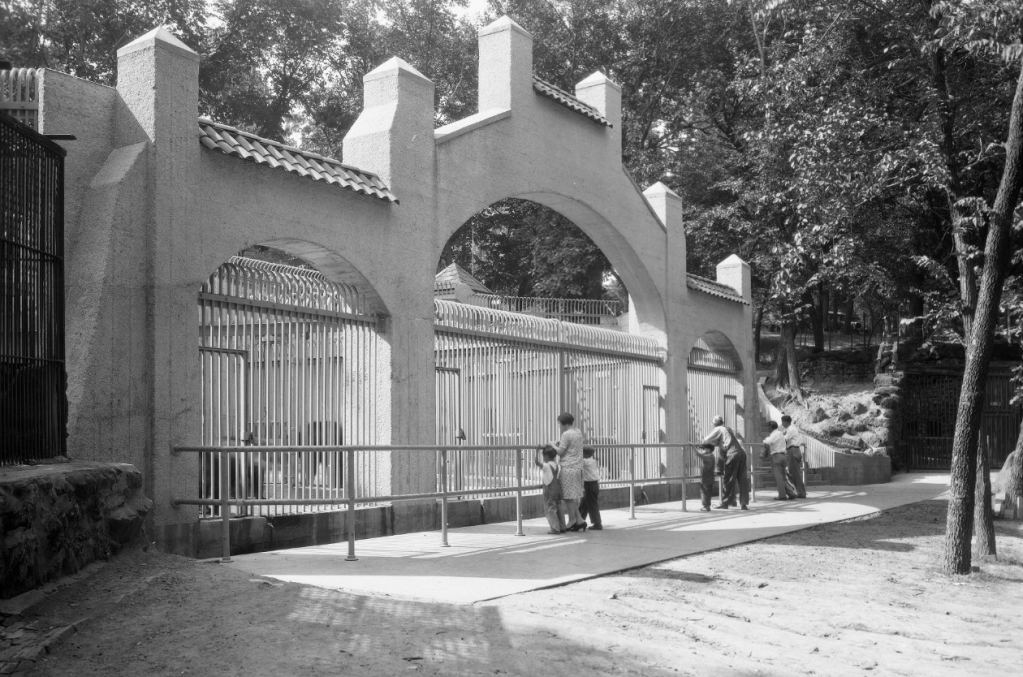
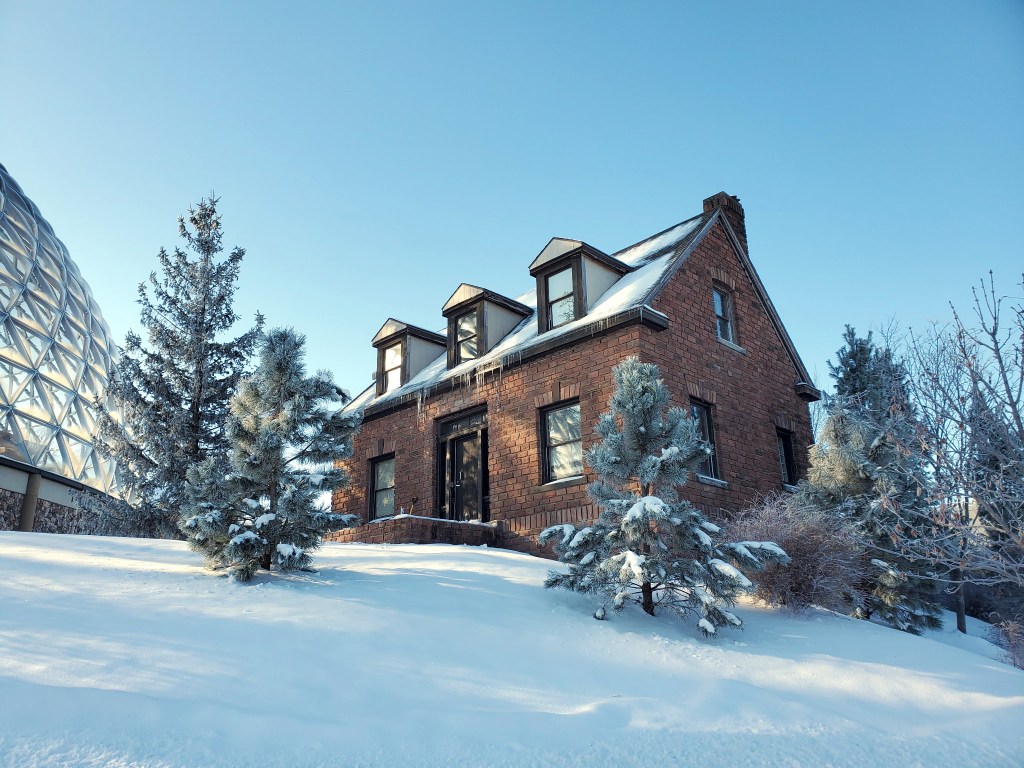
A cottage which still stands today was built inside the park so that Nels Anderson, its caretaker, could remain on site. The first animals – a moose, bear and fish – were moved to the park in 1895 followed by another 120 animals including deer and bison on loan from Buffalo Bill Cody in 1898. The park soon expanded to more than 100 acres with an increasing portion dedicated to animals. With native quarters for deer, elk and buffalo, it also had stone cages set into the hillside for the mountain lions, foxes, coyotes and badgers. By 1917 the collection also included mountain goats, hogs, bobcats, wolves, coyotes, opossums, monkeys, alligators, ducks, pheasants and a “freak five-legged cow.” New cat cages were donated by Gould Dietz in the 1920’s and new cat and bear exhibits were built by the WPA in the 1930’s.
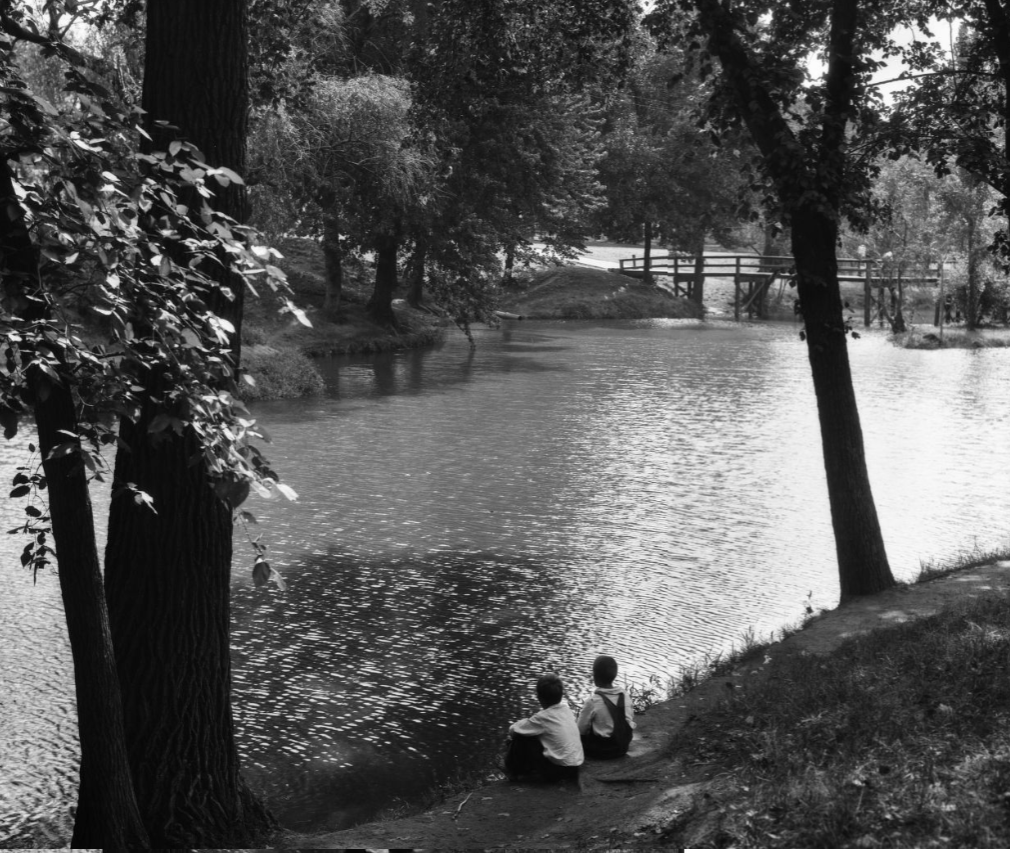
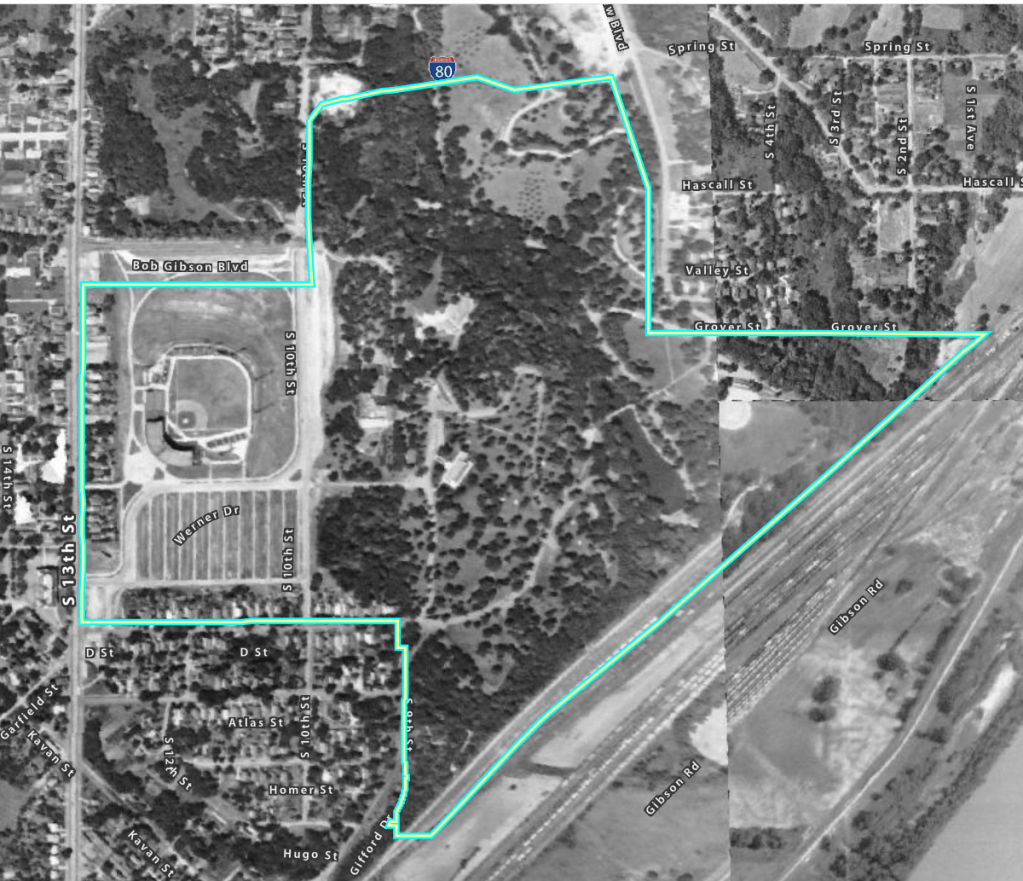
The park expanded in the early 1930s when the land that had once belonged to Tom Murray was acquired in a tax sale. Referred to as Sugar Loaf, the land was abandoned after its current owners calculated the cost of grading it and adding sidewalks, sewers and other improvements was not worthwhile. By this time the park was 140 acres.

The city acquired an additional 40 acres of Tom’s land north of Deer Park Boulevard in 1943. The land to the east was absorbed into Riverview Park while the land to the west that included high bluffs due to the grading of 13th Street was determined to be ideal for a new professional baseball stadium which would eventually be named after Johnny Rosenblatt.

Improvements were made to the park to support the continually growing number of animals as the Omaha Zoological Society was organized in 1952. Its days as Riverview Park came to an end in 1963 when Margaret Hitchcock Doorly donated $750k with the stipulation that it be named for her late husband, Henry, who was chairman of the World Publishing Company and publisher of the Omaha World-Herald which was founded by his father-in, Senator Gilbert Hitchcock.

Content written by Omaha Exploration. Feel free to leave a comment or a suggestion. Until then, keep exploring!
Omaha Exploration is sponsored by @Rockbrook Mortgage Inc.
More pictures



Subscribe
Type your email address below to be notified when a new story is posted.
Follow me on
Sponsor
Please contact me if you’re interested in sponsoring Omaha Exploration page: https://omahaexploration.com/contact-me/


 Omaha Exploration
Leave a comment