
Drake Court was not only Omaha’s largest but its premier apartment complex. The 14 building complex with interior courtyard was on the western edge of Omaha when it was built in 1916. It also served as the home to one of the city’s most famous citizens – Johnny Carson.

Built by the Drake Realty Construction Company, Drake Court was the product of brothers William and George Drake. While attending Iowa State as a mechanical engineering student, William had dreams of becoming the apartment king of the world alongside his brother who studied architecture. After graduating, they returned to Omaha in 1915.
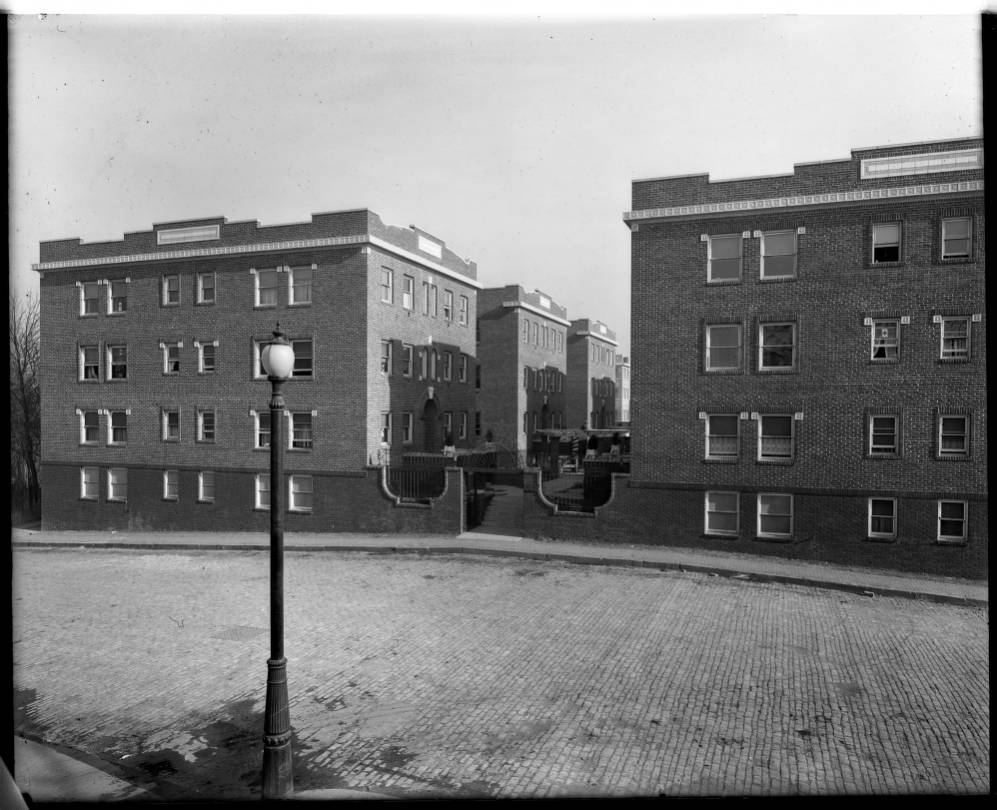
To build their masterpiece, they acquired the former Smith Caldwell property between 20th and 22nd Streets which was located on a strip of land between Leavenworth Street on the south and St. Mary’s Avenue on the north.

The brothers designed, financed and constructed Drake Court over the next three years. The 216 apartment units had a central courtyard with a formal garden and two gazebos. The complex also had a playground for children, central office that allowed tenants to pay their utility bills onsite while also leaving laundry to be cleaned and pressed and parcels delivered.

In 1919 they extended Drake Court west of 22nd Street with the construction of the Dartmoor apartment complex. These five buildings included 180 one bedroom units and look similar to Drake Court in some respects. The area on the western fringes of Omaha had become an affluent mixed-use neighborhood. Drake Court and its owner, William Drake, captured headlines in 1920 when his tenants organized to protest a $35 per month increase in rent.

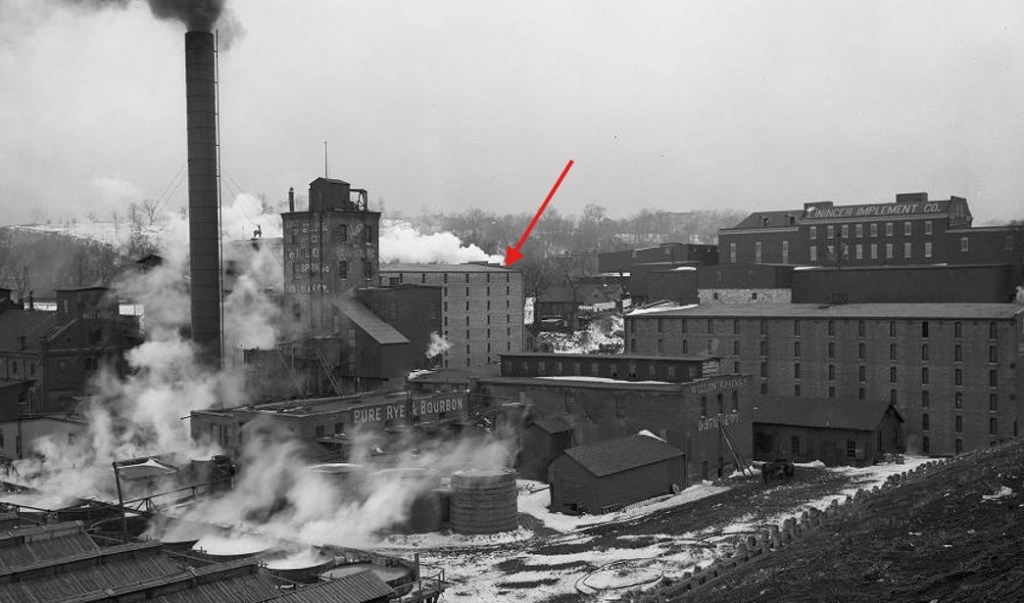
That same year the brothers acquired the former Willow Springs Brewery and Distillery near 4th and Pierce Streets and turned it into the place of business for their growing apartment empire. They renovated the building which sat empty for a time as it had one floor but was eight stories tall to accommodate the equipment inside. After adding seven interior floors, they converted to a warehouse while also building a mill and offices.
Still aspiring to become the apartment king, William and his brother George held more than $4M in apartments in 1925 while the company built 1,100 apartment units in Omaha in a 10-year period from 1918-1928. Among the Drake brothers other apartments were Coronado, Hanscom, Palmer, Alhambra, Austin, Terrace Court, Aberdeen, Carberry, Brandon, Elwood and many others.

The prevalence of Drake apartments led to the company competing against itself for tenants. As a result of overbuilding, William filed for bankruptcy and was forced to turn everything over to his creditors. The young man who made a fortune before he turned 35 years old lost everything. He moved to Chicago for a time before passing away in 1935 at just 45. George passed away in 1944 at 51.

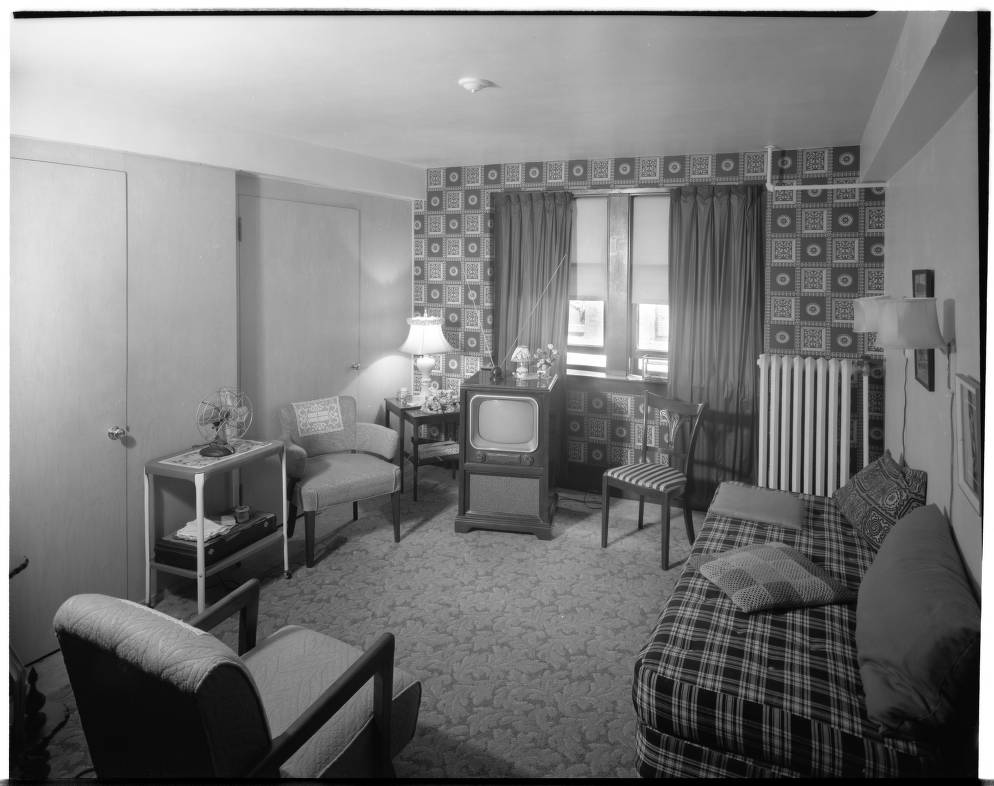
Drake Court remained a prestigious property and even included famed television host and comedian Johnny Carson as a tenant while he was working at WOW Radio in 1949. Johnny returned to visit the old home in which he painted one of the walls in 1969. Interestingly, its tenants organized again in 1970 to protest against rent increases.

By the late 1970s the surrounding neighborhood began to suffer as the city’s population began moving further west and the area was largely ignored. Through the 1980s and 1990s poverty was evident and crime including shootings, stabbings, fires and prostitution were rampant. Dartmoor, Ansonia (Anderson Apartments) and the nearby Rorick (City View Apartments) suffered as result. Drake Court wasn’t exempt from this as a series of negligent owners whose only interest in the apartment complex was to milk its tenants for profit without providing adequate living conditions in return. By 1990 only about 60 of the units were occupied with some of the buildings being condemned. In 1996 they were vacant save for the homeless that sought shelter when there were few other options.
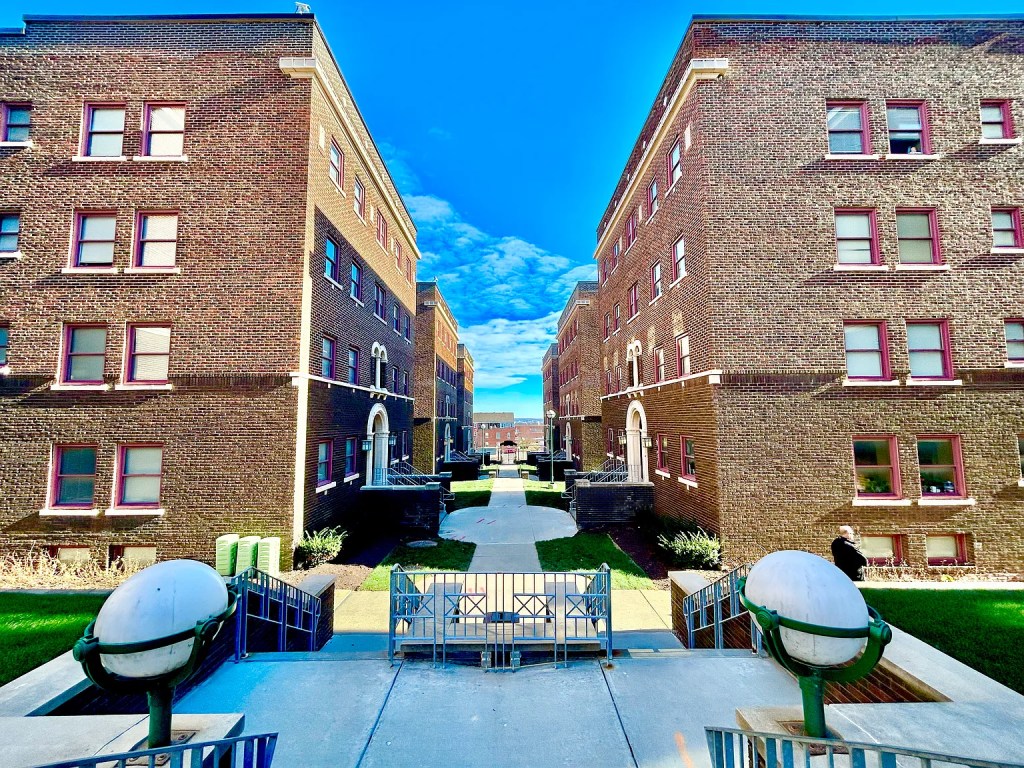
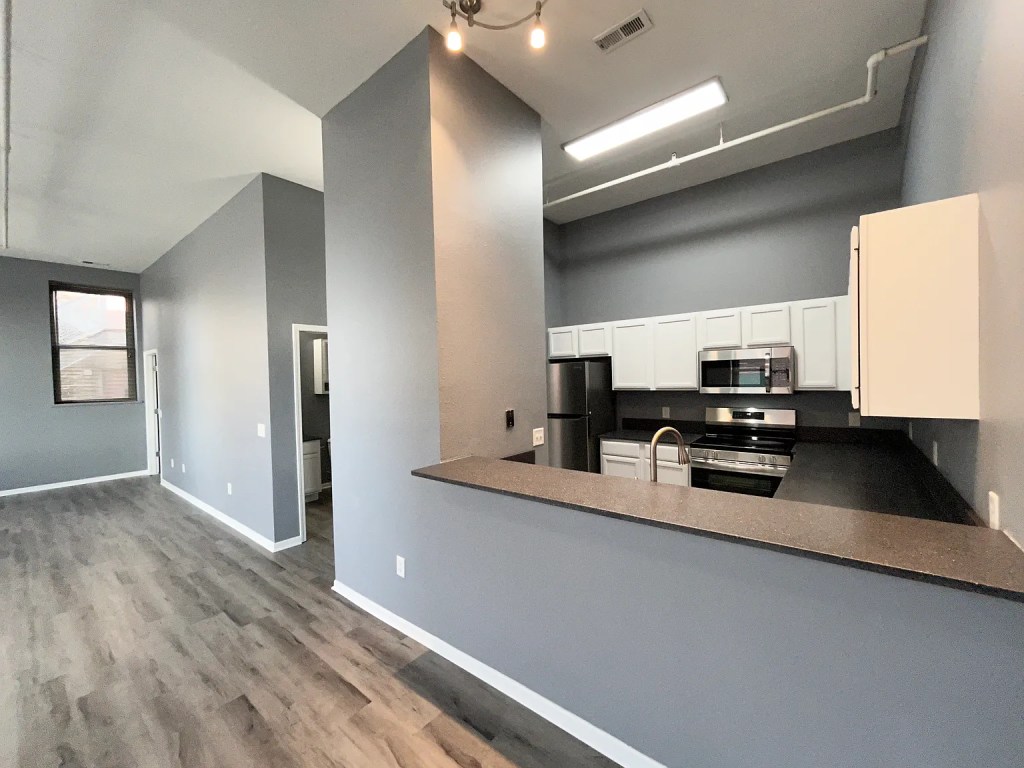
Drake Court found new life after NuStyle Development bought the complex. They gutted the buildings making sure to keep the exterior intact and created modern two and three bedroom mixed income units. The $16M project included the restoration of the courtyard as well as the addition of a fitness center, community room and information center. NuStyle also acquired the adjacent Grunwald building along Leavenworth Street which once served as the bus barn, paper storage warehouse and the temporary site of Liberty Elementary before its new building opened. It was converted into office space, lofts and indoor parking. When Drake Court reopened in 2003, rents ranged from $450 for a one bedroom up to $650 for a two bedroom. The apartment project was part of a larger plan to rejuvenate the area that included the construction of Liberty Elementary School next door.

The Drake Court Historic District which also includes the historic Dartmoor and Ansonia apartments were listed on the National Register of Historic Places in 2014. In 2024 NuStyle sold Drake Court to Harvest Development. Earlier this year its tenants formed a union claiming that living conditions have since gone downhill. Grievances included a problematic gate at the exterior of the building, a lack of security and being forced into month-to-month leases with rent increases.
Content written by Omaha Exploration. Feel free to leave a comment or a suggestion. Until then, keep exploring!
Omaha Exploration is sponsored by @Rockbrook Mortgage Inc.

Click here to learn about opportunities to sponsor Omaha Exploration!
More pictures




Follow OE on Facebook for more
Get an email when new content is posted
Omaha Exploration, 2025. Unauthorized use and/or duplication of this material without express and written permission from this site’s author and/or owner is strictly prohibited. Excerpts and links can be used, if full and clear credit is given to Omaha Exploration with appropriate and specific direction to the original content.
Omaha Exploration proudly supports

Contact me to learn more about M4K!
 Omaha Exploration
Leave a comment