

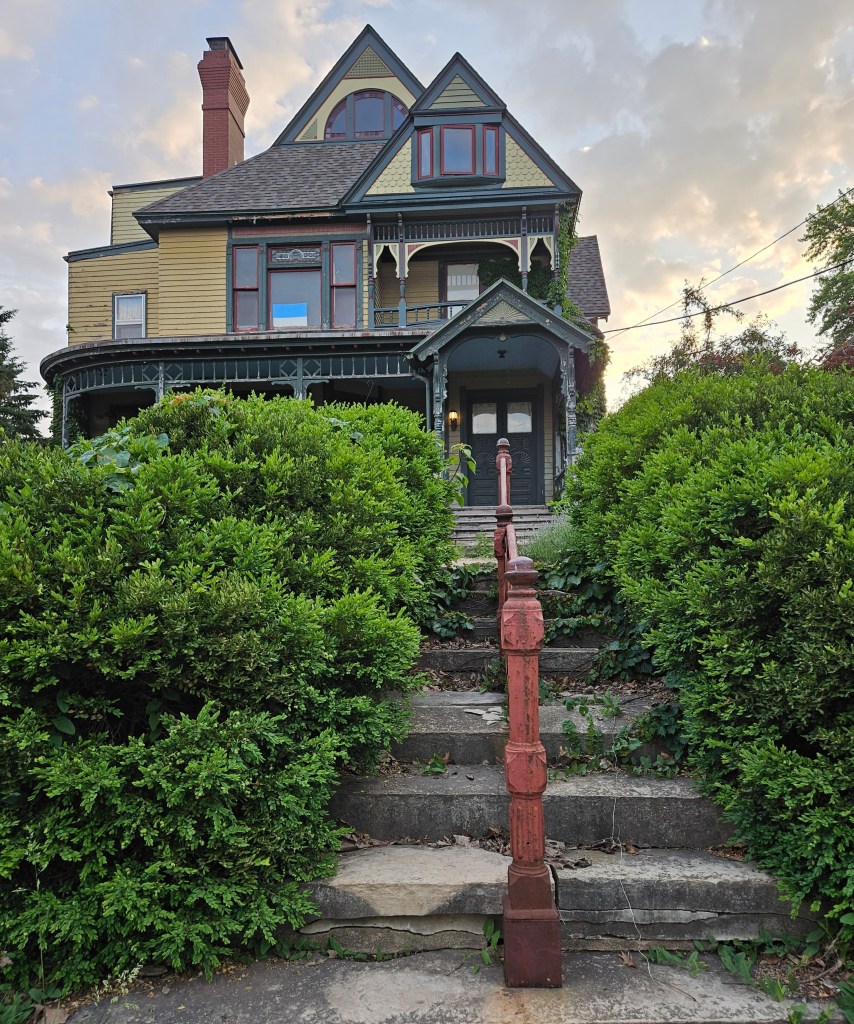
Built in 1890, the Queen Anne overlooking Hanscom Park was long considered a showcase home in the Field Club neighborhood. This style of house was popular during the Victorian Era from 1830-1890 and this was just one several that were built in the area.

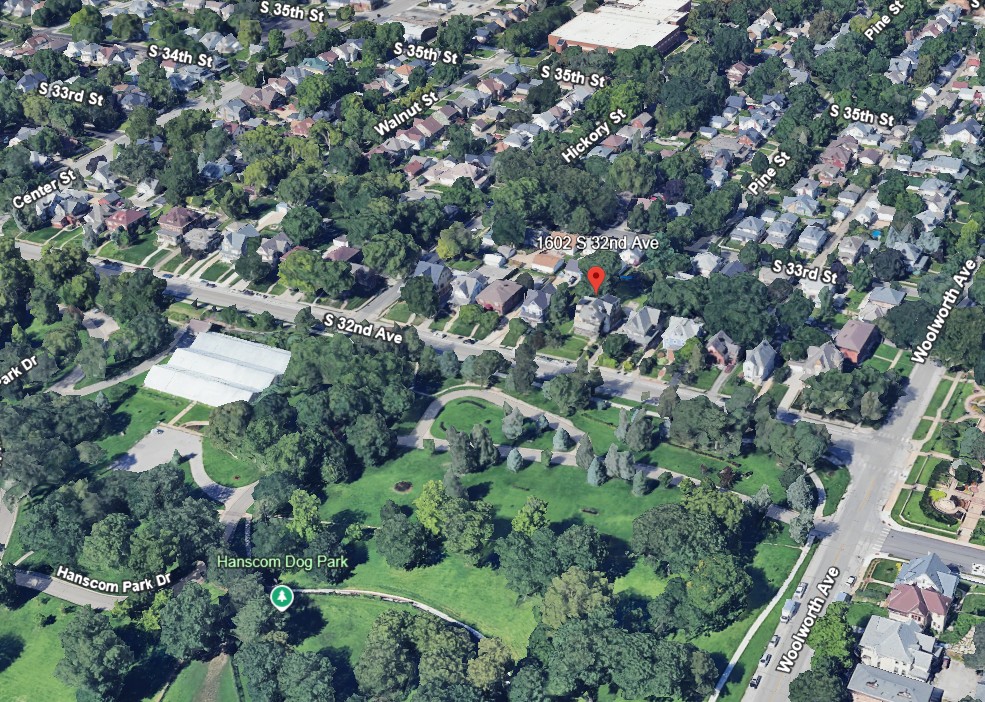
Located at 1602 S 32nd Ave, the 2 1/2 story house featured finials, cupola on its southeast corner, rounded wall on its northeast corner that resembled a turret as well as its elaborately detailed porch, ornamental shingling and large brick chimney. The steeply pitched and irregular roofline added to the asymmetrical nature of the style.

The 10-room house was built for Alfred Forman in 1890. He was the son of English immigrants and a native of Illinois that fought in the Civil War. Afterwards he worked as a train conductor before starting his own business as coal merchant and railroad ticket broker. While living in the grand house, he witnessed both the passing of his 19-year old Charles in 1895 and his wife Georgia in 1910. Every year on his son’s birthday, Alfred hosted a dinner for disadvantaged children.

After their deaths, Alfred mostly lived in the large home by himself. His longtime friend and coachman, Robert Anderson, lived in the carriage house for a number of years. Robert was also real estate agent who due to a spinal condition was known to conduct business from his buggy.
When Alfred passed away in 1933, he donated the house and several adjoining lots to the Omaha Creche, a daycare for single and working parents. His only request was that if it were to be used as a home for children, it be in the memory of his son. While the Creche never used it for that purpose, the memory of Froman family was honored with an annual outing for the children of the home. The house was rented to a number of occupants until it was sold in 1947.

At some point after Alfred passed away the house was turned into apartments as two of its porches were converted into apartment space. Interior designer Dick Bishop and his brother Daniel bought the house so that their parents could live in one of the apartments. The Bishop apartment was situated in what had been the foyer, dining room and parlor. These spaces were turned into a living room, pantry that featured a stained glass window that was moved from the front of the house to the side and the bedroom. In addition to the stained glass window, it had the original fireplace with decorative tile and metal scrollwork and iron fire basket over the hearth.

While the house lost its cupola, it maintains much of the intricate woodwork and details even if it is need of some TLC. With a permit having been filed recently for a remodel, hopefully a restoration of one of Field Club’s first houses is underway.
Content written by Omaha Exploration. Feel free to leave a comment or a suggestion. Until then, keep exploring!
Omaha Exploration is sponsored by @Rockbrook Mortgage Inc.

Click here to learn about opportunities to sponsor Omaha Exploration!
More pictures


Follow OE on Facebook for more
Get an email when new content is posted
Omaha Exploration, 2025. Unauthorized use and/or duplication of this material without express and written permission from this site’s author and/or owner is strictly prohibited. Excerpts and links can be used, if full and clear credit is given to Omaha Exploration with appropriate and specific direction to the original content.
Omaha Exploration proudly supports

Contact me to learn more about M4K!
 Omaha Exploration
Leave a comment