
While the Omaha Public Library can trace its beginning back as far as 1857, it disbanded shortly thereafter due to a lack of funding. It another 15 years before it made a comeback under the direction of men whose names are synonymous with Omaha: Byron Reed, Andrew Poppleton and James Woolworth. Its location was on the second floor of the A.J. Simpson Carriage Factory at 14th and Dodge Streets. The second library lasted five years before closing again in 1877.

After the second closure, the city levied a tax thereby allowing it to establish the Omaha Public Library later that year. To get it started, the now-defunct library association donated 4,500 books. The third proved to be a charm as the city’s rapid growth and increased demand for books forced it to move three times before finding a permanent home.

Land for the its new building was courtesy of real estate magnate Byron Reed who donated the land at 19th and Harney Street in 1894. Byron also donated most of his rare books, coins, currency, documents, manuscripts and other items to the library which were among the most complete in the country at the time.
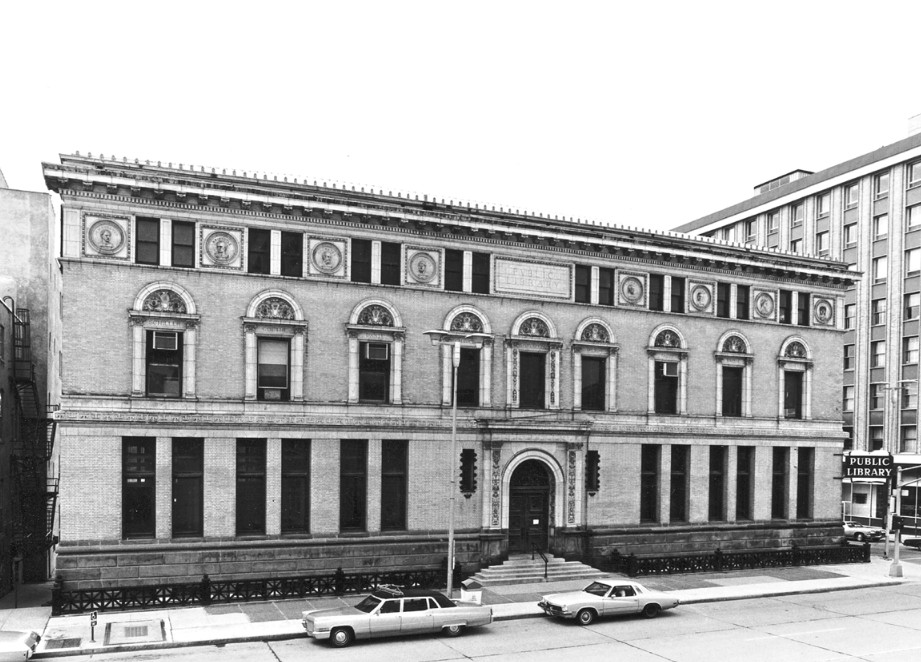
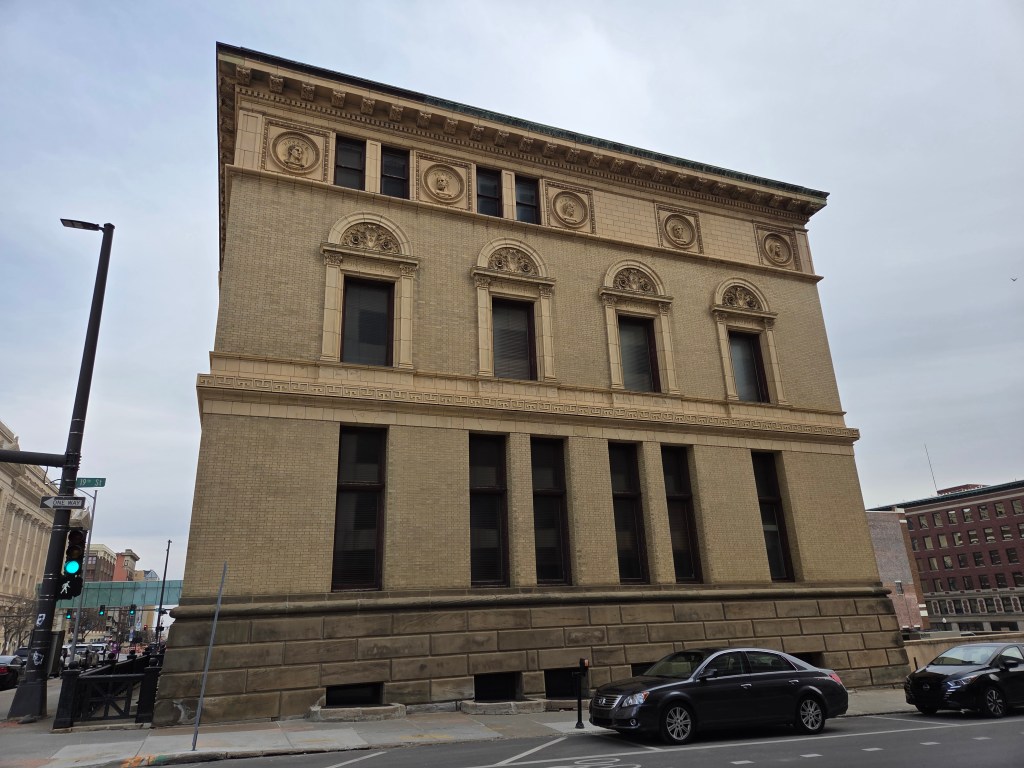
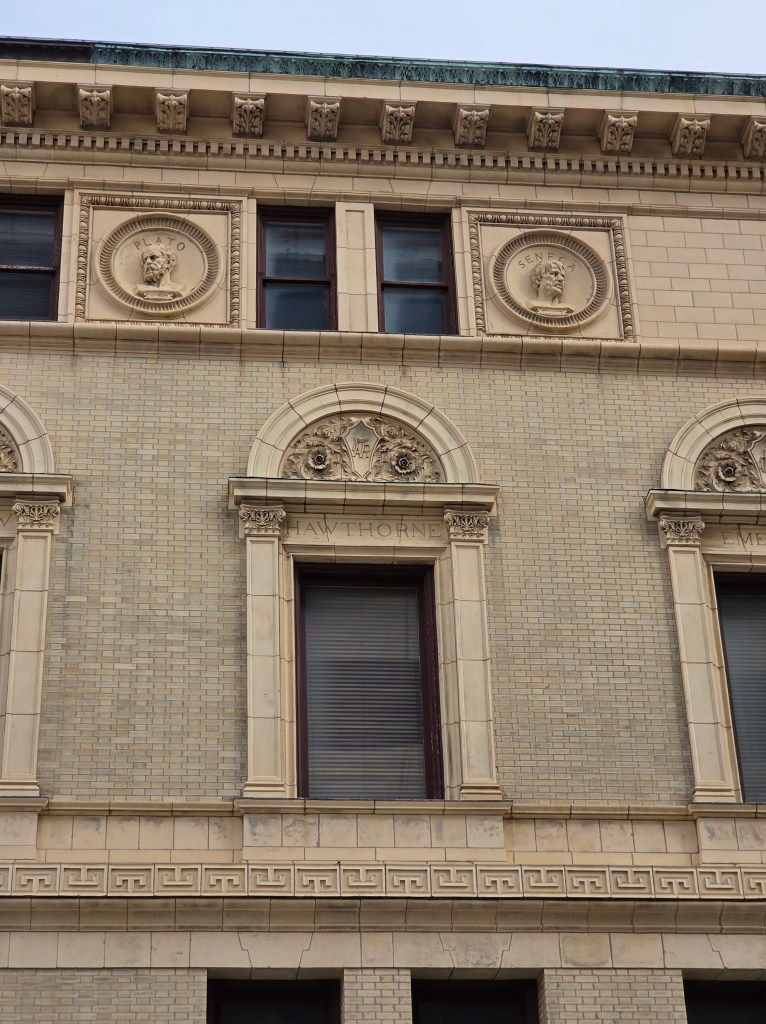
Located at 1823 Harney Street, John Harte was hired as the contractor and Thomas Kimball as its architect. The library was the architect’s first project in Omaha after attending school on the east coast and studying architecture in Paris. He designed the building in the Second Renaissance Revival-style. Among its key features is the elaborate terra cotta detailing and the lintel just below the cornice displays the names of important literary figures. He said that “he attempted to build a square, honest, sensible building, adapted inside and out to the purpose to which it is to be devoted.” It was often compared to the Boston Public Library.

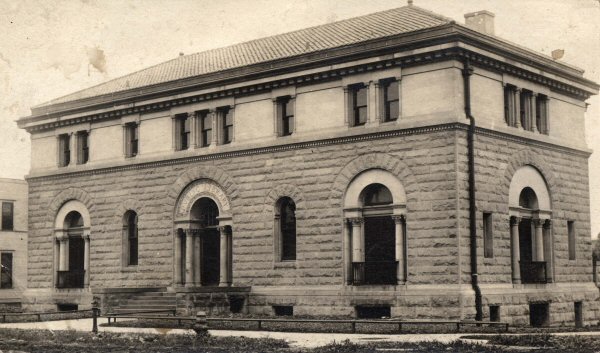
South Omaha, meanwhile, started its own library association in 1889 but found it difficult to find a permanent home. Like the Omaha Public Library, it moved frequently in its early years until industrialist Andrew Carnegie approved a grant to build a permanent structure. Located at 23rd and M Streets, it too was designed by Thomas Kimball. Opening in 1905, it was be absorbed into the Omaha Public Library in 1915 after South Omaha was annexed. Lack of space and damage to the building led to it being razed in 1954 and replaced with the current building.

The main library downtown, meanwhile, continued to serve as the symbolic center of Omaha’s general education and literary entertainment needs. Even so, Omaha won a satirical contest of having one of the worst libraries in the nation in the 1950s. Despite being a beautiful building, it was woefully inadequate to meet the needs of the growing city.
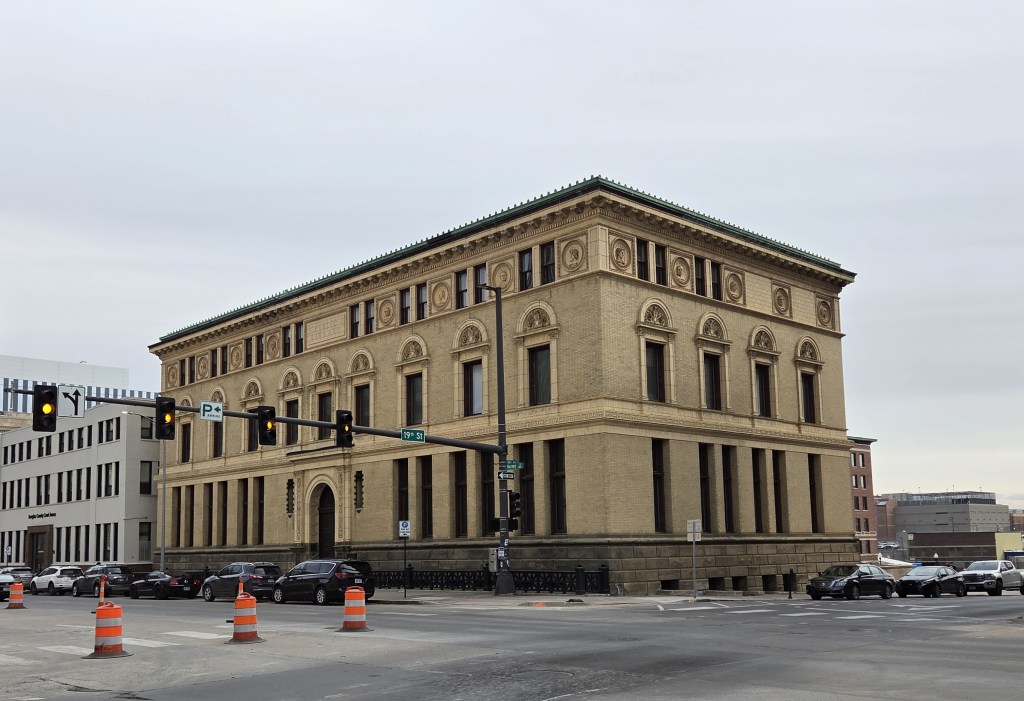
Would-be robbers attempted to steal pieces from the Byron Reed coin collection in 1965 and went so far as to cut a hole in the wall to gain access. After hearing the building engineer, they fled. A string of rare coin robberies actually led the library to place the collection in a bank vault before that event.
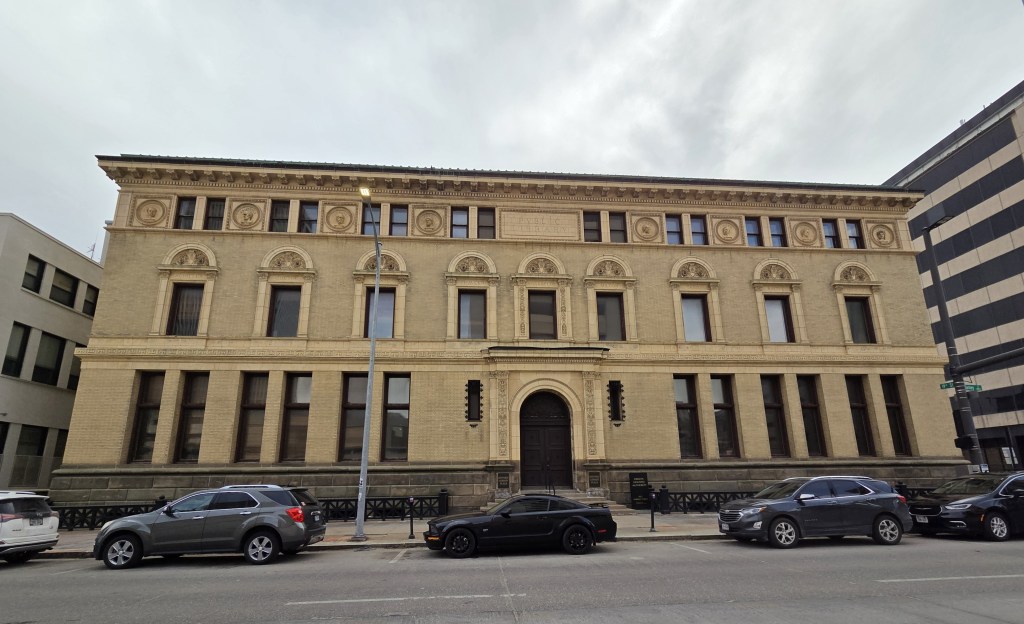
By 1970 the city was getting serious about replacing the old library. One proposal had it being built on the same site as the old Kimball designed building. Instead they selected a site at 14th and Douglas where the mostly empty Karbach Block stood. The site had the advantage of being across the street from the newly developed Central Park Mall (present day Gene Leahy Mall). The brand new W. Dale Clark Library opened in 1977 and replaced the branch at 18th and Harney Streets.
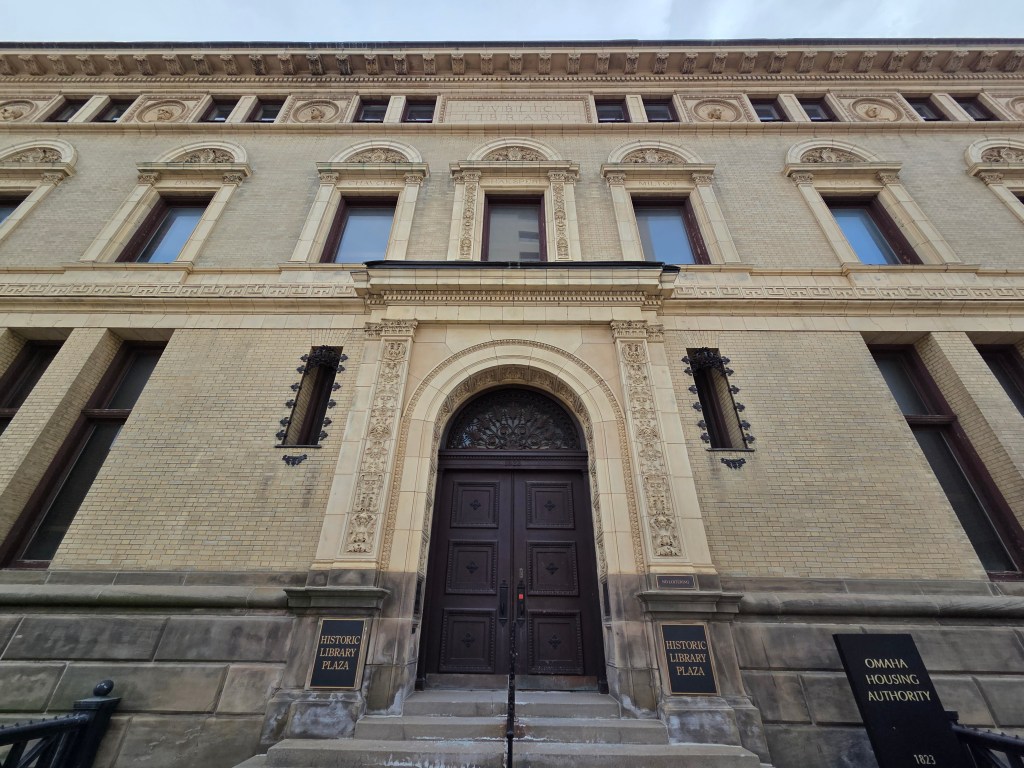
Now referred to as the Historic Library Building, it was listed on the National Register of Historic Places and designated as a Omaha Local Landmark in 1978. Afterwards it was converted to office space and was mostly occupied by lawyers. Since 2018 the building has served as the home of the Omaha Housing Authority.
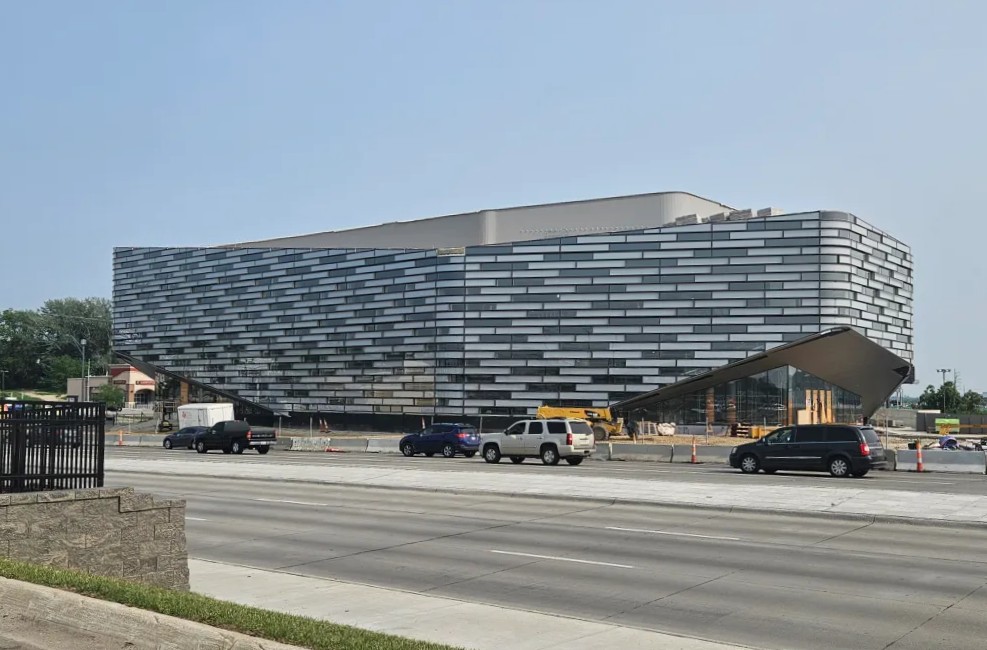
The Omaha Public Library currently operates more than a dozen branches throughout including the new Downtown Branch at 1401 Jones Street and the Central Branch at 72nd and Dodge Streets. The Central Branch will serve as its main branch after it opens in the spring of 2026.
Content written by Omaha Exploration. If you enjoy my content, you can follow or subscribe on my Facebook page, sign up to receive emails or make a donation on my website. Thank you and keep exploring!
Omaha Exploration is sponsored by @Rockbrook Mortgage Inc.

Click here to learn about opportunities to sponsor Omaha Exploration!
More pictures



Follow OE on Facebook for more
Get an email when new content is posted
Omaha Exploration, 2024. Unauthorized use and/or duplication of this material without express and written permission from this site’s author and/or owner is strictly prohibited. Excerpts and links can be used, if full and clear credit is given to Omaha Exploration with appropriate and specific direction to the original content.
Omaha Exploration proudly supports

Contact me to learn more about M4K!
 Omaha Exploration
Leave a comment