

James Curran was born in Omaha in 1903. The son of Irish immigrants, his father was the sheriff of Dodge County. After graduating high school, James opted to instead follow in the footsteps of his grandfather and become an engineer.
He strung together a few night school classes while working as an iron worker for Paxton and Vierling and then as a draftsman. During that time, he took the state examination to become an engineer. He was one of the few engineers to pass the state examination with no formal college training.

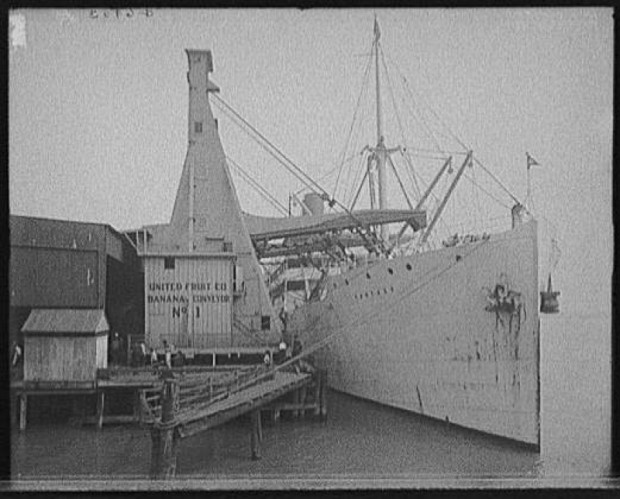
One of his first jobs was working on a conveyor system for hauling and loading a continuous flow of bananas from the loading docks to the railcar without getting bruised. To do so, he came up with an overhead cable system with hooks.

As it turns out, Union Pacific Railroad President Averell Harriman was in the process of building a luxury ski resort in Sun Valley, ID. He was intrigued by the idea after visiting Europe. His goal in doing so was to generate new demand for his rail lines which stretched from the Midwest towards the Pacific Ocean.

By 1927 James was working for U.P. He happened to be in the right place at the right time when Averell wanted his engineers to help develop a way that skiers could be taken to the top of the slope. At that time, skiers often took a train up and jumped off on high mountain passes, hiked uphill or relied on tow ropes powered by horses or water wheels. He sought a better way to get skiers back up as a potential key attraction of his resort.

James recalled the banana conveyor system he designed in Honduras and used a rough sketch to suggest a similar design to solve the problem. The idea was first rejected for being too hazardous. The concept was only saved when he slipped the idea in with the team’s other proposals. After coming across it, the ski consultant for the resort was intrigued with the idea and chose it over the other proposals. He called the idea which he described as a mono-cable an extraordinary idea.
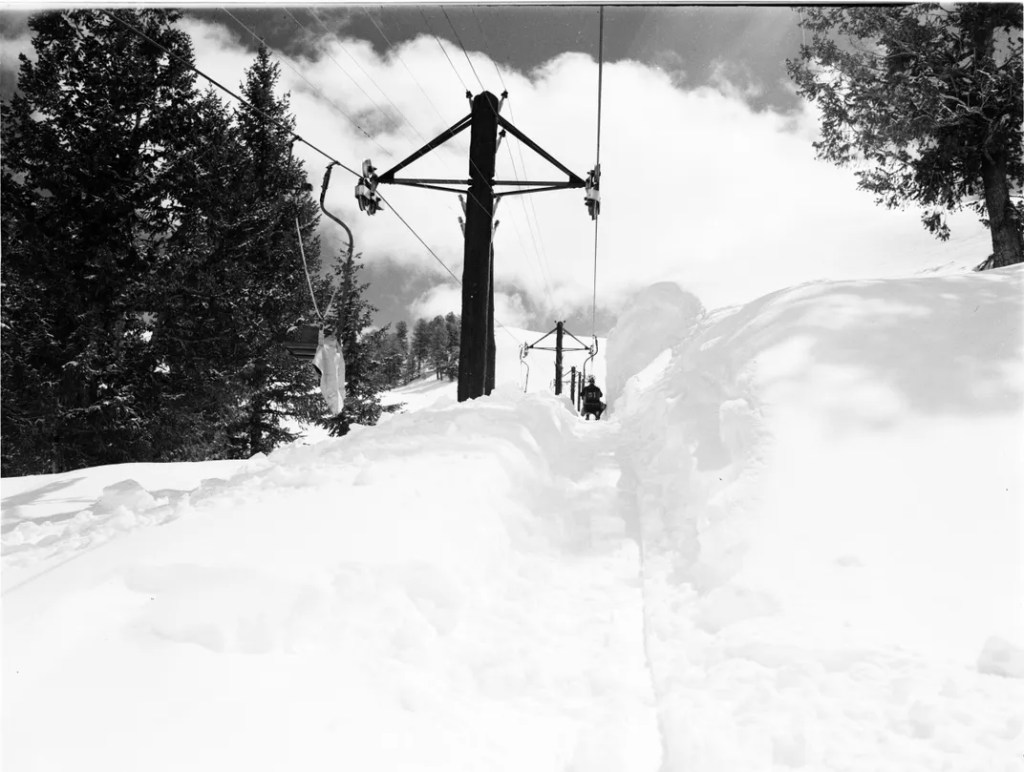
After a more thorough analysis with ski experts, they agreed that an mono-cable or overhead cable system could, indeed, be used to haul people back up the slope after a run. At that point Averell ordered that it be developed.

Two days later, in the middle of summer, James returned to Nebraska and worked with a small team from U.P. to figure out the details. In the back of a pickup, he built scaffolding with a chair hanging over the side. He used it to test the concept by having a friend drive towards him while in roller skates until the chair touched the back of his knees at which point he rolled forward on the skates until settling gently into the seat. After Averell attempted it himself, he declared it a success.
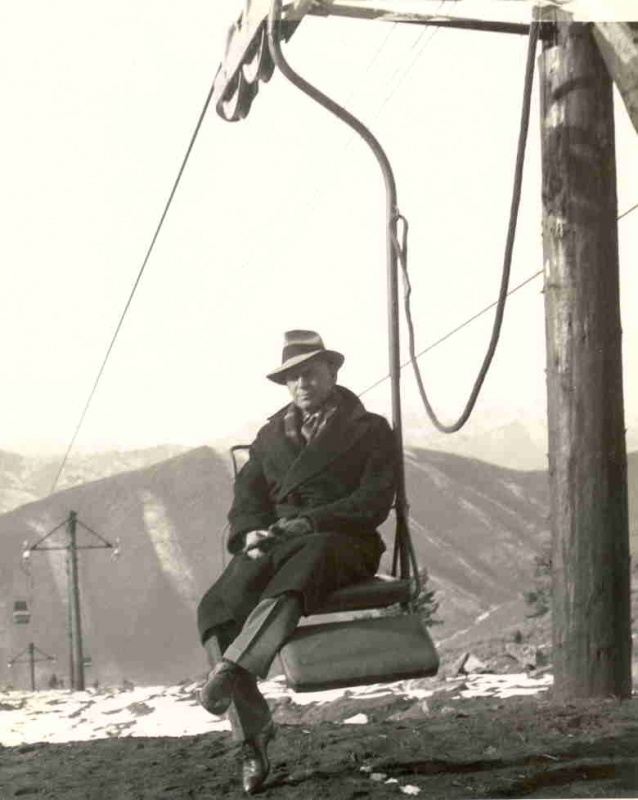
At that point the railroad engineers raced to complete the necessary components. In just four and a half months they constructed and installed everything needed to get the chairs off the ground.
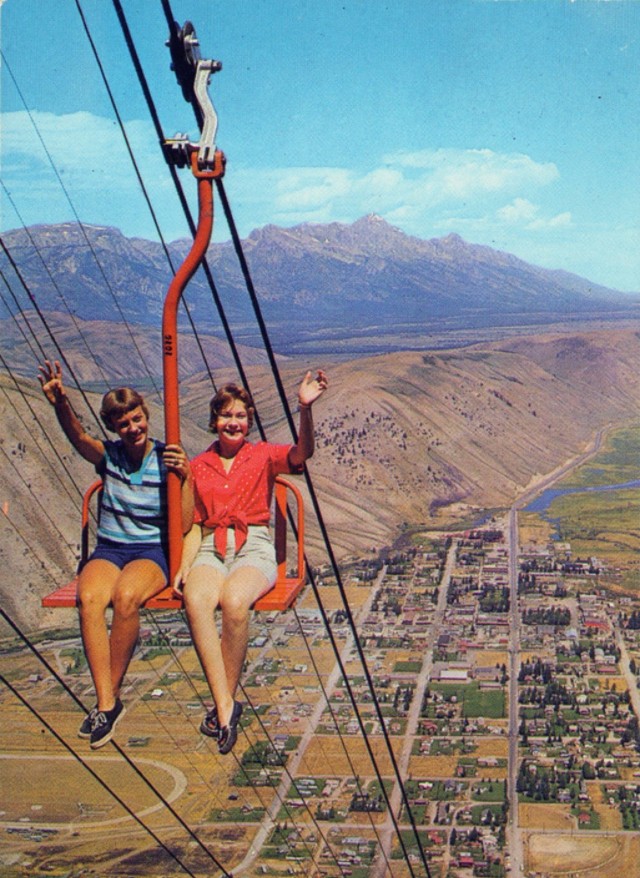
When Averell opened his Sun Valley Ski Resort in Idaho in 1936, it featured the world’s earliest functioning chairlift. In addition to being safe(ish), the chairlifts also offered a relatively cheap and enjoyable way for skiers to rest and take in the view of the slopes, trees and resort down below while being carried to the top for another run.

It was a resounding success and skiers flocked to Sun Valley Resort which became the first inclusive ski resort in the U.S. to offer an upscale lodge, fine dining, take ski lessons, swim and participate in other activities.
Since that time, chairlifts have gone through many refinements but they remain the workhorse of ski resorts and helped popularize the sport as a way of entertainment.
James, meanwhile, developed a reputation as a top bridge designer for U.P. He retired in 1966 before passing away in 1968 at the age of 64. Despite having never skied or profited from his invention, he was inducted in the U.S. National Ski Hall of Fame in 2001.
Content written by Omaha Exploration – follow my page for more! Please also feel free to leave a comment. If there’s something you want to learn more about, let me know. In the meantime, keep exploring!
Omaha Exploration is sponsored by @Rockbrook Mortgage Inc.

Click here to learn about opportunities to sponsor Omaha Exploration!
More pictures


Follow OE on Facebook for more
Get an email when new content is posted
Omaha Exploration, 2024. Unauthorized use and/or duplication of this material without express and written permission from this site’s author and/or owner is strictly prohibited. Excerpts and links can be used, if full and clear credit is given to Omaha Exploration with appropriate and specific direction to the original content.
Omaha Exploration proudly supports

Contact me to learn more about M4K!
 Omaha Exploration
Leave a comment