
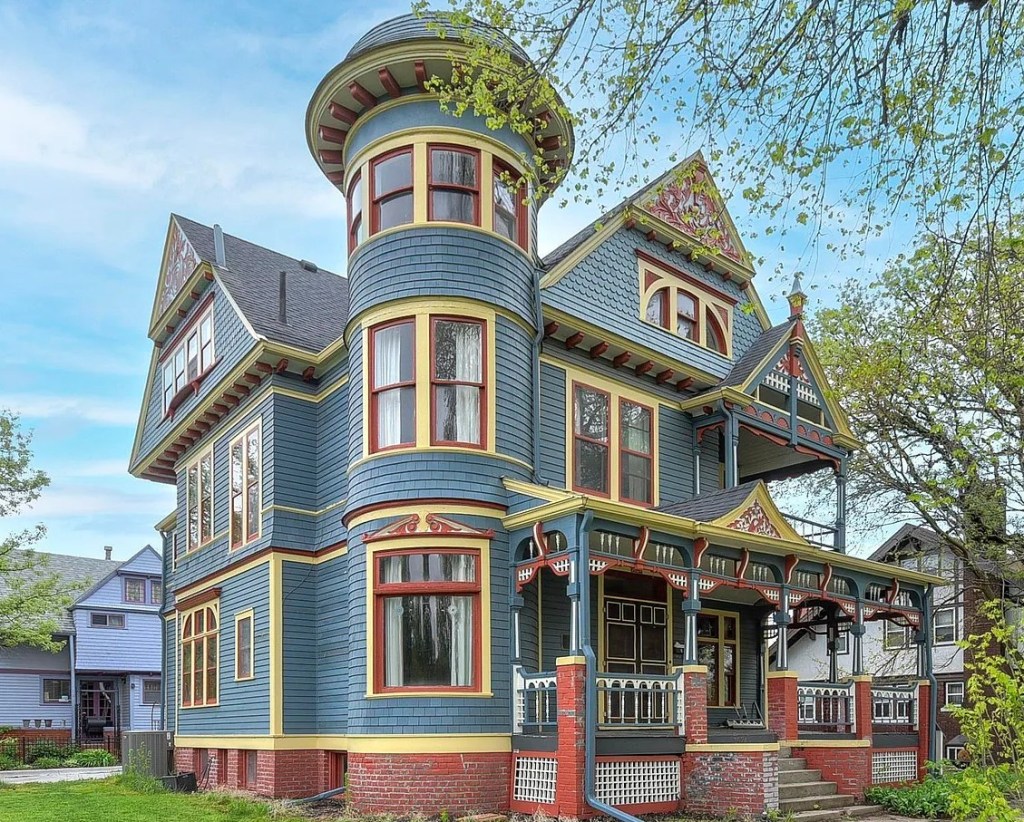
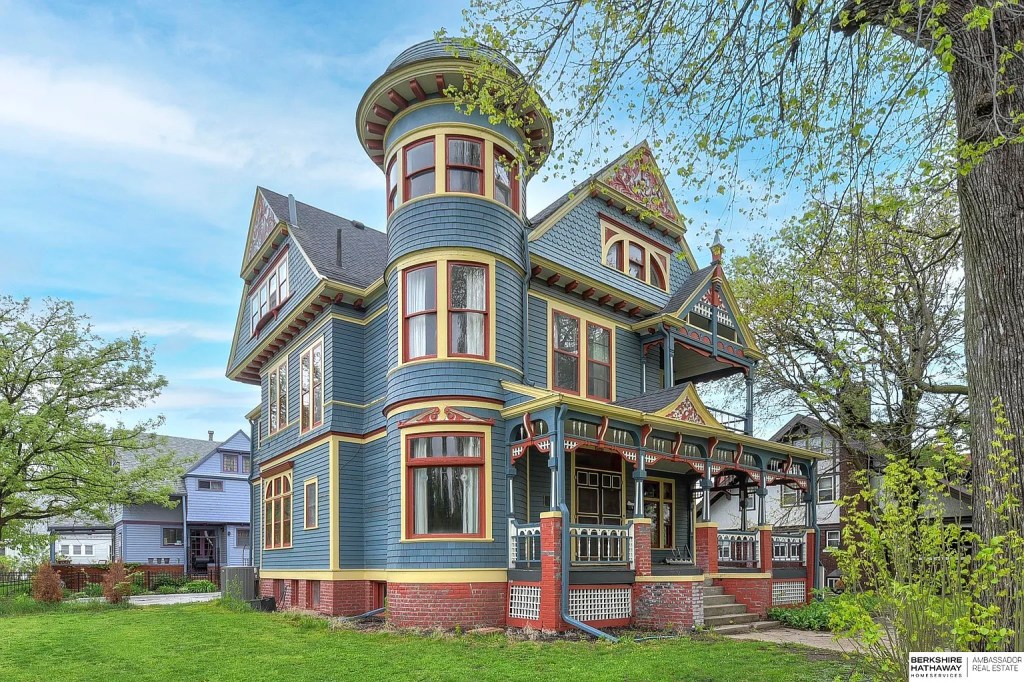
The Zabriskie House in Bemis Park with its Queen Anne architecture is among the most recognizable in all of Omaha. Had it not been for King John III of Poland, the house may have never been built at all. The Zabriskie ancestors – whose surname was Soborowski before changing it – had close ties to the king and may have even been related. It seems that the king was fearful that one ancestor in particular, Albert, coveted the crown. To prevent a coup, he banished the family which settled on a farm in New Amsterdam (current day New York).
The builder of the famous Zabriskie House, Edgar, was born in New York where his family remained through the decades. Young Edgar would end up going to sea for the first time when he was just 15 years old, paving the way for him to become the officer of a ship after his apprenticeship. Young, scrappy and hungry, Edgar enlisted in the Eighth New York Artillery in order to serve in the Civil War.

After the war, he married Esther Balch in 1870 and the two made their way to the rapidly growing city of Omaha. The couple first lived at 381 Capitol Avenue at which point he briefly worked for First National Bank. A subsequent job as a general agent and accountant for the Union Pacific Railroad required extensive travel. He and Esther returned to Omaha in 1880 where he worked as a cashier at Steele, Johnson and Company wholesale grocery before becoming an owner of Kennard Brothers wholesale drug company.
In 1888 the Zabriskie’s hired architects Benjamin Fowler and Charles Beindorff to design a home in the new Bemis Park neighborhood. Bemis Park happened to be the first suburb in Omaha to be laid out with respect to the topography of the land rather than a conventional grid.
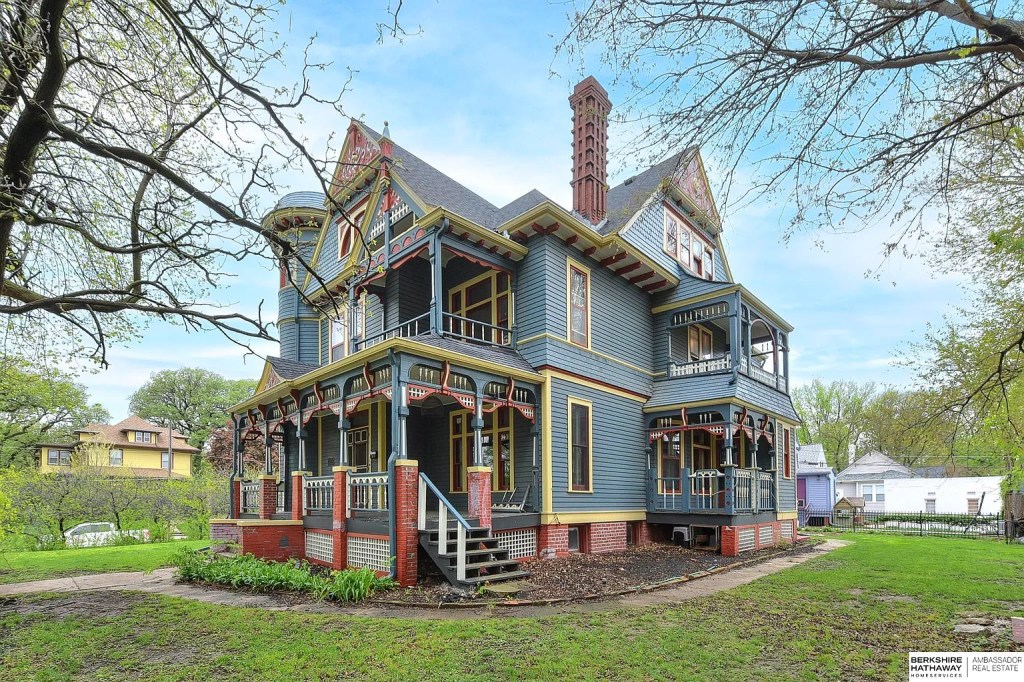
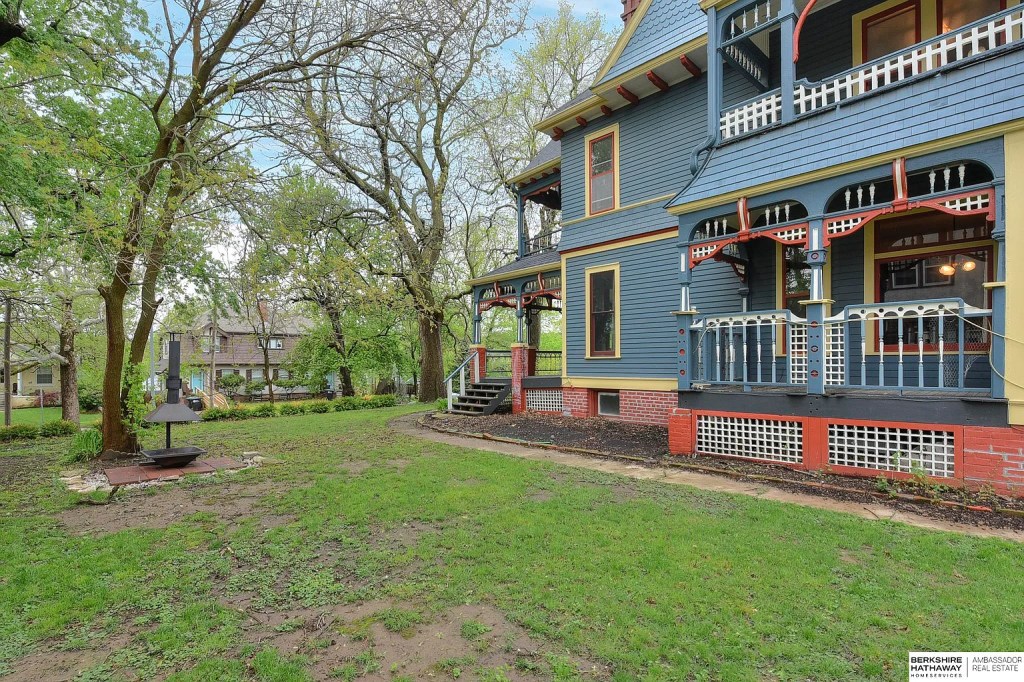
Both the main house at 3524 Hawthorne Avenue and the two-story carriage house were completed in 1889. At the time, Queen Anne architecture was popular with wealthy American industrialists and Edgar took the opportunity to show his off. The house was perched atop a hill looking down on the city that was being built all around it. The 14-room house was built for a cost of $3,500 and featured multiple peaked gables, a curved turret, two Eastlake-style porches with balconies, intricate wooden lattices, spindles and jigsaw forms.
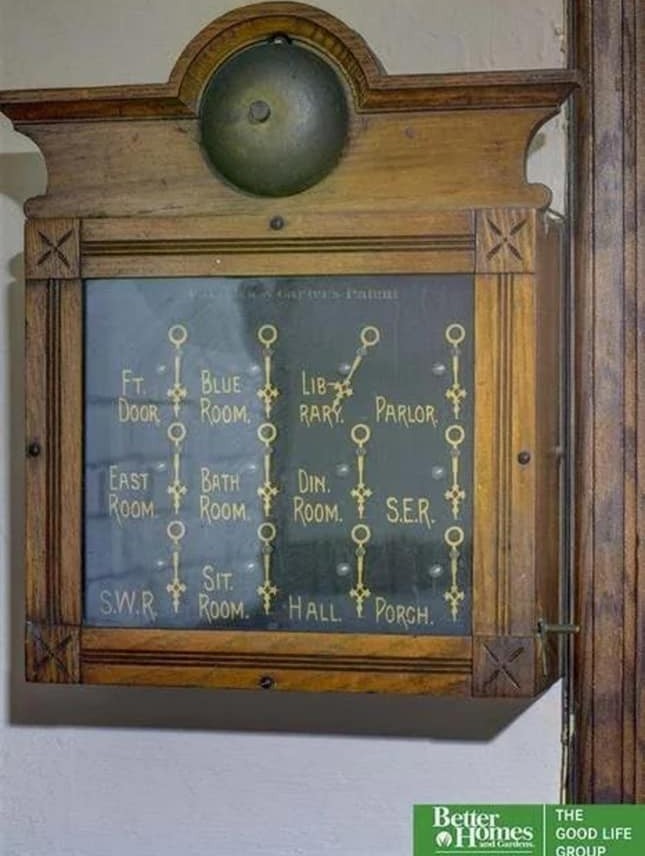
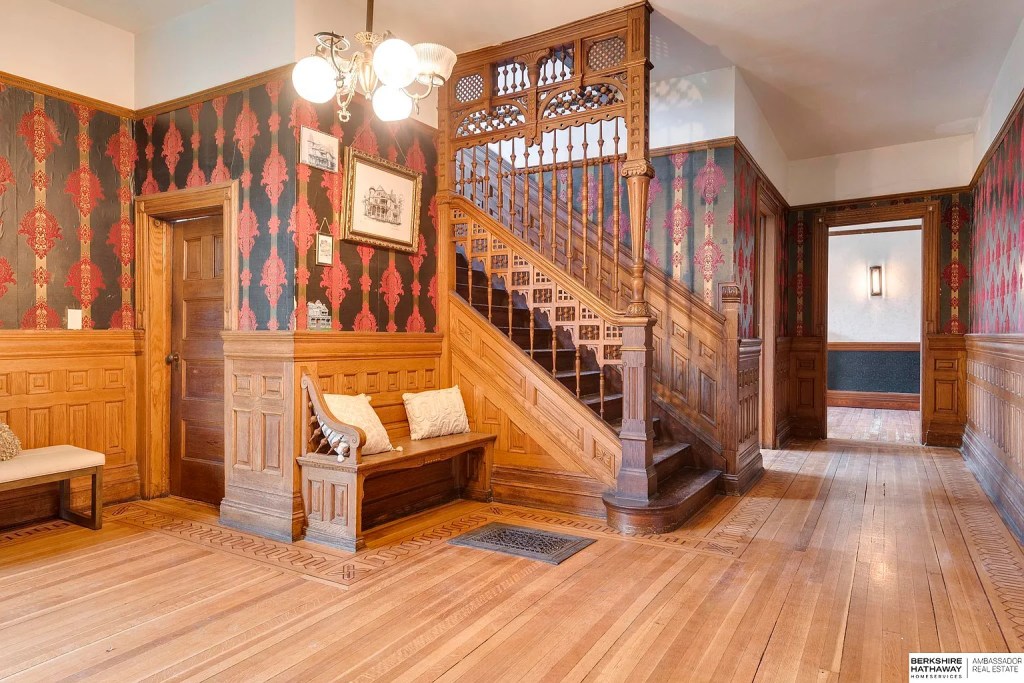
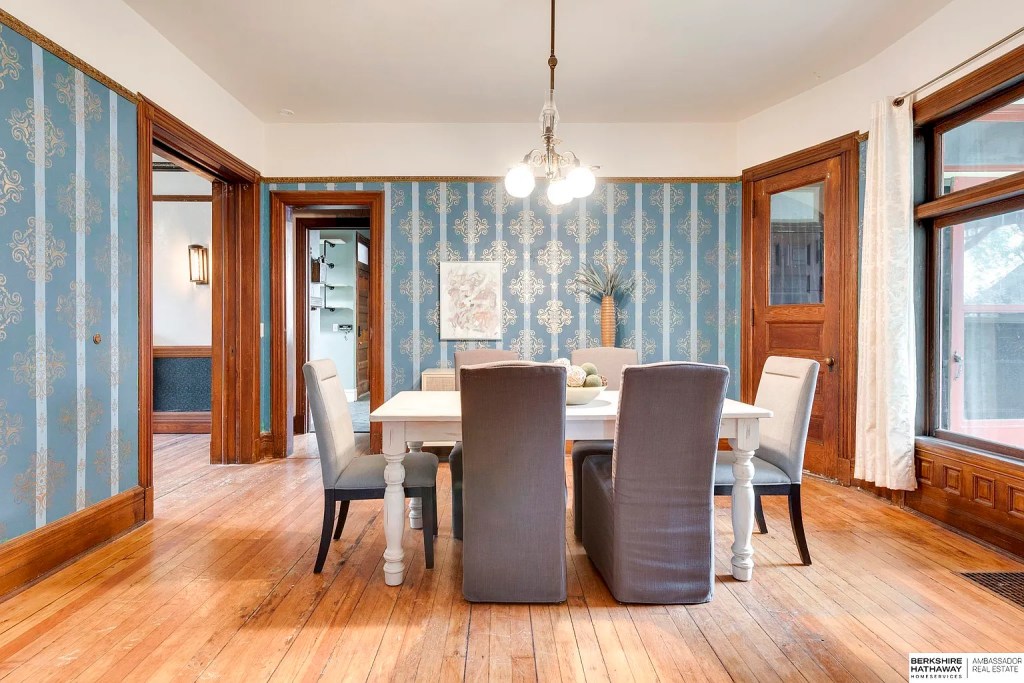
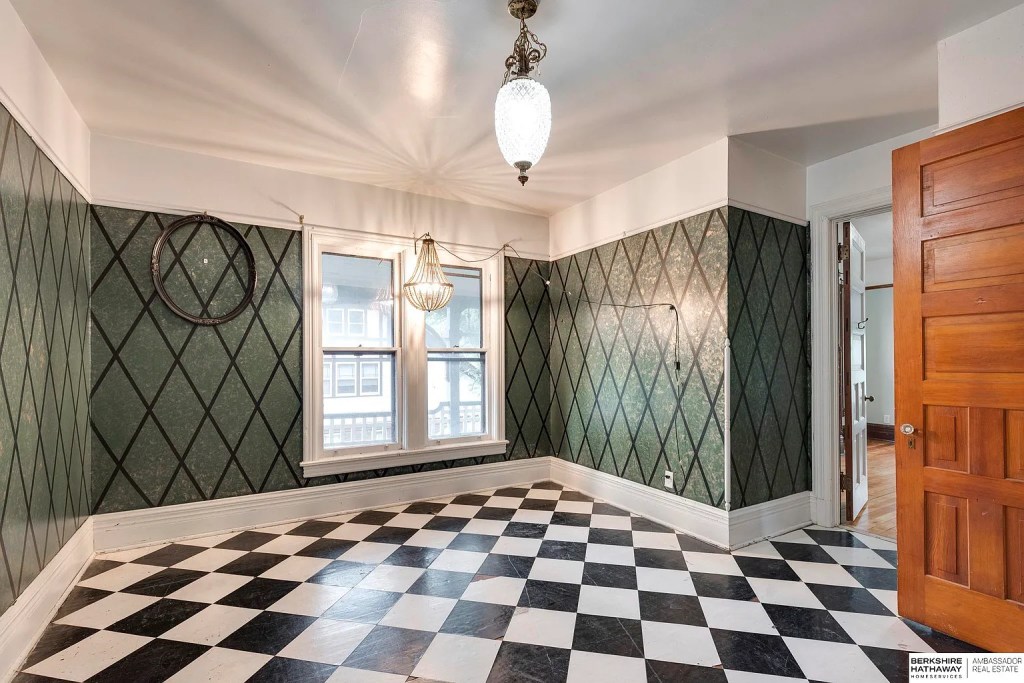
Inside the house had two fireplaces, a formal library and seven bedrooms. Regardless of where you were in the house, you could call “the help” using a call box that Edgar designed based on what he used while he was at sea. The buzzer informed the recipient of the room that you were in. The living room had a gaslight chandelier and wall sconces, cherry flooring, wall panels in oak, pecan and walnut imported from England, window glass from France, parquet work completed in Sweden, lattice work on the grand staircase leading to the second floor and Italian tiles depicting Renaissance musicians. Its owner also embraced technology by adding a coal furnace with a hand-cranked conveyor belt and a clock spring thermostat.

After Edgar passed away in 1908, Esther continued to live in the house which lost the top of its turret during the Easter tornado of 1913. Zabriskie’s son Edgar Jr., a lawyer with a private practice, moved into the carriage with his wife Mary Barbara after renovating it into a six-room residence. They also moved it from the northeast corner of the property and turned it 90 degrees so that it was faced 36th Street. After Esther passed away in 1944, Edgar Jr and Mary Barbara moved from the carriage house into the main house. At some point after that, the carriage house was sold as a separate residence.

Edgar Jr. remained in the house until he passed away sitting on the front porch in 1968. Mary Barbara had passed away 10 years earlier in 1958 and the couple had no children to inherit the house. The bank took ownership presumably due to debt on the part of its owner. The house sat vacant until 1972 when Jim Bechtel bought it. He gave the house a facelift painting it in classic pastel colors of pink, lilac and orchid along with turquoise and cream colored trim.
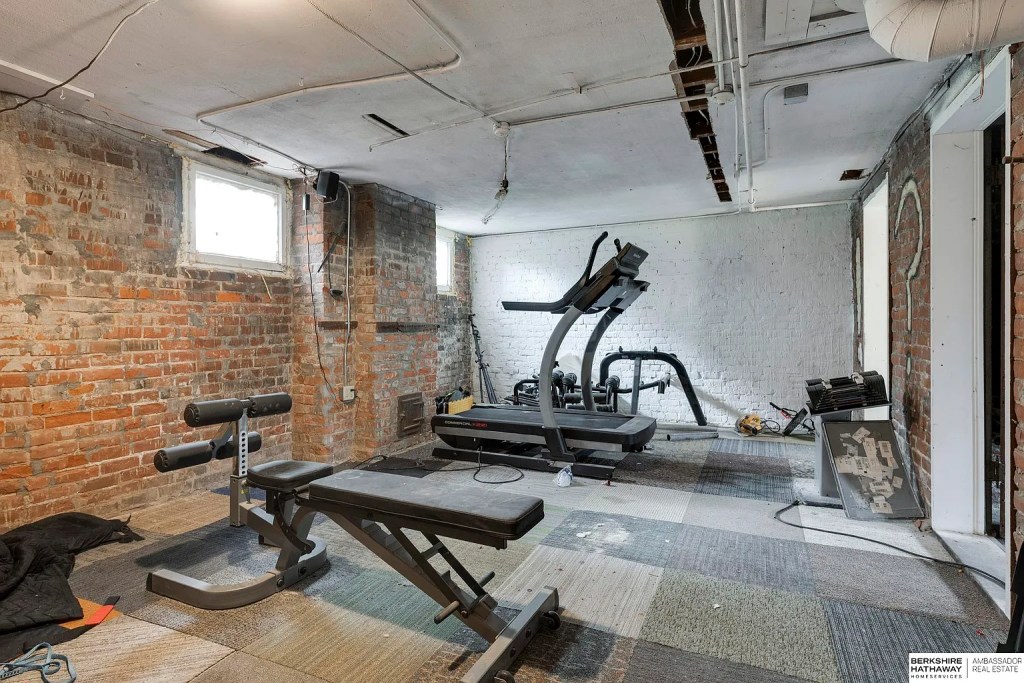
In 1978 the house was added to the National Register of Historic Places, and in 1980, it was designated an Omaha Landmark. Its next two owners continued the restoration process while faithfully restoring and honoring the houses history. Some of the recent work includes gutting and rebuilding the kitchen, installing a new driveway, updating the HVAC and old knob and tube electricity and other repairs.
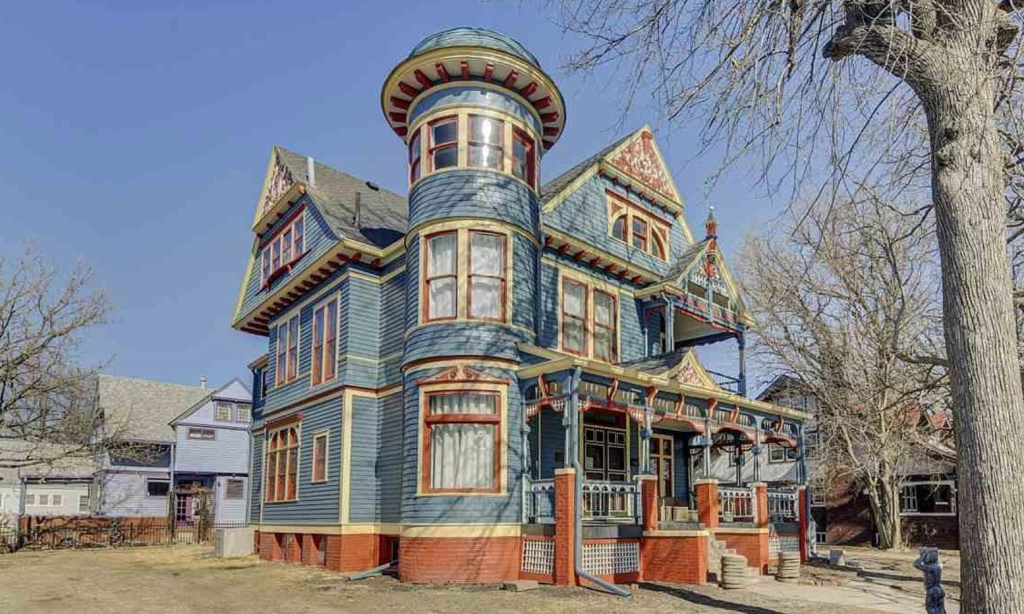
The Zabriskie House still stands with most of its original exterior and interior intact. That includes the original woodwork remains as does the call box which is fully functioning along with the gaslight chandelier which may be the only one remaining in Omaha and one of very few in the country. The house is once again in search of its next steward with a price of $399,000.
Content written by Omaha Exploration – follow my page for more! Please also feel free to leave a comment. If there’s something you want to learn more about, let me know. In the meantime, keep exploring!
Omaha Exploration is sponsored by @Rockbrook Mortgage Inc.

Click here to learn about opportunities to sponsor Omaha Exploration!
More pictures







Follow OE on Facebook for more
Get an email when new content is posted
Omaha Exploration, 2024. Unauthorized use and/or duplication of this material without express and written permission from this site’s author and/or owner is strictly prohibited. Excerpts and links can be used, if full and clear credit is given to Omaha Exploration with appropriate and specific direction to the original content.
Omaha Exploration proudly supports

Contact me to learn more about M4K!
 Omaha Exploration
Leave a comment