

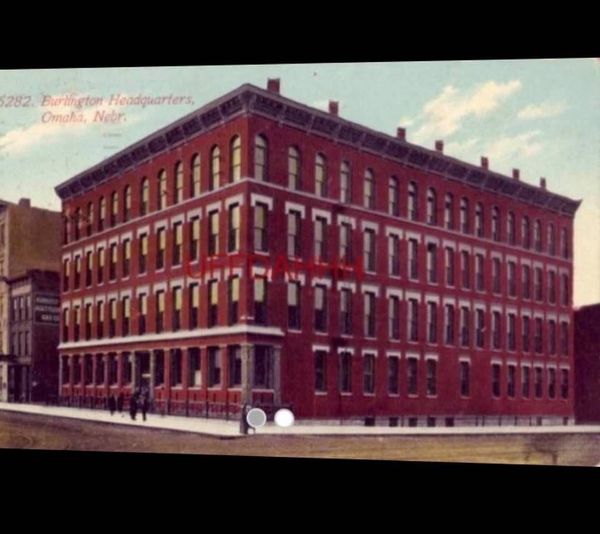
Today the Burlington Building with its bright white brick stands out as it is surrounded on three sides by the newly revamped Gene Leahy Mall. The building that served as the headquarters for the Burlington and Missouri Railroad was constructed in 1879. It sits on three lots on the northwest corner of 10th and Farnam Streets next to the area that was once Jobber’s Canyon.
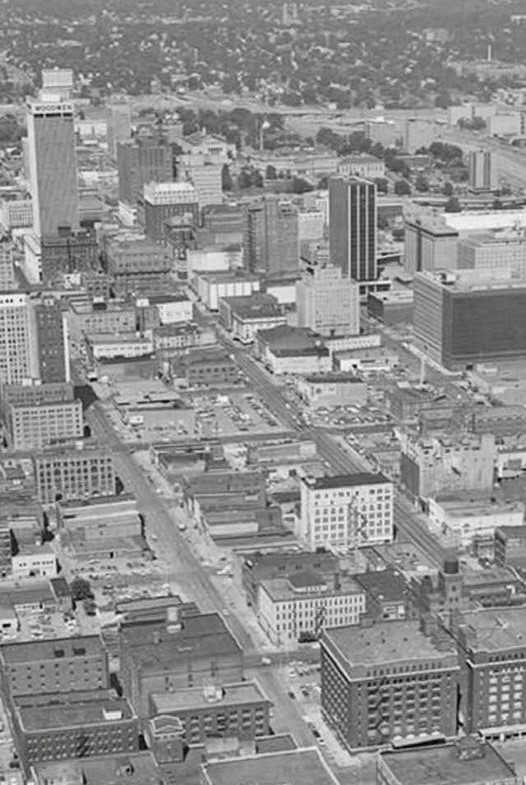
The other buildings on that block were razed for Gene Leahy Mall.
The three story Italianate-style building was made of brick and had stone trimming, an ornamental cornice that crowned the structure and a flat roof. The first floor of the building was designed as a storefront that was rented for business purposes. They were outfitted with cast iron and had plate-glass show windows. The second and third floors served as offices for the railroad and contained fire and burglar proof vaults on each floor. Finished with oiled southern pine, some of the extravagant offices even had fireplaces. The stone basement also contained space for a wholesaler in addition to storage and a furnace that steam-heated the entire building.

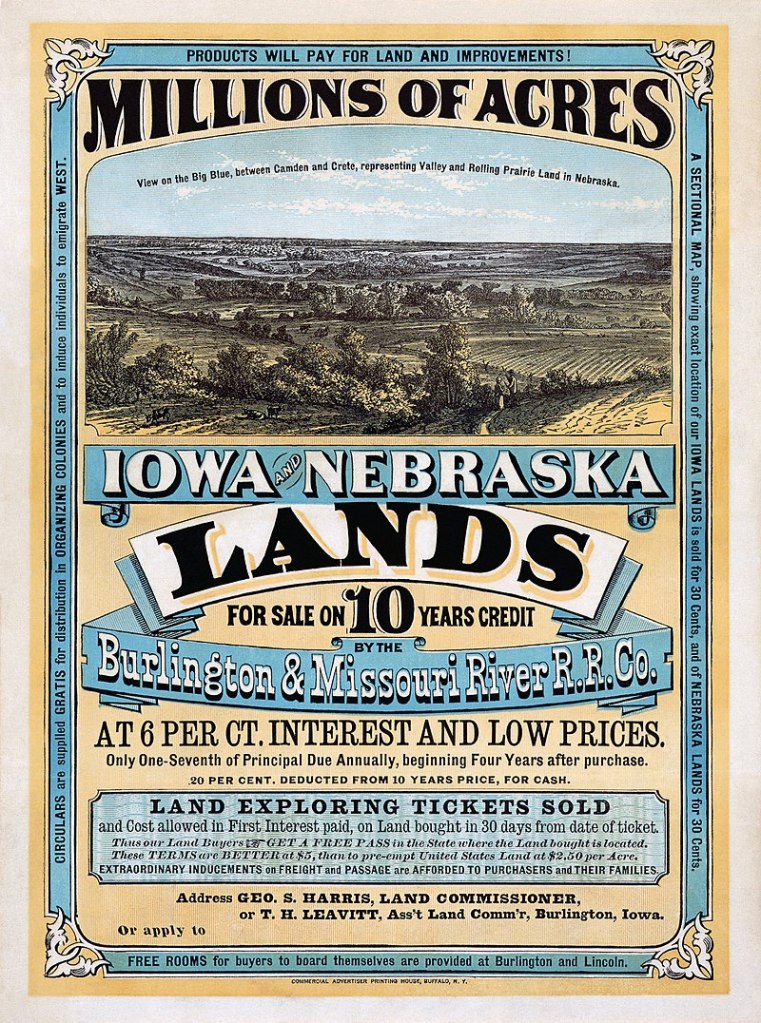
The railroad was founded in Aurora, Illinois in 1849 and had tracks that connected first to Chicago and later to Kansas City and Council Bluffs by 1870. The first floor was occupied by Nave, McCord & Brady Wholesale Grocers. Later the eastern storefront was rented out to Sloan, Johnson & Company who operated a wholesale grocery business. The western storefront was occupied by Vineyard & Schneider, wholesale notion dealers.

After Chicago, Burlington and Quincy Railroad (CBQ) acquired the Burlington and Missouri Railroad in 1872, they continued to grow. By 1886, the company outgrew the building at which point they added the fourth floor and bought an adjacent lot on its west to further expand the building.

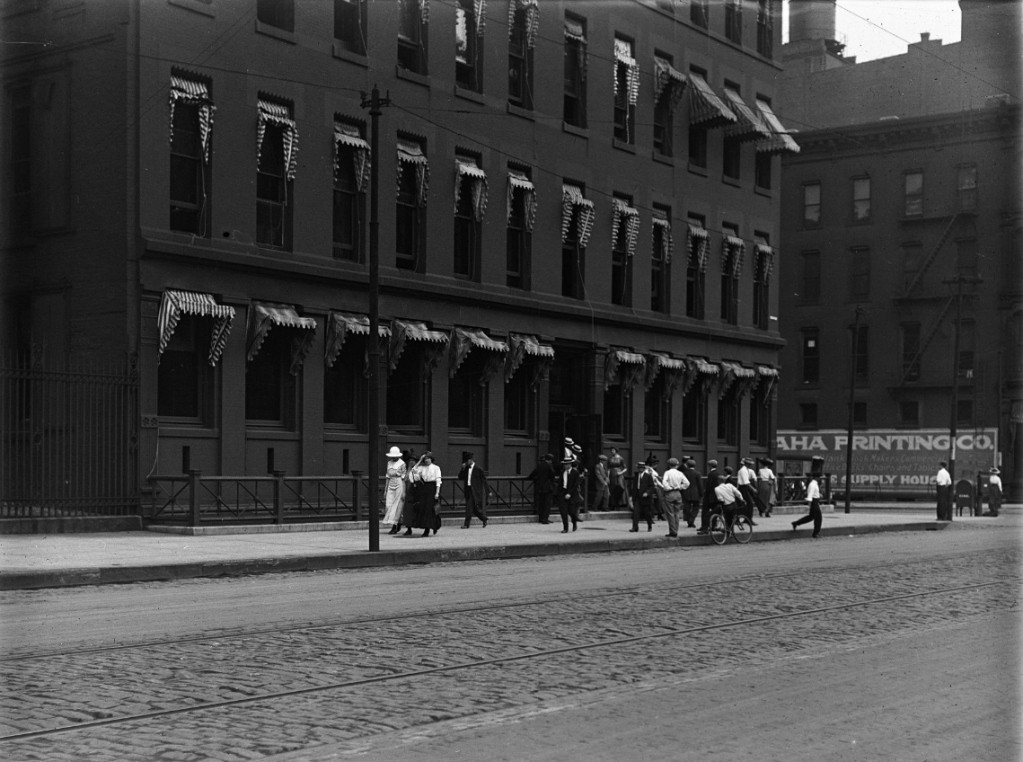
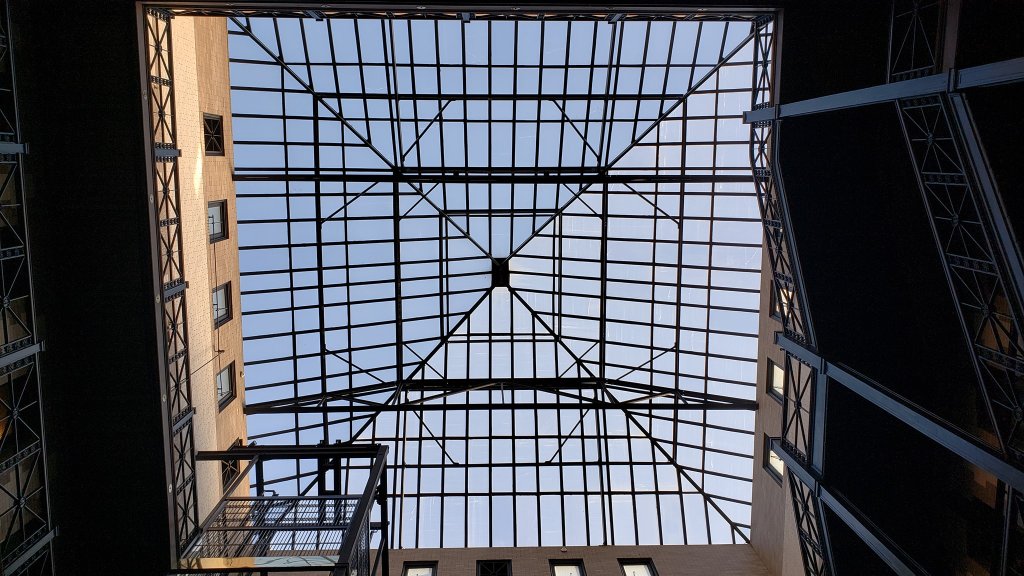
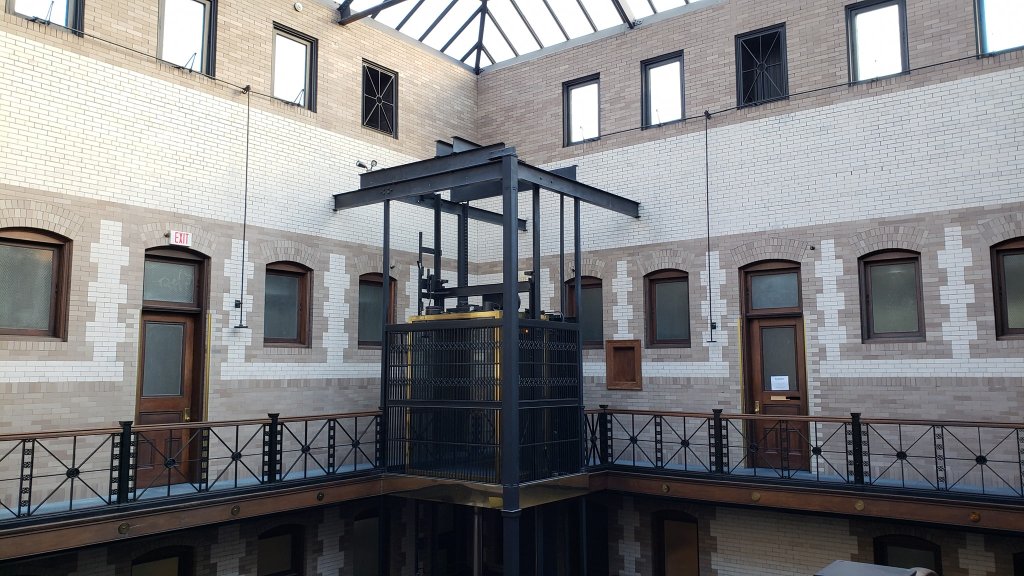
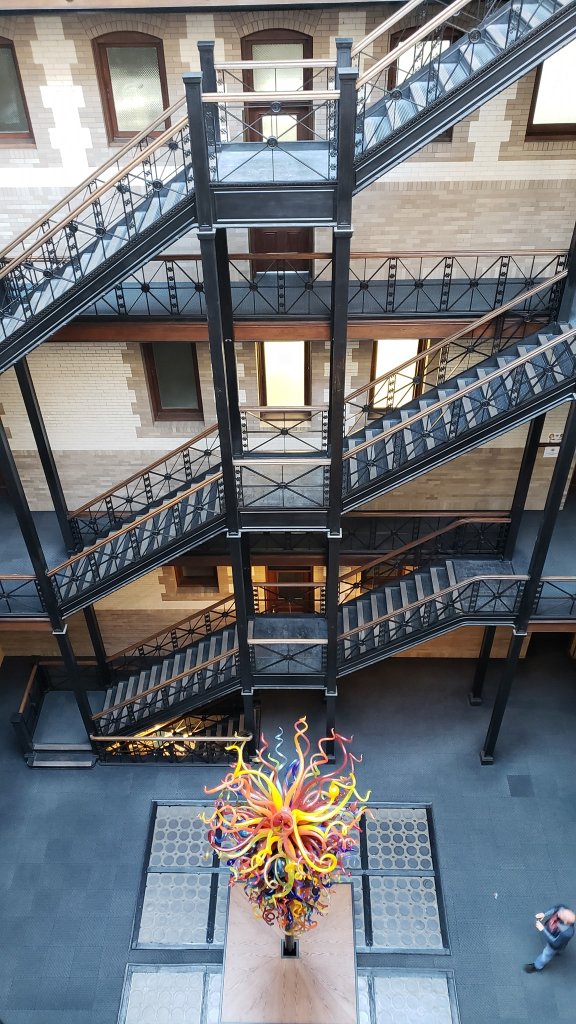
Architect Thomas Rogers Kimball performed an extensive remodel of the building in 1899 to resemble the Chicago, Burlington and Quincy building in the Windy City. At that time, he gutted the mid-section to add an interior skylight, galleries and staircases of cast iron and oak. The skylight allowed natural light to reach into the first floor atrium. The only change to the exterior was the removal of cast iron storefronts as the railroad converted this space into offices and the addition of an iron fence that ran along Farnam and 10th Streets. In addition to defining the main entrance, it also blocked off access to the basement.
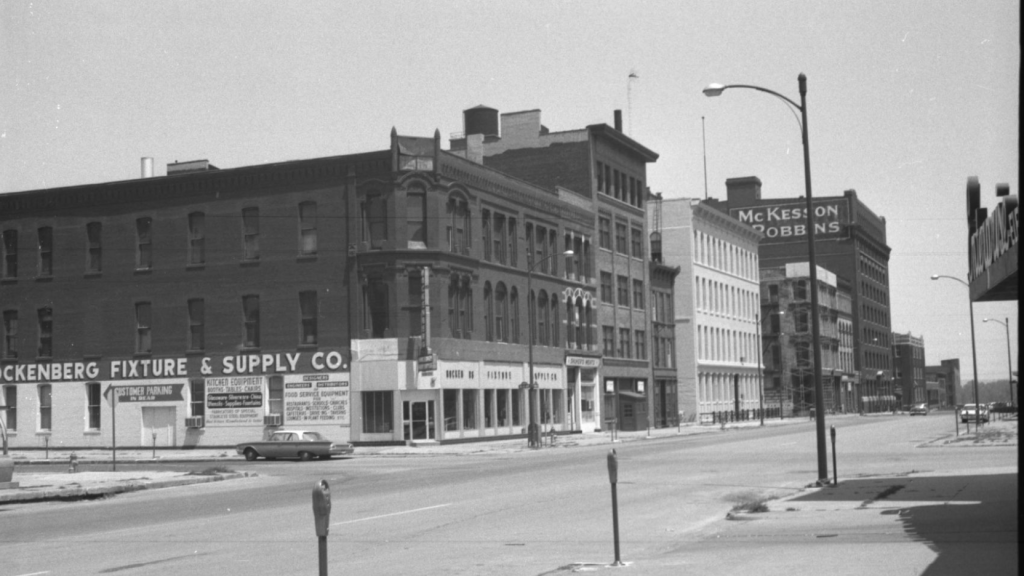
The railroad continued to operate from this building for four decades until relocating its headquarters to Capitol Plaza in Omaha in 1966. Businessman Bernhardt Stahmer purchased the building that same year with the intent of rehabilitating it. He resisted calls to tear it down and build a parking lot. Unable to restore the structure himself, it sat empty as he looked for a buyer. At one point he considered donating to a historical group but they determined they couldn’t afford the cost to restore it. He finally sold it to Harry Weiner in 1972. The owner of Weiner International Tire and Rubber Company, he initially stored tires in the building. With its gray coat of paint cracking, he sandblasted the exterior.
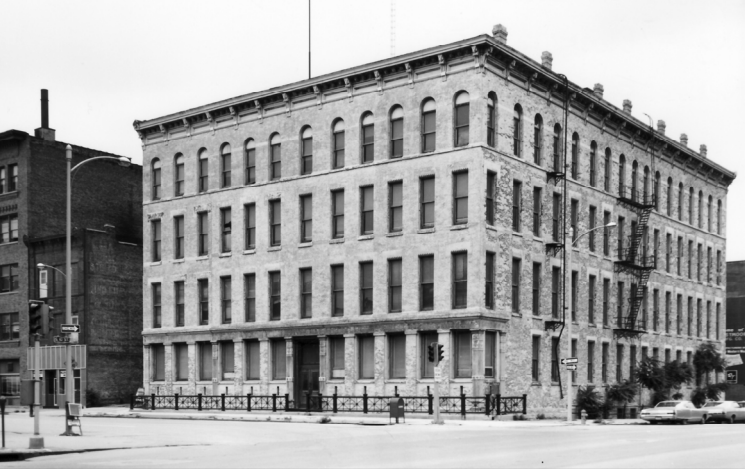
The city began condemnation proceedings on the building in 1973 but as plans to develop Central Park Mall (Gene Leahy Mall) came to fruition, there were calls to save it because of its historical and architectural significance. At that point, it was added to the National Register of Historic Places in 1974. It wasn’t designated as an Omaha Landmark until 1978. It and the McKesson-Robbins building (Greenhouse Apartments) were the only buildings in the six block area that is now the park to be retained.
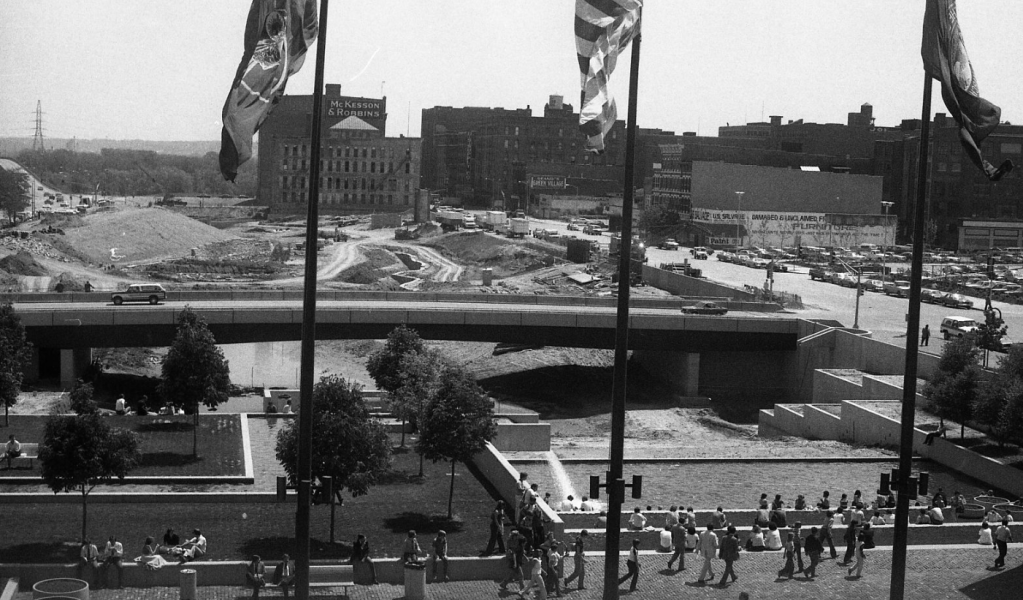
With plans to restore it and open a restaurant, offices and shops, the city ended up purchasing the building in 1976. By that time it was called an integral part of the new downtown park. After plans fell through, the city once again pondered razing it in 1981. Fortunately it was saved from the wrecking ball again and was finally renovated into offices in 1983 after sitting vacant for 17 years. Plans for a restaurant in the lower level never came to fruition. Inside a chandelier salvaged from a London building destroyed during a World War II air raid was installed as well as a glass elevator that was enclosed in an iron cage.
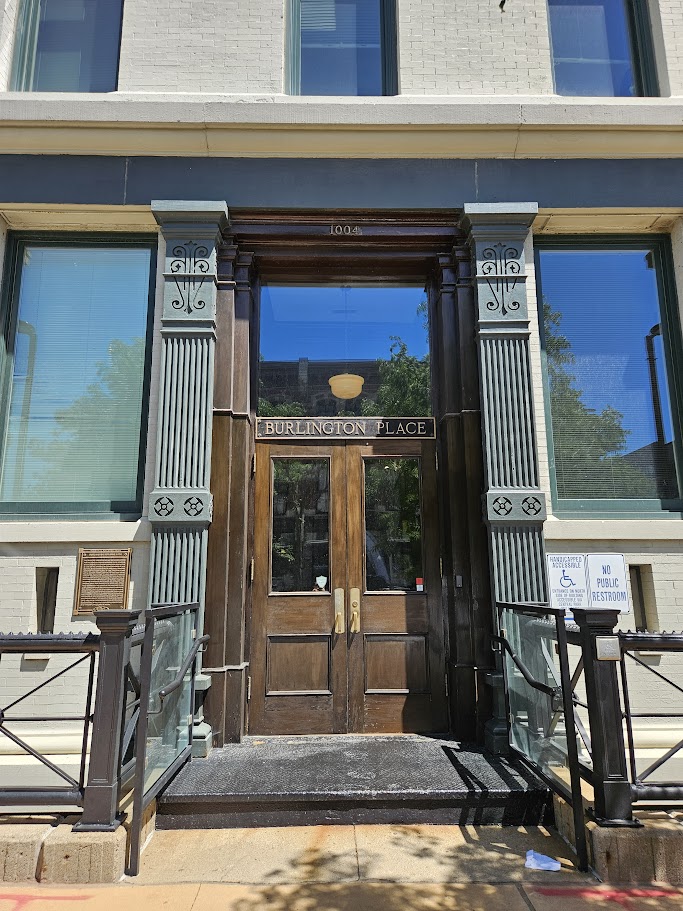
The city measured vibrations to ensure there was no damage to the building as Gene Leahy Mall was renovated in 2019. The city was careful not to repeat a mistake they made in 2002 when the implosion of surrounding buildings for the Holland Performing Arts Center caused the Frankie Pane’s building to be fatally damaged.
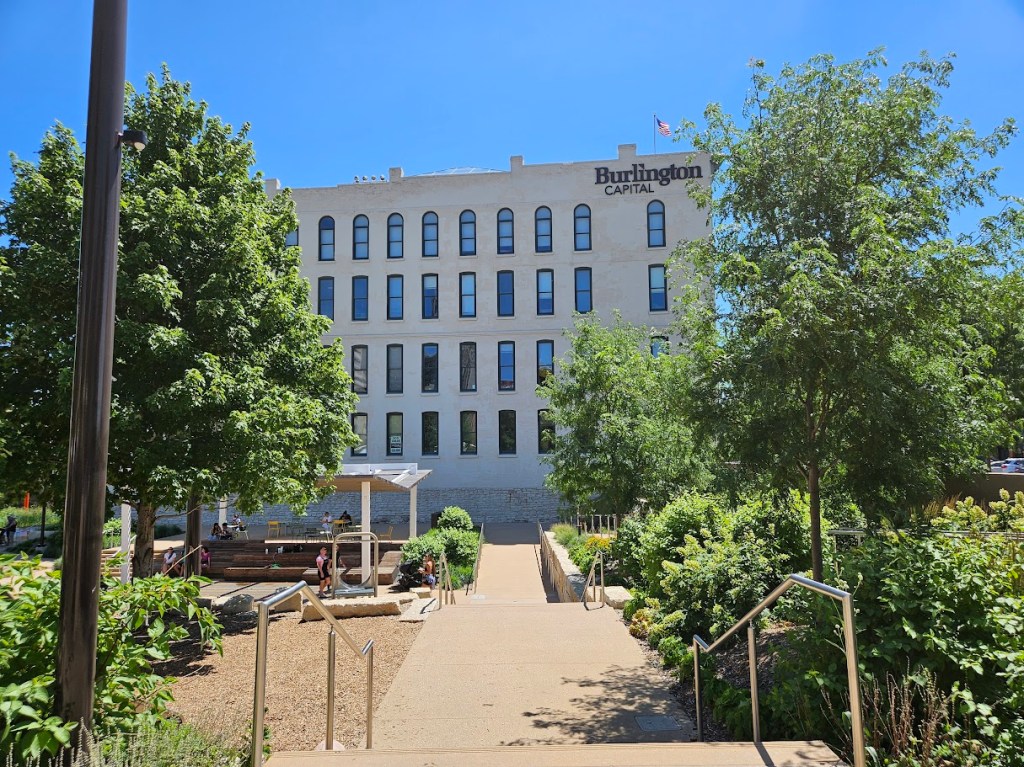
Since its founding it was involved in the development of frontier settlements, helped pioneer the fertile plans, stimulated growing cities along its route and operated through droughts, depressions and war. Burlington Place was one of the first successful renovations of a 19th century building in Omaha.
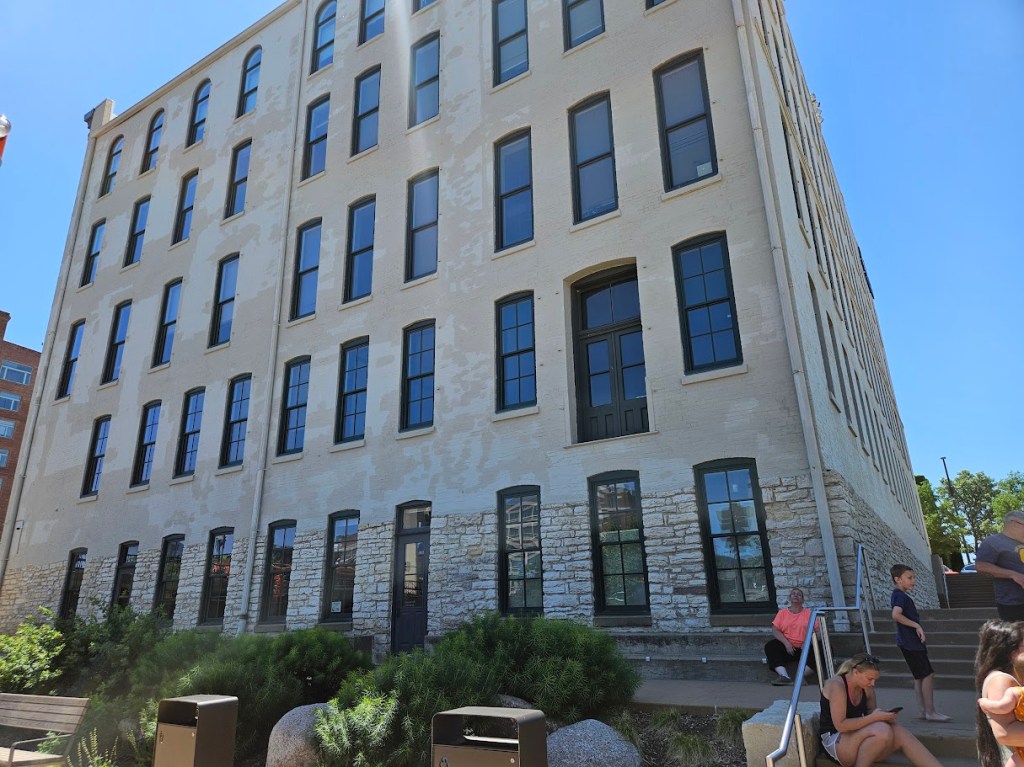
Today it is known as Burlington Capital and continues to sit in its familiar spot within the reimagined Riverfront park. The lobby which is opened to the public contains many of its original features including atrium, skylight, stairway and balconies. In its lobby you will find the “End of Day Chandelier” created by renowned artist Dale Chihuly.
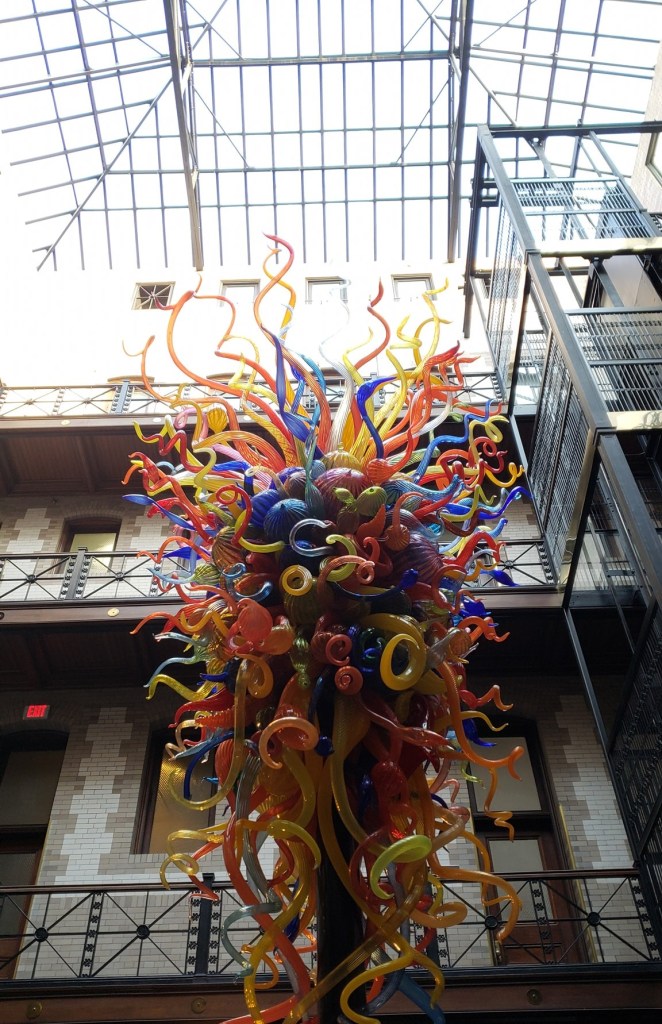
light from the skylight above. Courtesy of Omaha History Geek on Instagram.
Content written by Omaha Exploration. If you enjoy my content, you can follow or subscribe on my Facebook page, sign up to receive emails or make a donation on my website. Thank you and keep exploring!
More pictures

Omaha Exploration is sponsored by

Click here to contact me if you’re interested in sponsoring OE.
Get email notifications when new OE content is posted
Follow OE on the socials
Omaha Exploration, 2024. Unauthorized use and/or duplication of this material without express and written permission from this site’s author and/or owner is strictly prohibited. Excerpts and links may be used, provided that full and clear credit is given to Omaha Exploration with appropriate and specific direction to the original content.
 Omaha Exploration
Leave a comment