

Rosario and Grazia Caniglia settled in Little Italy where they found more than a few familiar faces from back home in Carlentini, Sicily. By 1910 Rosario would end up opening one of Omaha’s first Italian bakeries in order to support his family. His son, Cirino (Charles) worked as a grocer before pivoting to the bakery business alongside his father.
While in Omaha, Cirino was re-introduced to a childhood playmate from Carlentini named Giovanna Franco. The two had been separated for two years until she arrived in Little Italy with her sister in 1910. After visiting the bakery one day, Grazia informed Giovanna that her son wanted her hand in marriage. It seems that young Cirino was quite bashful in those days. They married two years later in 1912, a world away from where they first met.
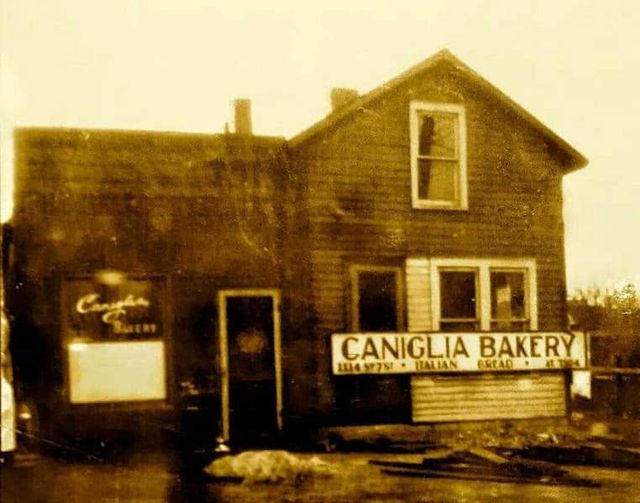
Cirino continued to work at the bakery as their young family continued to grow. In addition to raising five children, Grazia also started Omaha’s Santa Lucia Festival in 1925. A deeply religious woman, she would walk from her home at 6th and Pierce Streets to St. Philomena’s Church at 5 in the morning to say her prayers each day. She made it her mission to recreate Carlentini’s Santa Lucia Festival in Omaha in order to strengthen the community’s connection to their former homeland and to deepen their faith. The festival celebrates its 100th anniversary this year.

Cirino took over the bakery after his father passed away in 1928. During prohibition he was arrested for operating a still. This certainly wasn’t unique to him as many others were arrested while trying to make ends meet for their families particularly during the Great Depression. Despite never having attended school, Cirino turned out to be a skilled business person. He started baking for the next morning at 10 PM before finishing at 3 AM in time to deliver warm bread to customers for their breakfasts.
Even as automatic dough kneading machines became the standard, he continued to use his hands, confident the machine couldn’t do nearly as well as he could. Some of his creations, including “rooster’s comb bread” required many painstaking hand operations. Even while raising six children and organizing Santa Lucia, Giovanna handled the money for the family business. Business was good enough that they purchased the adjoining lots and built several small apartment houses. Cirino also operated a hardware store and pool hall.

While their son Nuncio (Eli) was stationed near Baltimore in 1945, he found himself strolling through the city’s large Italian North End looking for something to eat. That’s where he discovered a dish called pizza that looked similar to what Grazia would make them as children except she called it cucurene. The Sicilian dish was made with thin dough and then topped with cheese, spinach, broccoli, artichokes or whatever else they could find after which it was baked. He excitedly told his brothers of the popularity of the dish along the east coast. Together the brothers planned to open a pizzeria of their own once they got back home from serving their county.
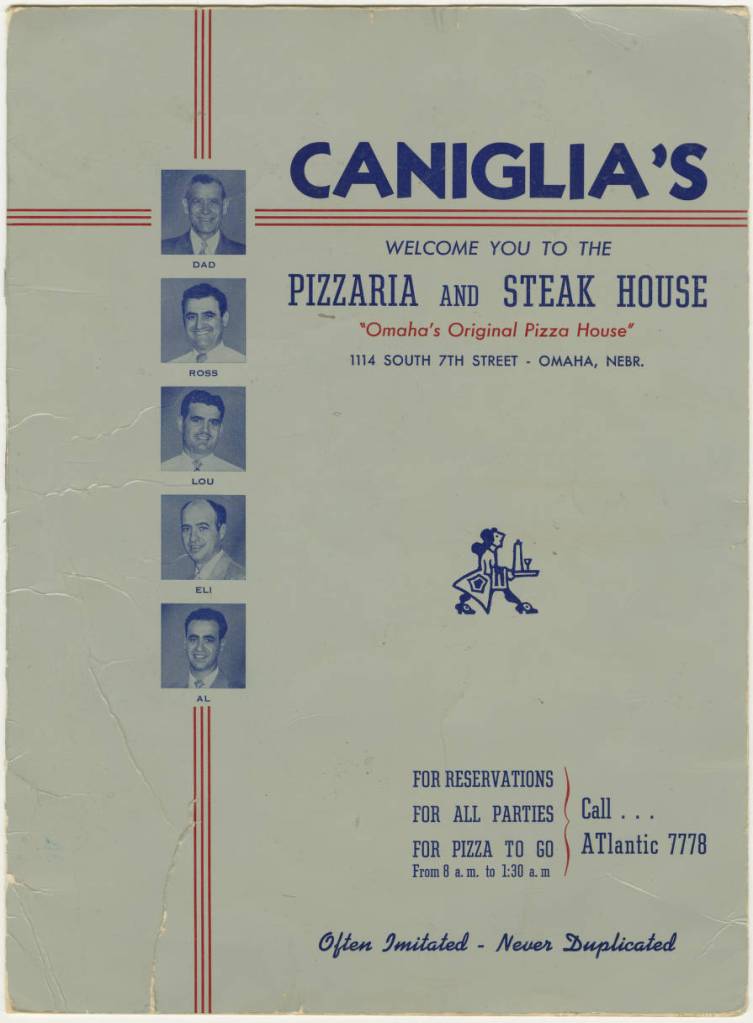


Caniglia’s Pizzaria and Steak House menu courtesy of Omaha Public Library.
After the Cangilia boys returned home, they started work on Omaha’s first pizzeria in 1946. They added an extension to the bakery and timed it so that it would be open during the Santa Lucia Festival. At first, they could barely keep up with the demand. Ross kept busy cutting meat and tending bar while Nuncio, Alfred (Al) and Sebastiano (Yano) made the pizzas and Lou was the chef . While business slowed when the festival ended, they continued to rely on bread sales to support their families.

The popularity of pizza took off in 1947 among non-Siclians and Italians. As pizza sales exploded, they closed the bakery in 1951. Cirino passed away one year later in 1952 at which point Giovanna and her sons continued to run the restaurant. Just two years later in 1954 the Caniglia family opened a plant at 16th and Vinton where they became frozen pizza pioneers as they distributed the pies all across the country.

The Caniglia siblings would all go on to open restaurants of their own including Piccolo Pete’s, Mister C’s, Venice Inn and Palazzo ‘Taliano among others. By the time the latter closed, business at the original pizzeria began to decline. At that point two of the Cangilia sons, Ross and Lou, returned to give it a boost. While Lou later went into business for himself, Ross stuck around and eventually his sons (Robert, Ronald and Charles) became the third generation to take over Original Caniglia’s Pizzaria and Steakhouse.
The restaurant survived the loss of its matriarch when Giovanna passed away in 1980 and even managed to stay open for another 22 years before closing its doors in 2005. The family cited increased competition out west and particularly from the casinos in Council Bluffs as the primary factor. The brothers also had no desire to turn the restaurant over to a fourth generation. When it closed, Ronald said that it was almost like a death in the family.

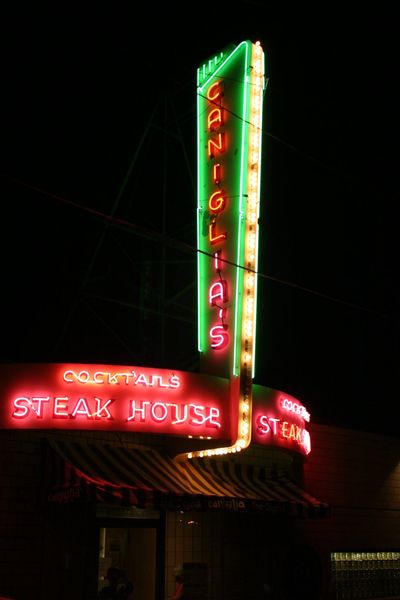
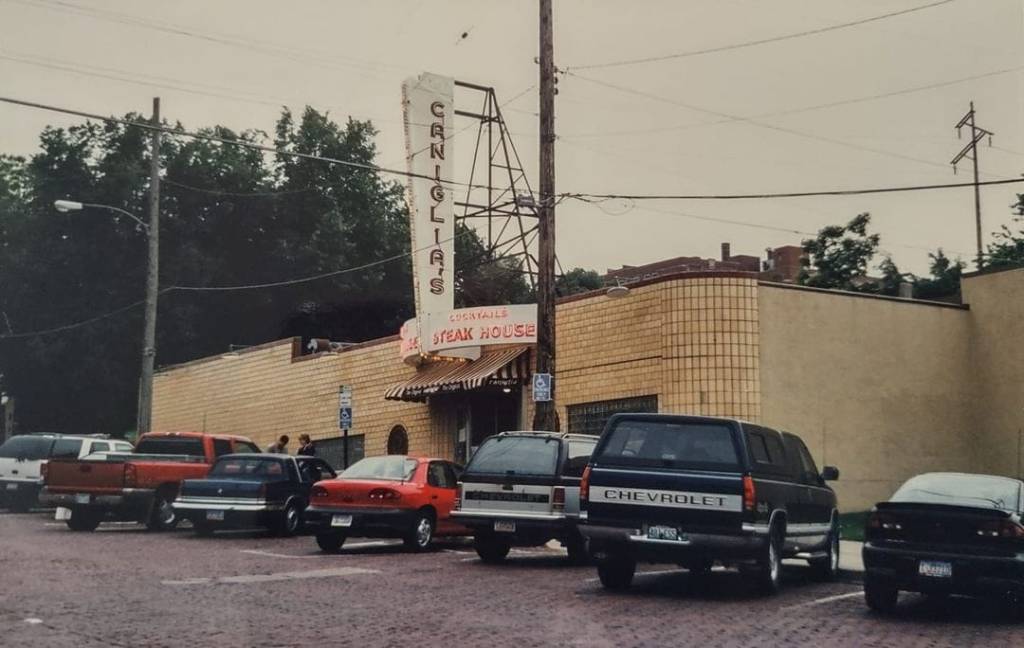
Photos of Original Caniglia’s Pizzaria and Steak House before it was razed in 2006. Courtesy of Jim Elbling on Forgotten Omaha Facebook page.
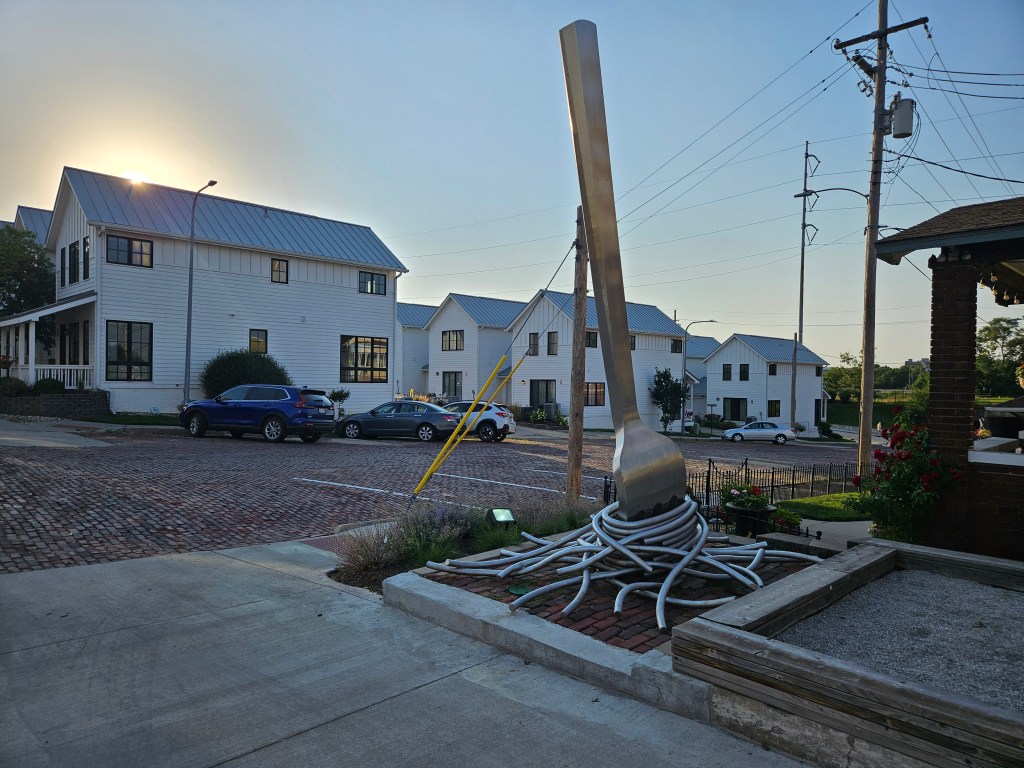
The bakery that Rosario started decades earlier that became Omaha’s first pizzeria was razed in 2006 to make way for a 35 townhouse community called The Towns. The developers said that they aimed to honor the neighborhood’s rich history.
In future posts, we’ll explore Piccolo Pete’s, Mister C’s and Venice Inn.
Please feel free to comment to share your thoughts and memories.
Until next time, keep exploring!
Bonus Pics

Get email notifications when new OE content is posted
Follow OE on the socials
Sponsor OE
Please contact me if you’re interested in sponsoring Omaha Exploration page: https://omahaexploration.com/contact-me/
Omaha Exploration, 2024. Unauthorized use and/or duplication of this material without express and written permission from this site’s author and/or owner is strictly prohibited. Excerpts and links may be used, provided that full and clear credit is given to Omaha Exploration with appropriate and specific direction to the original content.
 Omaha Exploration
Leave a comment