
The bluff that rises above the Missouri River in South Omaha was popular not only for hunters, fisherman, campers but also the tramps who rode the trains that passed along the tracks. The area had also been the home to the city works but was eventually abandoned as it proved too difficult to get in and out.

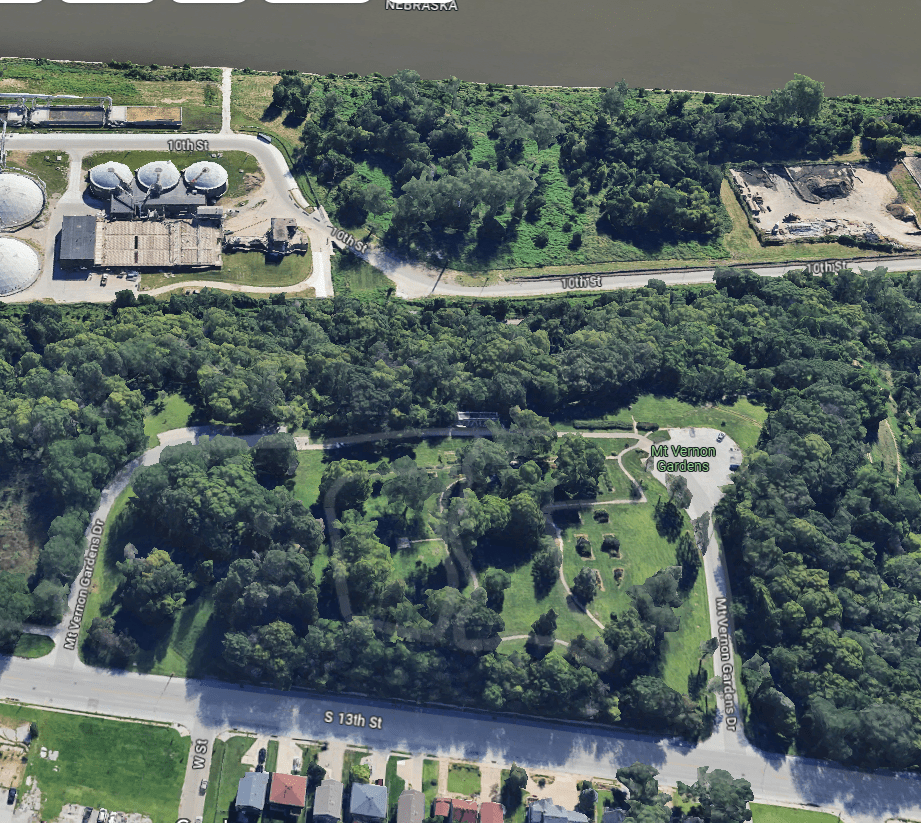
Having established Mandan Park a few years earlier, the City of Omaha acquired the land between it and the South Omaha Bridge and east of 13th Street by condemnation in 1924. Three years later Elsie Troup proposed turning this area into a miniature version of President Georgre Washington’s famous Virginia estate. Elsie was the vice-regent of Nebraska’s Mount Vernon Ladies Association. The association was a national organization devoted to the preservation of Mount Vernon as a shrine. Park Commission Joseph Hummel liked the idea so much that he supported the cause.

Despite only being half the size of Washington’s famous estate, the association selected this particular site as the bend in the Missouri River below was similar to the bend of the Potomac River in Virginia. Next the city invited students of Technical High School to submit proposals for the park which was then displayed at the spring flower show.

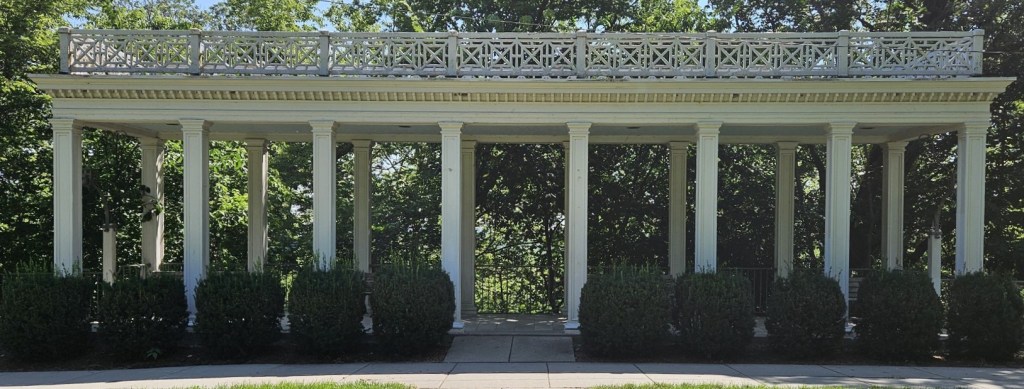
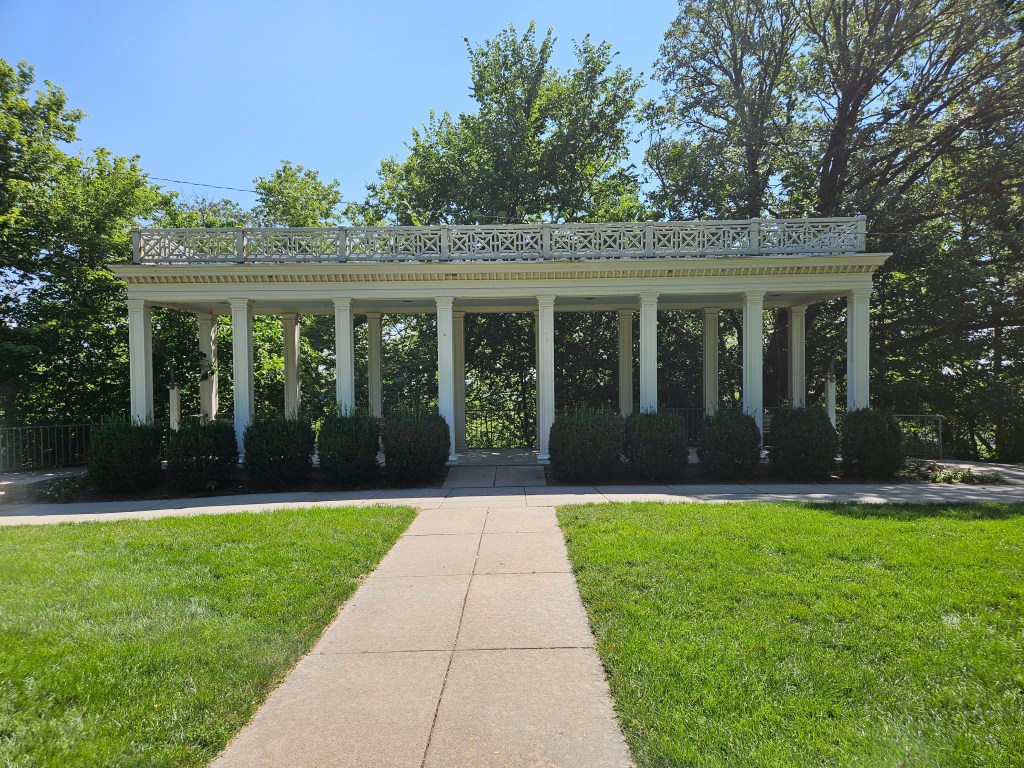
By the time construction started in 1928, the bluff was mostly bare. To prepare the ground for planting, loads of manure was hauled in from the Omaha Stockyards. While more than 100 species of plants were planted, it was impossible to mirror Mount Vernon as magnolia trees, boxwood hedges and other plants didn’t grow well here. Instead they set out to mirror its beauty on the eight acre site. Rather than construct a replica of Washington’s mansion, the city elected to construct a portico overlooking the river.
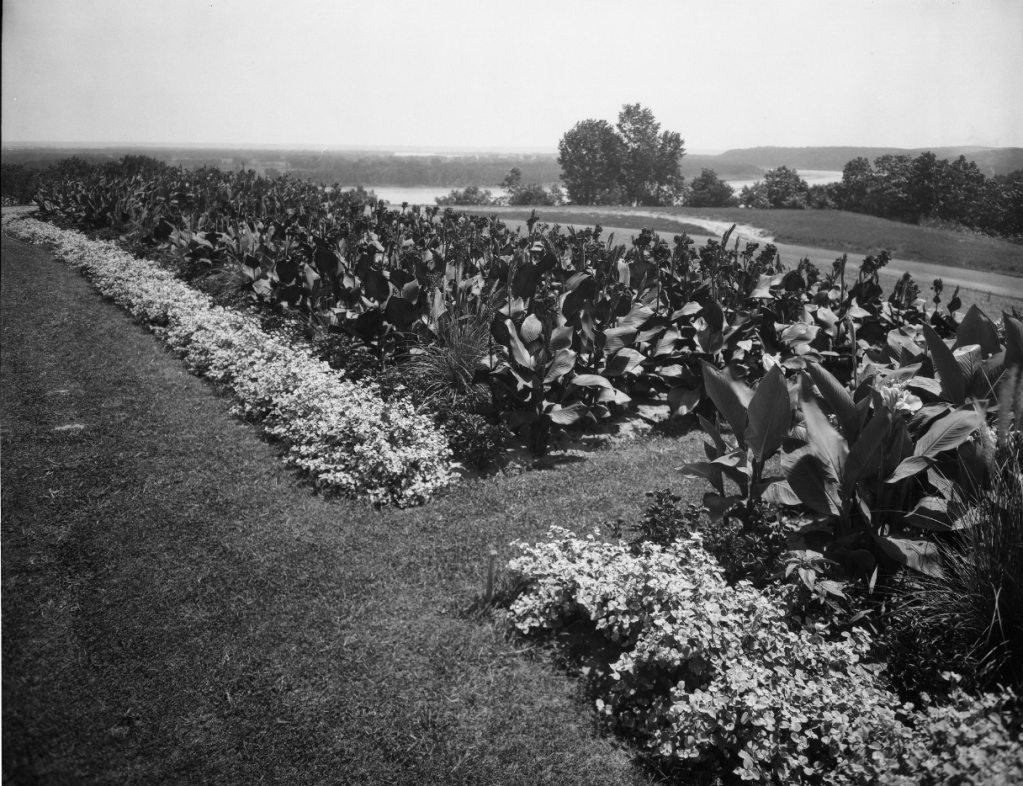
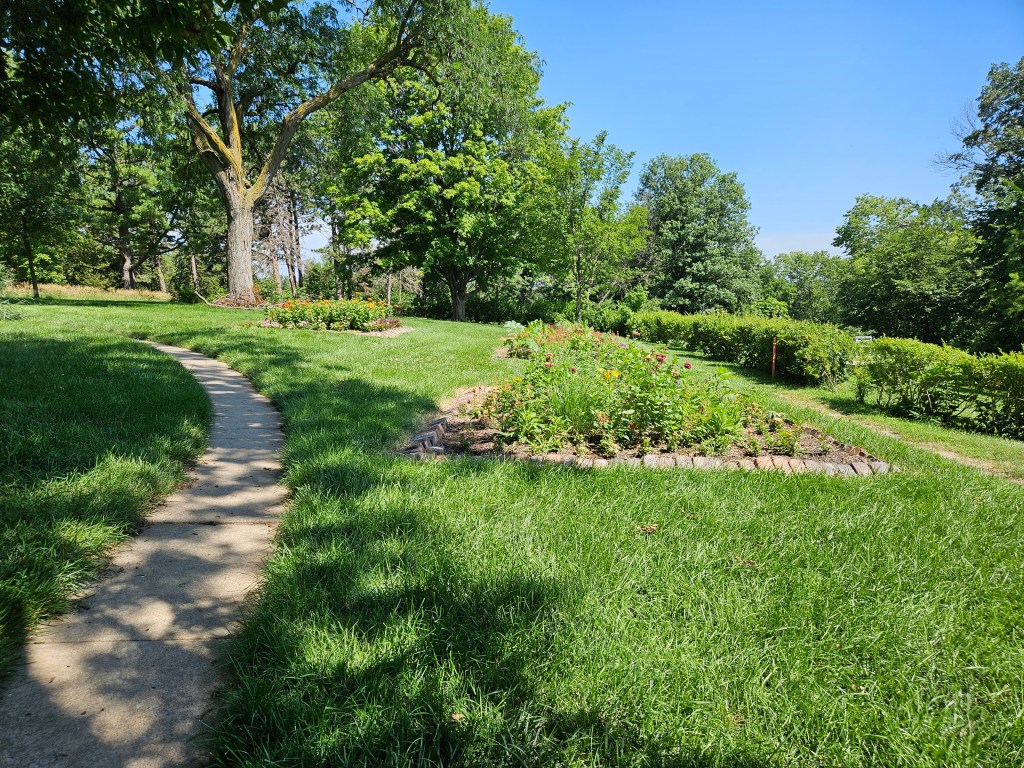
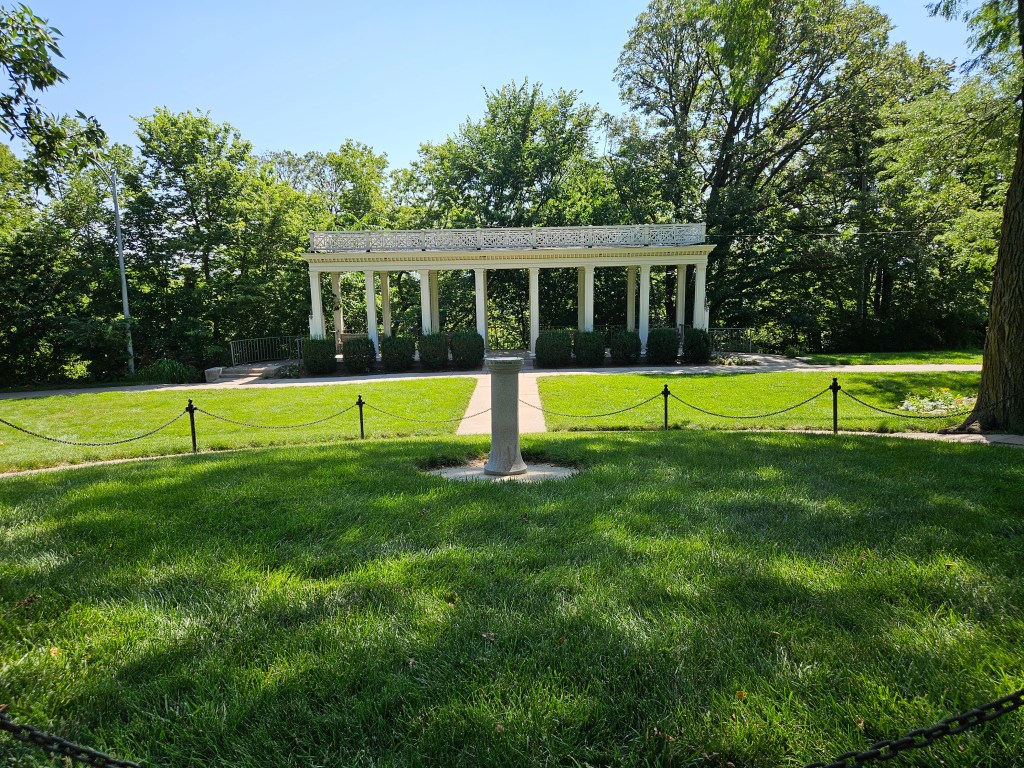
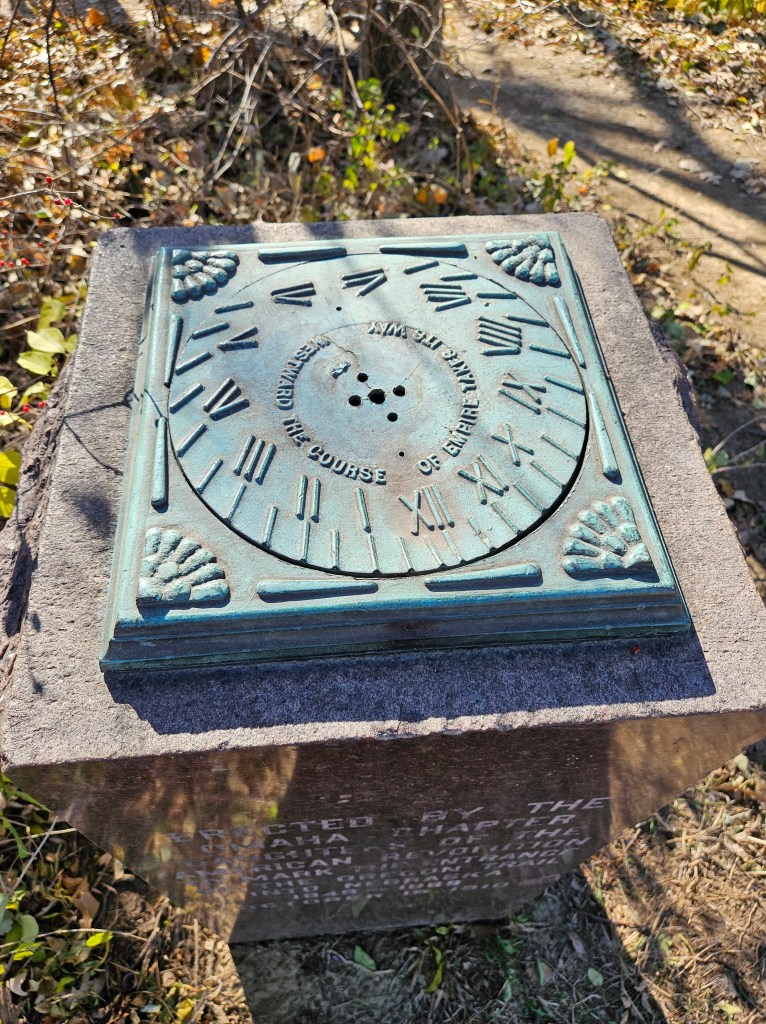
When it was finished, the park contained 16 rosebeds, 25 flowerbeds, replica sundial and a Masonic maze that was the exact same size and shape as the one Washington planted near Martha’s vegetable garden. Instead of a vegetable garden, our version of the park included plants and flowers arranged according to the time of day. In total the city spent $3,500 on the flowers, shrub, plants and trees.
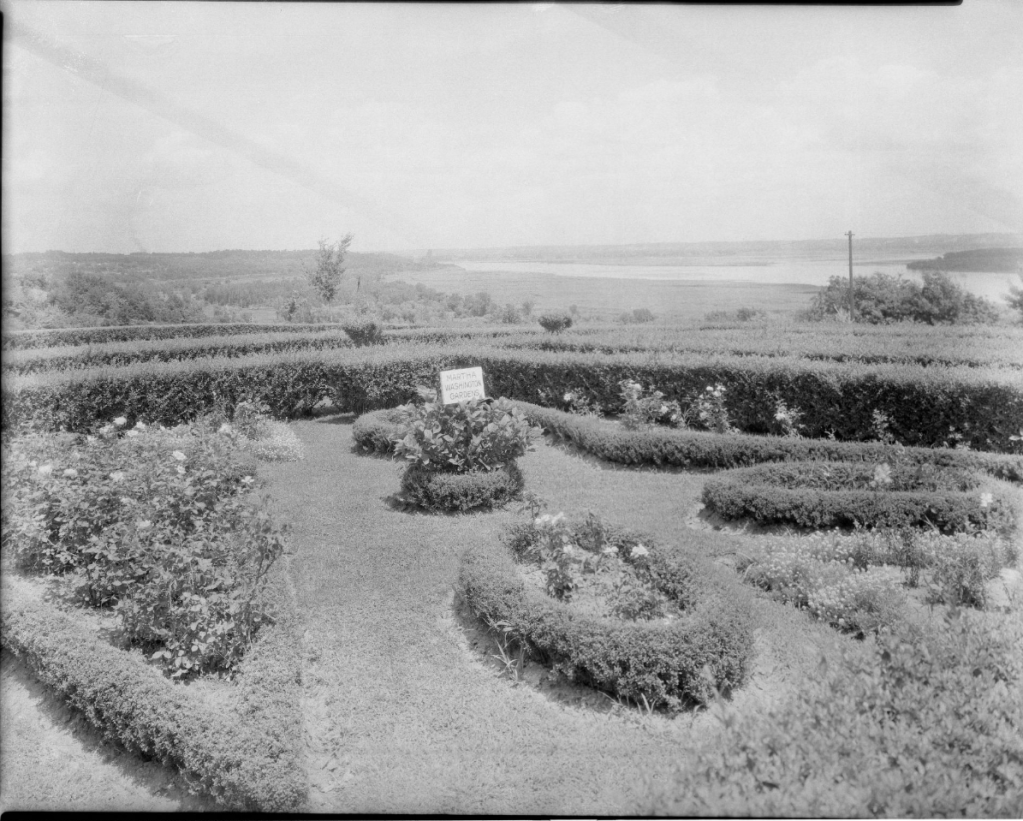
The new addition to Omaha’s park system proved to be quite popular when it opened in 1931. Some of the plantings were damaged shortly thereafter due to motorists speeding along River Drive to get there. It was often referred to as one of the loveliest spots in Omaha of Omaha withs its stunning panorama overlooking the Missouri River down below. In 1934 German Americans installed a Bronze plaque commemorating German explorer Alexander Philip Maximilian, the prince of Wied. The prince traveled along the Missouri River from 1832-1834 to study the people and the wildlife of the upper Mississippi.
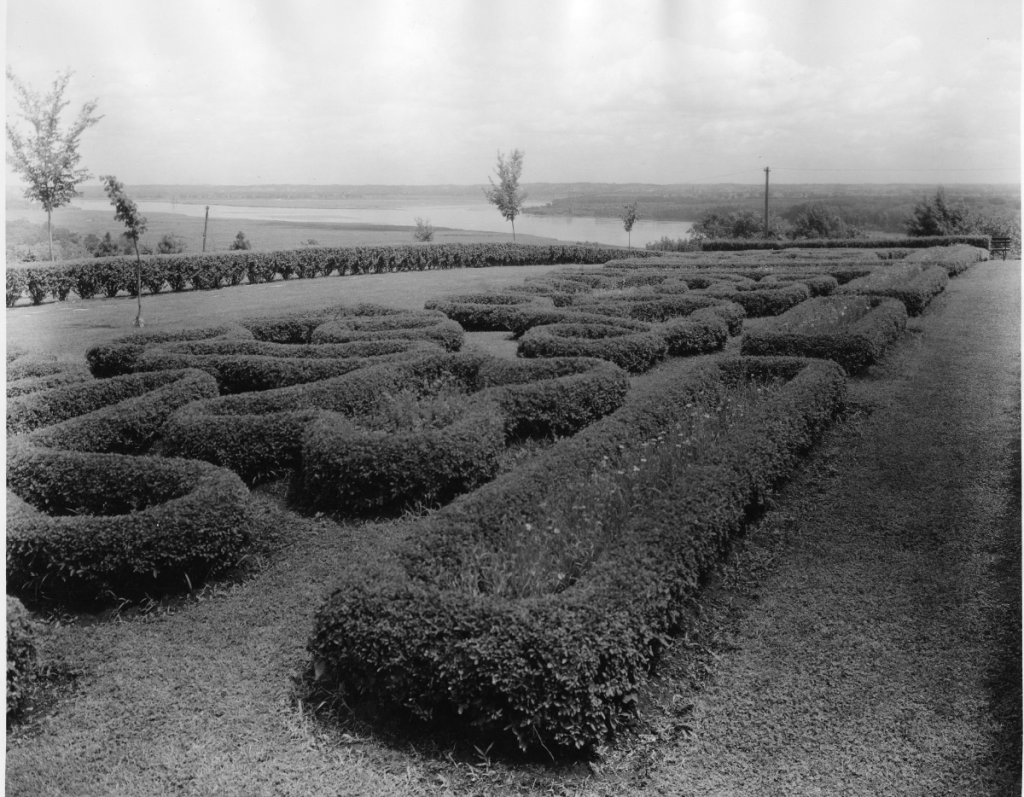
Things took a turn for the worst during World War II as funding for the continued maintenance of the park diminished. The lack of care caused additional trees to grow between the portico and the river obstructing the views that made it such an attraction in the first place. The park also fell out of favor as the city continued to move westward. Crime followed as vandals targeted the portico and grounds and it became a hot spot for public sex. In the 1990’s the city decided to invest in the park once again. They repaired and restored the portico to its original appearance using historic photos. They also restored the gardens in addition to adding a pedestrian walkway and an interpretive panel on the site’s history and development.

Despite the efforts of neighbors, the park was the target of vandals earlier this year when monuments were knocked over. City leaders are hoping to repair the damage and are working with the police to keep the area safe and clean. Despite the vandalism and lack of river views due to overgrowth, the park remains a popular spot for weddings and pictures.
Please feel free to comment to share your thoughts and memories.
Until next time, keep exploring!
Bonus pics



Subscribe
Type your email address below to be notified when a new story is posted.
Follow me on
Sponsor
Please contact me if you’re interested in sponsoring Omaha Exploration page: https://omahaexploration.com/contact-me/
Omaha Exploration, 2024. Unauthorized use and/or duplication of this material without express and written permission from this site’s author and/or owner is strictly prohibited. Excerpts and links may be used, provided that full and clear credit is given to Omaha Exploration with appropriate and specific direction to the original content.
 Omaha Exploration
Leave a comment