

While many of his countrymen were being rounded up and executed or sent to Siberia by the Soviet Union during World War II, Vytautas Mackevicius fled his homeland on foot. Back home in Lithuanian, his brother Alfonsas joined the resistance while his parents were exiled and put to work felling trees in Siberia. After 14 long years his parents were released and allowed to return. Alfonsas, however, killed himself to avoid capture.
Vytautas ended up in Hamburg, West Germany where he served in the British Army from 1946 to 1949. The future Stefanija Mackevicius meanwhile was working as a housekeeper and nanny in the home of a German officer. She was often mistreated by the family and forbidden to visit her parents. As the tide of the war began to turn against the Nazis, the officer fled Lithuania with his family and Stefanija to Hamburg. Stefanija managed to escape while en route.

After the war ended in 1945 both Vytautas and Stefanija found themselves living in barrack-style housing in a Red Cross camp for displaced Lithuanians. They got married in the camp and started a family while waiting for a chance to immigrate to the United States. The chance came in 1950 when they and 300 other Lithuanians had their immigration sponsored by a priest at Omaha’s St. Anthony Church whose congregation was largely Lithuanian. Most settled in the area surrounding the church. While initially staying with another family, they ended up moving into a house of their own at 5213 S 33rd Ave.
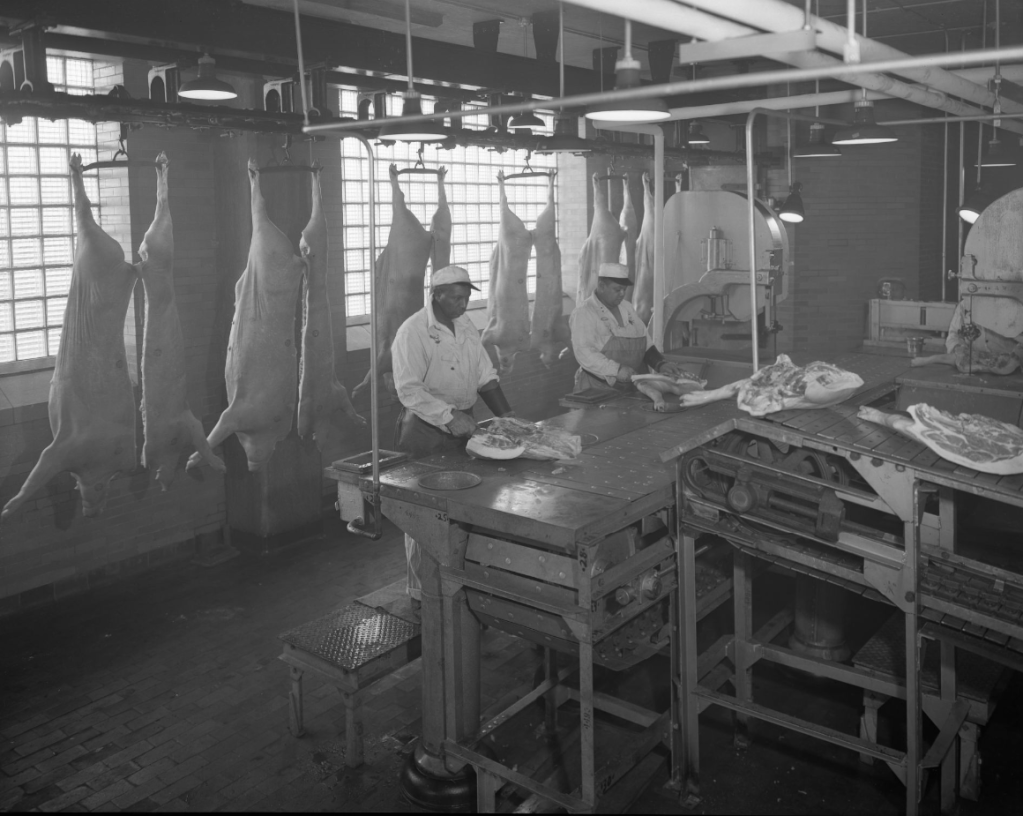
Vytautas, born in 1921 and raised on a small farm, found work at the Armour packing plant in South Omaha as did many of the Lithuanian immigrants. He didn’t know a lick of English but was determined to learn it. Stefanija learned English watching soap operas while at home with the children. The Lithuanian neighborhood had some small businesses but lacked a bakery. Stefanija shared the bread that she baked at home with neighbors in 1962. They enjoyed it so much that they offered her to pay for it. One thing led to another and in 1964, they constructed a brick building next to their house and opened Lithuanian Bakery.

The bakery featured a variety of bread including sourdough rye, pumpernickel, bagels, tortes, tarts, cottage cheese cakes and a dozen other specialties. The bakery was an immediate hit in the area and eventually attracted customers from hundreds of miles away craving its old world tastes. They opened a meat market within the bakery in 1966 after Vytautas found a Lithuanian cookbook in his father’s belongings. He was fascinated with the recipes and had a particular interest in sausage making.

While he was a meat cutter at Armour, he was not a sausage maker so the experience wasn’t particularly helpful. Despite that he started making sausage in the basement and learned through trial and error. His first attempts resulted in a lot of wasted meat. After six months, he felt good enough about the product that they began offering it in the store and eventually expanded to more than 40 varieties.

While Stefanija baked, Vytautas made sausage during the day before heading to Armour to work his night shift. When the meat packing plant relocated in 1968, he dedicated himself to the market full-time. He would often throw in a little something extra with a customer’s purchase. The small bakery began offering its bread by mail in the late 1970’s. Vytautus continued to work at the store until he passed away in 1984 at the age of 64. Stefanija continued to run the bakery alongside her sons Algird, Alfonsas, Vytautus and daughters Dobile and Birute. It was even a rite of passage for the grandchildren to work at the shop while they were in high school.

The bakery didn’t even introduce its most popular item, a Napoleon torte filled with apricot and vanilla buttercream until the early 1970’s. The process while time consuming at three days to make, was extremely popular and has been credited with keeping the bakery in business. They began selling the tortes by mail in 1988. In the mid-1990’s the tortes were featured on QVC as a part of a holiday show selling items from each state. They sold 1,200 tortes within three minutes. They even made the tortes for Omaha Steaks and sold them in local grocery stores. Stefanija continued to work at the store into the 1990’s and passed away in 2017 at 94.
On the wall of the bakery is a mural that shows St. Anthony’s Church in flames. In 1920 a fire destroyed the church which served as the place of worship for Omaha’s Lithuanian community. In 1932 Reverend Joe Jusvich became the pastor and restored the church. In the years that followed World War II, “Father Joe” sponsored the displaced Lithuanians allowing them to settle in Omaha. The mural also includes the Iron Curtain, a map of the Baltic countries, a stork and other images that tell the community’s story.

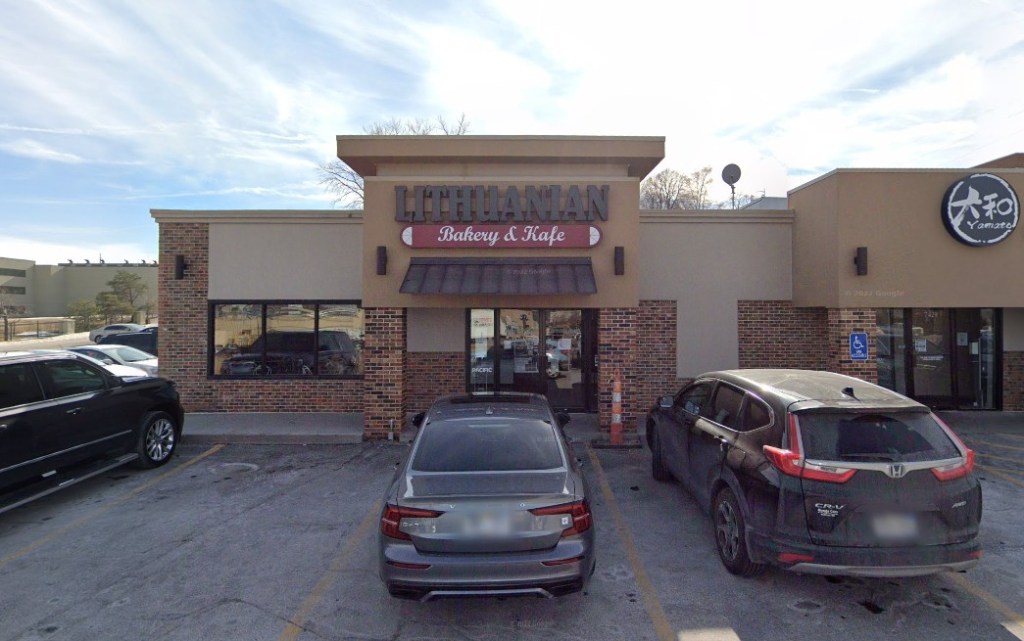
Lithuanian Bakery remains a family run business that continues to operate out of its original location at 5217 S 33rd Ave. Today they have a second location at 7427 Pacific. I believe they may have had an Old Market location at one point. Lithuanian Bakery continues to feature breads and tortes in addition to an eclectic menu based on “Old Country” recipes. It’s been recognized as one of the best bakeries and sweet shops in Omaha as recently as 2023.
Content written by Omaha Exploration – follow my page for more! Please also feel free to leave a comment. If there’s something you want to learn more about, let me know. In the meantime, keep exploring!
Omaha Exploration is sponsored by @Rockbrook Mortgage Inc.

Click here to learn about opportunities to sponsor Omaha Exploration!
Subscribe
Type your email address below to be notified when a new story is posted.
 Omaha Exploration
Leave a comment