

With so many of us being impacted by cancer, I wanted to take a moment to explore Omaha’s Cancer Survivor Park on World Cancer Day. The park was funded by Richard Bloch who was born in Kansas City in 1926. After graduating from Wharton at the age of 19, Richard returned home and joined a bookkeeping business with his brothers. By 1955 they branched out into tax preparation which marked the beginning of H & R Block.
By the late 1970’s, the business was handling 10% of the nation’s tax returns in an efficient and inexpensive manner. By 1978, however, Richard was diagnosed with lung cancer. One physician told the heavy smoker to get his estate in order because he only had three months to live. He went to another who said he was very sick and treatment would only make it worse. Refusing to accept the prognosis, he underwent two years of aggressive therapy causing his cancer to go into remission. Two years later Richard was diagnosed with colon cancer which he also beat.

After the life changing experience, Richard found a new purpose and sold his share in H & R Block. He endowed the R. A. Bloch Cancer Management Center at the University of Missouri – Kansas City in addition to developing the National Cancer Institute’s computer system that informed patients of the latest in cancer treatment. He also served on President Reagan’s National Cancer Advisory Board.

Richard went a step further by endowing parks in 24 cities across the United States and Canada dedicated to cancer victims. Richard’s wife, Annette, said that nationwide, there are many parks that are memorials to the dead. Starting in Kansas City in 1990, they created Cancer Survivors Parks to show that there is life with cancer. The Bloch’s were so impressed with Mayor P. J. Morgan’s presentation that they selected Omaha, the smallest city to receive an endowment that was originally only targeted for large cities.
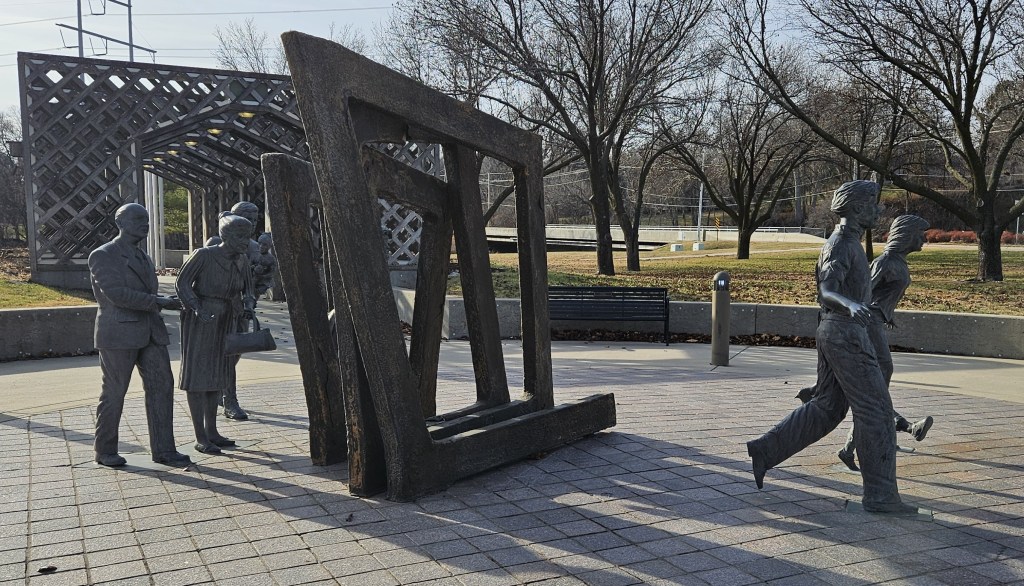
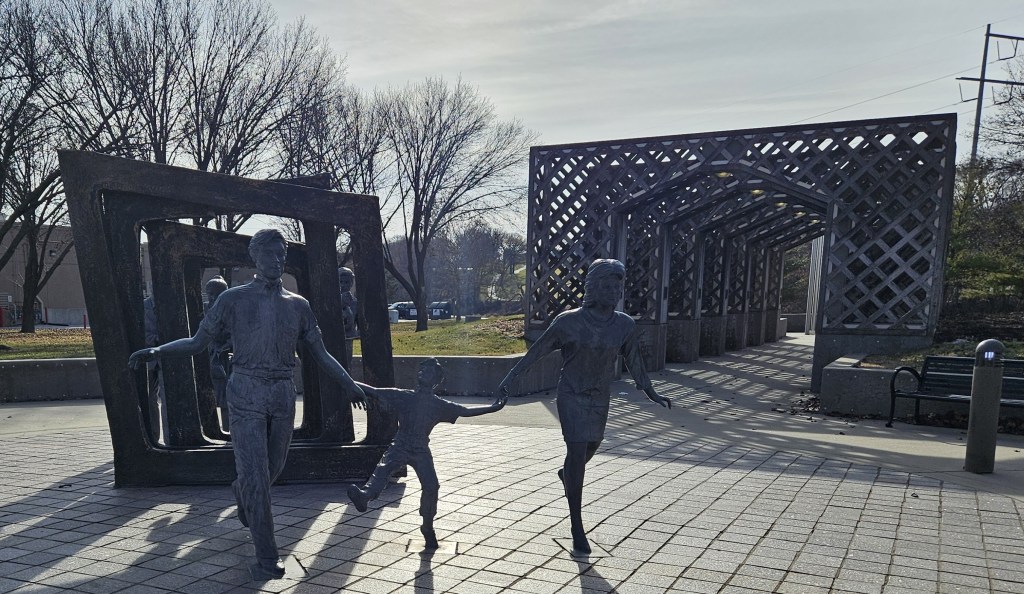
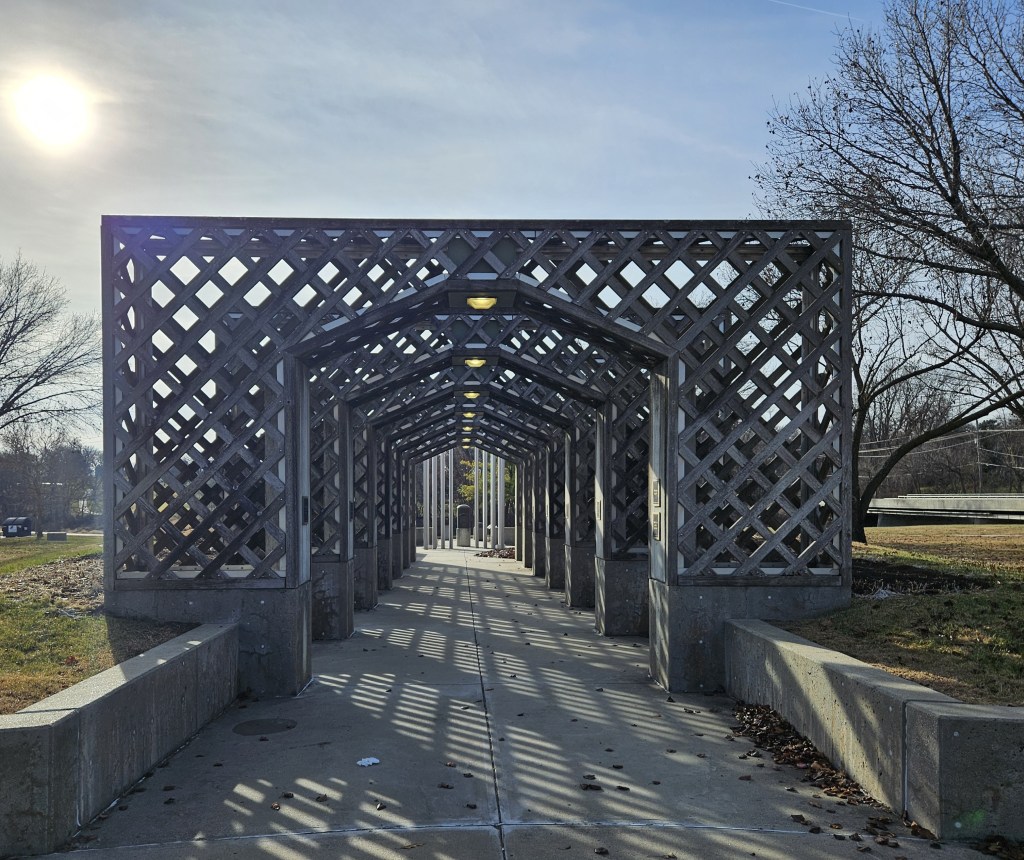
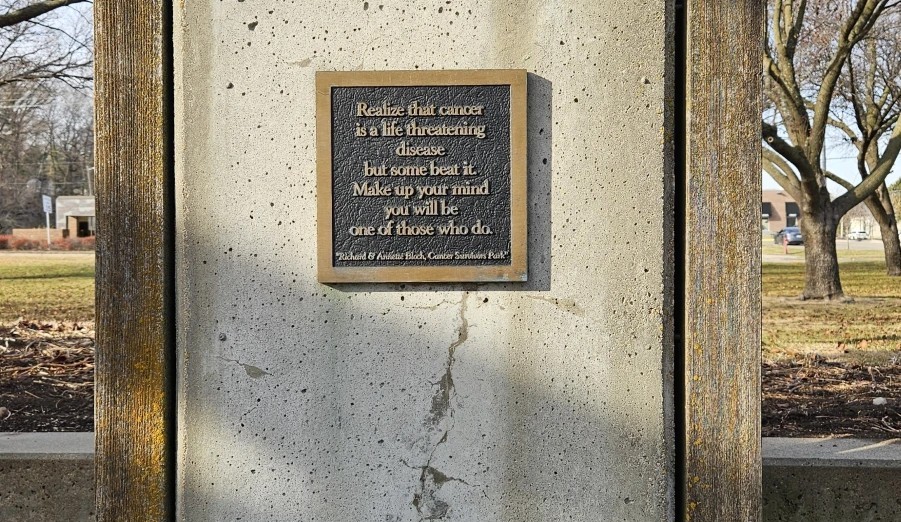
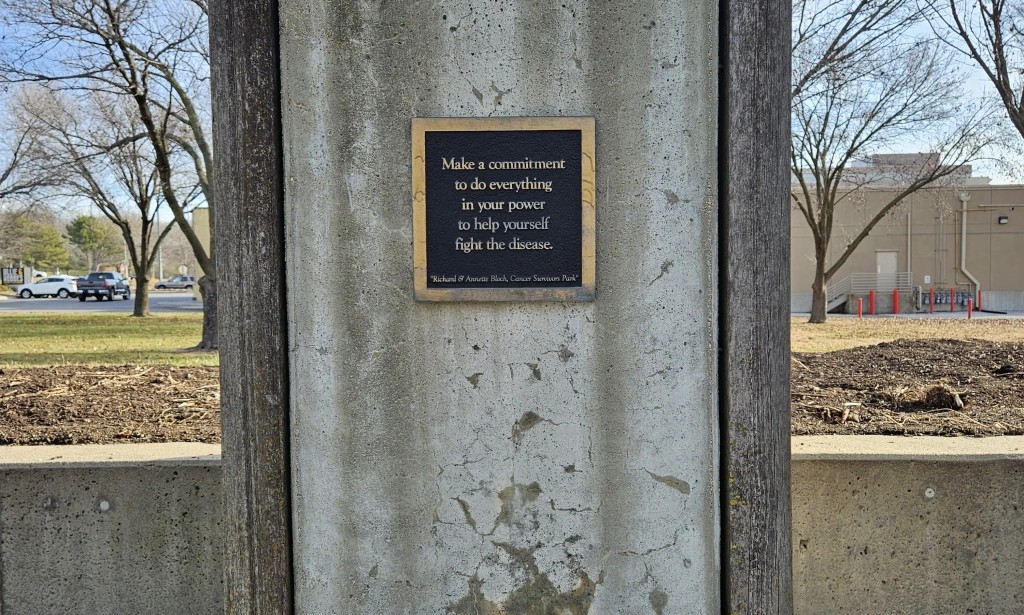
The foundation selected a site that sat on two acres of city owned land that had high visibility on 105th and Pacific. Omaha’s park opened in 1992 and represented the psychological journey of both cancer patients and their supporters. The park has eight life-sized bronze statues that passed through a maze. The first five figures show a range of emotions on their faces including fear, hope and determination. The last three figures come out of the other side of the maze happy and laughing representing successful treatment. The park also contains 14 tubes that are 24 feet high and that cast light into the sky. There are also 14 plaques that display both messages of hope and suggestions for those coping with cancer. On the far end is a computer which originally allowed people to input a specific type of cancer to see the names of local individuals who have survived that type of cancer for at least five years. I’m not sure whether the computer still works today.
Despite the bleak prognosis in 1978, Richard lived until he was 78 years before passing away in 2004.
The other parks are located in Bakersfield, CA; Baltimore, MD; Boise, ID; Chicago, IL; Cleveland, OH; Columbia, SC; Columbus, OH; Dallas, TX; Houston, TX; Jacksonville, FL; Memphis, TN; Minneapolis, MN; Mississaug a, Ontario, Canada; New Orleans, LA; Ottawa, Ontario, Canada; Phoenix, AZ; Rancho Mirage, CA; Sacramento, CA; San Diego, CA, Santa Rosa, CA; Tucson, AZ, and Tampa, FL.
Content written by Omaha Exploration – follow my page for more! Please also feel free to leave a comment. If there’s something you want to learn more about, let me know. In the meantime, keep exploring!
Omaha Exploration is sponsored by @Rockbrook Mortgage Inc.

Bonus pics

4 of the 14 plaques that have messages of hope and suggestions


Subscribe
Type your email address below to be notified when a new story is posted.
 Omaha Exploration
Leave a comment