
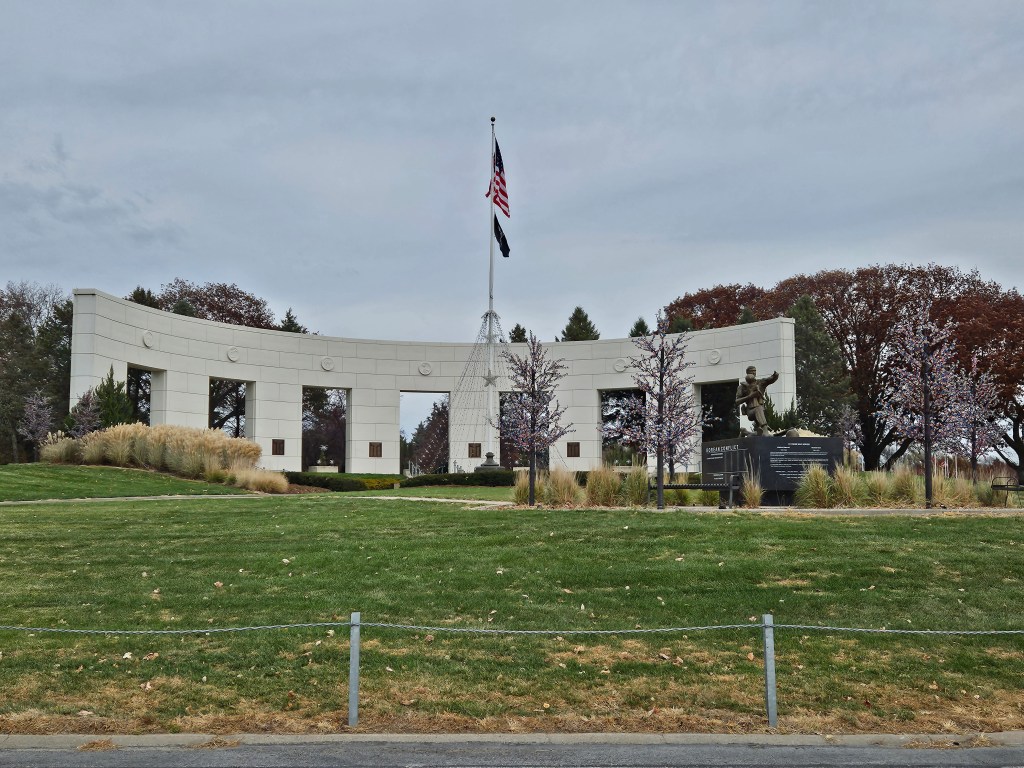
In 1943 while the outcome of World War II was still in doubt, Lulu Broad, owner of the Gypsy Tea Shop, wrote a letter to Henry Doorly, the publisher of the Omaha World-Herald. In the letter she suggested creating a memorial honoring the men and women who served our country. Henry endorsed the idea and mentioned it to some businessmen in town including Robert Storz of Storz Brewery.
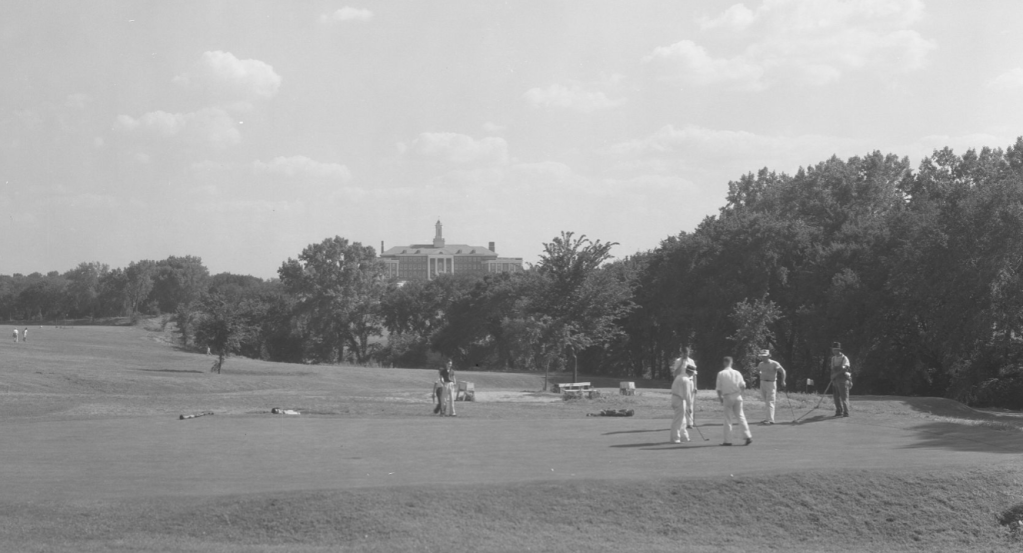
Robert lamented the 12-year struggle it took to raise funds for a WWI monument in Omaha. While the original plan was for a monument to be displayed in Elmwood Park, it wasn’t until 1937 that a scaled-back monument was finally dedicated at Turner Park. In order to establish the memorial, the WWII Memorial Park Association was formed with Storz as its president in 1944.
The association selected a site near University of Omaha and across from Elmwood Park. The city agreed to use 23 acres of condemned land from the Dundee Golf Course while the remaining 42 acres were purchased from the Dundee Realty Company. The intent from the beginning was for the citizens of Omaha, young and old, to fund the memorial. All told, over 3,000 individuals and organizations raised the necessary $250k to purchase the land, construct and landscape the site.

With its entrance at 60th and Underwood Ave, the memorial was dedicated in a ceremony featuring President Harry Truman on June 5, 1948. In his remarks, he said “The men who gave their lives did so because they believed, as I believe, in an ideal. That ideal is peace in the world for all of the world.” The park symbolizes the community’s gratitude to Douglas County veterans and those killed while fighting for freedom during WWII. Since then it was broadened to recognize the service and sacrifices of veterans in other conflicts.

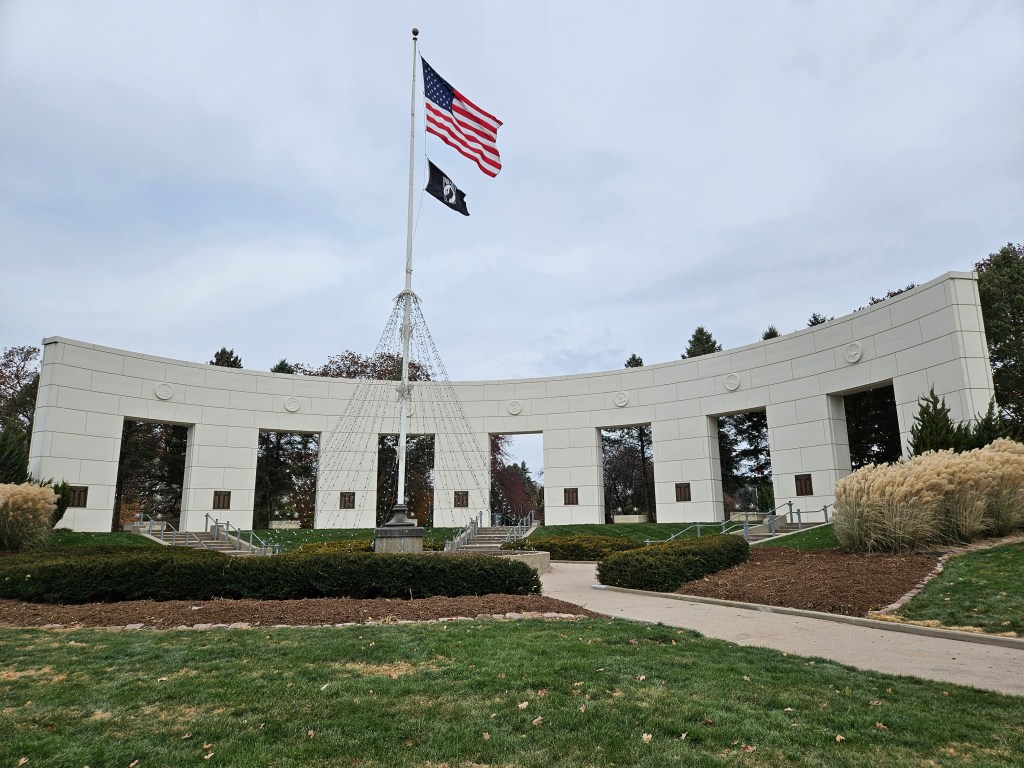
Located at the highest point in the park, the WWII Memorial Shrine recognizes the men and women of Douglas County who lost their lives while serving in the war. It consists of a semi-circular colonnade of seven arches. Above each arch is a branch of the U.S. military. Bronze plaques on the columns list the names of over 900 people who died during the war. In front of the shrine is an American flag that stands at the center of a circular flower bed that was originally a reflecting pool. A large lawn and trees enhance the beauty of the park. It wasn’t until 1959 that the formal rose garden was added where a peony garden was originally planned. Additional monuments have been added over the years.
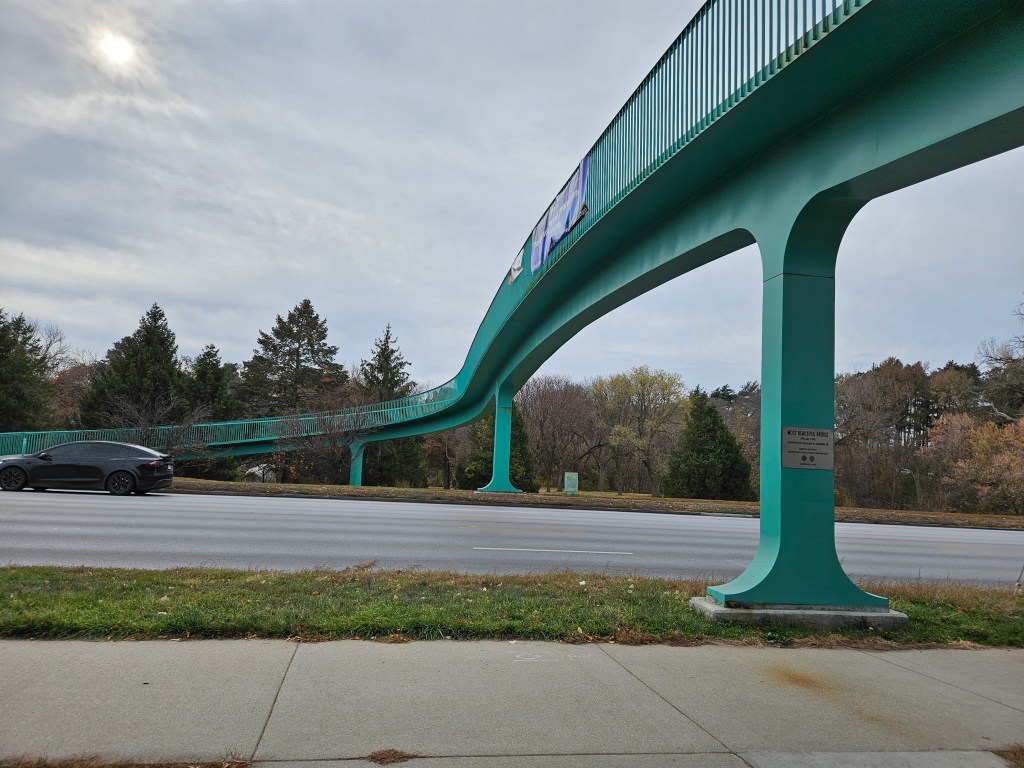
After the war ended in 1945, the student population in Omaha exploded as servicemen returned home. To address safety concerns of children having to cross busy streets in the growing city to get to school, the city began building pedestrian bridges. The first was built at 42nd and Grover. Parents of St. Margaret Mary’s promoted the idea of building a similar bridge over Dodge St. The design with its flowing S-curved steel structure was unlike anything the city had ever seen. The city planned to coordinate the construction of the bridge with the widening of Dodge to five lanes. The bridge opened in 1968 and was named Most Beautiful Bridge by the American Institute of Steel Construction a year later. In 2004 it was designated as an Omaha Landmark. Of more than dozen pedestrian bridges built during that time, the bridge at Memorial Park remains the most utilized.
Memorial Park is also the site of a large free summer concert and fireworks show that started in 1987. Some of the performers included The Temptations, The Beach Boys, The Village People, Three Dog Night, Huey Lewis and The News, Joan Jett, Wyclef Jean Sheryl Crow and Melissa Etheridge not to mention 311 for the city’s 150th birthday.

Since it opened the park has always been one of the most popular places for civic engagement. It’s been used to stage events including protests against the war in Vietnam, a park curfew and more recently the deaths of George Floyd and James Scurlock as well as the overuling of Roe v Wade.

In 2023 the park underwent its first major renovation since 1948 with a 2,500 sq foot plaza being built between the twin stairways. The plaza is expected to be a gathering place that can accommodate tents, flags, musical acts and gatherings and will include electric outlets and tent tie downs. It also allows a place for seating on a flat surface as the hillside stretching from the memorial to Dodge St slopes downward. Memorial Park remains an extremely popular place to fly a kite, toss a frisbee, walk a dog, sled, picnic and people watch.
Please feel free to comment to share your thoughts and memories.
Until next time, keep exploring!
Bonus Pics


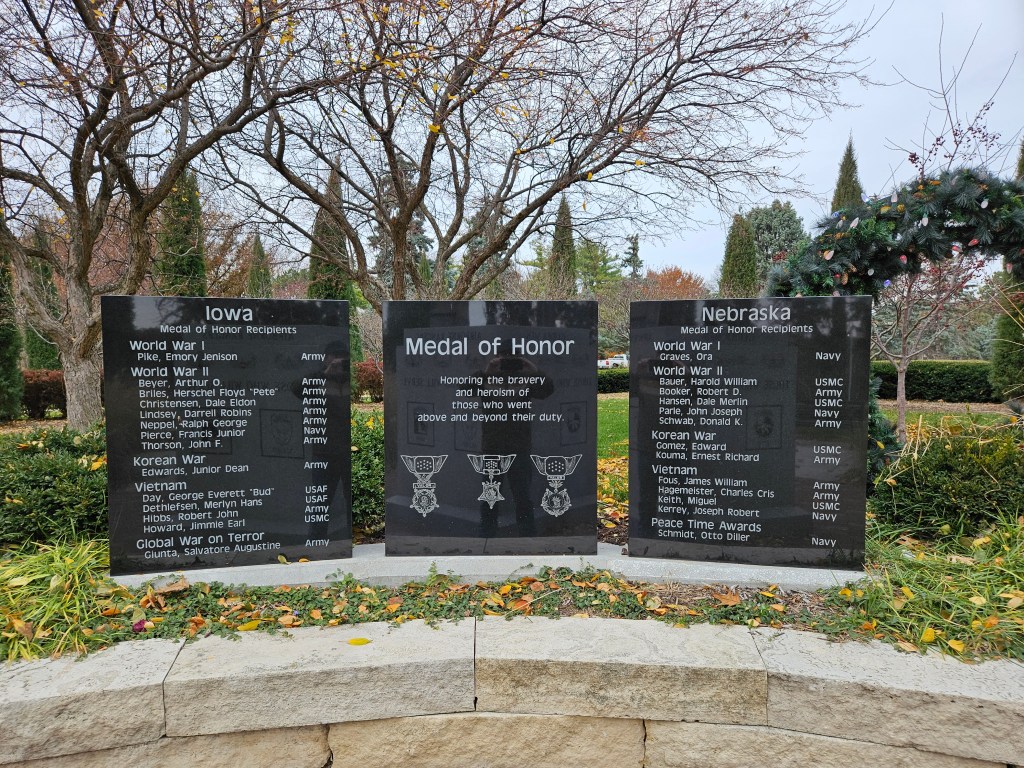
Below are just a few of the many scupltures and plaques at Memorial Park.




 Omaha Exploration
Leave a comment