

The predecessor to Rosenblatt Stadium was Vinton Street Park. The ballpark located near 13th and Vinton was built in 1900 and was the home of the Omahogs as well as Indians, Rangers, Rourkes, Buffaloes, Crickets and Packers. The team was owned and managed by Billy “Pa” Rourke who had been a scout working for the Chicago Cubs. Professional baseball proved to be popular in Omaha and as a result, the stadium was renovated to increase the capacity which included an auto yard allowing fans to watch games from their car. Both Babe Ruth and Lou Gehrig played exhibition games at the stadium in 1927.
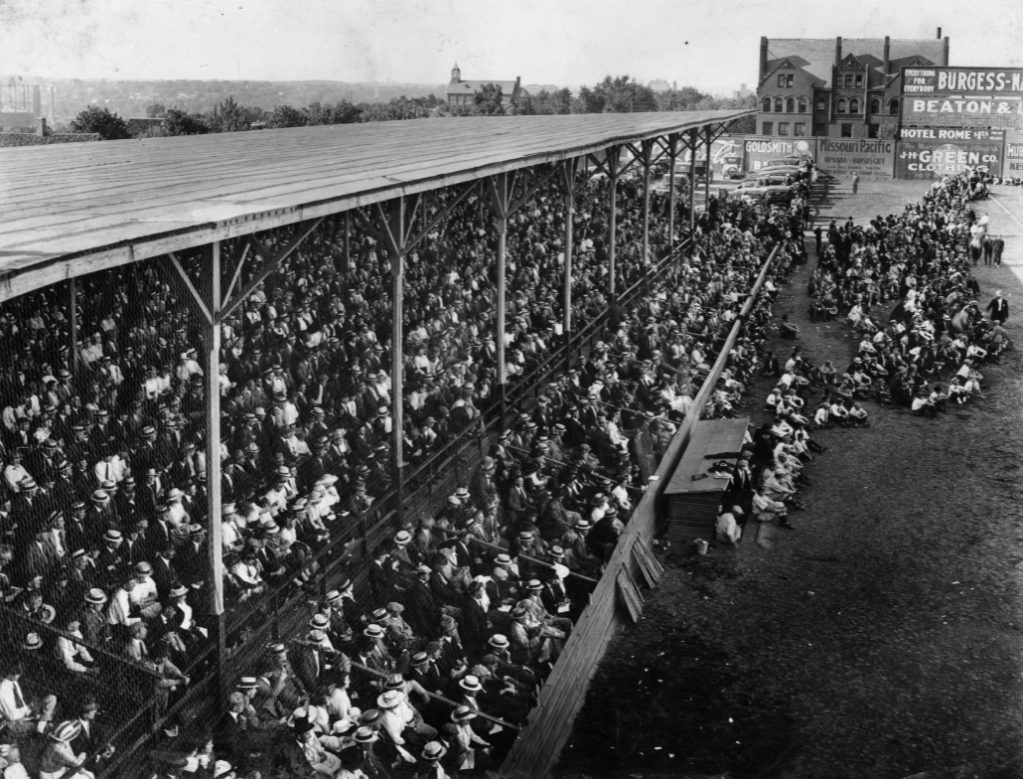
Ticket sales struggled during the Great Depression and while the addition of lights helped, the team struggled to pay its bills. The team left for Council Bluffs in 1935. A new team called the Robin Hoods called the stadium home in 1936 but disaster struck on August 14th when a fire destroyed not only the stadium but also 12 nearby houses. Despite calls to immediately replace the stadium, it wouldn’t happen for 12 years.
In 1945 voters approved a bond issue to build a new baseball stadium on a 40 acre parcel of land overlooking Riverview Park (current day Henry Doorly Zoo). The original plans called for a brick facade though it was dropped for less expensive concrete. Construction was completed in the fall of 1948. The new park, Omaha Municipal Stadium, was located about a half mile south of the old stadium. It became the home of the Omaha Cardinals, the single-A affiliate of the St. Louis Cardinals starting in 1949.
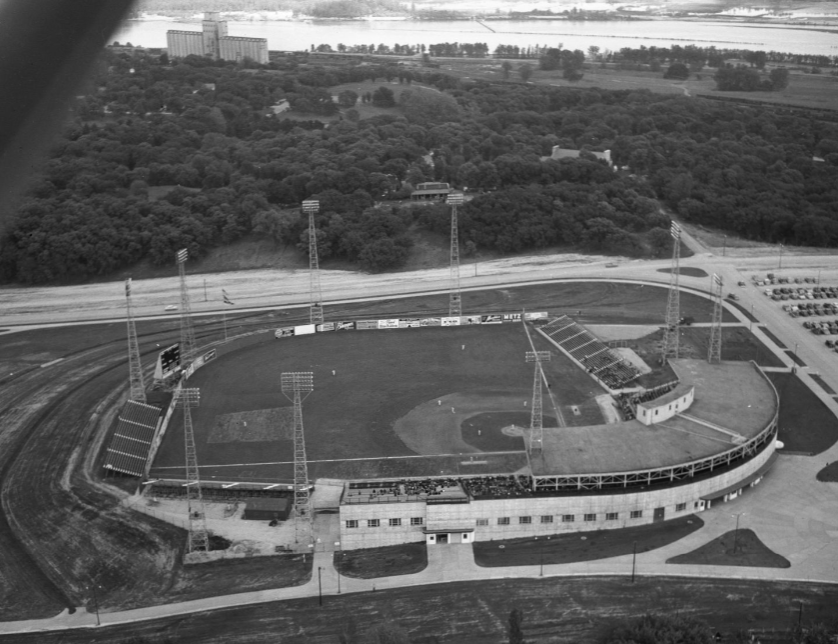
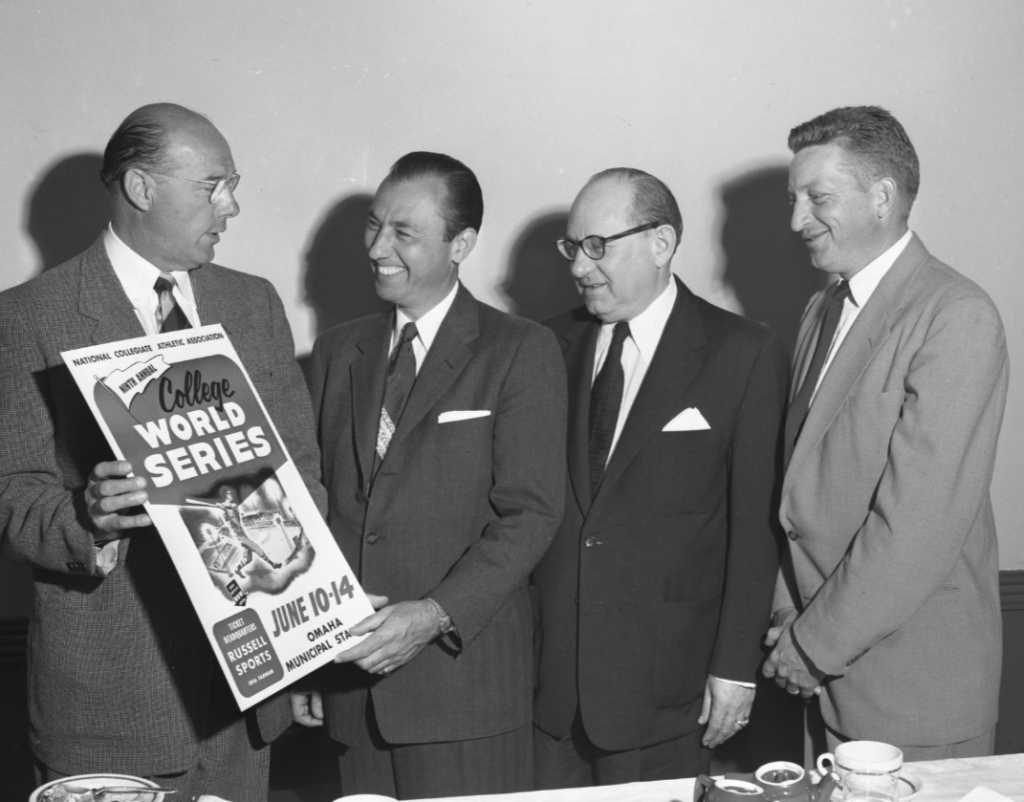
While Omaha Mayor Johnny Rosenblatt led the effort to build the new stadium with the express purpose of bringing minor league baseball to Omaha, he saw an opportunity to also draw the College World Series. The CWS was still in its infancy and played its first two seasons in Kalamazoo, MI and its third season in Wichita, KS. The pitch was successful as the CWS relocated to Omaha for its 1950 season.
Meanwhile, the stadium remained the home of the Omaha Cardinals until 1955. At that point, Omaha replaced the Columbus Red Birds as the Cardinals triple-A affiliate. The city’s relationship with St. Louis ended after the 1959 season. After that it was the triple-A affiliate of the Los Angeles Dodgers during the 1961-1962 seasons. The American Association disbanded in 1963 causing Omaha to be without a minor league baseball team until 1969.
Despite the setback, Omaha remained the home of the CWS which struggled financially and failed to turn a profit for 10 of its first 12 years. Over time, of course, the CWS became a lucrative event for both the NCAA and the city of Omaha. In 1964 Omaha Municipal Stadium was renamed Johnny Rosenblatt Stadium in honor of the man who was so instrumental in bringing professional baseball and the CWS to Omaha.
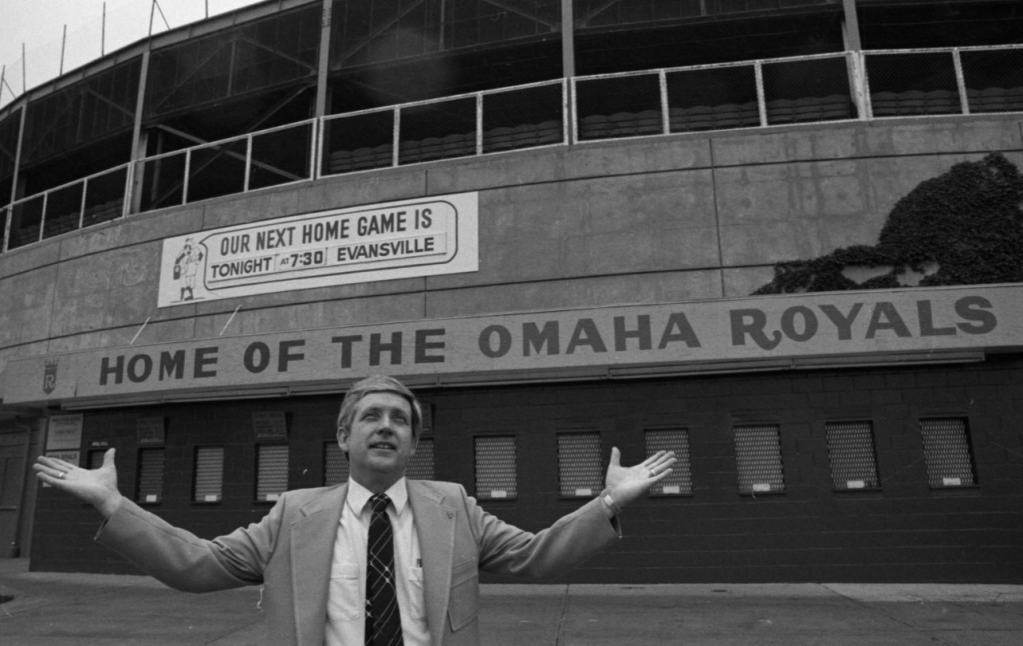
Minor league baseball finally returned to Omaha when it became the triple-A affiliate of the expansion Kansas City Royals in 1969. The growing popularity of the CWS proved detrimental to the O-Royals who struggled to fill seats in what had become the largest non-MLB stadium in the country. The team also had to go on an extended road trip each summer when the CWS arrived in town.
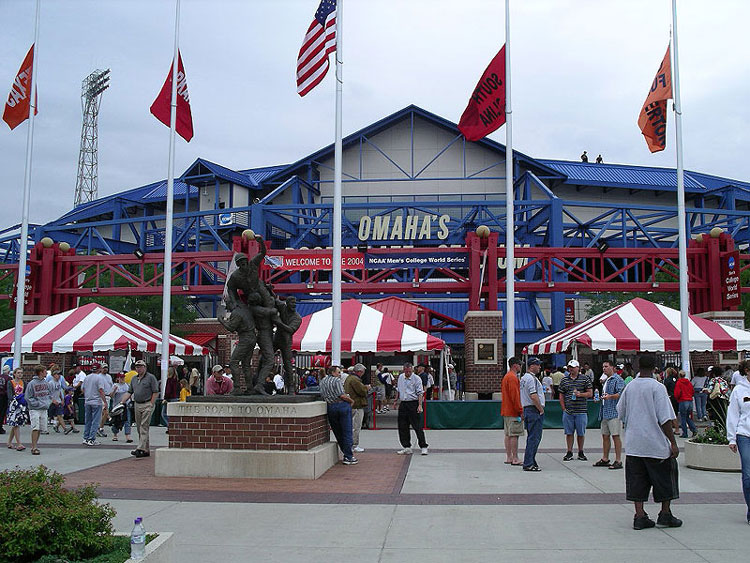
The CWS became a spectacle in south Omaha with its lively atmosphere, tailgating, pop-up beer gardens, merchandise shops and residents selling parking spots in their driveway, frontyard, backyard or adjacent lots. Meanwhile the stadium itself offered an intimate experience with most seats having a pretty good view of the field. Some seats however were obstructed which is not unusual for old stadiums. The outfield bleachers despite having a reputation for being a bit rowdy was a fun place to take in a game even if they were uncomfortable and crowded.
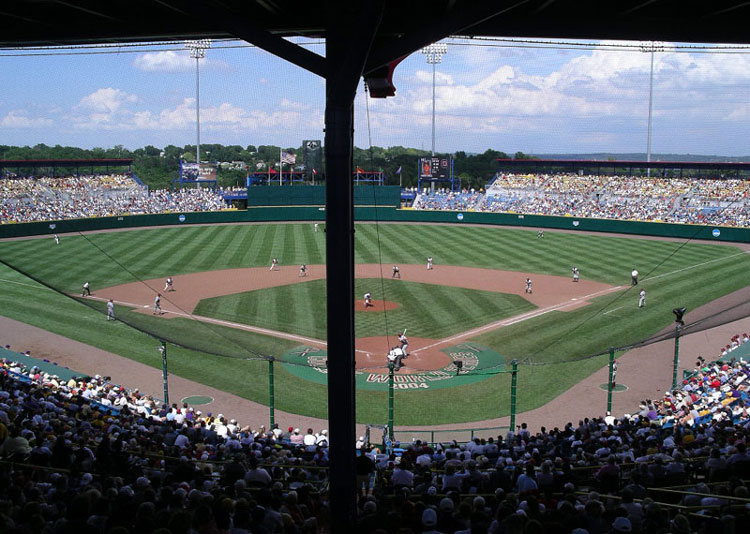
Rosenblatt was the home to 60 years worth of CWS memories with its endless rounds of the wave and the many beach balls being tossed around before landing on the field just to be deflated by sometimes overzealous groundskeepers. It was also more than just a baseball stadium. Its perch atop the hill made it a spectacular place for watching fireworks. It was also the site of concerts performed by The Beach Boys, The Police and Santana among others.
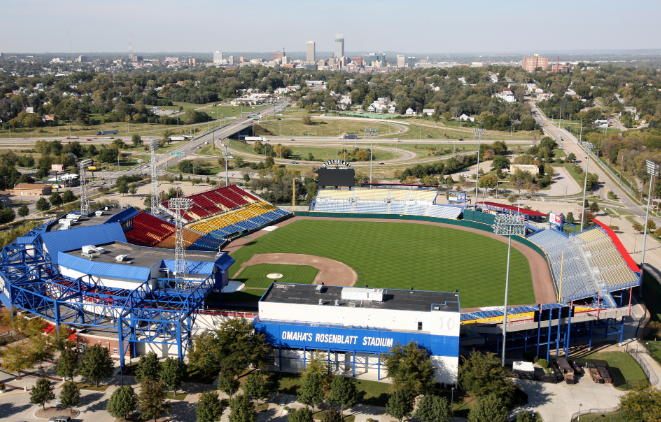
Even though the city spent over $35M to refurbish Rosenblatt over the years, it became clear that the NCAA wanted a new stadium for the event. At that point Rosenblatt was older than all Major League stadiums except Wrigley Field and Fenway Park. With its current contract expiring in 2010, the city was fearful of losing an event that generated more than $90M to the city not to mention prestige and advertising that came from having the city mentioned all over ESPN broadcasts over a two week time period. So with that, the city agreed to build a new $131M stadium in North Downtown in exchange for a 25-year contract.
In its final season, Rosenblatt served as the familiar home for both the Royals, CWS and added the Omaha Nighthawks of the United Football League. The Nighthawks were the only team in the new league to sell out all four of its home games resulting in the championship game being played in Omaha. It was the last sporting event to be held in the stadium.
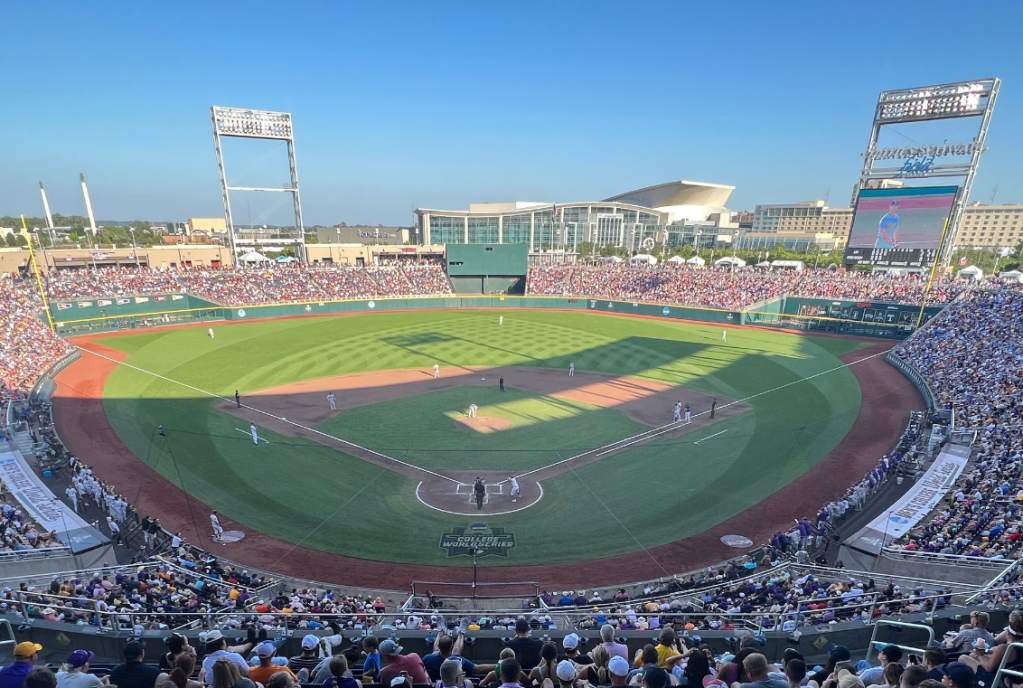
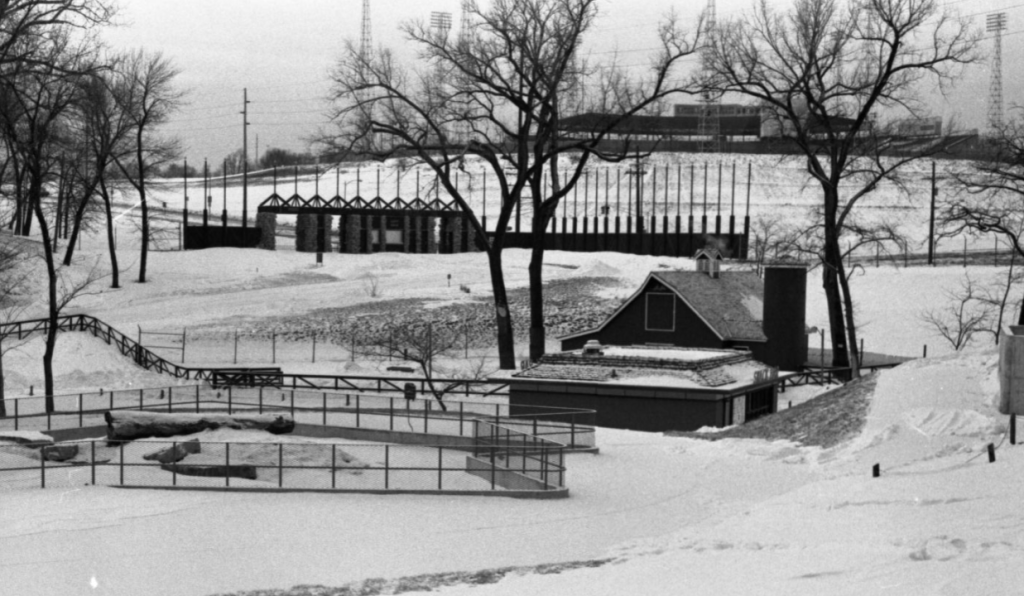
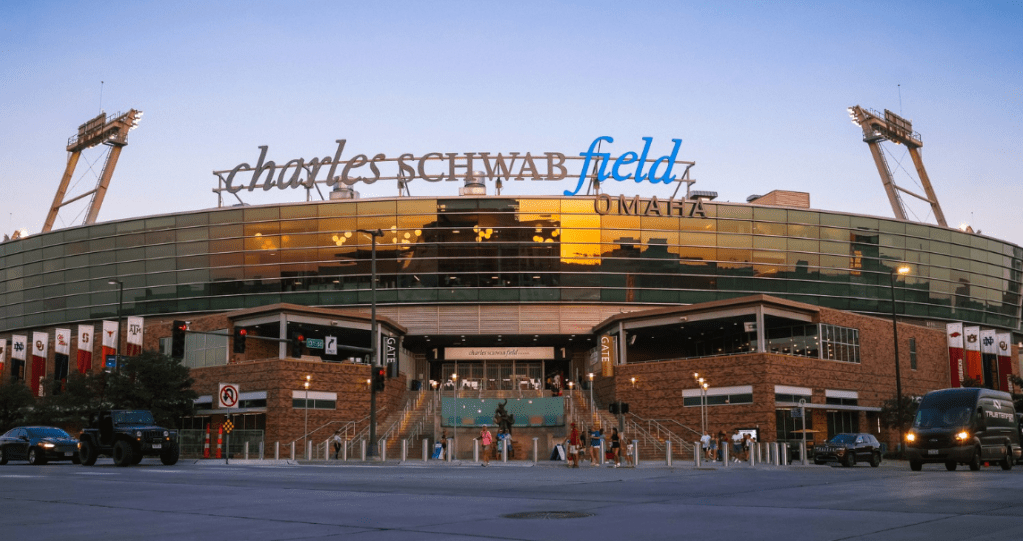
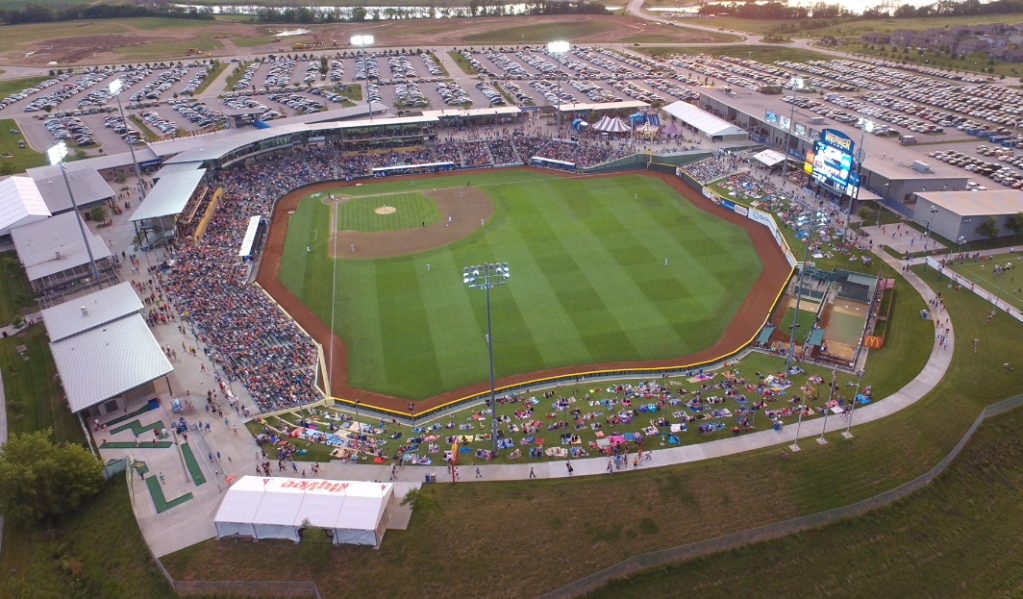
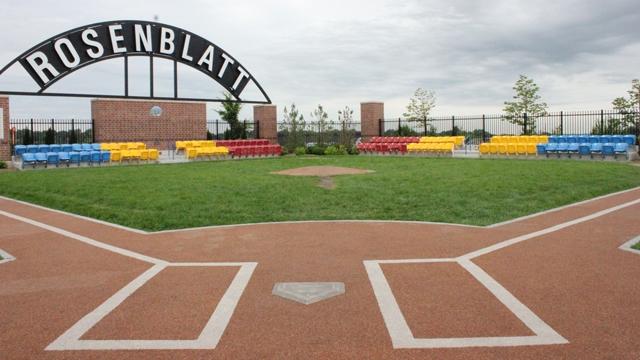
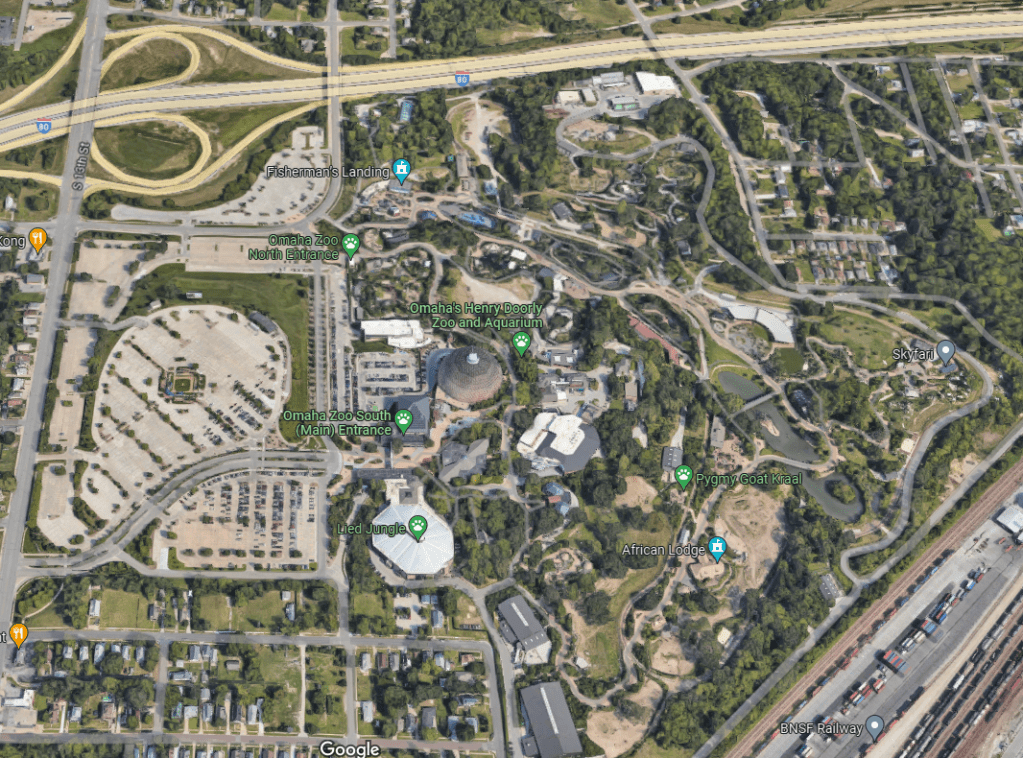
The Royals become the Storm Chasers after relocating to Sarpy County where they built a smaller, family friendly stadium called Werner Park. The CWS relocated to its new stadium, TD Ameritrade Park (now Charles Schwab Field), which also became home of the Creighton Bluejays. Meanwhile, Rosenblatt’s longtime neighbor, Riverview Park, grew to become the world-class Henry Doorly Zoo. The zoo purchased the land where the grand stadium once sat and currently use it for parking. To pay tribute to Rosenblatt, they built a little league version of the park in one of the lots.
Bonus Pics
 Omaha Exploration
Leave a comment