
Omaha’s oldest park was founded more than 150 years ago. Prior to that, the city had only one other park, Jefferson Square at 16th and Chicago Streets, which consisted of a single block. Noting the lack of green space in the rapidly growing 18-year-old city, Andrew Hanscom and James Megeath donated 57 of the 400 acres of land they had acquired for use as a new park. Both men were involved in politics, while Hanscom also worked as a real estate developer and Megeath as a forwarding agent for Union Pacific.

The land they donated, considered too hilly for residential development, was named Hanscom Park after the majority landholder. The remaining land was used to create the Hanscom Place neighborhood. The park sat on the western edge of the city, bordering 32nd Avenue. In accepting the donation, the city agreed to five conditions:
- It must remain a park forever.
- It would always be named Hanscom Park.
- The city must improve and beautify it.
- The city must build a road around the park.
- The city must maintain the park forever.

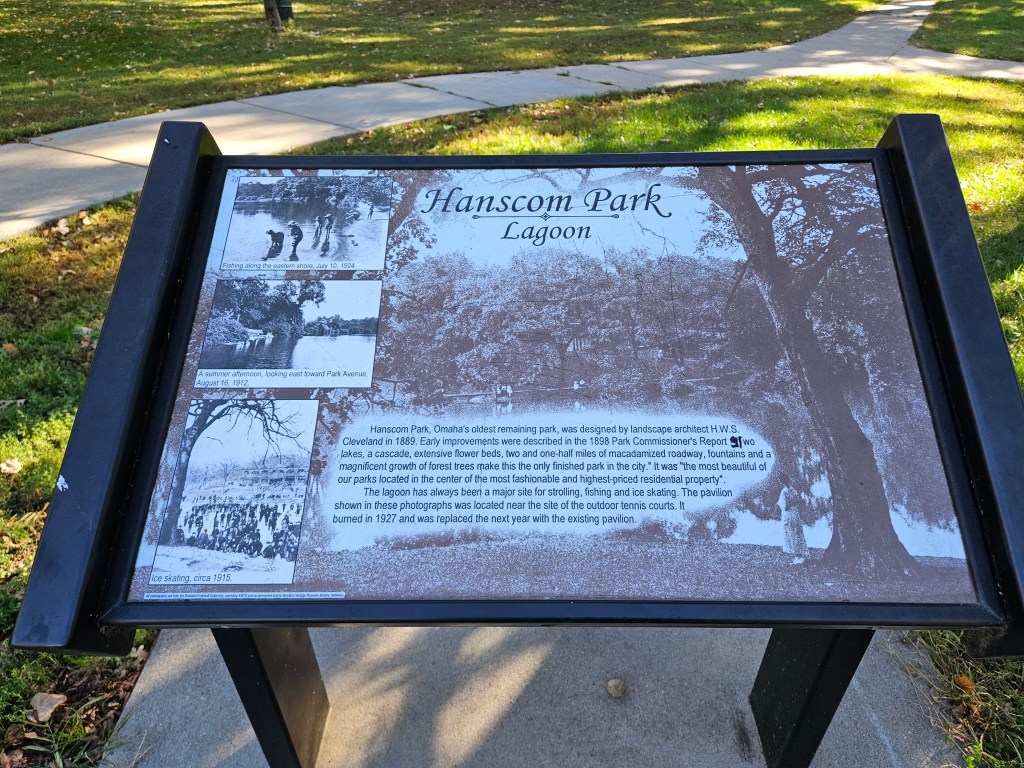
When it opened in 1872, the park offered respite from the city, particularly for those with automobiles and for nearby residents, though the surrounding neighborhoods were only beginning to take shape. By 1888, however, the city had not lived up to its end of the bargain, and the donors threatened to reclaim the land. This prompted the city to install a sewer system and regrade the streets around the park to make them easier to navigate. It also created a parks commission to plan, control, and care for the park. That led to the hiring of prominent landscape architect Horace Cleveland to design the park and boulevard system that would connect it to other newly established parks.
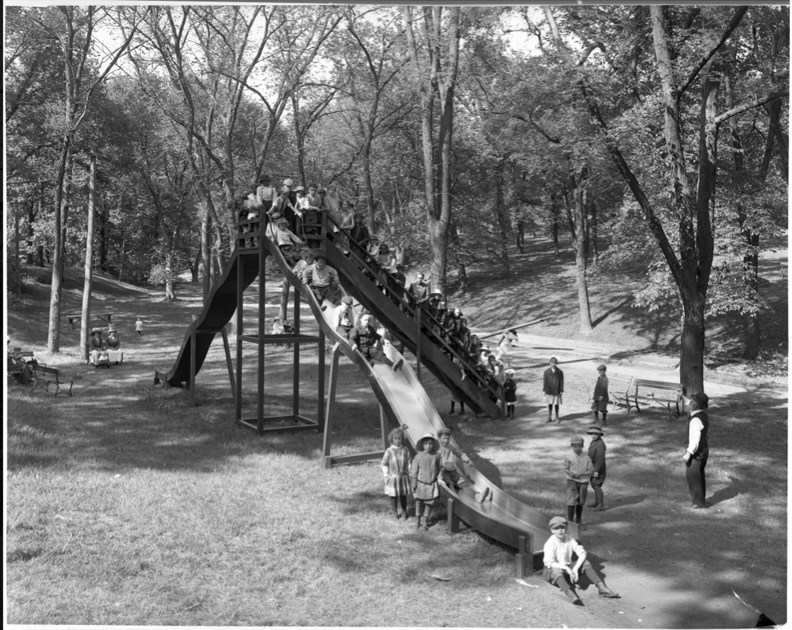
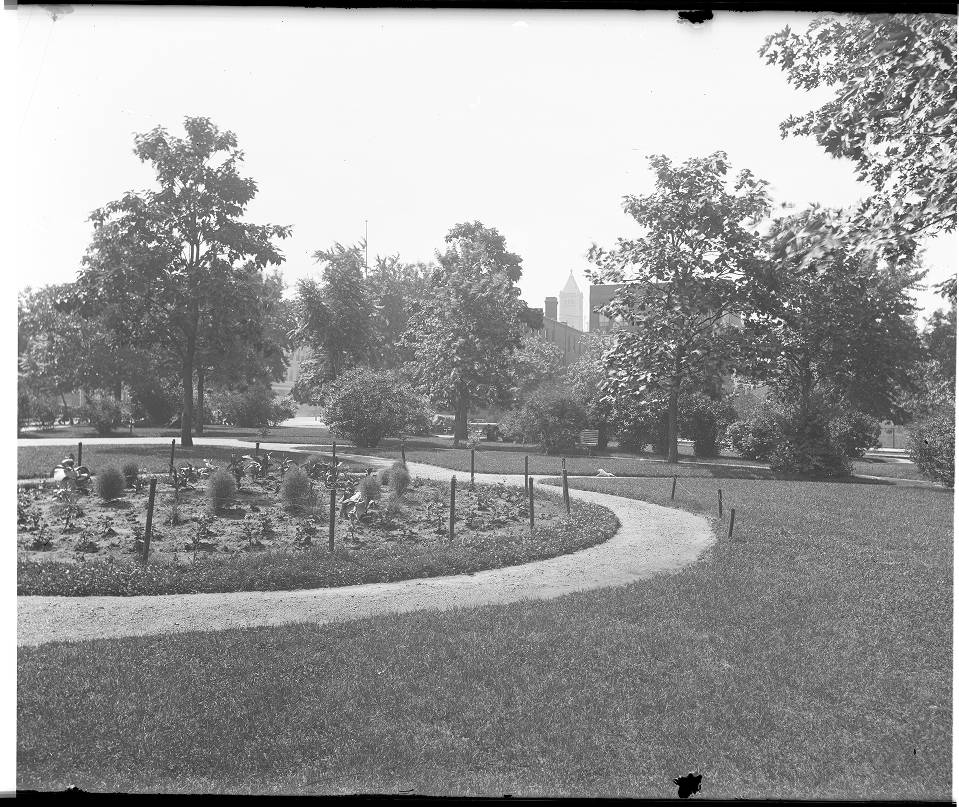
Once the renovation was complete and the streetcar line was extended to the park entrance, its popularity exploded. At one point, streetcars were stopping every ten minutes. Visitors found much to enjoy. In addition to the open green space and large flower beds, the park featured a bandstand and dancing platform for Sunday afternoon concerts, fountains, lagoons, a greenhouse, and an abundance of trees that provided shade. The idyllic park was also a runner-up to host the 1898 Trans-Mississippi Exposition.

Over time, the city banned dance parties and removed the dancing platform. Despite this, ice skating and fishing remained popular activities, along with attractions that included two metal slides hitched together, a merry-go-round, and teeter-totters. A pavilion was added by 1924 but burned down three years later. It was replaced with an even larger two-story structure that included a wraparound porch and caretakers’ quarters on its second floor.
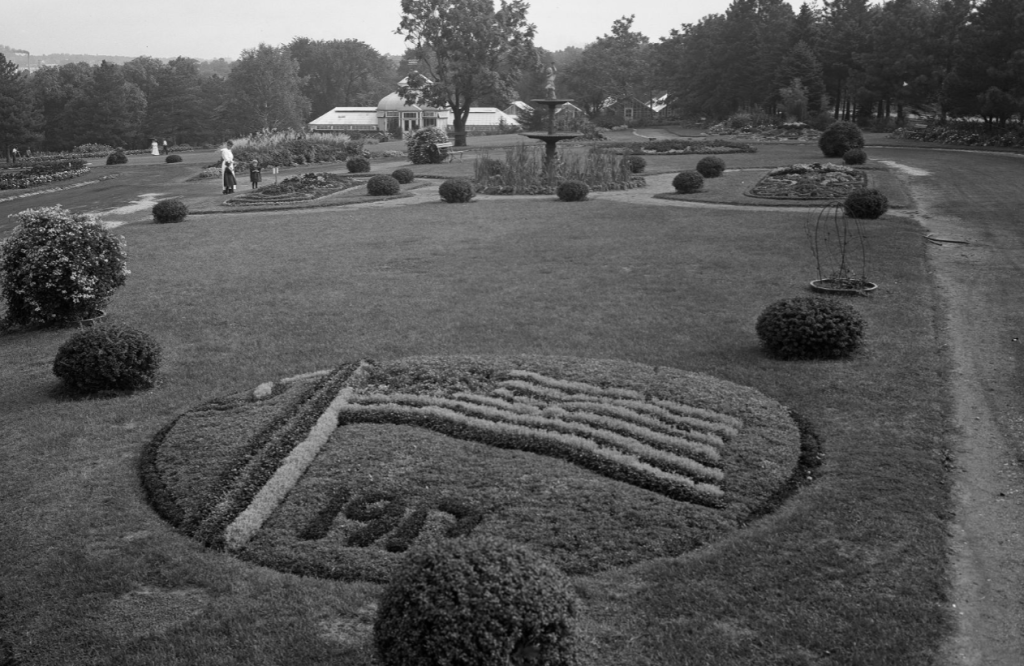
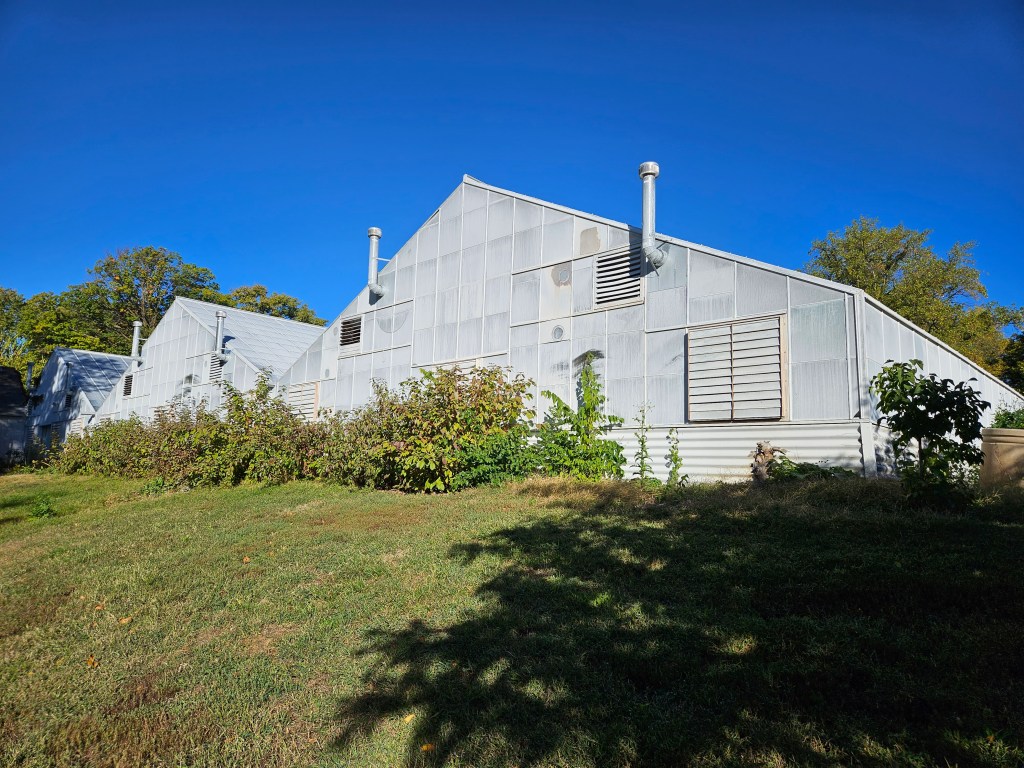
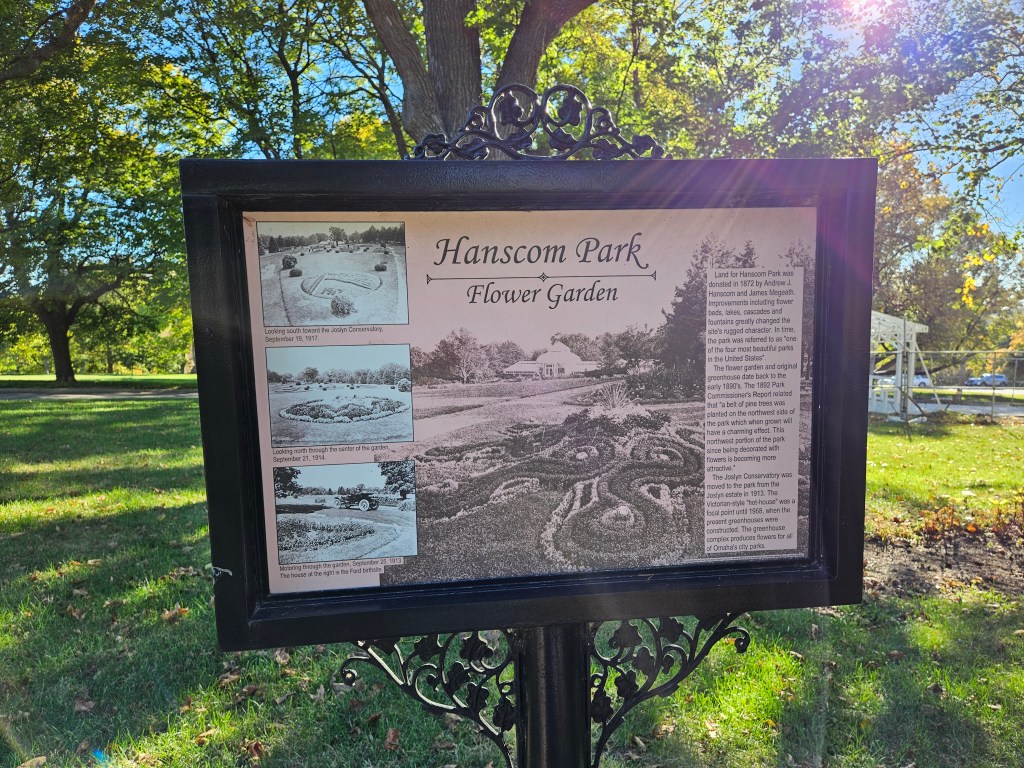
Following the Easter Day tornado in 1913, the Joslyn family donated its conservatory to the city and moved it from the castle to the park. The park became even more important after additional greenhouses were installed and used year-round to nurture plants that were later placed throughout the boulevard system.

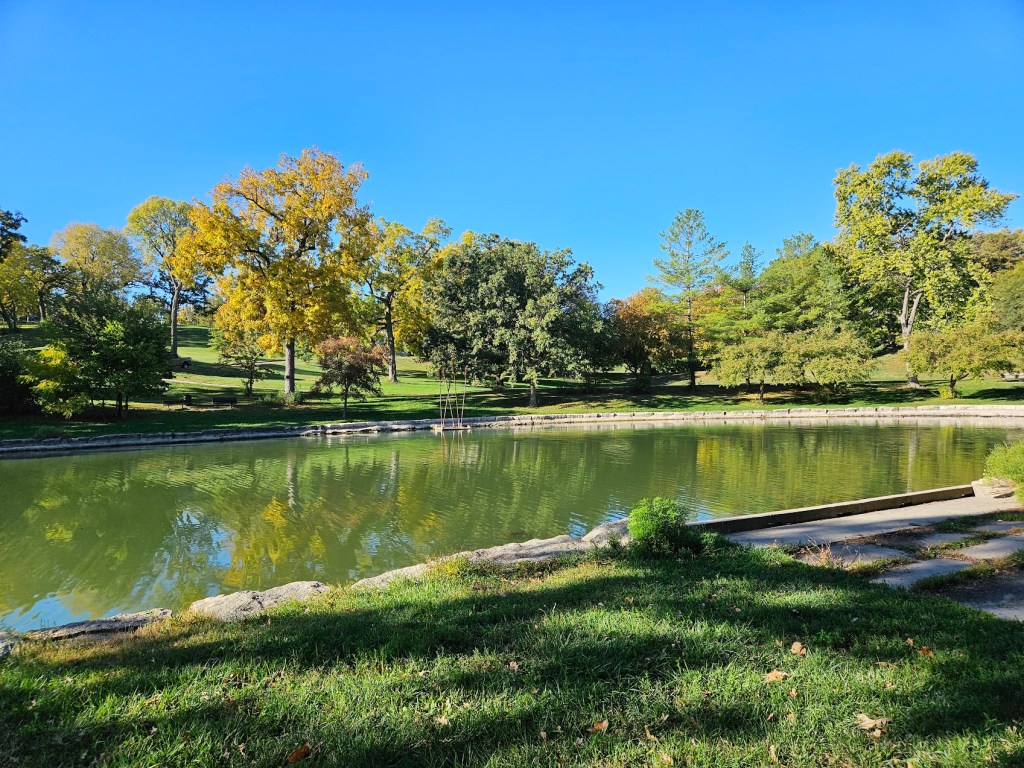
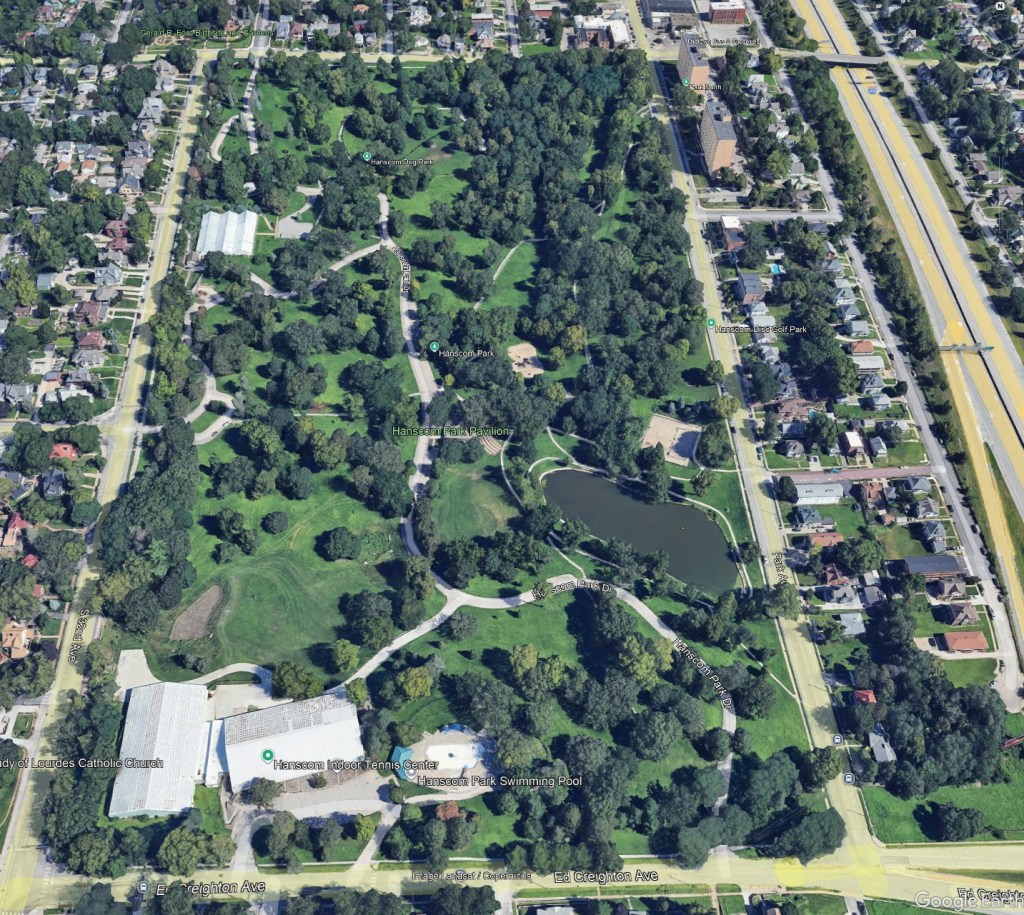
The park continued to change throughout the years becoming more like the one we recognize today. After the second pavilion caught fire in 1927, it was rebuilt on the opposite side of the lagoon, where it still stands. Its bandstand was torn down in the mid-1940s after being deemed unsafe and was replaced with a gazebo. In 1946, the upper lagoon was filled in, though the lower lagoon was spared. The natural spring was rerouted into the sewer system and eventually plugged. Meanwhile, concrete slabs from the earlier pavilion were repurposed into the city’s first tennis courts. A swimming pool was installed in 1961, and an indoor tennis facility used by Creighton University was built in 1967. The conservatory was deemed unsafe and demolished in 1968, though greenhouses remain in its place.
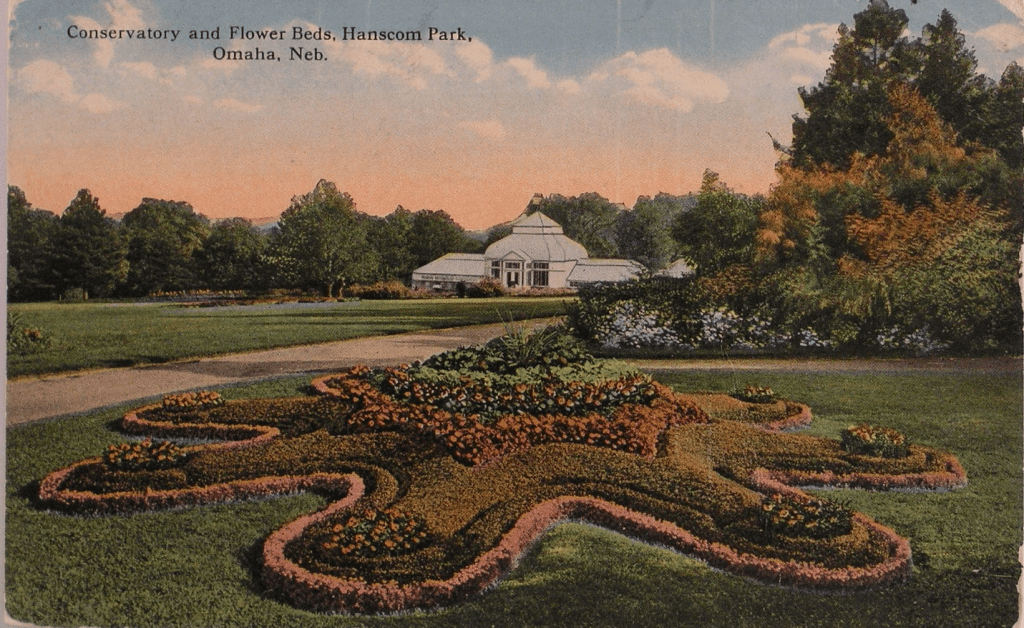
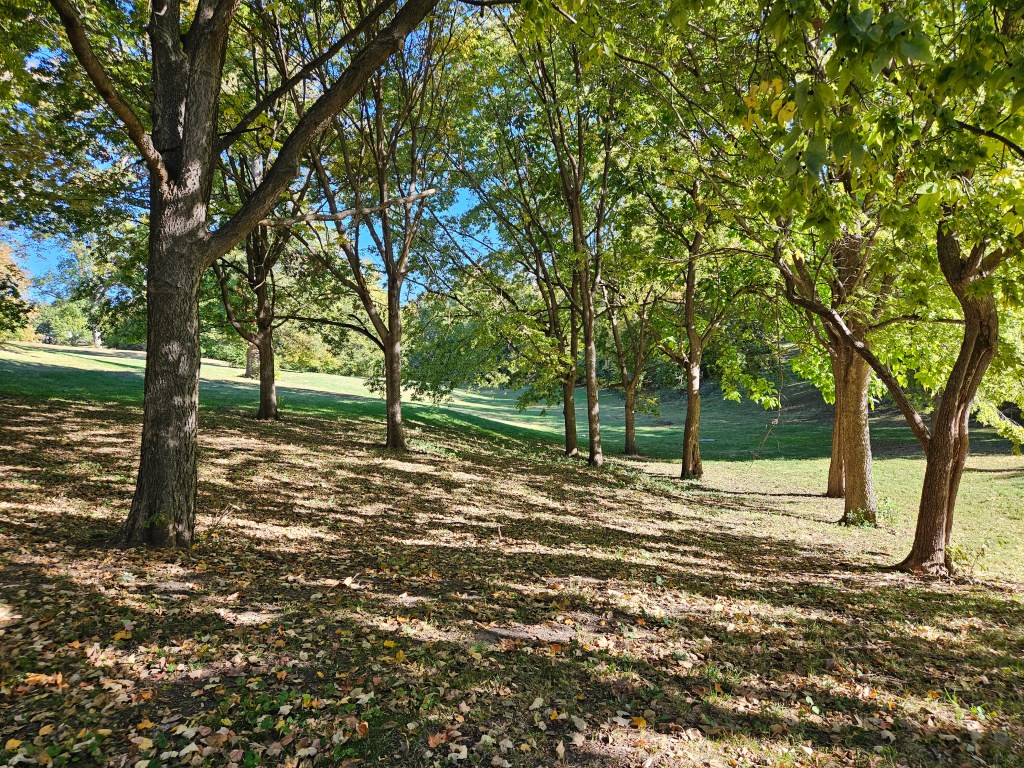
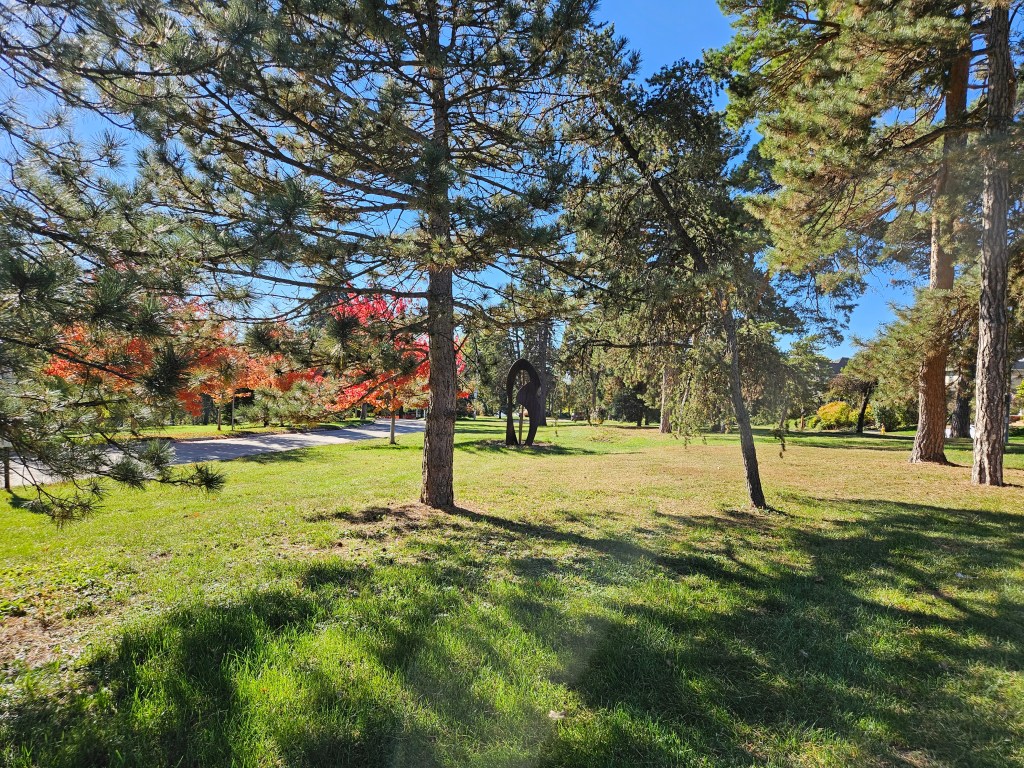
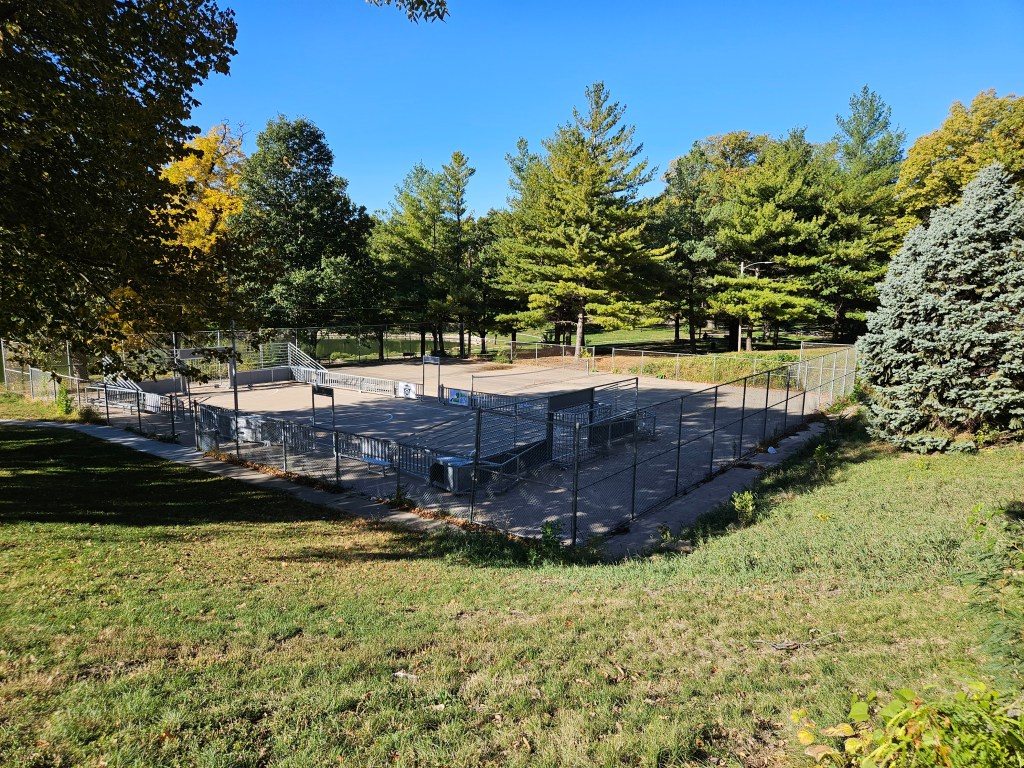
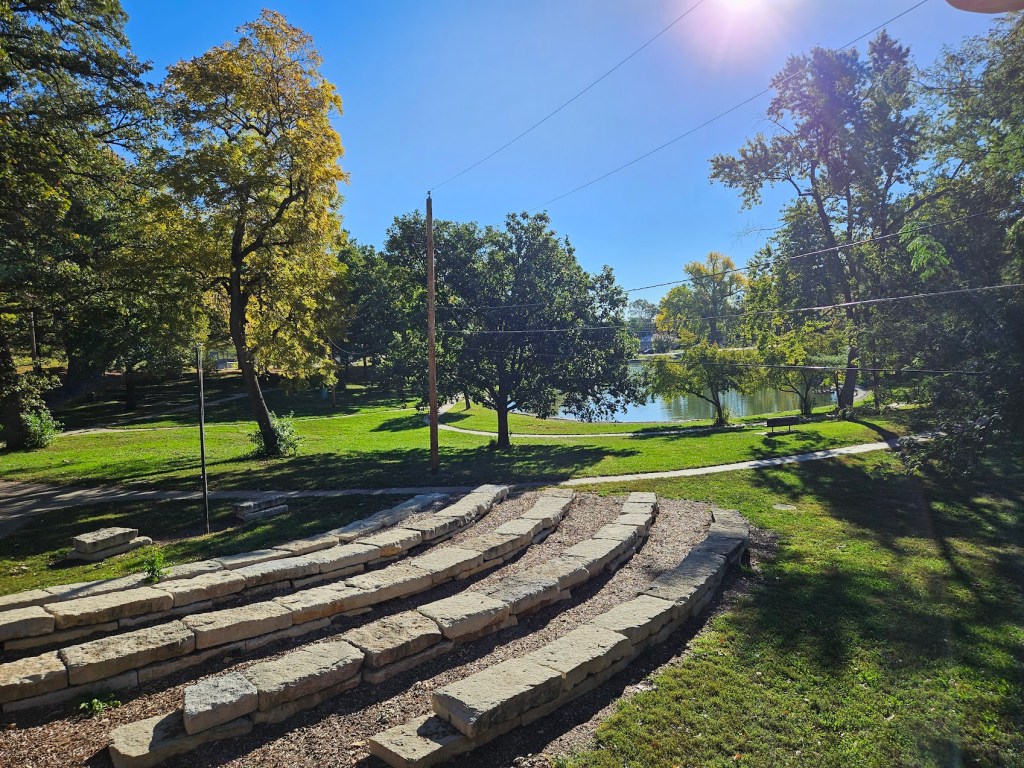
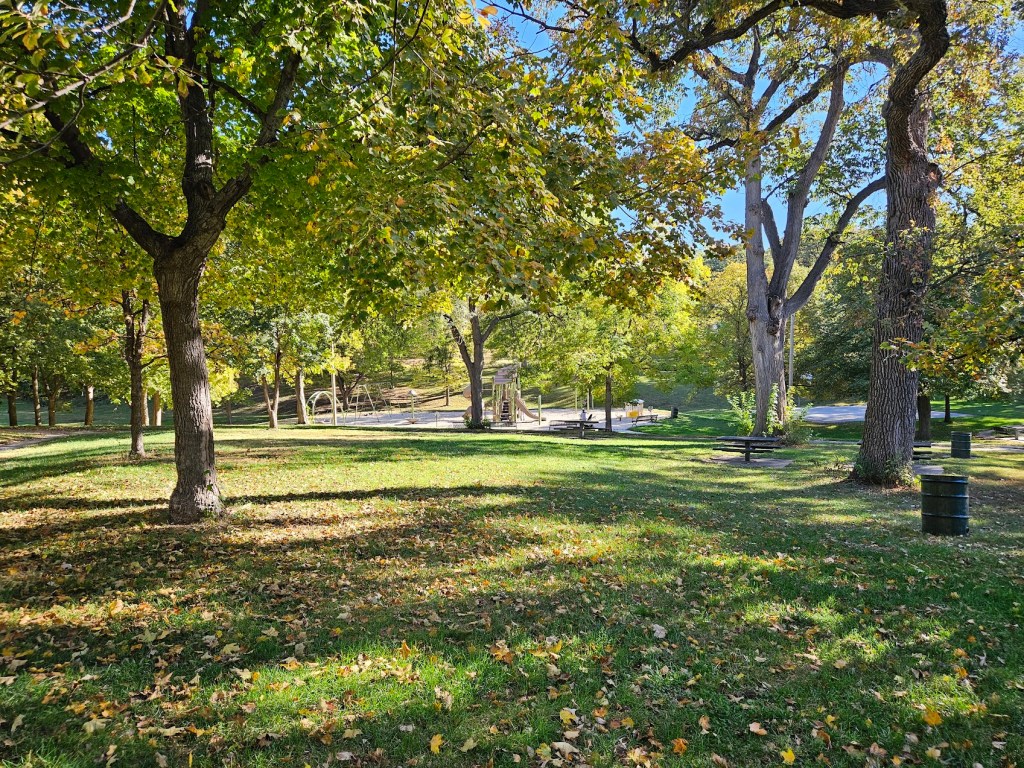
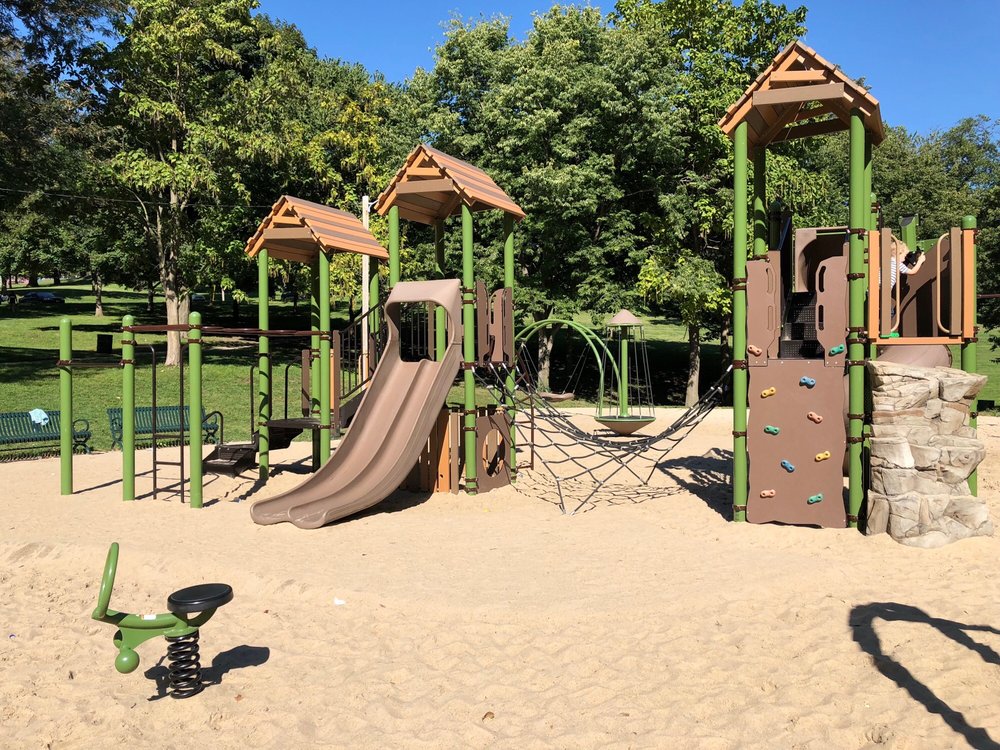
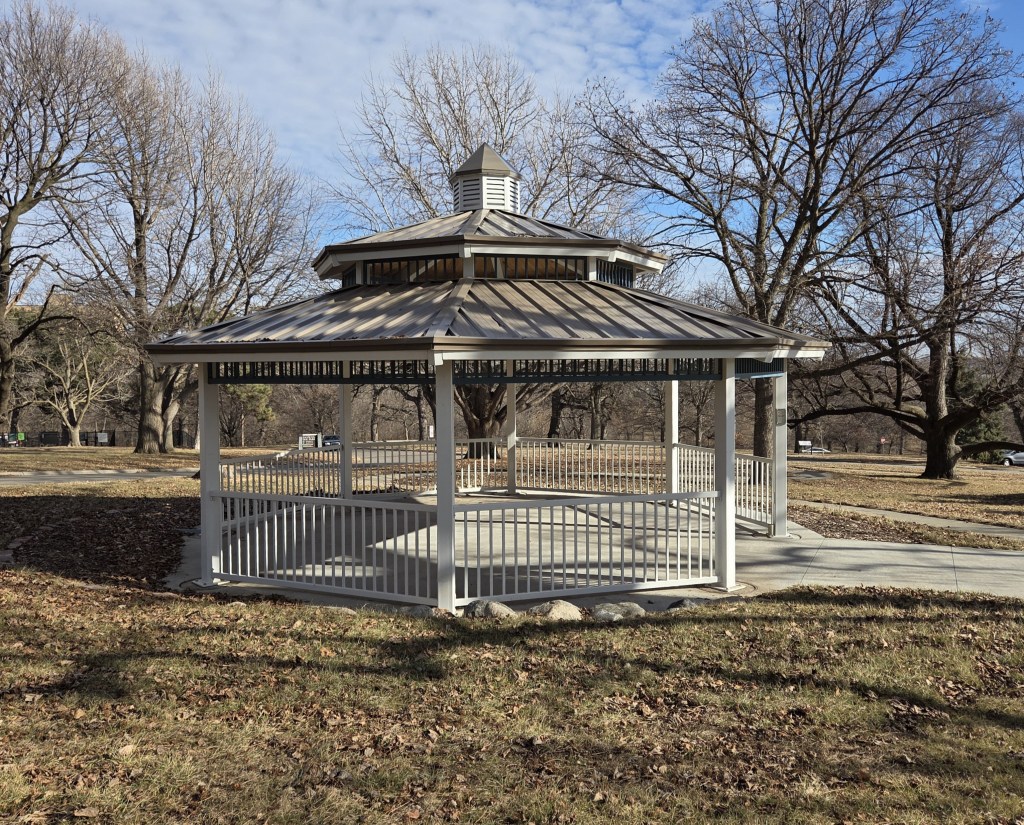
Hanscom Park became the city’s oldest park after Jefferson Square was demolished in the 1960s to make way for Interstate 480. Today, the park continues to evolve and remains a vital part of the community. It features a pavilion, greenhouses, lagoon and fountain, a zero-depth swimming pool with slides and a spray feature, playground equipment, a mini-pitch, indoor tennis facilities, a nine-hole disc golf course, a dog park, and a recently installed steel gazebo that replaced the one that burned down in 2022.

Content written by Omaha Exploration. If you enjoy my content, you can follow or subscribe on my Facebook page, sign up to receive emails or make a donation on my website. Thank you and keep exploring!
More pictures







Follow me on
Omaha Exploration, 2025. Unauthorized use and/or duplication of this material without express and written permission from this site’s author and/or owner is strictly prohibited. Excerpts and links can be used, if full and clear credit is given to Omaha Exploration with appropriate and specific direction to the original content.
Sources
- https://www.nebraskarealty.com/blog/post/hanscom-park-a-tribute-to-omahas-oldest-park
- https://en.wikipedia.org/wiki/Hanscom_Park#:~:text=Hanscom%20and%20James%20Megeath%20donated,the%20western%20fringe%20of%20Omaha.
- http://www.hpnaomaha.org/history.html
- https://www.hmdb.org/m.asp?m=57979
- Omaha’s Hanscom Park | Douglas County Historical Society
- Omaha World-Herald archives
 Omaha Exploration
Leave a comment