
In order to avoid conscription into the czar’s army on the eve of WW1, Mordecai Louis Paperny called upon a rich uncle. Louis as he was known was born in 1891 to a large but poor Russian family. The young man with no formal education wanted a new life with greater opportunity in America. When his uncle answered the call, boarded a ship to Ellis Island.

He remained in New York for a period of time first working in a suspenders shop as he learned the culture and the language. Unhappy with his situation, he decided to move to Omaha. He knew of a family from back home that had settled there a few years prior. While he didn’t know them personally, the family paid to bring their fellow countryman to the Midwest.

In South Omaha, he landed a job in the packinghouses and was making pretty good money. As luck would have it, he ran into Ida Woflson, a young woman that he fell in love with back in Russia. He had asked for Ida’s hand in marriage once before and she rejected him. After this chance encounter, they started dating. I mean, seriously, what are the odds of moving halfway across the world and running into the one person you wanted to spend your life with?
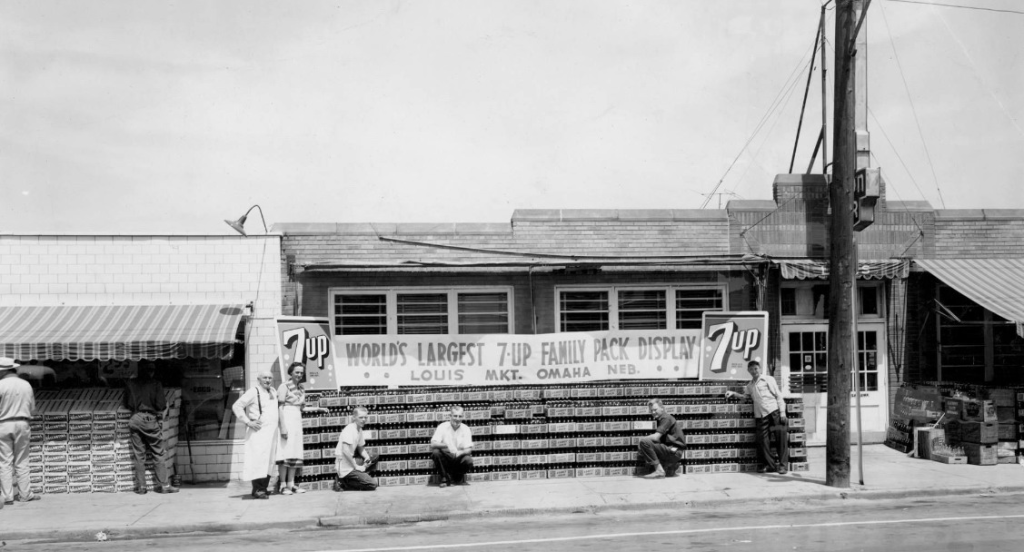
Eight months later he was a approached by Max, a man with the same last name as his but is of no relation. Max got Louis into the business of selling junk. He made even better money so he continued with the business after Max moved away. At one point Louis employed up to 40 people at his junkyard at 34th and Q St. The good times ended in 1916 when prices dropped. Louis lost everything except his truck. In order to make ends meet, he started driving to the city market where he would buy truck loads of fruit which would go on to sell from the back of his truck. He even got a permit to do so as a result of his relationship with Mayor Dahlman. As you can imagine, nearby brick and mortar grocers resented him for the competition. Not only that but Louis felt that selling from the back of a truck lacked legitimacy in the eyes of potential customers. They refused to accept the first price and would continue to bargain even if he sold the produce at a loss.
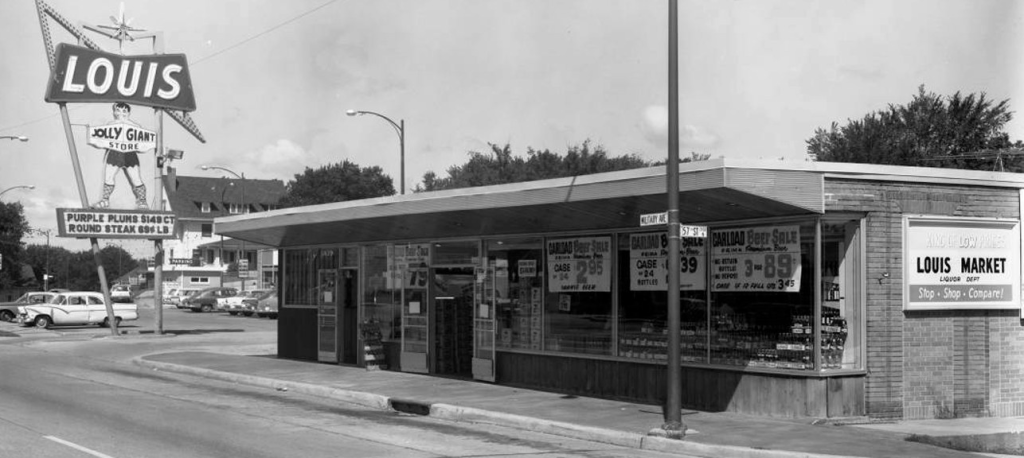
After getting married to Ida in 1918, Louis moved his business to a small town on the outskirts of Omaha called Benson. His new fruit market was located at 46th and Military Ave. A few years later in 1930 he would relocate to 5516 Military Ave. He had a partner named Louis Baum at this time. After they split, the other Louis opened Little Louis Fruit Market at 5132 Military Ave. They appeared to have a falling out of some sort. His one-time partner poisoned himself in 1935 and passed away.

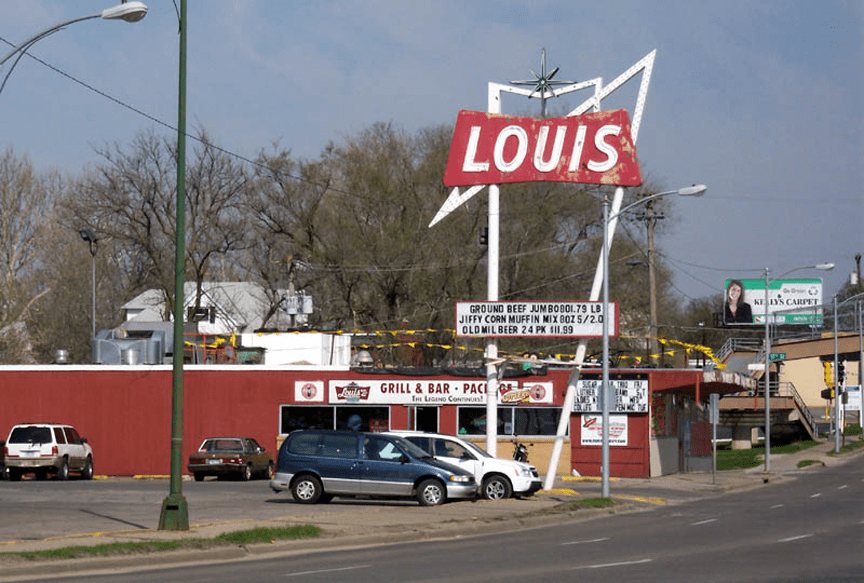
Our Louis found himself on the move again after his landlord raised the rent at his store. This time he moved across the street to 5702 Military Ave. This is the location we could come to know decades later. Louis, always an opportunist, decided to profit on the repeal of prohibition and began selling beer. By 1937 he added an addition so that he could split his business between a produce market on the west and a bar on the east. His was said to be the first open air market in the area. The windows were removable so that they could be taken out during the warm months. It was considered one of the finest and most modern fruit markets west of Chicago according to the Benson Times. Over time, Louis would earn a reputation for quality merchandise and low prices.

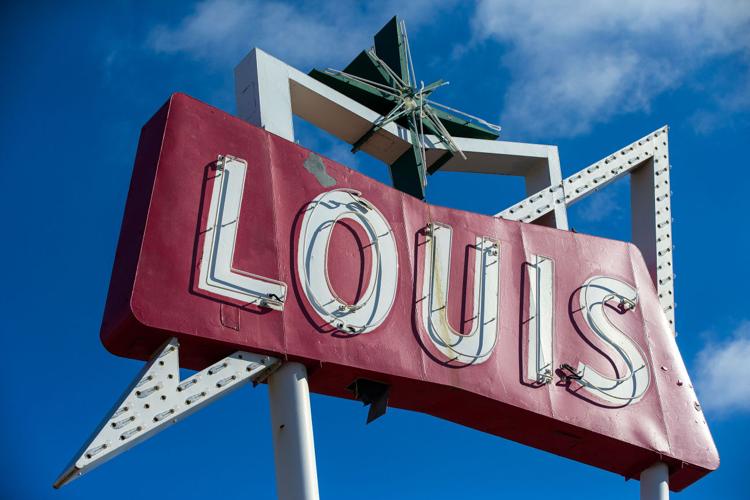
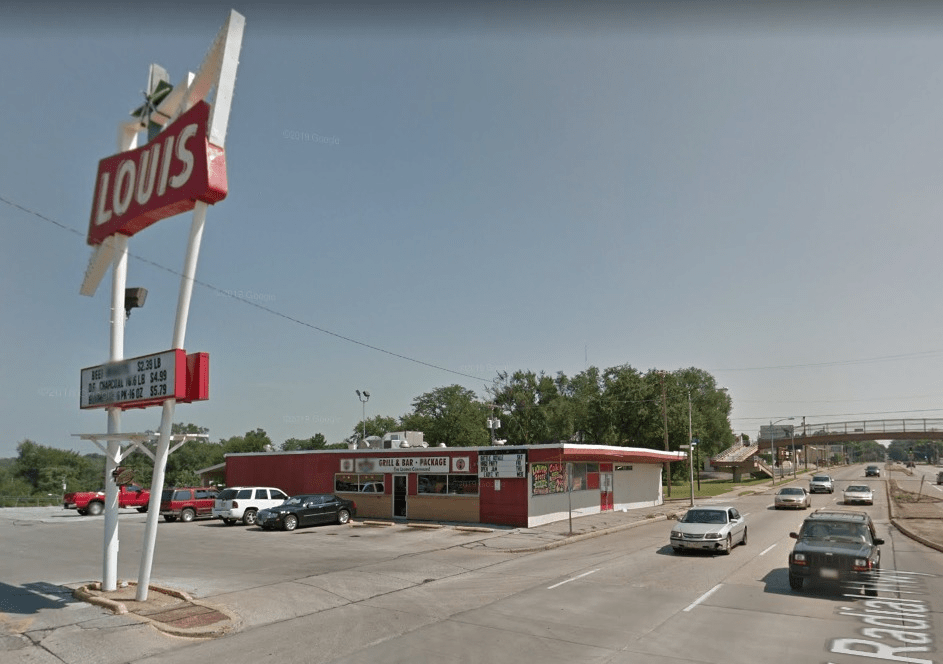
Due to the success of both the market and the bar, Louis was convert the original building into a Western-themed bar, grill and liquor store. He built a new supermarket next door at 5718 Military Ave. His new, larger store employed 75 and had a parking lot large enough for 250 cars. This was when his iconic 18-foot tall neon sign made its debut. Louis remained a family business in which his sons-in-law were partners alongside him. He was quoted as saying he was just a partner and there were no presidents or bosses and that he didn’t like bosses.

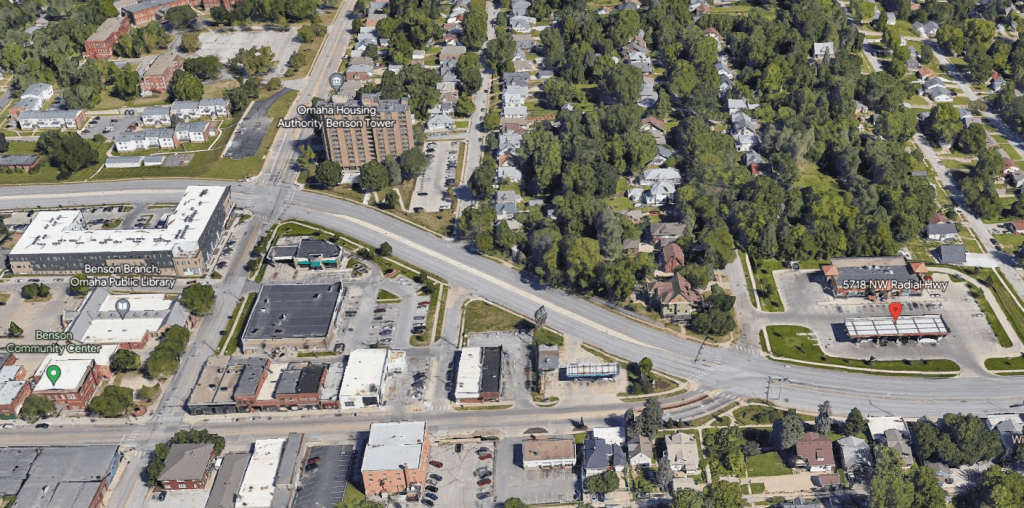
Before he passed away in 1974, Louis said the key to longevity was his prices. He believed in small profits on large volume. When he got a deal from his suppliers, he would pass the savings on to his customers. This strategy clearly worked as it became one of the largest independent supermarkets in Nebraska. Even after he passed the supermarket as well as the bar would remain in business nearly 40 years later. As the Benson bar scene began to take off, Louis Bar reinvited itself as a hot spot for a younger generation. It was short lived however as the market would close in 2012 and the bar just a year later. They were demolished in 2015 to make way for a Bucky’s gas station. Fortunately, the neon sign was preserved, repaired and relocated to pool area at the Benson Lights apartments on 60th and Northwest Radial Highway.
Content written by Omaha Exploration – follow my page for more! Please also feel free to leave a comment. If there’s something you want to learn more about, let me know that as well. In the meantime, keep exploring!
Omaha Exploration is sponsored by @Rockbrook Mortgage Inc.
Bonus Pics

 Omaha Exploration
Leave a comment