

Updated: January 3, 2025
In a city filled with great historic neighborhoods, Wyman Heights is one that always stood out to me due to its unique setting. Located in the hills north of Florence, the area was once referred to as Omaha’s “Black Forest”. Overlooking the Missouri River below, the area is steeped in history as it once served as home to Indigenous Tribes and is located near the fur trading post established by Nebraska’s first European settler, Manuel Lisa, in 1812.

The neighborhood was founded by Realtor Henry F. Wyman in 1926. Henry came from a well-connected family as his grandfather, William Wells Wyman, settled in Omaha shortly after its founding in 1855 and was appointed postmaster in 1855. He later established the Omaha Times newspaper and served on the city council. Henry’s father, Albert Uriah Wyman, served as the 12th and 14th Treasurer of the United States and established South Omaha National Bank.
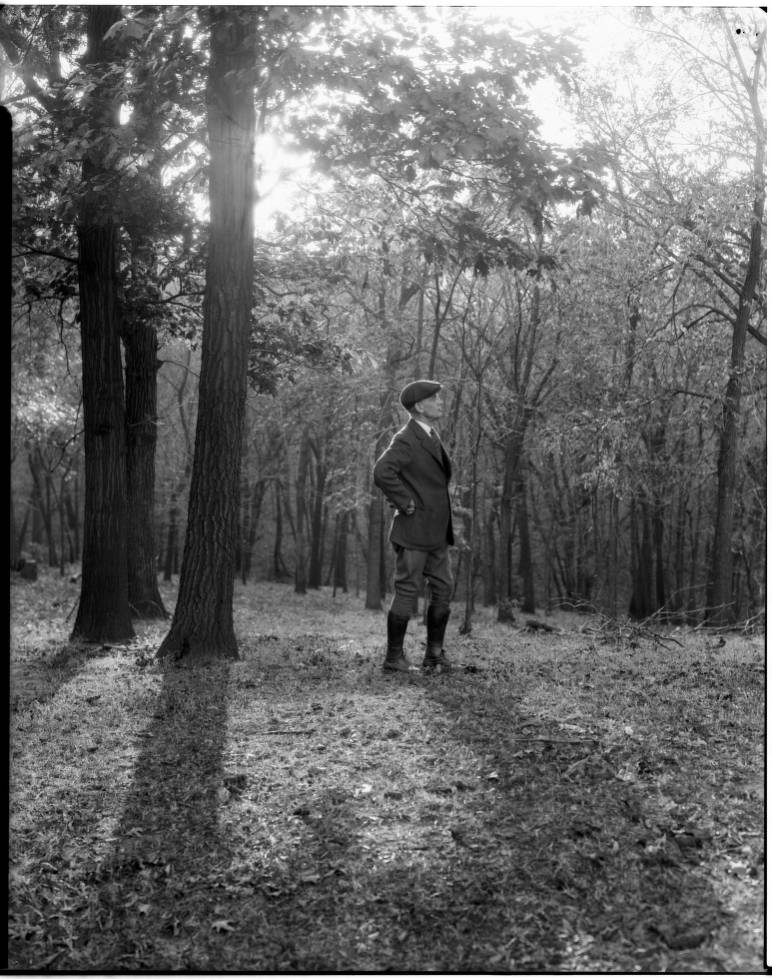
Even before Henry established the Wyman Heights neighborhood, there were a number of notable homes in the area including Tom Crane’s “Rosemere” which was said to be “the first pretentious suburban home erected” on the hill; Myron Learned’s “Walden Wood” which was said to have the most beautiful view in all of Douglas County and Henry Wyman’s “Woodney” which was perched upon the summit of the hill and was clearly seen from the town of Florence below.

Prior to the establishment of these homes, Henry was busy acquiring land in the area. By 1905, he purchased the southeast portion of what was then Florence Heights. Over the next 20 years, he purchased more than 80 acres of land.

After re-platting the land in 1926 with the intent of selling the plots for a premium, he was contacted by the University of Omaha (current day University of Nebraska at Omaha) who sought the land to build a new campus. Representatives of the university suggested this site because it was located just outside the city limits but still within easy reach of downtown. It was also suggested that the beauty of the wooded hills and its views offered the potential for a campus with large appeal. Ultimately, the university considered the land to be too expensive and would relocate to 60th and Dodge in 1938.

Several months later, Henry was ready to fulfill his dream of making Wyman Heights one of the best neighborhoods in all of Omaha and put 76 lots on the market. The expectation was that each home would cost between $10,000 and $15,000. The neighborhood took the shape of a horseshoe, with Ferry Street on its southern edge serving as the open end. The neighborhood stretched north up the hill where Main Street (present day 30th Street) ended and intersected 5th Street (present day 29th Street). As expected, the lots were highly desired due to their sweeping views, mature trees and proximity to the streetcar line offering easy access downtown.
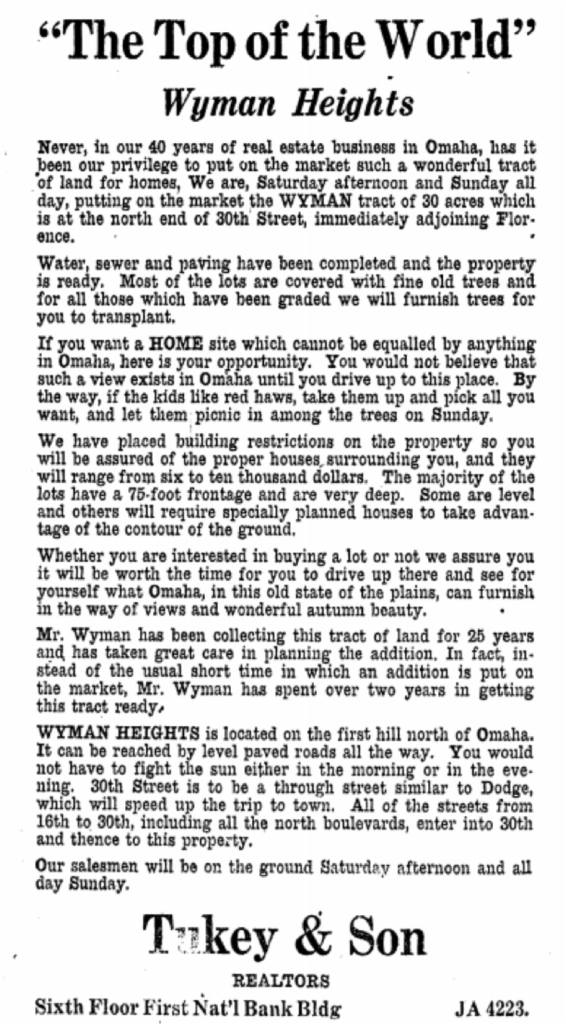
An advertisement from Tukey & Sons Realtor’s claimed that such a wonderful tract of land had never been placed on the market in Omaha. As a result, the neighborhood drew significant interest with more than 5,000 people visiting. 16 people purchased lots while additional land was donated to the City of Omaha in 1920 with the stipulation that it be used as a bird and game refuge.
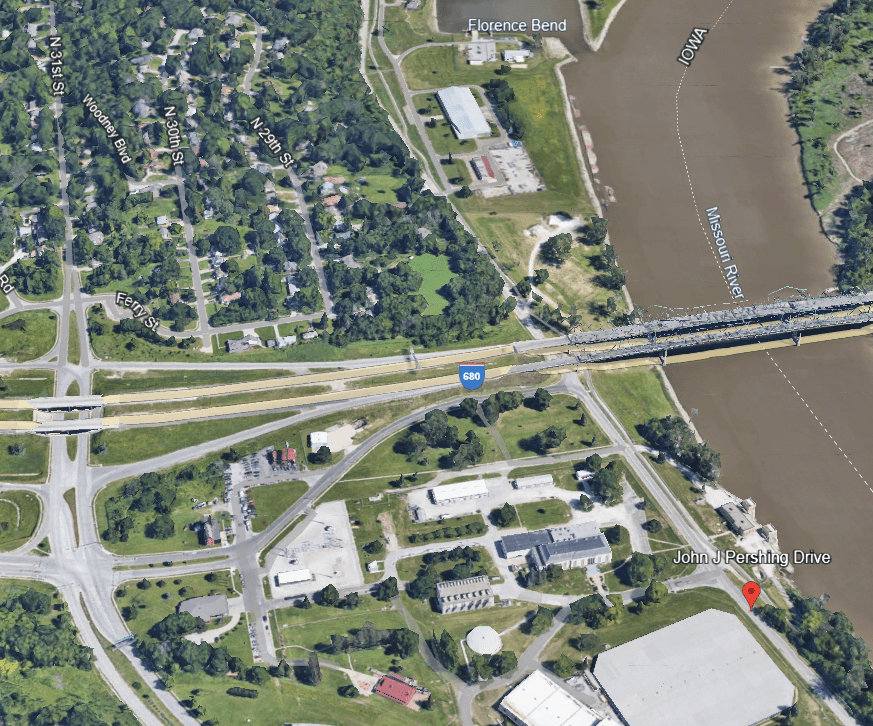
In 1938, the federal government sought the land was to be used as a bird and game refuge in order to build a boat basin and maintenance yard. The new yard was expected to employ 150 to 300 people and bring several hundred thousand dollars to the city payrolls on an annual basis. Henry agreed to deed the land to the government which, in turn, agreed that the basin would be out of sight of the neighborhood. Both the boat basin and maintenance yard continue to exist along John J. Pershing Drive.

On the site of his old home, Henry built a new 10-room, 4 ½ bath home which he also named “Woodney”. When it was finished in 1927, the Omaha World-Herald referred to it as “one of Omaha’s newest and loveliest suburban places.”
Henry’s dream of making Wyman Heights one of the best neighborhoods in the city was well on its way to being realized when the Great Depression struck in 1929. At that point, development slowed considerably, and the saddened founder opted to sell his beloved home to Dr. William Sealock for $18,000 in 1931. Despite moving to the Blackstone neighborhood, he frequently returned to his namesake neighborhood.
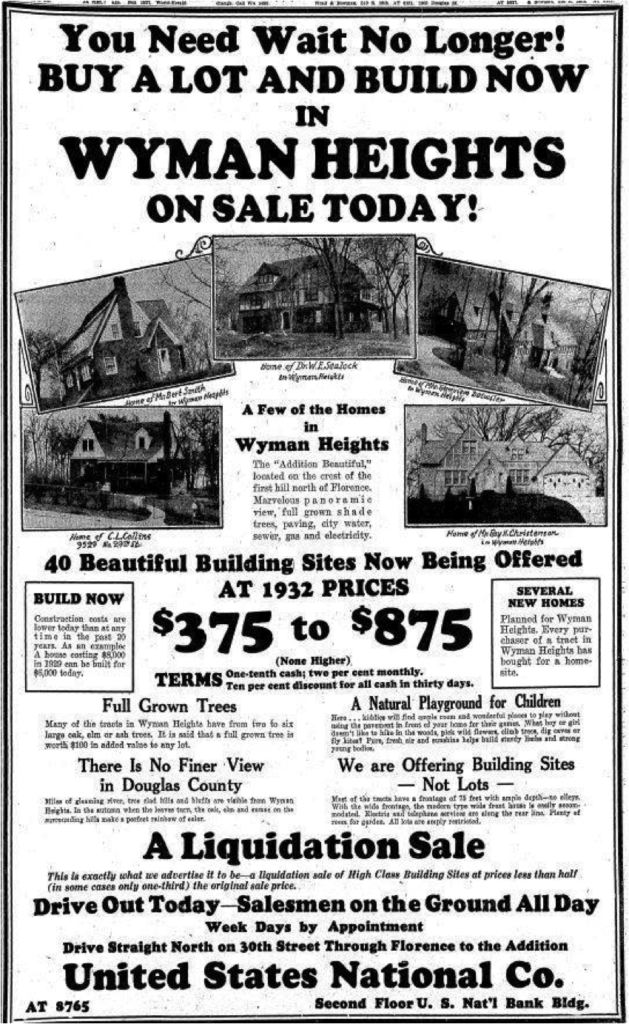
In an effort to sell the remaining lots, Amos Grant Co. posted an ad in 1931 claiming that the neighborhood was the lowest priced high-class district currently on the market. The following year, as lot sales remained stagnate, a liquidation sale was conducted which offered the remaining 40 lots at prices that were less than half the original sale price. After the depression and World War II came to an end, development picked up and all but four of the remaining lots were sold by 1956.
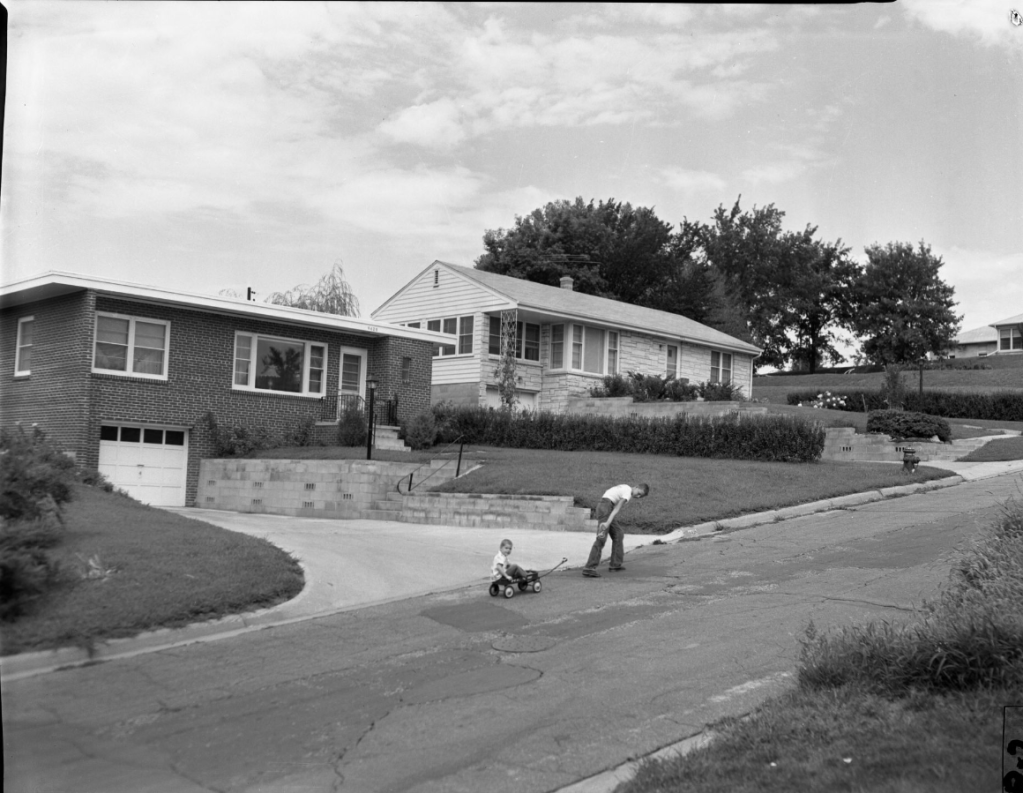
During the 1950s, the area surrounding Wyman Heights began to change drastically. The Mormon Pioneer Memorial Bridge was built in 1952 as a toll bridge that would take passengers traveling on Nebraska Highway 36 over the Missouri River to Crescent, Iowa. The following year, the streetcar lines were removed in an effort to widen 30th Street. After that, the neighborhood was orphaned from the rest of Florence when Interstate 680 sliced through 30th Street. Wyman Heights, however, remained the neighborhood on the hill just north of Florence.
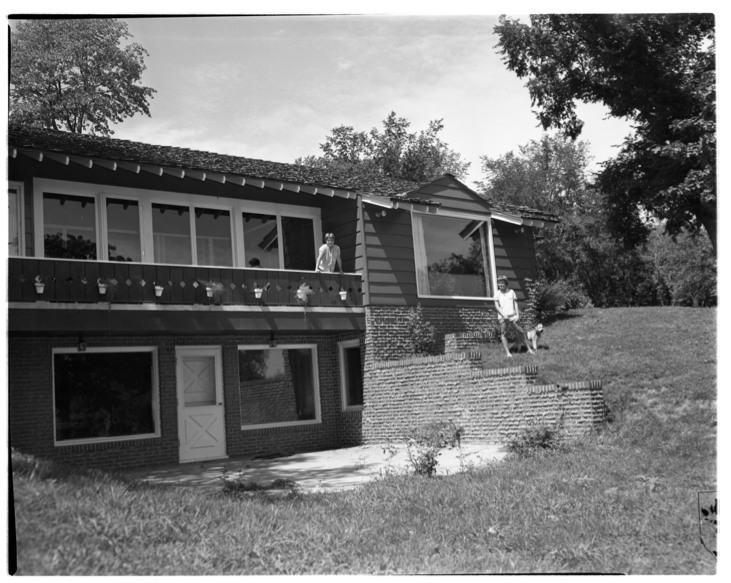
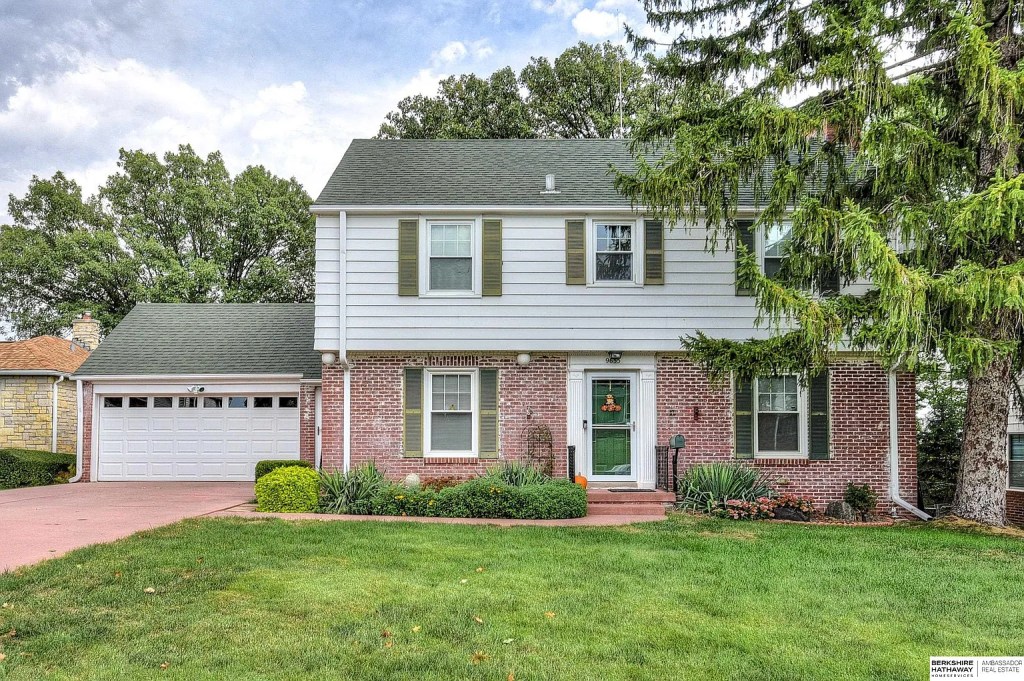
Today Wyman Heights is an “architectural panorama” that was built over a 35-year period. On the southern end of the neighborhood are white frame bungalows. Further up the hill, you’ll find a sprinkling of Tudor-style houses that were popular when the neighborhood was founded in the ’20s through the ’40s. Add to that sprawling ranch homes that were popular in the ’50s and ’60s.
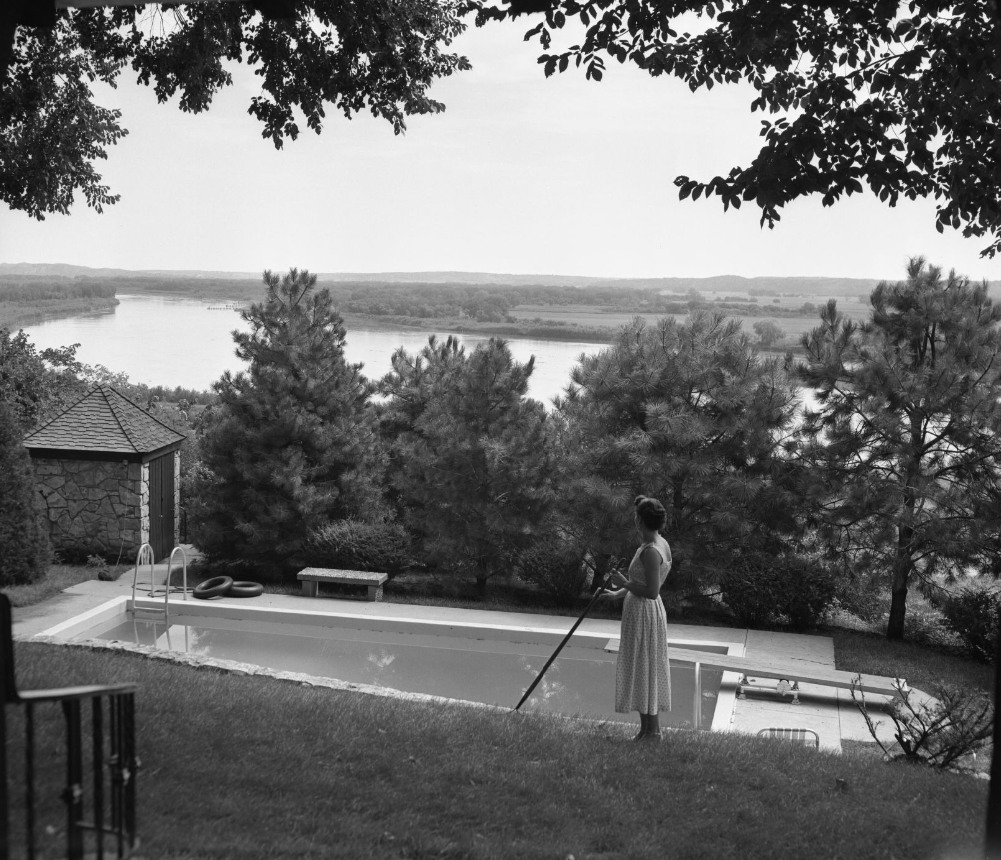

1956 Durham Museum photo of the Missouri River from the home of Claude Reed. The original pool and pool house are still intact.
The diverse collection of homes includes the aforementioned “Woodney” at 9680 N. 30th Street. It also includes an architecturally designed mansion at 9630 N. 30th Street that served as the home of Omaha Mayor Gene Leahy. Built in 1945, it had a gymnasium with basketball court, shooting range and soda fountain. During the height of the nuclear scare, the owner offered his concrete basement with its 20-foot-high reinforced steel ceiling as a bomb shelter. The former home of Reed’s Ice Cream founder Claude Reed was built in 1938 and sits at 9645 N. 29th Street. The head of one of the world’s largest construction companies, Peter Kiewit, lived at 9702 N. 30th Street in the former “Walden Wood” estate built in 1911. Sadly, the home burned to the ground in 1961.

While the trees that once composed the “Black Forest” have thinned, the view from these hills remain a thing of beauty. From this neighborhood, you can see both the gleaming river and the tree clad hills that “make a perfect rainbow of color in the autumn.” Combined with an array of lovely houses, Wyman Heights is one of the most unique and charming neighborhoods in Omaha.

Have you ever been to Wyman Heights? If so, what are your thoughts and what other neighborhoods are hidden gems in Omaha? I’d like to hear what you have to say so feel free to comment.
Bonus Pics





Follow me on
Sources
- Omaha World-Herald newspaper archives
- Omaha Bee newspaper archives
 Omaha Exploration
Leave a comment